Recycling Sector in the GCC Countries
Technological advancement and population growth in the Gulf Cooperation Council (GCC) countries have significantly increased the amount of waste generated from human and industrial activities, among others. This surge has placed GCC governments under considerable pressure, making it essential to manage waste more swiftly to avoid environmental and health problems.
The total amount of collected waste (both hazardous and non-hazardous) in the GCC is estimated at approximately 131.8 million tons, with 1.2% classified as hazardous waste and 98.8% as non-hazardous waste.
Mashrook Consulting is pleased to present key indicators of the recycling sector in the GCC countries:
-
The total amount of hazardous waste collected in the GCC countries stands at 1.6 million tons.
-
The total amount of non-hazardous waste amounts to 130.2 million tons.
-
Hazardous waste is divided into:
-
6% medical waste
-
81.8% industrial waste
-
12.2% other types (such as batteries and electronic waste)
-
-
Non-hazardous waste is divided into:
-
40.7% construction waste
-
25% household waste
-
1.7% green waste
-
32.5% other types
-
-
51% of the total collected waste (about 67.2 million tons) has been treated.
-
The total amount of industrial waste collected in the GCC is 1.3 million tons, with Saudi Arabia and the UAE producing 63.1% and 19.3% of it respectively.
-
The amount of non-hazardous household waste in the GCC is 32 million tons.
-
The UAE ranks first in waste recycling, with 42.8% of treated waste recycled.
-
The amount of hazardous waste recycled in the GCC is 100,000 tons, accounting for 9.3% of the treated hazardous waste.
-
Saudi Arabia leads in solid waste volume, producing over 16 million tons annually, followed by the UAE with approximately 5.4 million tons annually.
Waste composition in the MENA region:
-
Food and green waste: 58%
-
Glass: 3%
-
Metals: 3%
-
Paper and cardboard: 13%
-
Plastics: 12%
-
Wood: 1%
-
Rubber and leather: 2%
-
Other types of waste: 8%
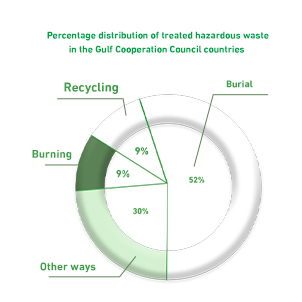
Hazardous waste treatment methods in the GCC:
-
Incineration: 9%
-
Landfilling: 51.7%
-
Recycling: 9.3%
-
Other methods: 30%
Non-hazardous waste treatment methods in the GCC:
-
Landfilling: 51%
-
Other methods (including incineration and recycling): 49%
Benefits of the Circular Economy in the GCC:
-
Reduction in primary energy consumption by approximately 4%
-
Creation of 50,000 recycling-related jobs
-
Reduction in carbon dioxide emissions by 13 million tons annually
-
Contribution to economic returns of up to USD 138 billion for the GCC during the period 2020–2030
Recommendations:
Mashrook Consulting recommends investing in the recycling sector for the following reasons:
-
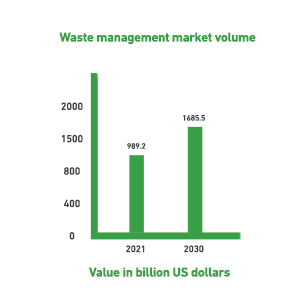
The world produces around 2.01 billion tons of municipal solid waste annually, with this number expected to rise to 3.40 billion tons by 2050.
-
Global electronic waste reached 12.8 million metric tons in 2014 and surged to 53.6 million metric tons by 2019.
-
Plastics and paper account for around 29% of total global waste, representing promising, profitable sectors if targeted for recycling.