Task and Authority Matrix Service - Mashroo3k

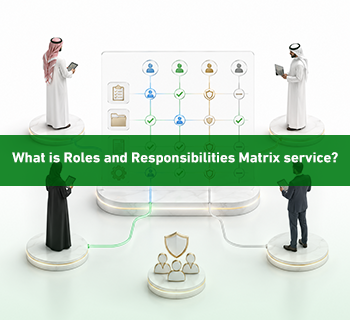
What Is the Task and Authority Matrix Service?

It is an organizational tool used to define and clarify the roles and responsibilities of each individual or entity involved in a specific project or process by linking each task to the person responsible for executing and overseeing it. This helps prevent overlapping authorities and ensures that work is carried out in an organized and clearly defined manner.
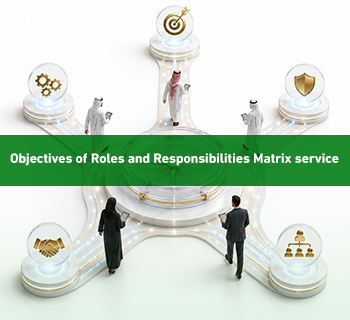
Objectives of Roles and Responsibilities Matrix service

  • Clarifying Roles and Responsibilities: Precisely and clearly defining the role of each individual or entity within the project or process.
  • Avoiding Overlapping Authorities: Preventing duplication and conflicts between different parties during task execution.
  • Ensuring Accountability: Clearly identifying the person or entity ultimately responsible for each task or decision.
  • Improving Communication and Coordination: Clarifying who should be consulted and who should be informed at each stage, thereby enhancing collaboration among teams and departments.
  • Improving Decision-Making Efficiency: Accelerating decision-making by identifying the authorized person responsible for approval or authorization at each step.
  • Organizing Workflow: Ensuring that tasks are executed in the correct sequence without gaps or delays resulting from unclear responsibilities.
  • Supporting Corporate Governance: Providing an official reference that supports transparency and oversight within the organization.

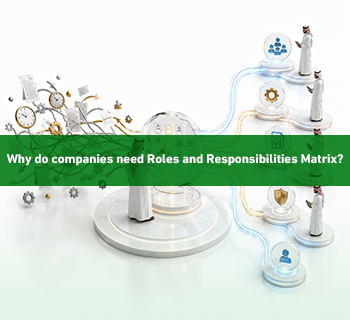
Why do companies need Roles and Responsibilities Matrix?

  • Eliminating Ambiguity and Clearly Defining Each Individual’s Responsibilities: To prevent confusion and conflicts between employees’ roles.
  • Enhancing Accountability: Linking each task to a designated person responsible for it, which strengthens commitment and ensures greater diligence in performance.
  • Accelerating Decision-Making: Clearly defining who has the authority to approve, reducing delays and streamlining procedures.
  • Improving Internal Communication: Clearly defining who should be consulted and who should be informed, reducing unnecessary meetings and enhancing the efficiency of teamwork.
  • Preventing Duplication of Efforts: Avoiding situations where multiple individuals perform the same task without coordination, thereby saving time and resources.
  • Supporting Growth and Expansion: Providing a clear reference for task allocation when onboarding new employees or restructuring the organization.
  • Achieving Governance and Transparency: Documenting roles and authorities to enhance trust and support organizational compliance.

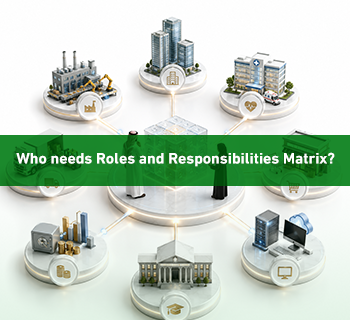
Who needs Roles and Responsibilities Matrix?

  • Companies and Organizations: Whether small or large, to organize internal operations and distribute tasks among departments.
  • Preventing Duplication of Efforts: Avoiding situations where multiple individuals perform the same task without coordination, thereby saving time and resources.
  • Startups: To establish a clear organizational structure from the outset that supports future growth and expansion.

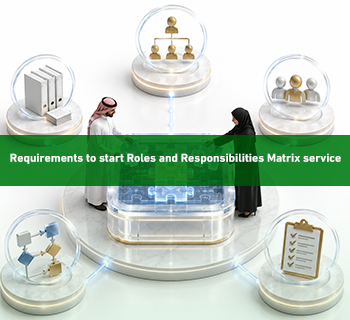
Requirements to start Roles and Responsibilities Matrix service

  • Organizational Structure: The organization’s organizational chart, showing all departments and management levels.
  • Internal Policies and Regulations: The approved rules and regulations governing workflow within the organization.
  • Employee and Position List: Names and job titles of all parties involved in the process.
  • Job Descriptions: The defined tasks and responsibilities for each position or role within the organization.
  • List of Operational Processes and Procedures: A detailed description of the processes and activities to be organized within the matrix.
  • Signing and Approval Authorities: A document specifying who has the authority to approve and authorize decisions at each level.
  • Contracts and Agreements: Any contracts or agreements that define the responsibilities of the parties in cases involving external partnerships.
  • Previous Reports and Operational Issues: Any reports that reveal previous issues related to role distribution or overlapping authorities.

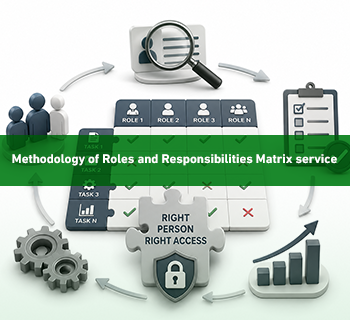
Methodology of Roles and Responsibilities Matrix service

  • Collecting Institutional Documents and Records: Review the organizational structure, internal regulations, job descriptions, and all approved policies governing workflow within the organization.
  • Conducting Interviews with Relevant Stakeholders: Conduct sessions with managers, employees, and stakeholders to understand the actual workflow in practice and identify areas of ambiguity and overlap in roles and authorities.
  • Analysis of Collected Data: Review and analyze all collected information and documents to identify gaps in the distribution of responsibilities and determine which roles require restructuring.
  • Designing the Initial Matrix Draft: Develop a preliminary matrix that links each task or procedure to the appropriate role for each party, clearly specifying who is responsible, who approves, who is consulted, and who is informed.
  • Presenting the Matrix to Stakeholders: Share the initial draft with all relevant stakeholders to gather their feedback and proposed revisions, ensuring everyone agrees on the distribution of roles and authorities.
  • Final Matrix Approval: Submit the revised final version to senior management for formal review and approval, ensuring its implementation across all levels of the organization.
  • Overlapping Roles and Responsibilities: A lack of clarity leads to conflicts in authority among employees and unnecessary duplication of efforts.

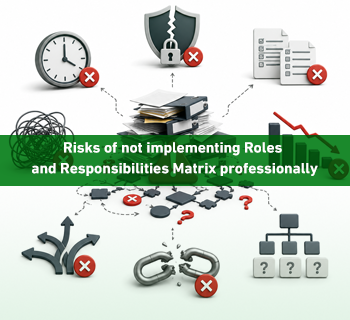
Risks of not implementing Roles and Responsibilities Matrix professionally

  • Overlapping Roles and Responsibilities: A lack of clarity leads to conflicts in authority among employees and unnecessary duplication of efforts.
  • Loss of Accountability: Failing to identify the person ultimately responsible for each task makes it extremely difficult to track errors and take corrective action.
  • Delayed Decision-Making: Unclear authorities disrupt workflow and lead to repeated delays in completing tasks and projects.
  • Weak Internal Communication: Failing to define who should be consulted and who should be informed creates room for misunderstandings and poor coordination between departments.
  • Reduced Productivity: Time wasted on disputes over responsibilities and rework costs the organization significant time, effort, and resources.
  • Tense Work Environment: Overlapping authorities can lead to internal conflicts between employees and departments, negatively affecting team morale.
  • Weak Governance and Oversight: The absence of documented roles makes the organization vulnerable to failing to meet compliance requirements and regulatory standards.
  • Difficulty in Scaling and Growth: Without a clear structure of responsibilities, it becomes difficult to onboard new employees or expand the organization’s operations in the future.

Why do companies rely on external parties to implement Roles and Responsibilities Matrix?

  • Neutrality and Objectivity: The external party evaluates roles and authorities from an impartial perspective, free from internal biases and organizational conflicts.
  • Expertise and Specialization: The external party has extensive experience in developing matrices across various sectors, ensuring higher quality and faster results.
  • Saving Time and Resources: The external party handles the entire process, allowing the internal team to focus on their core responsibilities without interruption.
  • Avoiding Internal Sensitivities: Redistributing authorities may create internal tensions, and the external party handles such situations with professionalism and expertise.
  • Effective Methodology: External parties rely on specialized and proven methodologies and tools that ensure accurate and comprehensive results.
  • Knowledge Transfer: The external party ensures that the internal team is equipped with the knowledge needed to maintain and update the matrix in the future.
  • Credibility with Senior Management: Recommendations provided by a specialized external party are more likely to gain acceptance and facilitate decision-making at the leadership level.
  • Ensuring Quality and Reliability: The external party delivers a comprehensive and approved final document in accordance with best practices and professional standards.

Why request Roles and Responsibilities Matrix service from Mashroo3k Consulting Company?

  • Specialized Expertise: Our team consists of specialists with extensive experience in developing Task and Authority Matrices for various sectors and industries.
  • Customized Solutions: We design the matrix specifically according to your organization’s needs, with no off-the-shelf solutions or generic templates.
  • Professional Methodology: We follow a clear and structured methodology that ensures all aspects of the work are thoroughly covered without overlooking any detail.
  • Saving Time and Effort: We handle the entire process, from analysis to delivery, allowing your team to focus on their core responsibilities.
  • For an Objective and Impartial Perspective: As an external party, we identify gaps and overlaps with an unbiased perspective, free from internal biases.
  • Professional Documentation: We provide you with an organized and approved document, ready for immediate implementation within your organization.
  • Post-Delivery Support: We provide the necessary support and guidance to ensure the proper implementation and maximize the benefits of the matrix.
  • Strict Confidentiality: We adhere to the highest standards of confidentiality and privacy when handling your organization’s data and information.
Green Friday

فرصة لا تتكرر

GREEN FRIDAY

خصم 25% على خدمات مشروعك استفد من العرض الآن، فالفرصة متاحة لفترة محدودة فقط
سجّل بياناتك واحصل على خصم 25% الآن