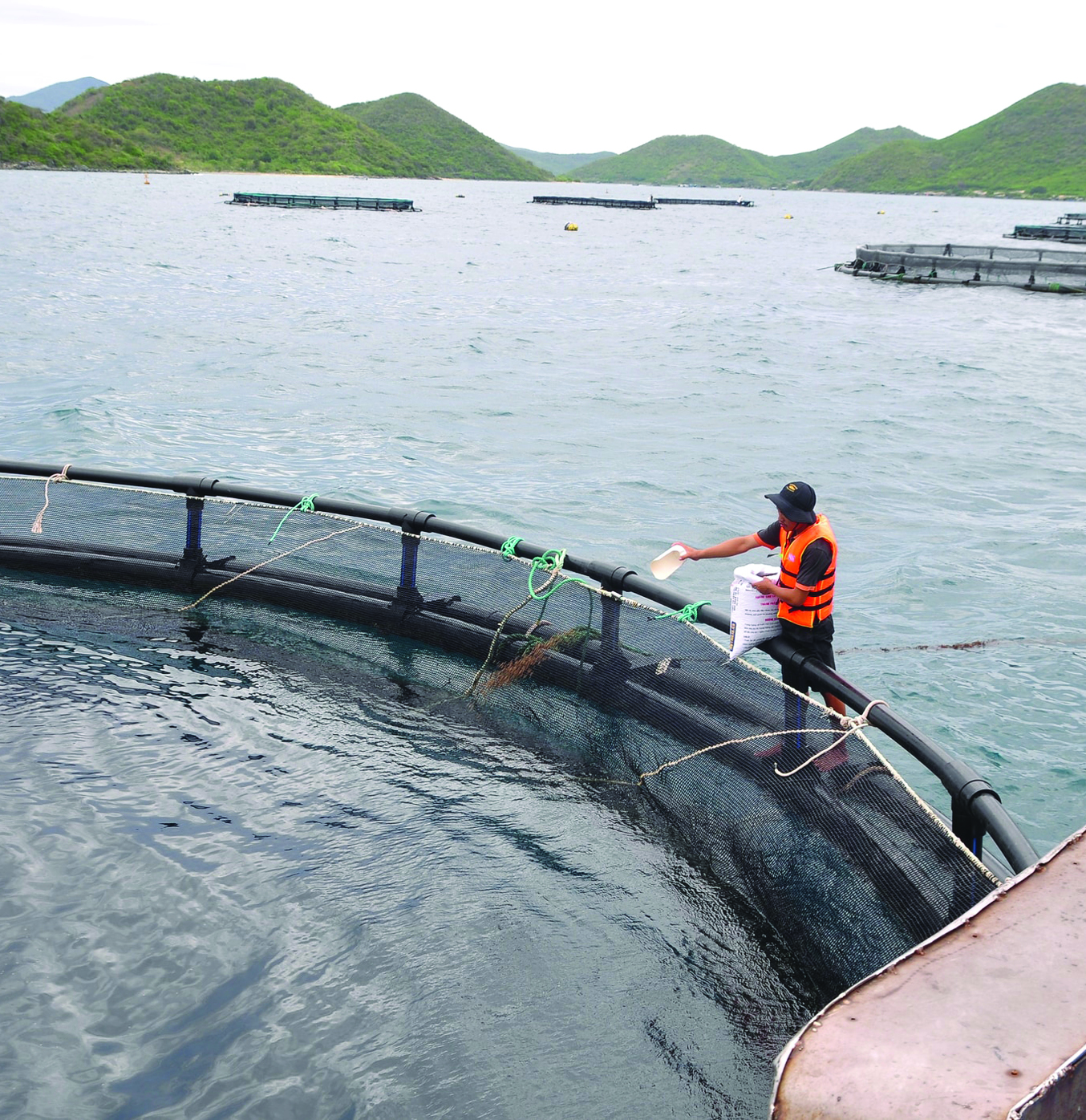
The Barramundi Fish Farming Project in floating cages represents a strategic step that strengthens the agricultural production sector and supports national food security. The project relies on the latest and most advanced production systems to deliver high-quality products that meet the needs of targeted sectors in both local and commercial markets.
Beyond its production dimension, the project stands as a promising investment opportunity that opens new horizons for investors seeking sustainable economic returns. It also contributes effectively to social development by creating job opportunities, which in turn improves income levels and enhances the standard of living.
To maintain its competitive edge, the project is committed to offering its products at reasonable prices, thereby reinforcing its market presence and achieving its targeted market share. Supported by qualified technical and administrative teams, the project is managed through an integrated approach based on innovation, operational efficiency, and quality assurance.
As a result, its impact extends beyond increasing production—it embodies a comprehensive model that combines economic viability with social development, establishing itself as one of the leading initiatives in the aquaculture sector.
The global barramundi market has witnessed promising growth in recent years, reaching an estimated value of USD 165 million in 2024, and is expected to rise to USD 233 million by 2031, at a compound annual growth rate (CAGR) of 5.1%.
This growth is driven by several interrelated factors, most notably the increasing global demand for healthy protein sources, the growing consumer preference for sustainable seafood, and significant advancements in aquaculture and production technologies that have reduced costs and operational risks. Additionally, a noticeable shift in consumption patterns has emerged, with consumers showing a stronger preference for fresh fish over packaged or frozen products, reflecting their pursuit of higher quality and better taste.
Specialty food channels—such as fine dining restaurants and niche seafood markets—have also played a vital role in fueling this growth, alongside improved export conditions and rising investments in the aquaculture sector. Collectively, these dynamics enhance the project’s competitiveness in global markets and position it to capture a significant market share, provided it adopts a strategy that balances product quality, cost efficiency, and flexible distribution.
The barramundi market in Saudi Arabia is experiencing rapid growth, solidifying its position as one of the most promising sectors within the national food security framework. The market size is estimated at SAR 3.75 billion in 2025, and is projected to grow to SAR 5 billion by 2033, reflecting the strong and rising demand for this type of fish.
Aligned with Saudi Vision 2030, the government offers substantial incentives to investors, including soft loans covering over 50% of total project costs, as well as the necessary infrastructure and direct support to expand the sector’s capacity.
Moreover, per capita seafood consumption in the Kingdom is expected to reach 20 kilograms by 2030, underscoring the need to increase local production to meet growing demand. Saudi Arabia also aims to boost self-sufficiency and reduce dependence on imports, as it currently imports approximately 6,000 tons of barramundi annually.
Altogether, these factors make the Saudi market a highly attractive investment environment, offering strong growth potential and long-term sustainability for aquaculture ventures.
Get a Feasibility Study
خصم 25% على خدمات مشروعك استفد من العرض الآن، فالفرصة متاحة لفترة محدودة فقط
سجّل بياناتك واحصل على خصم 25% الآن


