Standard Operating Procedures (SOPs) - Mashroo3k

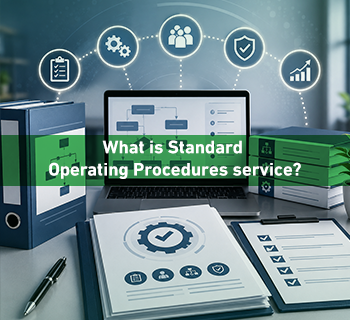
What is the Standard Operating Procedures (SOP) service?

Standard Operating Procedures (SOPs) are official documents that describe the detailed steps required to perform a specific task or process consistently and correctly. They aim to standardize work, reduce errors, and ensure consistent quality each time a process is carried out. These documents typically include the purpose of the procedure, its scope, defined responsibilities for each party, step-by-step instructions, as well as supporting references and forms. SOPs are widely used across various sectors such as hospitals, manufacturing plants, companies, and government entities, as they help facilitate employee onboarding, ensure compliance with regulatory requirements, and maintain business continuity regardless of individuals.
Objectives of Standard Operating Procedures service

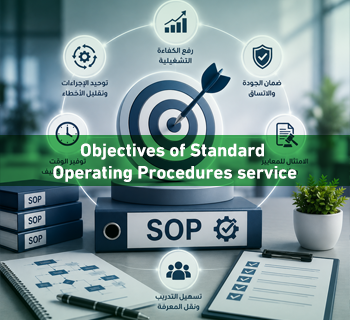
  • Standardization of Work: Ensuring that tasks are performed consistently in the same manner every time, regardless of the employee responsible for carrying them out.
  • Quality Improvement: Reducing errors and deviations while maintaining a consistent level of quality across all operations.
  • Facilitating Training: Helping new employees learn their tasks quickly and efficiently without the need for continuous supervision.
  • Ensuring Compliance: Meeting regulatory and legal requirements, as well as adhering to established professional standards.
  • Enhancing Efficiency: Reducing the time and effort required by following clear, structured, and proven procedures.
  • Preserving Organizational Knowledge: Documenting expertise and best practices to ensure valuable knowledge is retained and not lost when employees leave the organization.
  • Ensuring Business Continuity: Maintaining smooth and consistent workflow operations even in the absence of regular employees.
  • Supporting Decision-Making: Providing a reliable reference that can be used when dealing with emergency situations or unfamiliar circumstances.

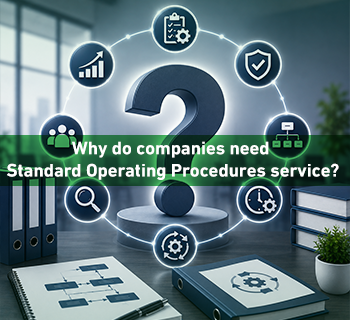
Why do companies need Standard Operating Procedures service?

  • To standardize work outputs according to the highest efficiency standards, ensuring an exceptional customer experience and protecting the brand’s reputation from any inconsistencies in service quality, regardless of who performs the work.
  • To transform tasks into structured and well-defined processes that minimize waste, protect the company from operational disruptions, reduce legal and financial risks, and ensure full control over the work environment.
  • To eliminate operational inefficiencies and duplicated efforts, reducing operating expenses (OPEX) and freeing leadership’s time to focus on strategic growth rather than daily firefighting and problem-solving.
  • To shorten the learning curve for new employees, enabling them to become productive and self-sufficient quickly, while reducing dependency on key individuals (key-person risk) and overcoming workforce turnover challenges.
  • To transform individual expertise into organizational assets owned by the company, ensuring business continuity and preventing knowledge loss or performance decline when key talent leaves the organization.
  • To build a self-compliant work environment that aligns with local and international regulations, facilitating successful audits, supporting certifications such as ISO, and creating opportunities for major partnerships and tender participation.
  • To provide a precise operational blueprint, enabling local and global expansion or the adoption of a franchise model with exceptional accuracy and speed—forming the foundation of success for large-scale organizational business models.

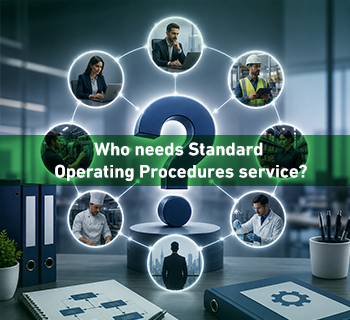
Who needs Standard Operating Procedures service?

  • Commercial Companies and Business Organizations: Whether small, medium, or large, to ensure operational consistency and support the achievement of business objectives.
  • Hospitals and Healthcare Centers: To ensure patient safety, standardize medical protocols, and reduce treatment-related errors.
  • Factories and Manufacturing Companies: To maintain product quality, control production processes, and minimize waste.**
  • Government Entities and Public Institutions: To standardize service delivery to citizens and ensure compliance with regulations and governing policies.**
  • Technology and Software Companies: To document development processes, manage projects effectively, and ensure product quality.**
  • Restaurants and Hospitality Businesses: To standardize food preparation, hygiene standards, and customer service across all locations and branches.
  • Logistics and Distribution Companies: To streamline shipping, warehousing, and delivery operations with accuracy and efficiency.
  • Educational Institutions: To standardize administrative and academic procedures and ensure the quality of education.
  • Financial Services Companies and Banks: To comply with regulatory requirements, protect customer data, and effectively manage operational and financial risks.
  • Nonprofit Organizations: To ensure transparency, streamline operations, and maximize the effective use of available resources.

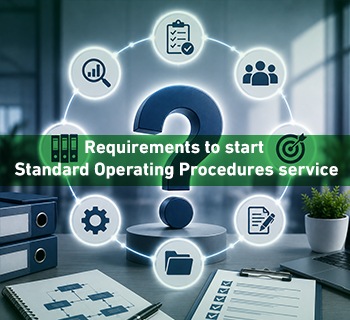
Requirements to start Standard Operating Procedures service

  • Commercial Registration Certificate or Company Incorporation Documents.
  • Organizational Structure, including a list of departments, job titles, and the number of employees.
  • Any existing procedures, policies, or process maps currently in place.
  • Current work forms and documents, along with performance and quality reports.
  • A list of the processes and departments to be documented, including their priority levels and any applicable external regulatory or compliance requirements.
  • An official authorization letter from senior management, including the names of responsible stakeholders and the schedule of coordination meetings.
  • The systems and software currently in use, along with document management methods and internal communication channels.

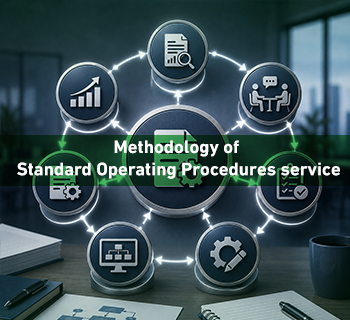
Methodology of Standard Operating Procedures service:

  • Kick-off Meeting with the Client: Begin with an introductory meeting involving senior management and key stakeholders to understand the nature of the business, its objectives, and expectations from the service, as well as to define the scope of work and the target departments.
  • Information and Data Collection: Review all existing documents, forms, and policies, and analyze performance and quality data to gain a comprehensive understanding of the company’s actual operational processes.
  • Current Process Analysis: Examine and evaluate existing workflows, identify weaknesses, gaps, and recurring issues, and develop process maps to clearly illustrate the sequence of activities and operational steps.
  • Preparation of an Operational Manual for Each Department: Document work procedures and define responsibilities for each department in a clear and user-friendly manner, while linking every procedure to its associated forms, templates, and supporting documents.
  • Review and Approval: Present the SOP manuals to the relevant stakeholders for validation of their accuracy, practicality, and alignment with actual operations. Necessary revisions are then incorporated before obtaining formal approval from senior management.
  • Documentation and Final Formatting: Professionally format the SOP manuals using a standardized template that includes version control, approval dates, and responsible personnel, ensuring they are ready for publication, distribution, and organizational use.
  • Delivery and Training: Deliver the finalized SOP manuals to the client and provide training to employees on how to implement and reference them effectively, while offering the necessary support during the initial implementation phase.
  • Periodic Review and Updates: Schedule regular reviews of the SOP manuals to ensure their continued alignment with business requirements, and update them whenever there are changes to processes, organizational structures, or regulatory requirements.

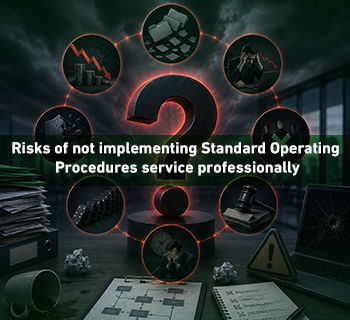
Risks of not implementing Standard Operating Procedures service professionally:

  • Task Overlap and Duplication: The absence of clear procedures can lead to overlapping responsibilities among employees, resulting in duplicated efforts or, in some cases, critical tasks being completely overlooked.
  • Inconsistent Service or Product Quality: Without standardized procedures, the quality of outputs may vary from one employee to another and over time, negatively impacting the company’s reputation and customer satisfaction.
  • Difficulty in Onboarding New Employees: New employees require a long time to learn their roles and rely heavily on colleagues, which reduces productivity and increases training
  • Loss of Organizational Knowledge: When an employee resigns, their expertise and way of working leave with them if it is not documented, creating a significant risk to business continuity and operational
  • Difficulty in Scaling and Growth: Without documented and repeatable procedures, the company cannot systematically open new branches or expand its operations in a structured and consistent manner
  • Legal and Regulatory Risks: Failure to document procedures exposes the company to legal liability and increases the risk of non-compliance with required laws, regulations, and industry standards
  • Increased Errors and Waste: The lack of clear procedures increases the likelihood of recurring mistakes, leading to higher costs and wasted resources
  • Low Customer Satisfaction: Inconsistency in service delivery and customer interactions leads to a decline in customer trust and loyalty toward the company.

Why do companies rely on external parties to prepare Standard Operating Procedures service:

  • Objectivity and Neutrality: External consultants view organizational processes with a neutral perspective, free from internal biases, ensuring that procedures are documented accurately and realistically without being influenced by personal relationships or internal pressures
  • Expertise and Specialization: External providers bring accumulated experience in developing procedures across multiple industries and sectors, ensuring the adoption of best practices and global standards
  • Time and Effort Efficiency: Developing procedures internally consumes employees’ time and distracts them from their core responsibilities, whereas external providers handle this task professionally without disrupting ongoing business operations
  • Compliance with Standards and Quality: External providers operate under structured methodologies and documented standards that ensure high-quality outputs and alignment with regulatory requirements such as ISO and other relevant frameworks
  • Avoiding Internal Complexities: Internal employees may face difficulties in documenting procedures across different departments due to sensitivities or internal competition, while external consultants can navigate these challenges more objectively and effectively
  • Leveraging Diverse Experience: External providers bring successful experiences from various companies, enriching the developed procedures with proven ideas and effective, real-world solutions
  • Ensuring Timely Delivery: A clear contract and defined timeline with the external provider ensure that work is completed on the agreed deadlines without delays

Why request Standard Operating Procedures service from Mashroo3k Consulting Company?

  • We have a team of experts specialized in developing and documenting procedures across multiple sectors, ensuring you receive professional SOPs tailored to the nature of your business.
  • We adopt an integrated and proven methodology that ensures full coverage of all aspects of your company’s operations with accuracy and professionalism, without overlooking any critical detail.
  • We do not rely on ready-made templates; instead, we develop procedures specifically tailored to your company’s nature, objectives, and organizational culture.
  • We are committed to delivering work on the agreed deadlines while ensuring the highest quality standards at every stage of the process.
  • Our relationship does not end with the delivery of procedures; we provide ongoing support to help you ensure proper implementation and to make any future updates when needed.
  • We adhere to the highest standards of confidentiality and ensure the protection of your company’s data and operational information throughout the entire collaboration period and beyond.
  • We have a deep understanding of the local business environment and its regulatory requirements, ensuring that your procedures are fully aligned with applicable laws and regulations.
  • Our service is not a cost, but a true investment that translates into higher operational efficiency, fewer errors, and greater long-term profitability.

Green Friday

فرصة لا تتكرر

GREEN FRIDAY

خصم 25% على خدمات مشروعك استفد من العرض الآن، فالفرصة متاحة لفترة محدودة فقط
سجّل بياناتك واحصل على خصم 25% الآن