
Mashroo3k affirms that the volume of waste in Saudi Arabia now exceeds 45 million tons annually. As the Kingdom is determined to increase its recycling rate from 1% to 80% by 2035, the company believes that investing in this vital sector will be highly profitable.
Regarding the prospects of the recycling and energy sector, the following points can be highlighted:
- In Saudi Arabia, 45,000 terajoules of energy can be saved by recycling glass and metals alone.
- An annual 3 terawatt-hours of electricity can be generated if all food waste in Saudi Arabia is utilized within biogas plants.
- It is possible to generate between 1 and 1.6 terawatt-hours of electricity annually in Saudi Arabia by processing plastic and other mixed wastes, such as paper, cardboard, wood, textiles, leather, and more, through pyrolysis operations.
Mashroo3k for Economic Consulting and Market Research emphasizes that recycling is one of the promising sectors in the Kingdom, and its projects represent real investment opportunities. This is especially significant as Saudi Arabia shifts towards a green economy, placing environmental preservation as a top priority under the wise leadership, as evident in Vision 2030.
The Global Recycling Sector
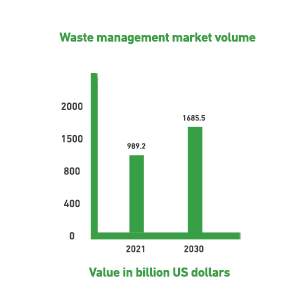
The global waste management market was estimated at approximately $989.20 billion in 2021. The market is expected to grow at a compound annual growth rate (CAGR) of 6.2% from 2022 to 2030, reaching a value of $1,685.5 billion by the end of the forecast period.
The Middle East and North Africa region is projected to expand its recycling and waste management efforts at a CAGR of 6.3% during 2022–2030. This growth is attributed to increased awareness of the sustainable benefits of reusing and recycling waste.
Additionally, population growth, rising urbanization levels, economic development, and changing consumption patterns highlight the necessity of encouraging investment in this vital sector.


