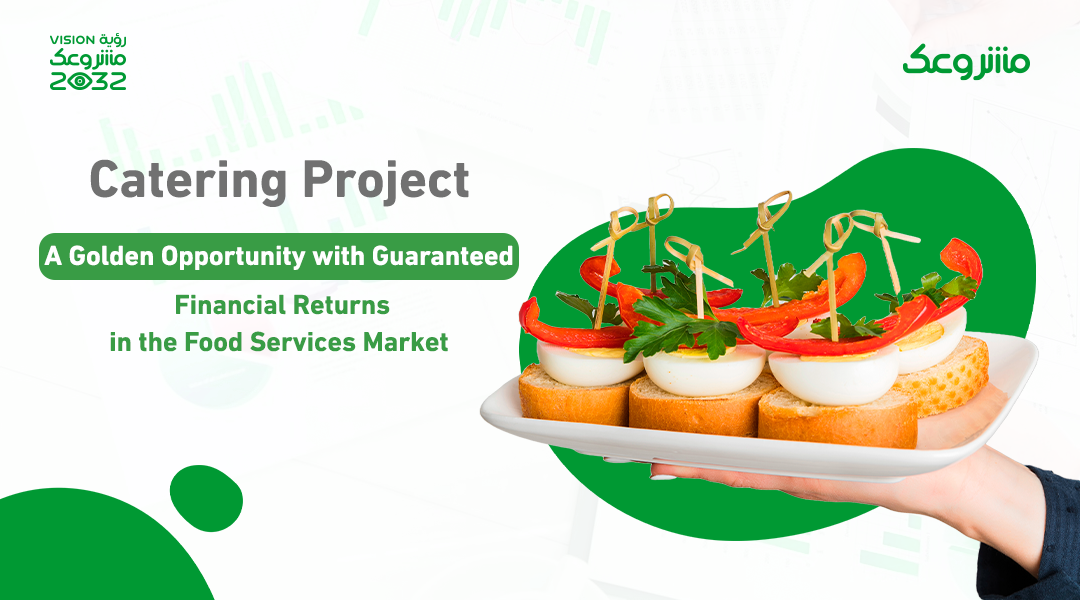
The demand for catering services has surged significantly in recent years, driven by the fast pace of modern life and the growing need to organize events and occasions with high levels of professionalism. This has made launching a catering business a promising investment opportunity that combines a passion for culinary arts with smart management skills.
With its high flexibility, a catering business can start small and gradually expand to cover weddings, conferences, and private gatherings, offering customizable packages to suit various tastes and budgets. As competition increases, factors such as premium quality, creativity in food presentation, and outstanding customer service have become essential for building a strong reputation and standing out in the market.
To ensure success and long-term sustainability, preparing a detailed feasibility study is the first crucial step to build a catering project that attracts customers, reassures investors, and delivers solid financial returns over time.
A catering project is a specialized business activity focused on preparing and supplying food for various occasions and events, such as weddings, conferences, corporate meetings, and private parties, as well as providing organized daily meals to companies and individuals.
It includes designing customized menus, preparing meals with precision, and presenting them professionally—either on-site or off-site—while ensuring high quality and excellent service.
This business model offers great flexibility: entrepreneurs can start with a simple home kitchen setup and later expand into a central kitchen that covers a wider area. They can also specialize in specific types of cuisine, such as healthy meals, vegetarian dishes, or luxury fine dining, to target different market segments.
Catering is considered a highly promising field that blends culinary creativity with business management skills and offers strong profitability potential due to the increasing demand for organized and professional hospitality services in today’s fast-paced world.
Start by creating a clear vision of the type of catering services you want to offer and accurately identifying your target audience.
Will you focus on luxury weddings, small family gatherings, or formal events and corporate conferences?
Will you provide customized daily meals for companies and individuals?
Choosing a clear niche will help you:
Conduct an in-depth study that includes:
Also, make sure to accurately calculate all costs, including:
Then, estimate the expected revenues based on projected demand and competitive pricing.
This feasibility study will serve as:
A requirement to secure funding if needed
A strong foundation for making informed business decisions
A tool to attract potential investors
Read here: What is a Feasibility Study Service, Its Objectives, and Why Companies Need to Conduct It
Choosing the right location is a crucial step for the success of a catering business, whether you are starting from a licensed home kitchen (in compliance with local regulations) or planning to rent a fully equipped commercial kitchen. The location must meet food safety requirements and high hygiene standards, and provide sufficient space for production, storage, and packaging. It’s also preferable to be close to your target market to reduce delivery costs and maintain food quality. A good location is not just a place to cook — it is the cornerstone for ensuring quality, legal compliance, and the ability to expand in the future.
Obtaining Licenses and Legal Permits
Before starting operations, ensure you complete all the legal procedures required to run your catering business safely and legitimately. Obtain health permits from the relevant authorities, a commercial license under your name or your brand name, in addition to occupational health and safety permits. Food safety training certificates for workers may also be required. These documents not only protect you from legal violations, but also enhance your project’s credibility with clients and regulatory bodies, and open the door for cooperation with large institutions that require full legal compliance.
Designing a Diverse and Attractive Menu
Create a comprehensive menu that combines variety, quality, and visual appeal to suit different tastes and various occasions, from casual gatherings to luxurious celebrations. Include options that cater to modern dietary trends such as healthy meals, vegetarian options, gluten-free dishes, or special diet meals. Balance familiar traditional dishes with creative touches that reflect your unique brand identity, while focusing on quality ingredients, cooking methods, and professional presentation. Your menu is not just a list of meals — it is a powerful marketing tool that represents your brand, attracts customers, and encourages repeat orders.
Purchasing Essential Equipment and Tools
Equip your kitchen with all the necessary tools and equipment to ensure efficient and professional operations, from cooking appliances (such as ovens, grills, and industrial fryers) and cooling and storage units, to preparation supplies (work surfaces, mixers, and machines), as well as serving tools, hot/cold food display equipment, and safe, attractive packaging. Do not overlook delivery vehicles — you’ll need a properly equipped van to maintain food temperature and deliver on time safely and professionally. Investing in high-quality equipment reduces breakdowns, improves service experience, and supports your ability to expand in the future.
Building a Professional Team
Your team is a vital element in the success of your catering project, so select skilled chefs and assistants with experience in preparing dishes accurately and professionally, with a focus on punctuality and performance quality. Train your team on strict hygiene standards according to food safety regulations, and offer continuous training programs on quality, cooking techniques, and professional presentation. Staff should also be trained in customer service, etiquette, and respectful interaction at events. A cohesive and professional team not only ensures precise execution of orders but also represents your brand positively and builds client trust and satisfaction.
Creating a Distinctive Brand Identity
Develop a strong visual identity that reflects your project’s character and sets it apart from competitors — starting with choosing a catchy, memorable name that conveys the nature and quality of your service, along with a professional, clear, and elegant logo. Extend this identity to your food packaging so it carries your brand logo and reflects professionalism, and pay attention to presentation details at events — from dishes and tableware to decor and overall visual styling. Every detail shapes the customer experience and helps build a lasting impression of quality and professionalism. A cohesive brand identity doesn’t just attract customers — it builds long-term loyalty and turns them into ambassadors for your business.
Launching an Effective Marketing Plan
Build a strong market presence with a well-structured marketing plan to introduce your services and attract your target customers. Use social media smartly to share professional photos of your dishes, showcase your packages, and highlight real customer experiences. Offer promotional deals to encourage first-time purchases, such as early-booking discounts or group meal offers, and distribute free samples in targeted areas to draw attention. You can also partner with event planners, wedding halls, and companies to be listed as a recommended catering provider. Effective marketing not only increases sales but also positions your brand as a trusted, professional option in the competitive catering market.
Starting Operations and Gradual Development
Start your business with measured steps by offering a limited range of services — such as small events or daily meals — to test the market and build a strong reputation for quality and reliability. Focus on customer satisfaction and collect feedback to continually improve performance. As orders increase and trust in your brand grows, gradually expand your services by increasing meal capacity, handling larger events, or targeting new segments such as companies or hotels. This gradual growth reduces risks, allows you to strengthen infrastructure, expand your team, and improve operations sustainably.
Project Concept
A catering project revolves around providing comprehensive food preparation and delivery services for various occasions — from weddings and family banquets to official meetings, conferences, and corporate events. The project combines culinary art, professional planning, and excellent customer service to offer an exceptional hospitality experience that meets clients’ expectations in quality, organization, and precision. This is a flexible service business that can start small and at reasonable costs, then gradually expand as the customer base grows and demand increases — making it a promising investment opportunity in the food services sector.
Objectives
The project aims to meet the needs of individuals and companies for ready-made, organized meals, with a focus on providing distinctive dishes that combine high quality, variety, and professional presentation suitable for each occasion. It also seeks to build a trusted reputation in the catering market through commitment to hygiene, punctuality, and customer satisfaction. Additionally, the project aims to achieve stable and sustainable financial returns by diversifying service packages, targeting different customer segments, and developing a loyal client base that relies on the service regularly — whether for special occasions or daily needs.
Market Study
The catering industry is witnessing remarkable growth in demand, driven by changing lifestyles, increasing busyness, and the tendency of individuals and institutions to rely on external food services to organize their events conveniently and professionally. The target segments are broad and include individuals organizing private events, companies holding regular meetings and events, as well as educational and healthcare institutions that need organized meals. Although the number of catering providers is increasing, there is still strong potential for success for projects that focus on excellence in food quality, innovation in menu design, and professionalism in service. The competitive advantage lies in understanding customer needs and delivering a comprehensive experience that combines taste, appearance, and reliability — which builds strong loyalty and a sustainable market share.
A catering project requires setting up a dedicated workspace for food preparation that complies with food safety and health regulations, whether it is a licensed home kitchen or a centralized commercial kitchen, depending on the planned size and scope of services.
The space must be equipped with essential equipment such as industrial ovens, refrigeration and freezing units, and clean, sanitized preparation surfaces. It should also include cooking tools, packaging materials, and storage solutions that ensure safe transportation and preservation of food quality.
Additionally, having a qualified team of chefs, assistants, and serving staff is essential. Team members must possess professional skills in food preparation, adhere strictly to hygiene standards, and be capable of handling customer requirements with precision and professionalism.
Read here: 7 Key Elements of a Project’s Technical Feasibility Study
The project requires a simple organizational structure at its initial stage, including an operations management team, chefs, assistants, and a person responsible for orders and delivery. A clear system should also be established for reservations, order handling, and after-sales service to ensure customer satisfaction and strengthen the business’s reputation.
The financial study is one of the main pillars for the success of a catering project, as it involves an accurate estimation of both fixed and variable costs. These include the cost of setting up (or renting) the kitchen, purchasing equipment, buying food supplies, paying staff wages, covering transportation and delivery expenses, as well as marketing and promotional costs.
In addition, daily operating costs are calculated based on the volume of orders and the type of services provided. On the revenue side, expected income is estimated according to the number of bookings, the pricing of packages, and the size of the targeted customer base — whether individuals or corporate clients.
The break-even point is then determined by analyzing the relationship between costs and revenues to find the minimum sales volume needed to cover all expenses without making a profit or loss.
Once operations stabilize and the customer base grows, profits are expected to increase gradually, supported by service expansion, repeat orders, and the development of loyal customers. This makes the project capable of generating a strong return on investment over the medium and long term.
Read here: The Importance of Having a Financial Feasibility Study for Your Investment Project
Effective marketing is a crucial factor in the success of a catering project, as the growth of the business depends on its ability to reach target audiences and build a positive brand image.
The marketing plan relies on several strategic channels, including promoting on social media platforms (such as Instagram, Facebook, and TikTok) by posting engaging content that highlights food quality, professional presentation, and authentic customer experiences.
Collaborating with event planners, wedding halls, and hotels also helps expand the client base and increase bookings.
Additionally, offering sample tastings at events or exhibitions plays an important role in introducing the public to the quality of your dishes and attracting future orders.
Marketing: Its Concept, Importance, Types, and the Best Implementation Approach
Read Here: Everything You Need to Know About the Promotional Mix — Its Definition, Importance,
Elements, and Key Influencing Factors
Recommendations
It is recommended to launch the catering project gradually and on a limited scale by offering selected service packages, in order to test operational efficiency, measure customer satisfaction, and build a strong reputation based on quality and reliability. From the start, the focus should be on using high-quality ingredients and adhering to the highest hygiene and food safety standards in the preparation environment, as this directly impacts the project’s success and distinction. Building a professional, well-trained team — with strong skills in cooking, presentation, and customer service — is also crucial to ensure smooth and professional execution. It is advisable to regularly update the menu to introduce new dishes, keep up with modern food trends, and meet changing customer expectations. In addition, investing in a flexible and targeted marketing plan is essential, relying on digital engagement through social media platforms, showcasing attractive visual content, and leveraging positive customer experiences for organic promotion. Finally, it is recommended to regularly monitor financial performance and analyze strengths and weaknesses to make well-planned, sustainable expansion decisions.
Potential Risks
A catering project may face several challenges that can affect its performance and sustainability. These include seasonal fluctuations in demand, where orders increase during weddings and holiday seasons but decrease at other times, requiring precise financial and operational planning. Intense market competition is also a major challenge, especially with the presence of many service providers, which makes it essential to stand out in terms of quality and service to retain customers. Rising food prices and transportation costs also pose a direct threat to profitability, so it is advisable to diversify supply sources and negotiate long-term contracts.
Success Factors
Strict commitment to quality and hygiene in all stages of food preparation and service is one of the fundamental pillars of a successful catering business, as food safety and ingredient purity are top priorities that build customer trust. In addition, innovation in menu design is a key factor, through developing creative dishes that align with modern food trends and cater to different tastes and dietary needs. Accuracy and speed in fulfilling orders also play a critical role in ensuring customer satisfaction, especially in events that require precise organization and on-time delivery.
Is a Catering Project Profitable?
Global indicators confirm that the catering services sector is witnessing remarkable growth, making it one of the most promising business opportunities in the medium and long term. Studies have projected the value of the catering market to reach around USD 674.1 million by the end of 2025, with continuous growth expected to surpass USD 1.04 billion by 2035. This strong performance reflects a compound annual growth rate (CAGR) of 4.5%, indicating a notable increase in demand for ready-made food and banquet services. These figures reinforce confidence in the project’s profitability and open the door for investors to enter a dynamic and stable market capable of generating rewarding returns.
How to Market a Catering Project Effectively
Use paid ads on platforms like Facebook and Instagram to accurately target specific segments (families, companies, or weddings).
Create a distinctive visual identity, including an appealing name, a professional logo, and a unique style in food presentation and service.
Design a simple website or an official page on social media platforms to showcase services, pricing, and professional food photos.
Market on social media by posting engaging content such as high-quality food images, exclusive offers, and coverage of events where services were provided.
Offer free samples at local events, exhibitions, or to targeted institutions as a way to introduce the quality of your food and build trust.
Collaborate with event planners, wedding halls, and event management companies to exchange referrals and gain customers through trusted channels.
Leverage positive customer reviews and real testimonials in marketing campaigns to build credibility and attract new customers.
Launch seasonal promotional offers for occasions like Ramadan, holidays, weddings, and graduation seasons.
Create a loyalty program or offer discounts for repeat customers to boost satisfaction and encourage word-of-mouth referrals.
List your project in local business directories, catering service apps, and online ordering platforms to increase visibility.

For inquiries and to request a feasibility study for the Catering Project
The kebab restaurant project is one of the food-service ventures that combines strong demand for grilled meals with the opportunity to target a diverse customer base, including individuals, families, and lovers of traditional Middle Eastern cuisine. With growing competition in the restaurant sector, however, the project’s success is no longer determined by food taste alone. […]
Read moreA children’s toy store project is not limited to selling toys; it is built on understanding what attracts children and what families look for when choosing products that combine entertainment and educational value. With the wide variety of educational toys, skill-development games, recreational toys, and gifts available, the store has opportunities to meet the needs […]
Read moreA residential complex project is no longer simply an investment in a collection of real estate units. It has evolved into an integrated development model that combines comfortable living, diverse services, and long-term investment value. As cities expand and residents’ needs evolve, demand is growing for residential complexes that offer a comprehensive environment suited to […]
Read moreThe veterinary clinic project comes at a time when animal care is no longer limited to treating illnesses or injuries, but has expanded to include health monitoring, vaccinations, routine checkups, and care for both pets and livestock. However, many animal owners face challenges in accessing specialized veterinary services that combine prompt response, high-quality care, and […]
Read more
خصم 25% على خدمات مشروعك استفد من العرض الآن، فالفرصة متاحة لفترة محدودة فقط
سجّل بياناتك واحصل على خصم 25% الآن


