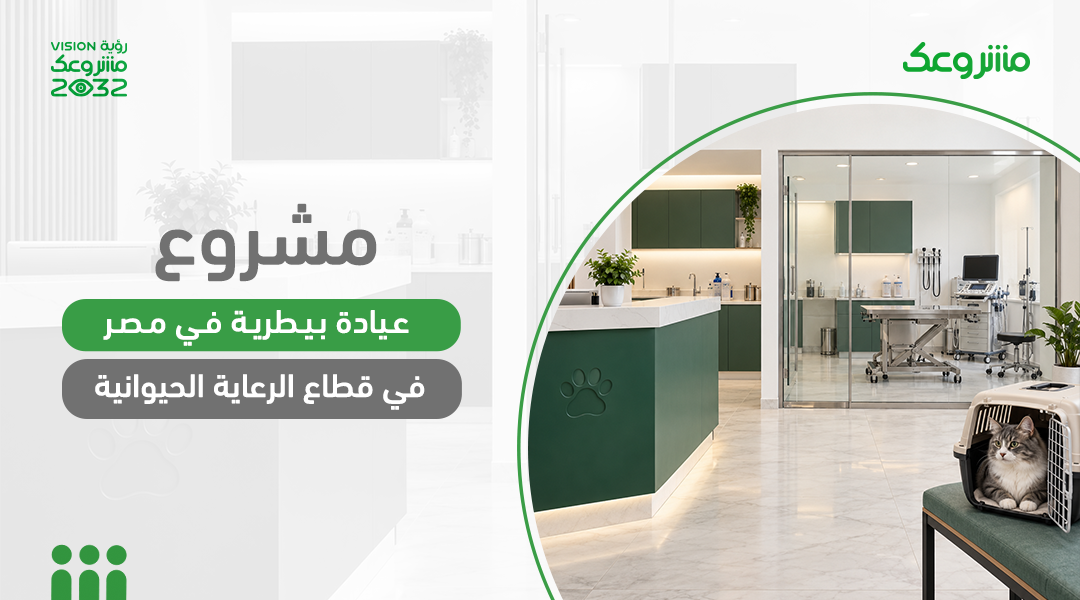
The veterinary clinic project comes at a time when animal care is no longer limited to treating illnesses or injuries, but has expanded to include health monitoring, vaccinations, routine checkups, and care for both pets and livestock. However, many animal owners face challenges in accessing specialized veterinary services that combine prompt response, high-quality care, and a diverse range of services. This creates an opportunity for specialized businesses to address these needs.
This presents an opportunity for investors who can assess the needs of the local area, identify the services in greatest demand, and establish a clinic that provides animal owners with a reliable and trustworthy experience. However, turning this opportunity into a sustainable business requires more than simply hiring a veterinarian and securing a premises. Choosing the right location, equipping the clinic, defining its services, providing the necessary equipment and qualified staff, and developing an appropriate marketing strategy are all factors that influence the project’s success.
So, how can a veterinary clinic be established on a well-planned foundation? What are its key requirements and challenges? This is what we will explore in this article.
A veterinary clinic project is a service-based business that aims to provide healthcare for pets and farm animals by offering examination, diagnosis, treatment, and disease prevention services, along with vaccinations, routine checkups, and health supervision for animals. The project relies on equipping the clinic with the necessary medical tools and equipment and hiring qualified veterinarians. Additional services may also be offered, such as laboratory tests and the sale of veterinary medicines and supplies, in accordance with the applicable licensing requirements. The importance of this project is growing alongside increased interest in animal health and welfare, making it an investment opportunity whose success depends on the availability and quality of veterinary services in the target area.
Yes, a veterinary clinic project is considered one of the most profitable service-based businesses. Recent statistics have demonstrated its strong potential, reporting thatthe global veterinary services marketreached USD 159.24 billion in 2025. The market is expected to grow from USD 171.61 billion in 2026 to USD 312.41 billion by 2034, registering a compound annual growth rate (CAGR) of 7.78% over the forecast period.
Read here: The Future of Livestock Investment in Egypt: Why Are Investors Turning to Ostrich Farming Projects?
Market research for a veterinary clinic project helps investors understand demand for veterinary services and identify the customer groups most in need of them, whether pet owners or livestock and poultry breeders. It also reveals the level of competition in the area, the services offered by existing clinics, and their strengths and weaknesses. This information helps determine which services the project can provide to gain a competitive advantage.
Market research also supports the selection of a suitable location based on customer density and the characteristics of the surrounding area, as well as setting prices that align with customers’ purchasing power and the level of competition. In addition, it helps identify changing market trends and needs. Using these insights, investors can develop a more accurate understanding of the project’s opportunities and challenges, avoid arbitrary decisions, and make informed choices before allocating resources and beginning implementation.
Read here: Turkey Farming Project in Egypt: Your Guide to a Successful Investment in the Poultry Production Sector
The total cost of a veterinary clinic project in Egypt varies depending on the clinic’s size and location, the level of medical equipment, the types of services offered, and whether the clinic will provide only basic examinations and treatments or also include laboratory tests and surgical procedures. The main cost components include the following:
Read here: Horse Stable Project in Egypt: A Comprehensive Guide to Starting a Successful Investment in the Equestrian Industry
The final equipment requirements for a veterinary clinic project depend on the types of animals targeted and the services offered. A clinic that focuses on examinations, vaccinations, and basic treatments will have different needs from one that also provides surgical procedures, laboratory tests, and diagnostic imaging. The main equipment and facilities required include the following:
A feasibility study helps reduce the risks of a veterinary clinic project by turning the business idea into a plan based on data and clear analysis before implementation begins. It examines demand for veterinary services and identifies target customer groups and competitors, reducing the likelihood of choosing an unsuitable market or location. It also clarifies the project’s technical and operational requirements and helps determine the equipment, staffing, and services needed to match the scale of the business.
From a financial perspective, a feasibility study evaluates the required investment, expenses, projected revenues, and cash flows. This helps investors estimate their funding and liquidity needs and avoid poorly planned financial commitments. It also examines potential risks, such as fluctuations in demand, rising operating costs, and competition, while developing scenarios and solutions to address them.
In this way, a feasibility study gives investors a clearer picture before deciding to launch the project. It also helps them identify weaknesses and opportunities early and make decisions based on sound analysis.
Read here: Feasibility Study (Definition, Objectives, Steps, Components, and Template)
With growing interest in pet ownership and the need for veterinary care and treatment services in Egypt, I decided to develop a veterinary clinic project with the aim of improving service quality and attracting more customers. However, over time, I began facing challenges that affected the clinic’s performance, most notably fluctuations in the number of visits, difficulty accurately identifying customer needs, and increasing competition in the area. I also struggled to determine which services were consistently in demand and offered opportunities for business growth.
I realized that overcoming these challenges required a deeper understanding of the market. Therefore, I decided to seek the assistance of Mashroo3k Consulting to obtain market research services., and the research helped me collect and analyze information about customer behavior and needs, understand pet owners’ preferences and the factors influencing their choice of veterinary clinics, and gain a better understanding of the services experiencing growing demand. It also enabled me to study competitors in terms of the types of services they offer and their pricing, identify opportunities to improve the clinic’s services, and define target customer segments more accurately.
Based on the market research findings, I became better equipped to prioritize improvements, select services that align with customer needs, and direct marketing efforts toward the appropriate target groups. This helped me make decisions based on clear information and analysis rather than personal assumptions, supporting the clinic’s development and strengthening its competitiveness in the Egyptian market.
Read here: How Can Market Research Services Give You a Clearer Vision of Your Project Before Investing?
The requirements for opening a veterinary clinic typically include obtaining the necessary licenses and approvals to operate, having a qualified veterinarian registered with the relevant authority, selecting premises that meet health and technical requirements, and providing equipment and facilities appropriate to the services offered. The clinic must also comply with regulations governing the storage of medicines and vaccines, hygiene, sterilization, and safety standards, as well as the safe handling and disposal of medical waste. Any additional requirements specified by local veterinary and health authorities must also be fulfilled.
A veterinary clinic project can be marketed by combining a strong digital presence with direct engagement with animal owners. This can be achieved by creating active social media pages and publishing educational content about animal health, nutrition, and vaccinations, as well as improving the clinic’s visibility on Google Maps and search engines. Other effective strategies include offering introductory promotions during the opening period, building partnerships with pet supply stores, farms, and animal breeders, and encouraging customers to share their reviews and experiences. Running digital advertisements targeting nearby areas can also help attract customers. In addition, providing appointment and vaccination reminders helps maintain communication with customers and encourages repeat visits.
Read here: Marketing:Its Concept, Importance, Types, and the Best Strategies for Implementation
The appropriate space for a veterinary clinic project varies depending on the nature of the services offered, the expected number of cases, and the equipment the clinic will contain. The premises should allow for dedicated areas for reception and waiting, examination and treatment, and the storage of medicines and supplies, as well as a surgical or observation area if required by the services provided.
We can conclude that this project represents an opportunity that goes beyond providing treatment and animal care, offering the potential to meet the growing needs of animal owners through specialized and reliable services. However, capitalizing on this opportunity requires a clear vision that begins with market research and identifying customer needs, and extends beyond equipping and operating the clinic to include resource management, marketing, and continuous service development.
Therefore, preparing a comprehensive feasibility study can help you assess the market and competition, identify the technical and operational requirements, and evaluate the project’s financial aspects before making an implementation decision. With proper planning and specialized expertise, you can develop a clearer vision for your project and determine the most suitable path for launching and growing it.
Take the first step toward your investment by requesting a feasibility study for a veterinary clinic project from Mashrouk Consulting, and make your decision based on comprehensive research and reliable data.

Contact us to request a feasibility study for a veterinary clinic project.
The kebab restaurant project is one of the food-service ventures that combines strong demand for grilled meals with the opportunity to target a diverse customer base, including individuals, families, and lovers of traditional Middle Eastern cuisine. With growing competition in the restaurant sector, however, the project’s success is no longer determined by food taste alone. […]
Read moreA children’s toy store project is not limited to selling toys; it is built on understanding what attracts children and what families look for when choosing products that combine entertainment and educational value. With the wide variety of educational toys, skill-development games, recreational toys, and gifts available, the store has opportunities to meet the needs […]
Read moreA residential complex project is no longer simply an investment in a collection of real estate units. It has evolved into an integrated development model that combines comfortable living, diverse services, and long-term investment value. As cities expand and residents’ needs evolve, demand is growing for residential complexes that offer a comprehensive environment suited to […]
Read moreThe veterinary clinic project comes at a time when animal care is no longer limited to treating illnesses or injuries, but has expanded to include health monitoring, vaccinations, routine checkups, and care for both pets and livestock. However, many animal owners face challenges in accessing specialized veterinary services that combine prompt response, high-quality care, and […]
Read more
خصم 25% على خدمات مشروعك استفد من العرض الآن، فالفرصة متاحة لفترة محدودة فقط
سجّل بياناتك واحصل على خصم 25% الآن


