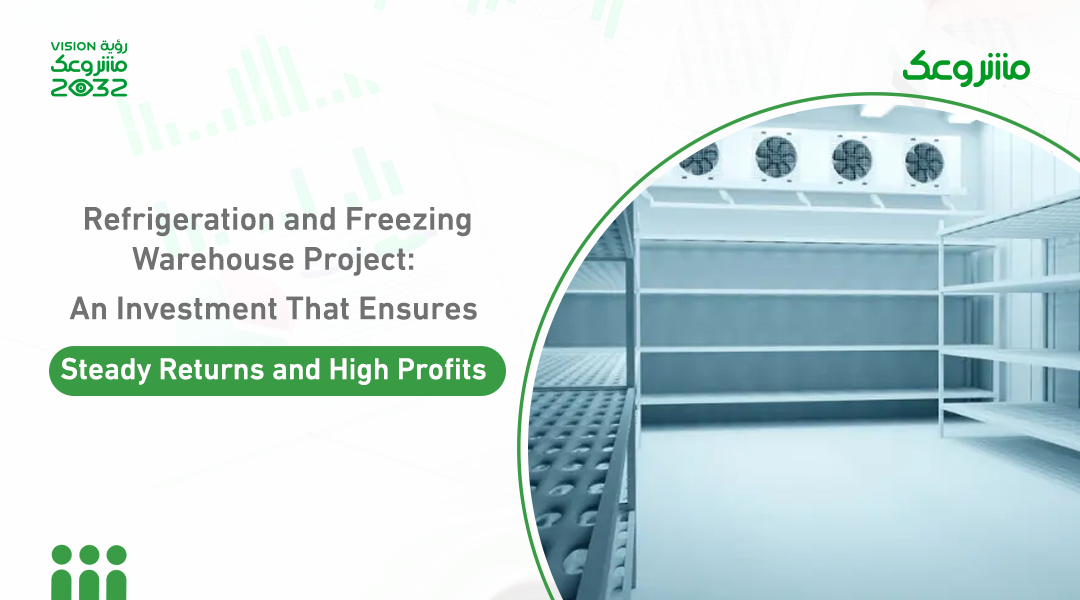
Cold Storage and Freezing Warehouse Project: A Strategic Investment Ensuring Continuous Returns and High Profits
Launching a cold storage and freezing warehouse project is considered one of the most promising investments, growing in importance day by day due to its critical role in sectors such as food and pharmaceutical industries, which heavily rely on refrigerated storage to ensure product quality and safety. This project provides a strategic solution for traders and manufacturers seeking a safe and efficient method to preserve their inventory, making it an investment that combines stability and high returns.
With a careful market study, investors can gauge the growing demand for these services, particularly with the expansion of distribution networks and rising local and regional consumption. Rapid advancements in refrigeration and freezing technologies have also opened new opportunities to reduce operating costs and improve efficiency, enhancing the project’s long-term viability. Importantly, cold storage and freezing warehouses serve multiple economic sectors, broadening their client base and ensuring continuous demand.
A cold storage and freezing warehouse is an investment facility specialized in storing food, pharmaceutical, and agricultural products at appropriate temperatures, either chilled to maintain freshness or frozen to extend shelf life. The project aims to provide a core service for traders, manufacturers, and distribution companies requiring safe and efficient storage solutions that preserve quality and minimize waste.
The project can handle various products, including meat, fish, vegetables, fruits, dairy, and even some medical products. From an investment perspective, it promises guaranteed returns due to increasing demand for refrigerated and frozen storage services, especially with the expansion of supply chains and rising consumption rates. Success depends on a strategic location, modern equipment, and effective operational management to ensure high-quality, continuous service.
The global commercial refrigeration equipment market was valued at approximately $49.3 billion in 2024 and is expected to reach $51.6 billion in 2025, surpassing $73.9 billion by 2032, with a compound annual growth rate (CAGR) of 5.26%. This growth highlights the strategic importance of investing in refrigeration and freezing projects, driven by increasing demand for temperature-sensitive food and pharmaceuticals and the growth of e-commerce and global supply chains.
1. Market Study and Opportunity Identification:
Identify target customers such as farmers, wholesalers, manufacturers, pharmaceutical companies, and restaurants. Analyze seasonal and annual demand, pricing, and competition to determine the required storage capacity and type of services (chilling, freezing, or product preparation).
Read here: Why is Market Research an Essential Tool for Project Success?
2. Define Business Model and Services:
Decide on services between standalone cold rooms or an integrated logistics system, including transportation, distribution, and inventory management. Determine the payment method (long-term contracts or pay-as-you-go), impacting design and pricing.
3. Licensing, Health Standards, and Safety:
Obtain necessary licenses, register with relevant authorities, and apply HACCP systems to ensure food safety and project credibility.
4. Site Selection and Layout Planning:
Choose a strategic location near main roads or production areas. Design the layout to ensure smooth workflow from receiving and sorting to cooling, freezing, packing, and shipping.
5. Cold Room Design and Thermal Insulation:
Determine capacities and temperature requirements based on product types. Use high-efficiency thermal insulation and quick-seal doors to reduce energy consumption and improve operational efficiency.
6. Refrigeration System Selection:
Use a central system or independent units depending on project size. Choose reliable equipment with digital monitoring and environmentally friendly refrigerants.
7. Energy Supply and Management:
Calculate electrical loads, provide backup generators, and implement energy efficiency measures like heat recovery and thermal exchangers.
8. Equipment and Tools:
Provide forklifts, suitable racks, quick-seal doors, temperature and humidity monitoring devices, lighting resistant to moisture, and fire/chemical safety systems.
9. Standard Operating Procedures and Quality System:
Implement protocols for receiving, inspection, and storage using FIFO/LIFO methods. Define cleaning, sterilization, and equipment calibration schedules.
10. Staffing and Training:
Hire specialized personnel for inventory management, system operations, and maintenance. Train staff on safety protocols, temperature monitoring, and emergency plans.
11. Contracts and Logistics Services:
Prepare clear contracts defining storage terms, insurance, and responsibilities. Focus on long-term partnerships with producers and distributors to ensure steady revenue.
12. Financial Planning and Feasibility Study:
Estimate investment and operational costs, determine break-even points, and forecast returns to attract funding.
Read here: The Importance of Having a Financial Feasibility Study for Your Investment Project
13. Maintenance, Risk Management, and Insurance:
Implement routine equipment maintenance, insure warehouses and goods, and develop contingency plans for technical failures.
14. Pilot Launch and Continuous Evaluation:
Start with limited capacity to test systems, contracts, and billing. Monitor inventory turnover, spoilage rates, and energy use to guide gradual expansion.
For more information on the requirements for cold storage and freezing facilities, click here.
For cold storage and freezing facilities, the above requirements apply; however, if the project involves mobile cold and freezing units, the following considerations must be observed:

For Inquiries and to Request a Feasibility Study for a Cold Storage and Freezing Warehouse Project
The kebab restaurant project is one of the food-service ventures that combines strong demand for grilled meals with the opportunity to target a diverse customer base, including individuals, families, and lovers of traditional Middle Eastern cuisine. With growing competition in the restaurant sector, however, the project’s success is no longer determined by food taste alone. […]
Read moreA children’s toy store project is not limited to selling toys; it is built on understanding what attracts children and what families look for when choosing products that combine entertainment and educational value. With the wide variety of educational toys, skill-development games, recreational toys, and gifts available, the store has opportunities to meet the needs […]
Read moreA residential complex project is no longer simply an investment in a collection of real estate units. It has evolved into an integrated development model that combines comfortable living, diverse services, and long-term investment value. As cities expand and residents’ needs evolve, demand is growing for residential complexes that offer a comprehensive environment suited to […]
Read moreThe veterinary clinic project comes at a time when animal care is no longer limited to treating illnesses or injuries, but has expanded to include health monitoring, vaccinations, routine checkups, and care for both pets and livestock. However, many animal owners face challenges in accessing specialized veterinary services that combine prompt response, high-quality care, and […]
Read more
خصم 25% على خدمات مشروعك استفد من العرض الآن، فالفرصة متاحة لفترة محدودة فقط
سجّل بياناتك واحصل على خصم 25% الآن


