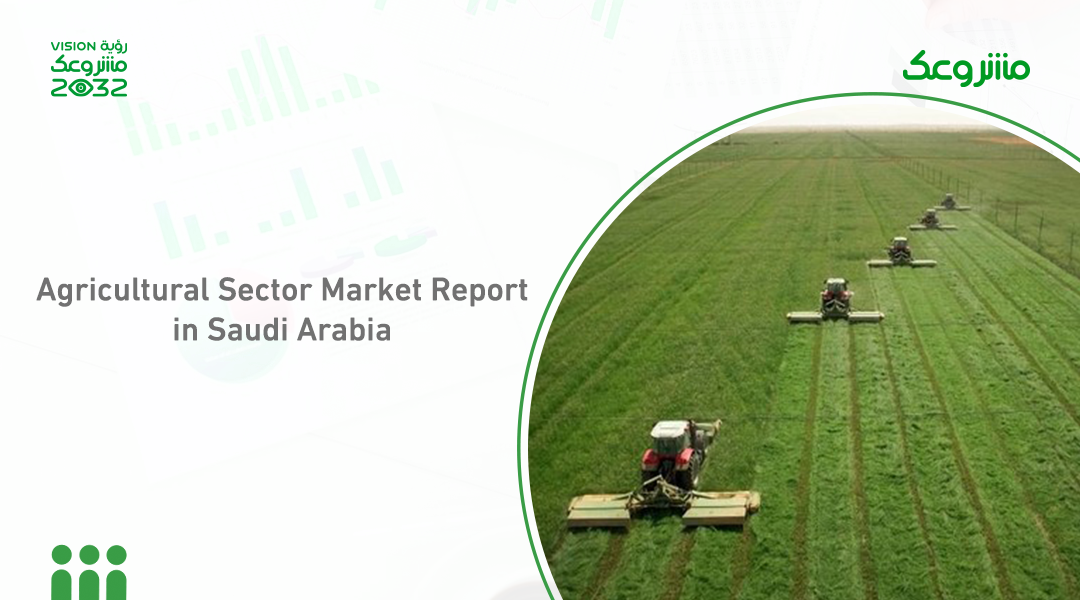
There is no doubt that the agricultural sector in Saudi Arabia is a fundamental pillar of the national economy, not only due to its direct contribution to the GDP but also as a key driver of the food value chain. It provides raw materials and production inputs for more than 1,000 food and beverage factories, representing about 14% of all factories in the Kingdom, reflecting the strong organic link between agriculture and the food industry. Over time, this sector has shifted from traditional production methods to a modern model based on innovation, resource optimization, and advanced technologies.
Saudi Arabia’s Vision 2030 has played a pivotal role in driving this transformation, through programs supporting local production, diversifying income sources, and enhancing food security. The adoption of the National Environment and Water Strategy, alongside the Food Security Strategy, has established a comprehensive framework that balances agricultural development with sustainable natural resource management, particularly amid increasing climate challenges. As a result, the agricultural sector in Saudi Arabia is no longer just a source of food but a cornerstone of economic and social stability, and a central element in building a sustainable knowledge-based national economy.
The agricultural sector in Saudi Arabia possesses unique competitive advantages, including advanced infrastructure, geographic and climatic diversity that allows year-round agricultural production, and increasing reliance on modern technologies that enhance production efficiency and open wide investment and export opportunities, such as:
This harmonious geographic distribution provides a clear comparative advantage for each region, supporting national food security and creating specialized investment opportunities aligned with each production environment.
The agricultural sector is a vital economic pillar, contributing 2.5% of GDP, with a value exceeding SAR 117 billion in 2024. Beyond direct contribution, it forms the backbone of the country’s food value chains, supplying roughly 1,000 food and beverage factories (over 14% of total factories) with essential inputs. This strategic integration between agriculture, industry, and trade stimulates growth across multiple economic sectors. The sector also diversifies national income sources, reduces the non-oil trade deficit, generates employment, and supports rural development, with over 300,000 small farmers depending on it as a primary source of income. The close link between economic and social dimensions underscores agriculture as a key developmental lever, driving Saudi Arabia toward a more diversified, sustainable, and inclusive economy.
The agricultural sector is advancing confidently to become a cornerstone for economic diversification and food security, with strategies focused on sustainability and production efficiency. Expansion in modern technologies such as hydroponics, vertical farming, and greenhouses has already increased production capacity to over 11 million tons annually while reducing water consumption by up to 98% through smart irrigation systems.
The rapid shift toward organic farming, specialized agricultural cities, and converting waste into fertilizers opens new avenues for value addition, enhancing competitiveness locally and globally, making Saudi Arabia a model for smart and sustainable agriculture.
Read here: Fish Farming Project – A Promising Investment Opportunity in 2025
Read here: Discover the 7 Most Profitable Agricultural Projects
Read here: Why Mushroom Farming is One of the Most Successful Agricultural Projects in 2025
For more agricultural production investment opportunities, click here.

To communicate and learn more about Mashroo3k company and its services
The kebab restaurant project is one of the food-service ventures that combines strong demand for grilled meals with the opportunity to target a diverse customer base, including individuals, families, and lovers of traditional Middle Eastern cuisine. With growing competition in the restaurant sector, however, the project’s success is no longer determined by food taste alone. […]
Read moreA children’s toy store project is not limited to selling toys; it is built on understanding what attracts children and what families look for when choosing products that combine entertainment and educational value. With the wide variety of educational toys, skill-development games, recreational toys, and gifts available, the store has opportunities to meet the needs […]
Read moreA residential complex project is no longer simply an investment in a collection of real estate units. It has evolved into an integrated development model that combines comfortable living, diverse services, and long-term investment value. As cities expand and residents’ needs evolve, demand is growing for residential complexes that offer a comprehensive environment suited to […]
Read moreThe veterinary clinic project comes at a time when animal care is no longer limited to treating illnesses or injuries, but has expanded to include health monitoring, vaccinations, routine checkups, and care for both pets and livestock. However, many animal owners face challenges in accessing specialized veterinary services that combine prompt response, high-quality care, and […]
Read more
خصم 25% على خدمات مشروعك استفد من العرض الآن، فالفرصة متاحة لفترة محدودة فقط
سجّل بياناتك واحصل على خصم 25% الآن


