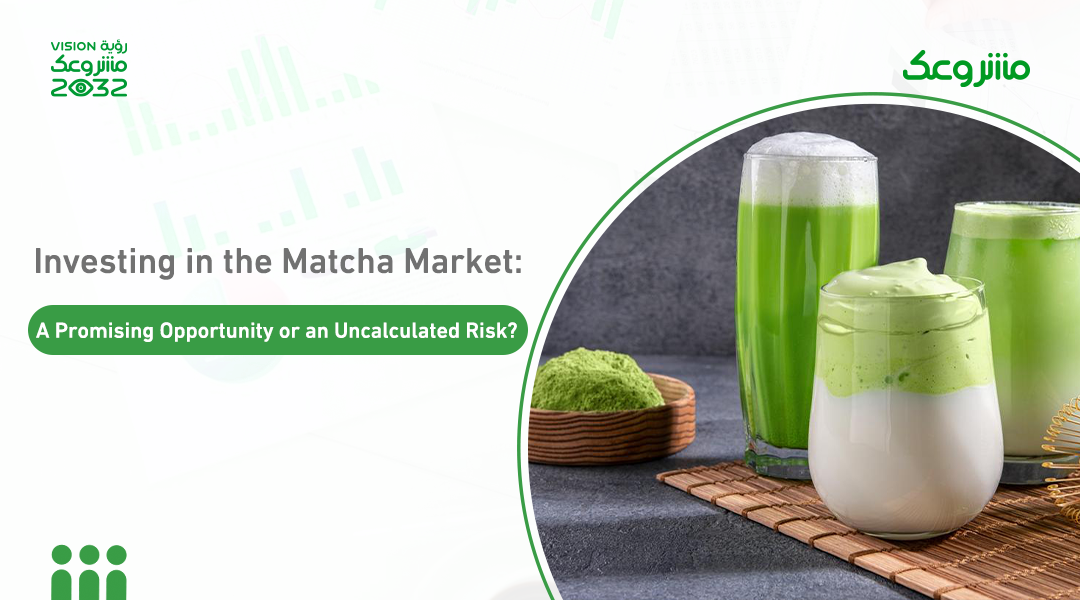
The matcha market has witnessed a remarkable transformation in recent years—from a traditional Japanese tea used in ancient tea ceremonies to a global product strongly positioned in the health drinks and food markets. This fine green powder, rich in antioxidants and catechins, has become a symbol of the wellness era, attracting growing consumer demand for natural alternatives to coffee and caffeine-heavy beverages. This surge in popularity has encouraged numerous startups and global brands to enter the matcha sector, whether as a powdered drink or as an ingredient in food, desserts, and skincare products.
However, the question remains: Is investing in matcha a golden opportunity with sustainable long-term returns, or merely a fleeting trend that might lose its appeal as new healthy beverage alternatives emerge? To answer this, it’s essential to analyze market trends, consumer behavior, and the potential risks related to competition, production costs, and brand development.
Matcha is more than just a type of green tea—it represents a deep-rooted Japanese culture embodying harmony and mindfulness. Originating in China during the Tang dynasty, it found its true home in Japan in the 12th century, when Buddhist monks introduced it to aid meditation and focus during long hours of worship. Since then, matcha has become an integral part of the traditional Japanese tea ceremony, known as “Chadō” or “The Way of Tea”, a spiritual and social practice expressing values of balance, respect, and inner peace.
Over time, matcha evolved from temple rituals to a daily drink associated with health and vitality. With the global shift toward natural, antioxidant-rich foods in the 21st century, matcha became an international phenomenon—spreading from Japan to the U.S., Europe, and the Middle East. Today, it is not only consumed as a traditional tea but also used in specialty coffee, pastries, baked goods, and even cosmetics—illustrating how an ancient ritual can adapt to modern lifestyles.
The global matcha market is growing rapidly, driven by several interconnected factors that have made it a leading product in the healthy beverage and natural alternatives sector:
The matcha industry is now one of the most promising sectors in the global market. As consumer awareness of matcha’s health benefits rises, so does demand for organic, natural products aligned with modern wellness trends. However, seizing these opportunities requires a deep understanding of market trends, costs, competition, and quality control—making it a strategic long-term investment rather than a passing fad.
Key opportunities include:
Despite its growth, matcha production remains costly and competitive.
Younger generations view matcha as a lifestyle symbol, not just a drink. It embodies natural, sustainable, and mindful living—values that align with their identity. Matcha’s balance of caffeine and L-theanine delivers calm energy, while its vibrant color has made it an Instagram icon representing health and aesthetic appeal.
Current indicators suggest that matcha is more than a temporary trend—it’s a sustainable industry aligned with the global shift toward organic and functional foods. However, its future depends on continuous innovation, quality assurance, and brand positioning. The challenge lies in maintaining consumer interest as new “superfoods” like moringa or organic cacao enter the spotlight.
Investing in matcha should be driven by long-term strategic vision, not short-term hype. Investors should assess:
Ultimately, matcha represents a promising yet demanding investment—one that rewards those who commit to quality, innovation, and a deep understanding of consumer behavior. With the right strategy, it can evolve from a trend into a lasting and profitable brand.
The kebab restaurant project is one of the food-service ventures that combines strong demand for grilled meals with the opportunity to target a diverse customer base, including individuals, families, and lovers of traditional Middle Eastern cuisine. With growing competition in the restaurant sector, however, the project’s success is no longer determined by food taste alone. […]
Read moreA children’s toy store project is not limited to selling toys; it is built on understanding what attracts children and what families look for when choosing products that combine entertainment and educational value. With the wide variety of educational toys, skill-development games, recreational toys, and gifts available, the store has opportunities to meet the needs […]
Read moreA residential complex project is no longer simply an investment in a collection of real estate units. It has evolved into an integrated development model that combines comfortable living, diverse services, and long-term investment value. As cities expand and residents’ needs evolve, demand is growing for residential complexes that offer a comprehensive environment suited to […]
Read moreThe veterinary clinic project comes at a time when animal care is no longer limited to treating illnesses or injuries, but has expanded to include health monitoring, vaccinations, routine checkups, and care for both pets and livestock. However, many animal owners face challenges in accessing specialized veterinary services that combine prompt response, high-quality care, and […]
Read more
خصم 25% على خدمات مشروعك استفد من العرض الآن، فالفرصة متاحة لفترة محدودة فقط
سجّل بياناتك واحصل على خصم 25% الآن


