هذا النص هو مثال لنص يمكن أن يستبدل في نفس المساحة، لقد تم توليد هذا النص من مولد النص العربى، حيث يمكنك أن تولد مثل هذا النص أو العديد من النصوص الأخرى إضافة إلى زيادة عدد الحروف التى يولدها التطبيق.
Amid the continuous expansion of the food industry and the growing demand for value-added products, a chocolate manufacturing project emerges as a promising venture that combines innovation with profitability. Chocolate is not merely a consumer product; it is a craft rooted in refined taste, precise production processes, and high-quality ingredients, offering investors a real opportunity to build a distinctive brand capable of competing in a wide and dynamic market. The diversity of flavors and the increasing demand for premium and healthy chocolate open the door to creating innovative assortments that cater to multiple customer segments. Through organized planning and careful attention to production and marketing details, this project can evolve into a sustainable business that achieves gradual growth and delivers rewarding long-term returns.
What is a chocolate manufacturing project?
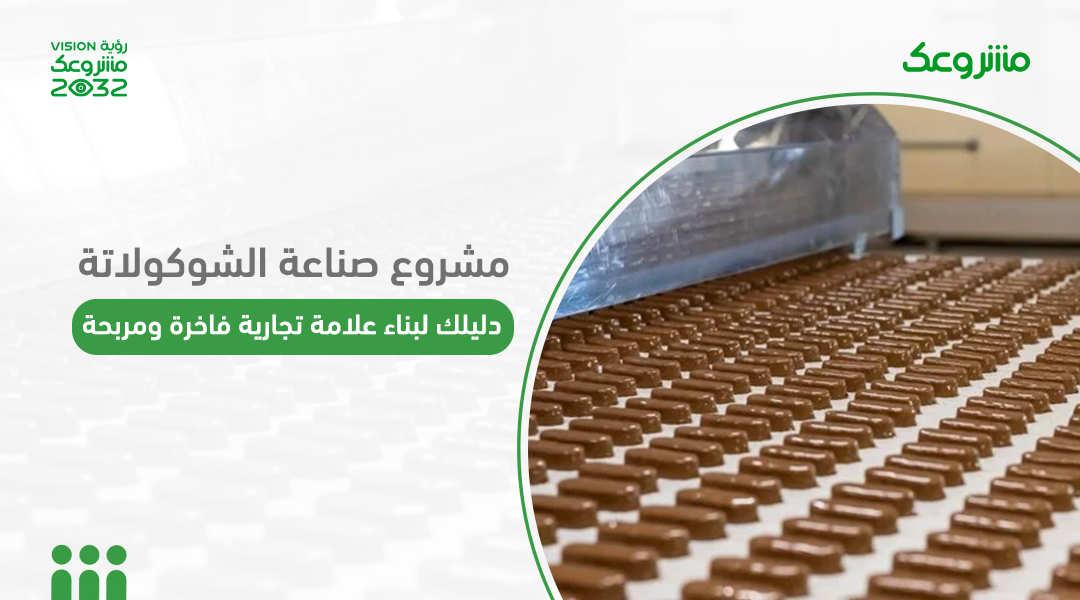
A chocolate manufacturing project is a food industry facility specialized in producing and manufacturing various types of chocolate and its forms—whether bars, filled chocolates, or premium products designed for gifts and special occasions. The project then handles packaging, marketing, and selling to end consumers or commercial distribution points. The project relies on transforming basic raw materials such as cocoa, cocoa butter, sugar, and milk into a high-quality final product through a precise manufacturing process that includes mixing, melting, molding, cooling, and final packaging. This project is considered promising due to the consistently high demand for chocolate throughout the year, its association with celebrations and gifts, and the potential to develop innovative products that cater to different age groups and purchasing power.
Is a chocolate manufacturing project profitable?
Yes, the chocolate manufacturing market has experienced continuous growth in recent years. Its size is expected to increase from USD 186.6 billion in 2025 to USD 193.97 billion in 2026, with a compound annual growth rate (CAGR) of 4.0%. This growth is projected to continue, reaching USD 232.03 billion by 2030, with a CAGR of 4.6%. This ongoing expansion reflects the widening global demand for chocolate, making a chocolate manufacturing project a profitable and scalable investment opportunity in the long term.
Why invest in a chocolate manufacturing project
The chocolate manufacturing project represents a distinguished investment opportunity that combines continuous demand with high potential for innovation and expansion, making the project attractive for achieving rewarding financial returns and sustainable long-term growth. The advantages of investing in a chocolate manufacturing project are evident through several points, the most important of which are:
The continuous and increasing demand for chocolate locally and globally, which ensures market stability.
High profit margin when effectively controlling the costs of raw materials, production, and packaging, which allows for attractive investment returns.
The possibility of starting with a moderate capital with the potential for gradual expansion based on actual demand growth, thereby reducing potential risks.
A variety in the product range, including bars, fillings, dark and milk chocolate, in addition to healthy options.
Flexibility of distribution and sales channels includes retail stores, major chains, wholesale distribution, e-commerce, and custom orders.
Ease of building a strong and distinctive brand, due to the strong emotional connection that chocolate products have with consumers.
The possibility of innovation in flavors and designs to attract different customer segments and increase competitiveness.
The possibility of geographical expansion and export is feasible when adhering to international quality standards and obtaining the necessary certifications.
Great opportunities for expansion through diverse marketing channels, which increases access to new markets.
Exploiting seasonal occasions and the high demand during holidays and special events to maximize profits.
What is the cost of a chocolate manufacturing project?
The investment costs of a chocolate manufacturing project vary depending on the scale of operations, the type of products, and the geographical location. The main cost items can be classified as follows:
Renting or purchasing a site in an industrial area suitable for the factory or workshop.
Construction and interior finishing works such as moisture-resistant flooring and electrical and plumbing installations.
The main production line includes mixers, mills, casting machines, cooling, and packaging.
Auxiliary equipment such as transportation tools, quality inspection devices, and additional cooling devices.
Furniture and office desks with computers and office equipment.
Primary raw materials such as cocoa butter, cocoa powder, sugar, powdered milk, nuts, flavorings, and packaging materials.
Monthly salaries of staff for the manager, production engineer, production workers, packing, and cleaning.
Monthly operating expenses such as electricity, water, and maintenance bills.
Legal licenses and permits such as the commercial registration, industrial activity license, health approval, and environmental permit.
Initial marketing including brand design and distribution of free samples
Operating capital reserve to cover unexpected expenses.
What are the requirements for starting a chocolate manufacturing business in Saudi Arabia?
Licensing requirements
Licensing procedures must include issuance, renewal, modification, suspension, and cancellation in accordance with the Municipal Licensing System and its executive regulations.
A valid commercial register must be provided that specifies the activity or activities required for licensing.
The industrial license must be submitted from the Ministry of Industry and Mineral Resources.
A permit must be obtained from the National Center for Environmental Compliance Monitoring (Construction/Operational).
Approval must be obtained from the General Directorate of Civil Defense, and an engineering report must be submitted proving the suitability of the building for performing industrial activities in accordance with fire protection requirements, and fulfilling the necessary requirements from the relevant authorities.
Site and Space Requirements
It is permissible to utilize spaces exceeding the minimum required for parking, to introduce additional uses or supporting services.
If the building comprises a group of adjacent buildings, the complete setback requirements and approved plans must be applied to each building individually.
The activities permitted to be conducted outside the designated industrial sites are determined by the competent central committee, based on a Cabinet decision.
Requirements for Additional and Homogeneous Activities
The total area of additional activities shall not exceed 50% of the total area specified in the license.
Adhering to the minimum area of the main activity.
No additional activity area should exceed 20% of the main activity area, such as self-service points.
Commercial Signage Requirements
Compliance with the regulations and requirements for commercial signs is required, provided that they are consistent with the license information.
It is required that the commercial plate information matches the approved license data.
Commercial signs must be removed upon license cancellation, and the site must be handed over in good condition with the restoration of the original state prior to installation.
Architectural requirements for buildings and the overall site
Adherence to the approved planning requirements in the industrial plan.
Providing clear and safe entrances and exits, along with organizing the movement of vehicles and pedestrians within the site.
The building must be made of safe construction materials and comply with the Saudi Building Code.
Compliance with the regulatory setback requirements according to the approved plan.
Providing designated areas for loading and unloading within the site boundaries.
Adherence to thermal and acoustic insulation requirements according to the nature of the activity. …
Providing warehouses or storage spaces that comply with safety requirements.
Compliance with structural safety and fire resistance requirements in accordance with the Saudi Building Code
Ensuring clear evacuation routes and emergency exits according to approved regulations.
Providing adequate parking spaces within the site boundaries in accordance with municipal requirements.
Taking into account landscaping and urban planning requirements, if any.
Architectural Requirements for Existing Buildings
Ensuring the structural safety of the existing building before engaging in the activity.
Addressing any construction or architectural violations before operation.
Compliance with updating safety and fire-fighting systems according to the Saudi Building Code
Maintaining the facades and overall appearance in accordance with municipal regulations.
Allocating safe and organized storage areas within the site.
No expansions or modifications shall be carried out except after obtaining the necessary regulatory approvals.
Compliance with the site’s feedback and internal regulation requirements.
Architectural requirements in industrial areas and approved plans (light activities)
The building must be independent or part of buildings designated for industrial activity.
Commitment to providing parking spaces within the site boundaries.
The net height of the building shall not be less than (2.5 m) or as determined by the approved regulations.
Compliance with the Saudi Building Code regarding safety and construction (SBC).
General Operational Requirements
Operating the activity is prohibited before obtaining all the necessary licenses and regulatory approvals.
It is not permissible to commence work outside the area specified in the license or to use the site for activities other than those licensed.
Full compliance with health, environmental, and occupational safety requirements during operation.
Engaging in any additional activity not specified in the approved license is prohibited.
The cleanliness of the site must be maintained, and public roads and facilities must not be obstructed.
The sale or display of products that do not meet specifications or are not related to the licensed activity is prohibited.
It is forbidden to generate noise, emissions, or waste that affect the environment or neighbors.
Commitment to the safe disposal of waste and residues in accordance with approved regulations and instructions.
It is prohibited to operate the site if the license is canceled or has expired without renewal.
Compliance with regulations and instructions issued by the competent authorities, including the Ministry of Environment, Water and Agriculture – if applicable.
Signage must be placed within the site indicating safety procedures, evacuation routes, and operating instructions, in accordance with approved regulations.
Commitment to placing warning signs in hazardous areas or areas designated for storage or operation, in a manner that ensures the safety of workers and visitors.
For more information on municipal requirements for factories, click here.
How to Ensure the Success and Sustainability of a Chocolate Manufacturing Project
To ensure the success and sustainability of the chocolate manufacturing project, focus must be placed on several key elements that guarantee business continuity and enhance profitability, including:
Commitment to using high-quality ingredients and developing innovative recipes that cater to different customer tastes
Introducing new flavors and designs and incorporating healthy or luxury products to keep up with market trends
Adopting multiple marketing strategies that include digital platforms, exhibitions, online stores, and traditional advertising
Regularly monitoring costs and revenues and analyzing profitability to ensure the sustainability of the project
Focusing on training the production and management team to ensure work efficiency and manufacturing quality
The ability to modify production lines and expand the range of products according to market demand and its changes
Listening to customer feedback and continuously improving products and services to enhance their loyalty to the brand
Developing plans to expand production, enter new markets, and innovate seasonal products to increase revenues
My Experience in the Chocolate Making Project
Mr. W.L has always believed that true entrepreneurship is that which combines sustainable profitability with added value for society. His ambition was not limited to merely establishing a business, but he dreamed of building a luxury brand that redefines the chocolate experience, offering a product that unites authentic flavor with high-quality craftsmanship. The spark for this endeavor emerged when W.L noticed a clear gap in the local market; with the growing consumer passion for distinguished local products, there was an urgent need for an industrial project specialized in chocolate manufacturing with a quality that could compete with imports. This opportunity then transformed into a carefully planned business strategy to establish a fully integrated factory.
However, the path from idea to implementation was obstructed by the challenge of financing; despite possessing insightful vision and conducting an initial feasibility study, the requirements for establishing a modern production line, purchasing specialized equipment, and securing a strategic stock of raw materials (such as cocoa and cocoa butter) A massive capital was formed, and here the pivotal role of Mashroo3k Consulting Company emerged, which intervened as a strategic partner to transform the initial file into a comprehensive and compelling financing package directed to the Saudi Industrial Development Fund, where Mashroo3k undertook the task of accurately engineering capital requirements, and formulating the operational and financial plan in a manner that reflects the project’s feasibility and growth potential, thereby granting the file high investment appeal. This consulting effort culminated in the flexible financing solutions offered by the Saudi Industrial Development Fund, specifically designed to support the industrial sector. The project benefited from a financing package that included working capital to operate production lines, supply chain financing to ensure the flow of raw materials, in addition to fixed asset financing for establishing the factory and equipping it with the latest smelting, forming, and packaging technologies.
Today, and after just one year since its inception, Mr. W. L.’s dream has turned into an impressive industrial reality. The factory now operates at maximum efficiency, and its luxurious products are distributed through an extensive network covering major stores and companies. The project has not only achieved consistent profits and steady growth but has also succeeded in establishing itself as a leading local brand.
Frequently Asked Questions About the Chocolate Manufacturing Project
What are the ingredients for making chocolate
The quantities for making chocolate depend on the type of chocolate, but the basic ingredients are cocoa mass, cocoa butter, and sugar. In some types, powdered milk is added to produce milk chocolate, in addition to natural flavorings to enhance taste and texture.
What is the best-selling chocolate in the world?
Milk chocolate is the best-selling worldwide due to its balanced taste and popularity across various groups, most notably Cadbury Dairy Milk chocolate, which features a sweet flavor and creamy texture that have made it a favorite among families.
What is the main ingredient in chocolate?
The main ingredient is cocoa (cocoa mass and cocoa butter), which is responsible for the flavor, nutritional value, and distinctive characteristics of chocolate.
What is the most famous country for chocolate production?
Switzerland is considered one of the most famous countries in chocolate making worldwide, due to its renowned high quality and historical expertise in this field, alongside other countries such as Belgium.
What is the cost of establishing a chocolate company?
The cost varies depending on the size of the project, the type of equipment, the area of the factory, and the level of operation. It is possible to start with a small project with limited capabilities and then gradually expand, whereas a large factory requires a higher investment and integrated industrial facilities.
What are the disadvantages of chocolate?
One of the most prominent drawbacks of chocolate is its high sugar content in some types, its susceptibility to heat and poor storage, in addition to the fact that excessive consumption may lead to an increase in calorie intake and associated health effects.
For inquiries and to request a feasibility study for a chocolate manufacturing project
The kebab restaurant project is one of the food-service ventures that combines strong demand for grilled meals with the opportunity to target a diverse customer base, including individuals, families, and lovers of traditional Middle Eastern cuisine. With growing competition in the restaurant sector, however, the project’s success is no longer determined by food taste alone. […]
A children’s toy store project is not limited to selling toys; it is built on understanding what attracts children and what families look for when choosing products that combine entertainment and educational value. With the wide variety of educational toys, skill-development games, recreational toys, and gifts available, the store has opportunities to meet the needs […]
A residential complex project is no longer simply an investment in a collection of real estate units. It has evolved into an integrated development model that combines comfortable living, diverse services, and long-term investment value. As cities expand and residents’ needs evolve, demand is growing for residential complexes that offer a comprehensive environment suited to […]
The veterinary clinic project comes at a time when animal care is no longer limited to treating illnesses or injuries, but has expanded to include health monitoring, vaccinations, routine checkups, and care for both pets and livestock. However, many animal owners face challenges in accessing specialized veterinary services that combine prompt response, high-quality care, and […]