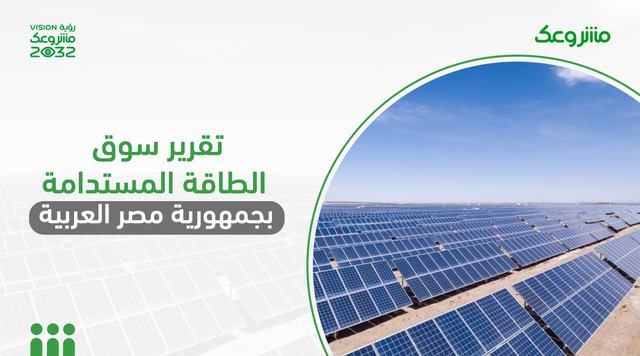
Egypt’s sustainable energy sector is undergoing a rapid strategic transformation that reflects the country’s vision for a more efficient and sustainable future in managing its energy resources. This direction is part of comprehensive national efforts aimed at diversifying energy sources and increasing reliance on renewable energy, particularly solar and wind power, contributing to the reduction of carbon emissions while maintaining a balance between economic growth and environmental protection.
Egypt is also implementing major projects to develop energy infrastructure, enhance the efficiency of electricity networks, and expand the adoption of advanced technologies for energy storage and optimization. The sector has become a key pillar supporting the national economy, especially with the growing role of local and foreign investments in advancing clean energy projects.
This report aims to provide a comprehensive overview of the current state of sustainable energy in Egypt, highlighting its key developments and performance indicators, while analyzing future growth opportunities within this vital sector during the coming period.
The Egyptian government has introduced a range of incentives to attract investments in the renewable energy sector, most notably the implementation of the Feed-in Tariff (FiT) system in 2014 to support solar and wind energy projects. Under this scheme, fixed purchase prices were guaranteed for the electricity generated, providing stable cash flows for investors and encouraging increased investment in the sector.
Investments in renewable energy are closely linked to economic growth in Egypt. Studies indicate that a 1% increase in renewable energy usage can lead to a 1.02% rise in Gross Domestic Product (GDP) in the long term, highlighting the sector’s importance in supporting the national economy.
Egypt’s move toward expanding renewable energy aligns with global trends that support sustainability and emissions reduction, while also addressing the growing domestic demand for energy in the local market.
Total electricity demand increased from 160 TWh in 2020 to approximately 190 TWh in 2024, reflecting continuous growth in energy consumption and a rising need to expand sustainable energy projects.
The contribution of renewable energy increased from 25 TWh in 2020 to approximately 28–30 TWh in 2024, confirming the gradual expansion in reliance on clean energy sources within the Egyptian market.
Installed renewable energy capacity increased from 6 GW in 2020 to approximately 7.2 GW in 2024, reflecting the expansion of solar and wind power plants.
The targeted renewable energy capacity increased from 6.6 GW in 2020 to a projected 8.5 GW in 2024, reflecting the state’s ongoing plans to expand reliance on clean energy and achieve sustainable development goals.
Egypt Vision 2030 seeks to build a sustainable energy sector capable of meeting the growing developmental needs by maximizing the utilization of both conventional and renewable energy resources. This approach contributes to supporting the national economy while preserving the environment. The vision focuses on reducing dependence on finite traditional energy sources, expanding the use of renewable energy, and strengthening Egypt’s regional position in this field. In this context, the government is working to:
The government is working to develop the electrical grid and increase its capacity to accommodate electricity generated from renewable energy sources, ensuring the stability of the power system and managing fluctuations in generation output.
The state aims to attract investments in the renewable energy sector by providing a supportive environment, while also strengthening collaboration with research centers to develop innovative solutions for energy storage and reduce associated costs.
Egypt is monitoring and adopting the latest technologies, including lithium batteries, green hydrogen, and thermal storage systems, with the aim of supporting the stability of electrical grids and improving their efficiency in the future.
The government encourages the use of small-scale systems such as solar water heaters, rooftop solar panels, and biogas in rural areas, while also providing financing mechanisms that enable individuals to generate their own energy.
The vision supports private sector participation in renewable energy projects by creating a competitive electricity market and modernizing pricing mechanisms such as feed-in tariffs and net metering systems.
The state focuses on promoting a culture of energy conservation through the use of energy-efficient appliances, the implementation of green building standards, and the expansion of natural gas use in vehicles to support sustainability.
The Arab Republic of Egypt is witnessing rapid development in the renewable energy sector, driven by the state’s efforts to strengthen reliance on clean energy sources and support sustainable development. Egypt has approximately 48 substations with a total capacity of 5,450 MVA at 500 kV.
Projections indicate that the sustainable energy market volume will increase from 23.29 billion kWh in 2024 to around 26.74 billion kWh by 2030, at a compound annual growth rate (CAGR) of 2.80%, reflecting the growing demand for clean energy in the country.
In this context, Egypt’s wind power capacity reached about 1,890 MW in 2023, marking a 15.03% increase compared to 2022, and accounting for nearly 28.2% of total renewable energy capacity. Solar energy capacity also reached approximately 1,856 MW in 2023, increasing by 7.66% year-on-year and representing around 68.5% of the country’s total renewable energy capacity.
The global sustainable energy market is witnessing rapid growth, driven by the transition toward clean energy sources, the advancement of sustainability efforts, and the reduction of carbon emissions. Projections indicate that global renewable energy consumption will rise from 8.74 trillion kWh in 2025 to approximately 10.75 trillion kWh by 2030, at a compound annual growth rate (CAGR) of 4.22%.
In addition, the global market size is expected to increase from USD 1.7 trillion in 2025 to around USD 3.7 trillion by 2030, reflecting a CAGR of 17.20%. This growth highlights the accelerating global investment in the clean energy sector.
Electricity generation indicators in the Arab Republic of Egypt reflect the state’s direction toward diversifying energy sources and strengthening reliance on sustainable and clean energy. This supports sustainability plans and enhances the security of electricity supply in the coming years.
Please read here: Solar Energy Project: A Smart Investment Driving the Future of Clean Energy
Please read here: Invest in the Future: 5 Factors That Make Solar Energy Projects More Profitable Than Ever
Read Here: Everything You Need to Know About SWOT Analysis and How It Is Applied

To communicate and learn more about Mashroo3k company and its services
The kebab restaurant project is one of the food-service ventures that combines strong demand for grilled meals with the opportunity to target a diverse customer base, including individuals, families, and lovers of traditional Middle Eastern cuisine. With growing competition in the restaurant sector, however, the project’s success is no longer determined by food taste alone. […]
Read moreA children’s toy store project is not limited to selling toys; it is built on understanding what attracts children and what families look for when choosing products that combine entertainment and educational value. With the wide variety of educational toys, skill-development games, recreational toys, and gifts available, the store has opportunities to meet the needs […]
Read moreA residential complex project is no longer simply an investment in a collection of real estate units. It has evolved into an integrated development model that combines comfortable living, diverse services, and long-term investment value. As cities expand and residents’ needs evolve, demand is growing for residential complexes that offer a comprehensive environment suited to […]
Read moreThe veterinary clinic project comes at a time when animal care is no longer limited to treating illnesses or injuries, but has expanded to include health monitoring, vaccinations, routine checkups, and care for both pets and livestock. However, many animal owners face challenges in accessing specialized veterinary services that combine prompt response, high-quality care, and […]
Read more
خصم 25% على خدمات مشروعك استفد من العرض الآن، فالفرصة متاحة لفترة محدودة فقط
سجّل بياناتك واحصل على خصم 25% الآن


