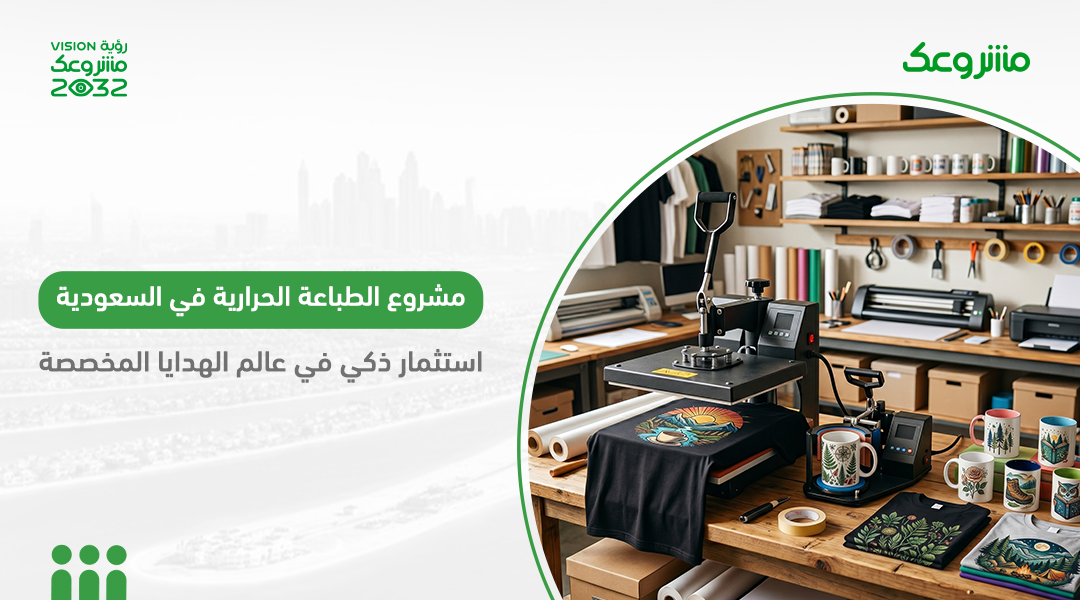
The thermal printing project has become one of the most prominent investment models in today’s Saudi economic landscape, driven by a significant boom in personalization culture and the growing demand for unique customized gifts and products. This project is no longer just a technical process for printing images; rather, it has evolved into a creative platform that enables entrepreneurs to transform ordinary items… Such as T-shirts, mugs, bags, and promotional materials are transformed into artistic pieces that reflect the tastes, aspirations, and diverse preferences of customers across different segments. With the rapid advancement of digital printing technologies and Saudi Arabia’s orientation toward supporting small and medium enterprises under Vision 2030, thermal printing has emerged as an ideal option that combines low startup costs and ease of implementation on one hand, with the potential for high and fast returns on the other. In light of these factors, the project represents a true golden opportunity where artistic creativity meets promising economic viability.
A thermal printing project is essentially based on transferring designs, images, and logos onto various products using heat and pressure through specialized equipment designed for this purpose. Its applications cover a wide range of products such as T-shirts, mugs, caps, bags, cushions, and various promotional gifts, enabling the creation of unique customized products that meet the needs of both individuals and businesses.
This project is distinguished by exceptional flexibility, making it accessible to a wide range of entrepreneurs, as it can be launched with moderate capital without the need for large infrastructure. It also allows for gradual expansion based on demand and product diversification, making it a business model that combines ease of initial setup with strong potential for rapid growth.
Global economic indicators confirm that the thermal printing project is currently classified as one of the most promising investment opportunities. This is clearly reflected in the numbers, as the global thermal printing market reached approximately USD 51.29 billion in 2025, rising to USD 53.75 billion in 2026. This growth highlights a significant shift in global demand for the sector.
The upward trend is expected to continue steadily, with the market projected to exceed USD 79.07 billion by 2033, achieving a compound annual growth rate (CAGR) of 5.7% during the forecast period (2026–2033).
Investing in a thermal printing project offers many advantages that make it an attractive option for entrepreneurs, especially with the increasing demand for customized products and creative gifts. The most notable advantages include:
Low operating costs, as the project in its early stages does not require complex equipment or large spaces, making it ideal for small and medium-sized investors.
Strong return on investment, as the project enables good profits by printing on a wide range of products such as clothing, mugs, and promotional items, which enjoy consistent market demand.
Ease of expansion and development, as it is possible to start with a limited range of products and gradually add new printing services and product types as the customer base grows.
Wide variety of printable products, including clothing, mugs, gifts, promotional items, and many other products.
High demand for customized products and unique designs in the Saudi market.
Reliance mainly on creativity and marketing rather than complex technical expertise, making the project accessible to a wide range of entrepreneurs.
Ability to sell online and reach a large customer base through social media platforms efficiently.
Fast order fulfillment and production compared to some traditional printing techniques.
High flexibility, making it suitable for individuals and entrepreneurs seeking a scalable and evolving business.
The cost of starting a thermal printing project varies significantly depending on several key factors, primarily the scale of the intended project, the type of products to be produced, as well as the quality of the selected equipment and machines. These costs are distributed across several main components that collectively form the project’s financial structure:
This includes the heat press machine, which serves as the backbone of the project, in addition to specialized machines for printing on mugs and T-shirts, as well as cutting devices required to complete the work professionally. It also includes a computer equipped with specialized design software, which represents the core creative component for producing professional-quality designs that meet customer expectations.
This includes a variety of essential components, primarily thermal papers, inks, and vinyl, in addition to printable products such as T-shirts, mugs, and other customized items. It is worth noting that the cost of this category is not fixed; rather, it varies significantly based on three main factors: the type of selected materials, their quality level, and the purchase volume. Overall costs tend to decrease as order quantities increase, making negotiation with suppliers and selecting materials that balance quality and price a strategic decision that directly impacts the project’s long-term profit margins.
This item essentially involves preparing a suitable workspace for the thermal printing business. It begins with ensuring proper ventilation, which is highly important due to the heat emitted by the machines during operation. It also includes providing adequate lighting to support design accuracy and production quality, as well as installing shelves, tables, and organized storage systems that ensure smooth workflow and reduce time wasted searching for materials and supplies.
Although this component may seem secondary to some, investing in it properly from the outset ultimately translates into higher productivity and a more professional working environment that creates a positive impression on customers.
This item consists of three main components. The first is electricity consumption, which represents one of the most significant recurring operational costs due to the heat-based nature of the equipment and its continuous energy requirements during working hours. The second is regular maintenance of machines, which serves as the first line of defense against unexpected breakdowns and helps maintain consistent performance and avoid costly interruptions. The third is the replacement of damaged parts and consumable materials that wear out due to continuous use.
It is worth noting that neglecting this component or failing to properly account for it does not only lead to a decline in product quality, but may also halt production entirely at critical times. Therefore, proper planning and allocating a fixed budget for this item is considered a sound investment decision.
The design and marketing component represents the public face of the project and the true driver of its growth and market expansion. High production quality alone is not sufficient to build a strong and loyal customer base without a professional and impactful marketing presence.
On the creative side, this item includes the development of attractive designs that reflect the product’s identity and meet the diverse tastes of customers, as well as the creation of a cohesive brand identity that gives the project its distinctive character and strengthens its presence in consumers’ minds.
On the marketing side, it extends to managing professional marketing campaigns across social media platforms, which have become the primary channel for reaching target customer segments. It also includes establishing a strong presence on e-commerce platforms, expanding sales reach beyond geographical limitations.
In reality, investment in this component is not a luxury but a strategic necessity, as creative design and smart marketing are what transform the project from a simple printing workshop into a recognized and competitive brand in the market.
Labor and management costs are among the essential components closely linked to all aspects of the project’s daily operations. They cover an integrated system of interconnected tasks, starting from receiving and accurately managing orders, passing through continuous communication with customers and ensuring a positive purchasing experience, and ending with the execution of printing, packaging, and delivery processes, which represent the final stage in the production and service chain.
The most notable characteristic of this cost item is that it is not fixed in nature; rather, it expands and increases directly as the project grows and production volume rises. This requires the business owner to plan in advance for labor needs at each stage of growth and to distribute responsibilities in a way that ensures smooth operations without compromising service quality or delaying order delivery. Ultimately, administrative efficiency is the key factor that determines whether a project struggles under growth pressures or transforms them into an opportunity for expansion and success.
What are the steps to start a thermal printing project?
Start with a clear and specific vision of your business: will you specialize in printing on clothing, move toward mugs and gifts, or target providing promotional printing services for companies and shops? Early specialization lays a strong foundation.
Conduct a thorough market analysis to understand the demand for printed products in your area, identify the most popular items, and study competitors to determine their strengths, weaknesses, and available opportunities.
Do not take any operational steps before preparing a comprehensive feasibility study that estimates equipment and material costs, calculates expected profits, and determines the minimum sales volume required to achieve your desired return.
Keep in mind a clear image of your ideal customer, whether an individual seeking personalized gifts or a company needing branded promotional materials, as this will guide your operational and marketing decisions.
Ensure that your workspace has sufficient space for work and storage to allow smooth operations without congestion or disorganization.
Equip your workspace with essential tools such as a heat press machine, cutting devices, a computer, and specialized design software, while also ensuring proper ventilation and lighting.
Build relationships with reliable suppliers who can provide quality materials at competitive prices and ensure consistent supply.
Complete all legal requirements and obtain the necessary licenses before starting operations to protect your project from shutdown risks.
Develop a clear operational plan covering the entire production process—from receiving orders and pricing them to packaging and delivery—with efficient execution mechanisms.
Allocate sufficient time to conduct practical trials on different products to verify print quality, color accuracy, and durability, as early testing helps avoid costly mistakes in front of customers.
Develop a consistent visual identity for your project, including a logo, product presentation style, and distinctive designs, as a professional appearance builds trust and accelerates market presence.
Rely on social media platforms and e-commerce stores as key pillars of your marketing strategy.
Finally, make regular maintenance of equipment and continuous quality monitoring a fixed routine, as maintaining operational efficiency is essential for sustaining professional output.
What machines and equipment are needed to start a thermal printing project?
The success of a thermal printing project largely depends on selecting the right equipment that enables high-quality products and fast execution. The most important machines and tools required include:
Heat press machine: the core device used to transfer designs onto different products using heat and pressure.
Sublimation printer or DTF printer: used to print designs and high-resolution colors onto transfer paper before applying them to the final product.
Mug printing machine: used in case of specializing in printing mugs and promotional gift items.
Vinyl cutting machine: used for precisely cutting designs and logos, especially for apparel and promotional product printing.
Computer with professional design software: used to prepare and edit designs before printing.
Heat transfer papers and heat transfer vinyl (HTV): used to transfer designs onto clothing, fabrics, and various surfaces.
High-quality printing inks: essential to ensure color durability and resistance to fading after use and washing.
Printing materials (blanks): such as T-shirts, mugs, canvas bags, cushions, and keychains depending on the project’s target products.
Auxiliary tools: such as scissors, heat-resistant tapes, templates, and measuring tools to ensure printing accuracy.
Storage shelves and setup equipment: used to organize materials and finished products and maintain a clean, efficient workspace.
| Challenges | Ways to Overcome Them |
|---|---|
| Poor print quality or color fading | Use high-quality inks and materials, and adjust temperature and pressing time according to each product type. |
| Product damage during printing | Conduct test runs before full production and ensure correct machine settings. |
| High cost of materials and equipment | Start with basic equipment and expand gradually, while sourcing affordable and reliable suppliers. |
| Strong market competition | Offer innovative designs, excellent customer service, and build a strong brand identity. |
| Delays in order fulfillment | Organize workflow efficiently, set precise production and delivery schedules, and maintain sufficient material stock. |
| Weak marketing and customer reach | Invest in digital marketing via social media platforms, showcasing attractive samples of work to build trust and attract customers. |
| Poor print durability after washing or use | Carefully select materials compatible with thermal printing technology and strictly follow correct temperature and pressing guidelines to ensure long-lasting results and customer satisfaction. |
| Difficulty managing increasing orders | Use order and sales management systems that provide a clear overview of production and delivery stages, enabling efficient scaling without compromising quality. |
| Frequent equipment breakdowns | Follow a regular maintenance schedule and invest in high-quality machines with reliable technical support and long lifespan. |
| Seasonal demand fluctuations | Diversify products and target year-round occasions such as holidays, corporate events, and gift seasons to maintain consistent demand. |
Guidelines to Ensure Success and Sustainability in a Thermal Printing Project
Ensure the selection of high-quality printing materials such as T-shirts, mugs, and inks, as they form the foundation of customer trust and shape the market image of your business.
Pay close attention to the accuracy and quality of designs before printing, as well-executed designs attract customers, differentiate your project, and establish a strong visual identity.
Offer a diverse range of printable products to serve different customer segments, whether individuals seeking personalized gifts, companies needing promotional materials, or seasonal event products.
Maintain precise control of temperature and pressure settings for each product type, as technical accuracy is essential for ensuring print quality and durability under daily use.
Leverage social media platforms as your primary marketing channel, and consistently showcase real, appealing samples of your work to attract potential customers.
Provide customized design services that meet individual customer preferences, as personalized products carry higher value and are more competitive in the market.
Monitor production costs carefully to reduce waste and protect profit margins, while ensuring that quality remains uncompromised, as it is the core of your reputation.
Make timely delivery and fast execution a core principle of your business, as satisfied customers are more likely to return and recommend your services to others.
Continuously follow customer feedback and reviews, treating them as valuable insights for improving services and enhancing product quality.
Introduce seasonal offers and promotions aligned with holidays and peak demand periods to maximize sales opportunities.
Regular maintenance is essential for sustainability, as a strict maintenance schedule for machines prevents unexpected breakdowns and is far less costly than production interruptions.
Plan expansion carefully and gradually, whether by adding new products or expanding online sales channels, ensuring that growth is stable and long-term.
Read here: How to Start a Small Business and Ensure Its Profitability in 2026
Product Ideas for a Thermal Printing Project
The thermal printing project is characterized by exceptional diversity in producible items, offering the business owner great flexibility to target multiple customer segments and generate revenue from several channels simultaneously. The most notable products include:
Customized clothing and apparel: Printing T-shirts, hoodies, and sportswear with team logos, brand identities, or artistic designs. This category is considered the most in-demand and popular in the local market.
Gifts and special occasions products: Customizing cushions, notebooks, and gift boxes with personal photos, names, or selected phrases, turning them into unique items with high sentimental value that are widely popular during holidays and social events.
Promotional materials and branding products: Producing mugs, canvas bags, caps, and keychains printed with company logos to serve as mobile marketing tools that enhance brand visibility during exhibitions and corporate events.
Home décor and textile products: Applying exclusive designs to fabrics, curtains, and decorative cushions with high color precision, catering to interior designers and home décor enthusiasts seeking customization.
Paper products and creative packaging: Printing stickers, posters, greeting cards, and promotional paper materials, along with customized packaging designs that add a professional touch and enhance the overall customer experience.
Please read here: Clothing Printing Project: A Golden Opportunity to Start a Profitable Business with Minimal Resources
Please read here: Best Projects in Saudi Arabia: Your Guide to Investment Opportunities Aligned with Vision 2030
I am (T. J) from Madinah. I started my thermal printing project with great enthusiasm, but in practice I faced two main challenges: poor initial planning and difficulty in securing the necessary liquidity to equip and operate the location.
To deal with these obstacles in a scientific and systematic way, I turned to “MASHROO3K” Consulting Company, where I found real support. They prepared a comprehensive feasibility study for me covering all marketing, technical, financial, and administrative aspects. Thanks to their expertise, I was able to overcome the financing barrier through well-studied solutions that resulted in obtaining funding from the Social Development Bank through clear and smooth procedures.
After receiving the financing, I started implementing my project, and—praise be to God—the performance indicators improved significantly. The project is now operating with high efficiency and noticeable stability.
I would also like to emphasize that this qualitative transformation, which moved my project from the establishment phase to a safe and stable stage, would not have been achieved without God’s help first, and then the continuous professional support provided by the “MASHROUK” expert team.
Read here: How do SME financing programs drive the economic transformation journey in the Kingdom?
What are the requirements for thermal printing?
A thermal printing project requires a set of essential tools and supplies, including a heat press machine, a sublimation or DTF printer, printing materials such as T-shirts, mugs, and bags, heat transfer papers, specialized inks, as well as a computer and design software to prepare graphics before printing.
The lifespan of a thermal printer is closely linked to three key factors: the quality of the device at the time of purchase, the way it is used on a daily basis, and the level of maintenance and care it receives.
Generally, a thermal printer can last for a relatively long period, typically ranging from 5 to 10 years or more. This lifespan can be achieved when the device is used properly according to manufacturer instructions and when regular maintenance and cleaning schedules are followed to prevent dust and residue buildup that may affect performance.
Ultimately, a well-maintained printer rewards its owner with a longer operational life and more stable performance over time.
Thermal printing does not easily fade if it is done correctly using high-quality materials and inks. However, it may be affected over time due to improper use or incorrect washing methods. Therefore, execution quality plays a crucial role in ensuring long-lasting print durability.
Does a thermal printer require special paper?
Yes, a thermal printer requires specialized paper such as sublimation paper or heat transfer paper, depending on the printing technique used. These papers help transfer the design accurately and ensure it adheres properly and permanently to the final product.
Thermal printers offer an integrated set of advantages that make them a smart investment choice for entrepreneurs at different levels. One of their most notable features is high printing speed, which outperforms traditional printers and enables faster order completion with greater efficiency.
They also operate with very low noise levels, creating a more comfortable and productive working environment free from disruptive sounds. In addition, they are easy to use and do not require advanced technical expertise or complex maintenance, making them suitable for beginners and startup owners entering the field.
From a financial perspective, they are characterized by relatively low operating costs, which help reduce overall expenses and directly improve profit margins. Finally, they are known for their high reliability and stable long-term performance.
From the above findings, it can be concluded that the thermal printing project remains one of the most promising investment paths, due to its unique ability to combine creativity with operational flexibility, as well as its steadily expanding profit potential. This momentum is further supported by a fundamental shift in Saudi consumer behavior, which is increasingly oriented toward customization and products with emotional value, such as unique gifts that reflect personal or corporate identity.
However, turning this opportunity into a sustainable reality is not limited to merely acquiring equipment. It depends on building a well-structured strategic business plan, selecting machines and technologies that balance operational efficiency with final product quality, and continuously focusing on creating modern designs that meet market expectations. It also requires maintaining high standards of precision in execution and aligning offerings with different seasons and occasions.
When these foundations are in place, the project goes beyond being a simple commercial activity and becomes the nucleus of a strong brand capable of reaching broader customer segments, building a solid base of customer loyalty, and achieving stable and growing financial returns.

For inquiries and to request a feasibility study for the thermal printing project
The kebab restaurant project is one of the food-service ventures that combines strong demand for grilled meals with the opportunity to target a diverse customer base, including individuals, families, and lovers of traditional Middle Eastern cuisine. With growing competition in the restaurant sector, however, the project’s success is no longer determined by food taste alone. […]
Read moreA children’s toy store project is not limited to selling toys; it is built on understanding what attracts children and what families look for when choosing products that combine entertainment and educational value. With the wide variety of educational toys, skill-development games, recreational toys, and gifts available, the store has opportunities to meet the needs […]
Read moreA residential complex project is no longer simply an investment in a collection of real estate units. It has evolved into an integrated development model that combines comfortable living, diverse services, and long-term investment value. As cities expand and residents’ needs evolve, demand is growing for residential complexes that offer a comprehensive environment suited to […]
Read moreThe veterinary clinic project comes at a time when animal care is no longer limited to treating illnesses or injuries, but has expanded to include health monitoring, vaccinations, routine checkups, and care for both pets and livestock. However, many animal owners face challenges in accessing specialized veterinary services that combine prompt response, high-quality care, and […]
Read more
خصم 25% على خدمات مشروعك استفد من العرض الآن، فالفرصة متاحة لفترة محدودة فقط
سجّل بياناتك واحصل على خصم 25% الآن


