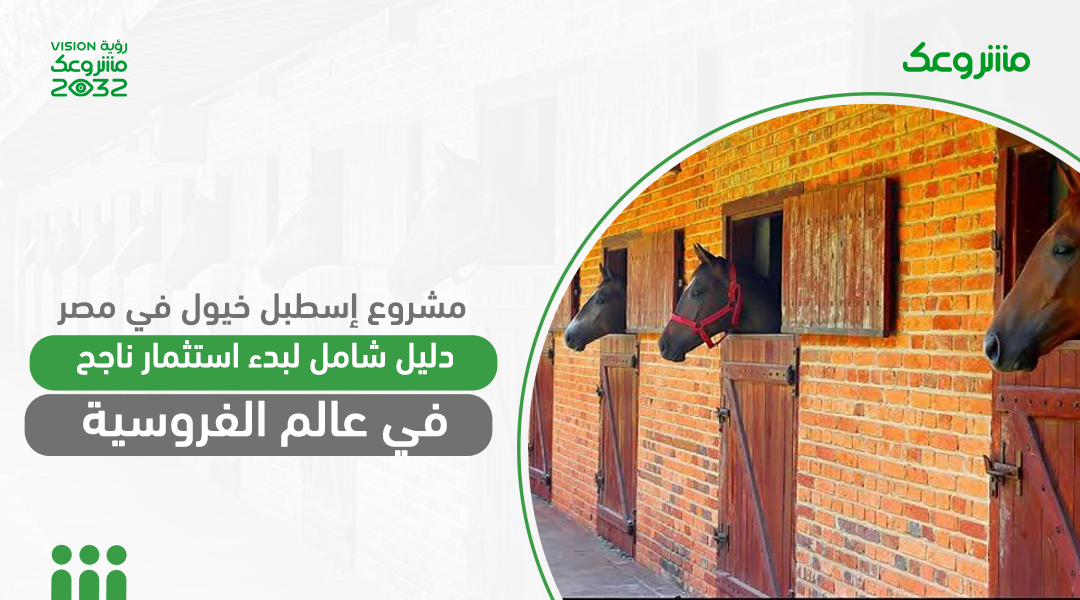
A horse stable project is one of the most distinctive investment opportunities that attracts the attention of both investors and equestrian enthusiasts, given the potential to generate attractive financial returns through a wide range of services, including horse boarding, training, equestrian instruction, horse rental, and other activities related to the industry. With growing interest in equestrian sports and horse breeding in many countries, investing in this type of project has become a promising option that requires careful planning and a clear vision to ensure success and sustainability. In this context, we explore everything you need to know about a horse stable project, starting with the project concept and requirements, through costs and success factors, to the key challenges investors may face and how a feasibility study can pave the way for establishing a successful project that achieves its investment objectives.
A horse stable project is an investment project focused on establishing and equipping a dedicated facility for housing and caring for horses in accordance with the highest safety and health standards, while providing all essential requirements to ensure the horses’ health and comfort. The project is not limited to horse breeding and care; it also includes horse boarding, training, equestrian instruction, horse rental, and organizing events and competitions related to the industry.
Yes. Global market indicators suggest that a horse stable project can be a financially viable and profitable investment, supported by sustained demand for equestrian services and the expanding consumer base worldwide. The global horse riding tourism market was valued at approximately USD 9.33 billion in 2025 and is expected to continue growing at a compound annual growth rate (CAGR) of 4.9% from 2025 to 2035, reaching approximately USD 15.0 billion by 2035. This reflects the market’s expanding size and continued growth opportunities, confirming that investment in this sector has strong potential to generate attractive returns when the right services are selected and the project is managed efficiently.
A horse stable project is considered a promising investment opportunity due to its numerous advantages, making it an attractive option for those interested in the equestrian sector and seeking sustainable investment returns. The key advantages include:
Read here: Why Is an Equestrian Club Project Considered a Smart and Sustainable Investment?
Market research is one of the most important steps before establishing a horse stable project, as it helps assess the level of demand, identify target customer segments, and understand the competitive landscape, ensuring sound investment decisions. The market study covers the following key areas:
Read here: Market Research for a Project: The Foundation for Investment Planning and Selecting the Most Profitable Opportunities.
Read here: Competitor Analysis: The Key to Sustainability and Success in the World of Business.
The cost of starting a horse stable project depends on several factors, including the project size, the number of horses targeted, and the level of facilities and services to be provided. Therefore, costs vary from one project to another based on the investment size and operational objectives. The main cost items include the following:
A horse stable project requires a range of essential facilities and equipment to ensure the horses’ comfort and safety while providing professional services to customers. The most important requirements include:
The success of a horse stable project depends on several factors that contribute to providing high-quality services, attracting customers, and achieving sustainable investment returns. The most important factors include:
A horse stable project generates revenue through a diverse range of services, helping increase income and reduce reliance on a single revenue stream. The main sources of revenue include:
Read Here: Everything You Need to Know About SWOT Analysis and How It Is Applied
“When I decided to launch a horse stable project in Cairo, I realized the scale of the investment and preparation required. However, the implementation process was challenged by two major obstacles: first, the lack of precise strategic planning regarding market size, costs, and administrative structure; and second, securing the necessary financing to execute the project.
This is where the strategic partnership with Mashroo3k Consulting marked a turning point. The company provided a comprehensive feasibility study covering the marketing, technical, financial, and administrative aspects, creating a clear roadmap for every stage of the project.
Most importantly, the team provided structured financing solutions and supported me throughout the process of meeting the requirements of the Micro, Small and Medium Enterprises Development Agency (MSMEDA). This enabled me to secure the required capital and implement the project accurately in accordance with the established plan.”
Horse stable supplies include a range of essential equipment that ensures the horses’ comfort and safety, such as feeders and water troughs, saddles and bridles, horse grooming and hoof-care tools, suitable flooring, feed storage facilities, training equipment, ventilation and lighting systems, as well as safety and veterinary care supplies. These requirements contribute to creating a healthy and safe environment inside the stable.
Yes, horse trading can be a profitable activity when managed according to a well-planned strategy. Profitability depends on selecting suitable breeds, providing high-quality care and training, and effectively marketing horses in target markets. It is also influenced by factors such as feeding and veterinary care costs, market demand, and the experience of the project operators. Therefore, it is recommended to prepare a comprehensive feasibility study to assess expected costs and revenues before making an investment.
There are several ways to generate revenue from horses, including selling horses after breeding or training, providing horse boarding services for a fee, renting horses for training, recreational rides, and events, organizing equestrian training courses, and training horses for races and competitions. Additional revenue can be generated through horse care and grooming services and the sale of equestrian supplies. Diversifying these activities helps increase revenue and achieve a more stable return on investment.
There is no fixed area that is suitable for all projects. The ideal size for a horse stable project depends on the number of horses targeted and the services the project will provide. However, the area should be sufficient to accommodate stables, training arenas, feed storage facilities, service facilities, and safe movement areas for horses. Selecting a site that allows for future expansion also makes it possible to add new services and increase the project’s capacity as the business grows.
The profitability of horse stables depends on management quality, the diversity of services provided, and the level of demand in the target market. The more successfully a project provides services such as horse boarding, training, equestrian instruction, horse rental, and specialized care, the greater its potential to generate stable revenue. Effective cost management, a strong focus on service quality, and preparing an accurate feasibility study before implementation can further enhance profitability and support sustainable investment returns.
Opening a horse stable requires selecting a suitable location that meets regulatory requirements and obtaining the necessary licenses and approvals from the relevant authorities. The stable must be equipped in accordance with safety, health, and animal welfare standards, with adequate spaces for horse boarding and training arenas. It should also have proper ventilation and drainage systems and employ qualified personnel to care for the horses and oversee operations, while complying with the veterinary and health requirements applicable in the country.
In conclusion, this sector represents a unique combination of passion and smart investment. The path to success begins with proper planning, careful site selection, and close attention to the details of horse care. With growing interest in equestrian sports, the project stands out as a strategic option for serious investors, offering opportunities for sustainability and continued growth for those who manage it effectively and carefully plan every step.

For more information and to request a feasibility study for a horse stable project, please contact us.
The kebab restaurant project is one of the food-service ventures that combines strong demand for grilled meals with the opportunity to target a diverse customer base, including individuals, families, and lovers of traditional Middle Eastern cuisine. With growing competition in the restaurant sector, however, the project’s success is no longer determined by food taste alone. […]
Read moreA children’s toy store project is not limited to selling toys; it is built on understanding what attracts children and what families look for when choosing products that combine entertainment and educational value. With the wide variety of educational toys, skill-development games, recreational toys, and gifts available, the store has opportunities to meet the needs […]
Read moreA residential complex project is no longer simply an investment in a collection of real estate units. It has evolved into an integrated development model that combines comfortable living, diverse services, and long-term investment value. As cities expand and residents’ needs evolve, demand is growing for residential complexes that offer a comprehensive environment suited to […]
Read moreThe veterinary clinic project comes at a time when animal care is no longer limited to treating illnesses or injuries, but has expanded to include health monitoring, vaccinations, routine checkups, and care for both pets and livestock. However, many animal owners face challenges in accessing specialized veterinary services that combine prompt response, high-quality care, and […]
Read more
خصم 25% على خدمات مشروعك استفد من العرض الآن، فالفرصة متاحة لفترة محدودة فقط
سجّل بياناتك واحصل على خصم 25% الآن


