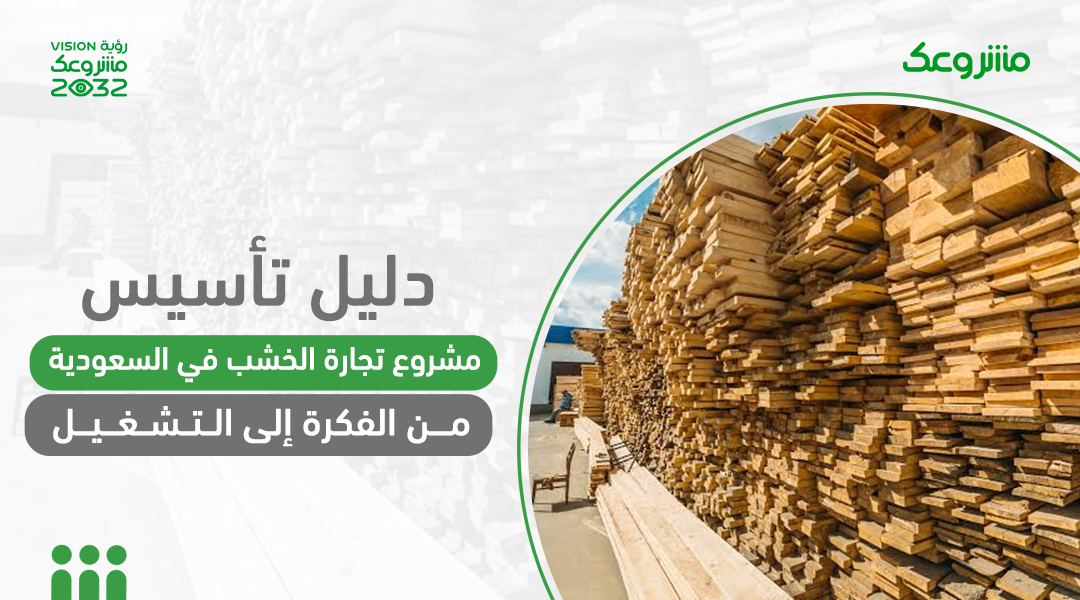
The wood trading business project is considered one of the commercial ventures with continuous growth opportunities, driven by the increasing demand for wood across the construction, furniture, interior decoration, and finishing sectors. With urban expansion and the growing number of residential and commercial projects, investing in this field has become a promising option for those seeking a business that combines stability with the potential to generate attractive returns. However, the success of the project does not depend solely on providing products; it requires careful planning, selecting the right suppliers, and understanding market and customer needs. In this context, we will explore the key steps required to start a wood trading business, the main requirements and expected costs, the necessary licenses, effective marketing strategies, and the factors that can help you achieve success and sustain your business in this promising sector.
A wood trading business is a commercial activity based on purchasing wood from manufacturers, importers, or authorized suppliers and then selling it to target customers such as carpentry workshops, furniture manufacturers, contracting companies, and finishing stores, whether on a wholesale or retail basis. The business involves providing various types of wood to meet market needs, while focusing on product quality, inventory management, and building a strong network of suppliers and customers. This project is considered a promising investment opportunity due to the continued demand for wood across various sectors, giving it strong potential for growth and attractive returns when properly planned and efficiently managed.
Read here: Wood Recycling Plant Project: A Profitable Venture with a Guaranteed Return on Investment
The wood trading business project is considered one of the promising ventures, supported by the continuous growth in demand for wood and wood products across the construction, furniture, and interior decoration sectors. This is reflected in the size of the global wood trading market, which was valued at USD 1.05 billion in 2025 and is expected to increase from USD 1.1 billion in 2026 to USD 1.6 billion by 2034, at a compound annual growth rate (CAGR) of 4.76% during the forecast period. This reflects attractive investment opportunities for those looking to enter this sector.
Read here: Saudi Wood Industry Market Report
A wood trading business is considered a promising venture due to several key investment advantages, including the following:
The cost of a wood trading business varies depending on several key factors, including the scale of the business, the types of wood to be traded, the target inventory volume, the project location, and the level of facilities and services provided to customers. These costs are distributed across several essential items that form the project’s financial structure, including:
Fluctuations in wood prices are among the most significant challenges that may affect the project’s profitability, particularly with changes in import prices or transportation costs. This risk can be mitigated by continuously monitoring the market, diversifying suppliers, and purchasing appropriate quantities when prices are stable.
Wood may be damaged due to moisture, improper storage, or exposure to environmental factors, resulting in financial losses. To avoid this, well-equipped warehouses should be provided, along with proper storage practices that preserve product quality.
Supplier delays in delivering shipments may lead to inventory shortages and the inability to fulfill customer orders on time. This issue can be overcome by working with multiple suppliers and maintaining a reserve inventory sufficient to cover essential needs.
The wood trading sector is highly competitive, which may affect sales volume. To overcome this challenge, the business should focus on providing high-quality products, offering a diverse product range, adhering to delivery schedules, and building strong customer relationships.
Poor inventory management may result in shortages of certain products or the accumulation of large quantities of wood that are difficult to sell. This can be avoided by using an effective inventory management system and regularly monitoring sales activity.
Transportation, storage, and labor costs may increase, affecting profit margins. Therefore, it is recommended to continuously monitor expenses, improve operational efficiency, and negotiate with suppliers and transportation companies to secure the best possible rates.
Workers may be exposed to injuries while loading or moving wood or operating cutting equipment. To minimize these risks, safety procedures must be followed, appropriate personal protective equipment must be provided, and workers must be trained in safe working practices.
| Item | Analysis |
|---|---|
| Strengths | High demand for wood across the construction and furniture sectors. A wide variety of products that can be supplied. Potential to achieve good profit margins. The project can be scaled as sales volume increases. |
| Weaknesses | The need for sufficient capital to maintain a diverse inventory. High storage and transportation costs. The need for large spaces to store wood safely. |
| Opportunities | Urban expansion and the increase in construction projects. Growth in the furniture and interior decoration sectors. Potential to expand into online sales. Providing services such as cutting and supplying wood for projects. |
| Threats | Fluctuations in global wood prices. Rising shipping and import costs. Strong competition among traders. Potential delays in supply operations or disruptions in supply chains. |
Managing a wood trading business in Riyadh was not as easy as I had expected. At the beginning of operations, I faced several challenges that affected the workflow, most notably inadequate planning and the lack of a clear study outlining the project’s requirements and management approach. I also faced difficulties in selecting the right suppliers, determining the appropriate inventory level, and addressing marketing challenges that limited my ability to reach target customers.
Therefore, I decided to seek the support of Mashroo3k Consulting. The company prepared a comprehensive feasibility study covering the marketing, technical, financial, and administrative aspects, which helped me organize the implementation steps and make decisions based on clear and well-defined foundations.
The company’s role was not limited to preparing the study; it also provided practical solutions to the marketing challenges facing the project, which helped improve performance, streamline operational processes, and enhance work efficiency. As a result, the project became more competitive and achieved better results thanks to the comprehensive support provided by the experts at Mashro3k Consulting.
Yes, the wood trade is considered a commercial activity with good profit potential due to the continued demand for wood across various sectors, including construction, furniture manufacturing, interior decoration, and finishing. Project profitability depends on several factors, most importantly careful supplier selection, offering a diverse range of high-quality wood products, efficient inventory management, appropriate pricing, and building a stable customer base. The more successfully the business owner reduces operating costs and flexibly meets market needs, the greater the potential for achieving attractive returns and sustaining the business over the long term.
A wood trading business can offer a wide range of products that meet the needs of various sectors, including natural wood such as pine, beech, and oak, as well as engineered wood such as MDF, plywood, blockboard, and particleboard. The business can also offer moisture- and insect-resistant treated wood, in addition to wood products used for finishing and interior decoration. Diversifying these products helps meet different customer needs, increase sales opportunities, and achieve better returns.
Wood used in furniture manufacturing can be sourced from sawmills, local wood suppliers, importing companies, and authorized distributors that provide various types of natural and engineered wood. Some manufacturers also rely on direct imports to obtain specific types of wood that are not locally available. It is preferable to choose a reliable supplier that ensures wood quality, product variety, and adherence to delivery schedules, helping maintain the quality of the final product and ensure production continuity.
Wood is used in many important industries, most notably furniture manufacturing in its various forms, door and window manufacturing, construction and building works such as formwork and wooden molds, interior decoration and finishing, including flooring, ceilings, and walls, as well as the manufacturing of wooden packaging and pallets used for packaging, storage, and transporting goods.
The best type of wood varies depending on its intended use. However, in terms of quality and durability, oak wood comes first due to its strength and long lifespan, followed by mahogany, which is known for its luxurious appearance and moisture resistance. Next comes beech wood, one of the most widely used types in furniture manufacturing due to its hardness and ease of shaping. Pine (Swedish) wood comes next because of its lightweight nature and versatility, followed by Mouski wood, which is an economical option suitable for many carpentry and finishing applications. Ultimately, selecting the most suitable type depends on the intended use, the required product quality, and the available budget.
We can say that a wood trading business project is one of the key investment ventures with promising growth opportunities, driven by the continuous demand for wood across the construction, furniture, and interior decoration sectors. However, achieving success in this field requires a thorough feasibility study, careful supplier selection, efficient inventory management, and the implementation of an effective marketing plan that meets market needs. If you are looking to establish a business based on well-studied foundations and minimize potential risks, seeking the expertise of specialists in preparing feasibility studies is an important step that can help you make sound investment decisions and confidently move forward toward a successful and sustainable project.

For more information and to request a feasibility study for a wood trading business project.
The kebab restaurant project is one of the food-service ventures that combines strong demand for grilled meals with the opportunity to target a diverse customer base, including individuals, families, and lovers of traditional Middle Eastern cuisine. With growing competition in the restaurant sector, however, the project’s success is no longer determined by food taste alone. […]
Read moreA children’s toy store project is not limited to selling toys; it is built on understanding what attracts children and what families look for when choosing products that combine entertainment and educational value. With the wide variety of educational toys, skill-development games, recreational toys, and gifts available, the store has opportunities to meet the needs […]
Read moreA residential complex project is no longer simply an investment in a collection of real estate units. It has evolved into an integrated development model that combines comfortable living, diverse services, and long-term investment value. As cities expand and residents’ needs evolve, demand is growing for residential complexes that offer a comprehensive environment suited to […]
Read moreThe veterinary clinic project comes at a time when animal care is no longer limited to treating illnesses or injuries, but has expanded to include health monitoring, vaccinations, routine checkups, and care for both pets and livestock. However, many animal owners face challenges in accessing specialized veterinary services that combine prompt response, high-quality care, and […]
Read more
خصم 25% على خدمات مشروعك استفد من العرض الآن، فالفرصة متاحة لفترة محدودة فقط
سجّل بياناتك واحصل على خصم 25% الآن


