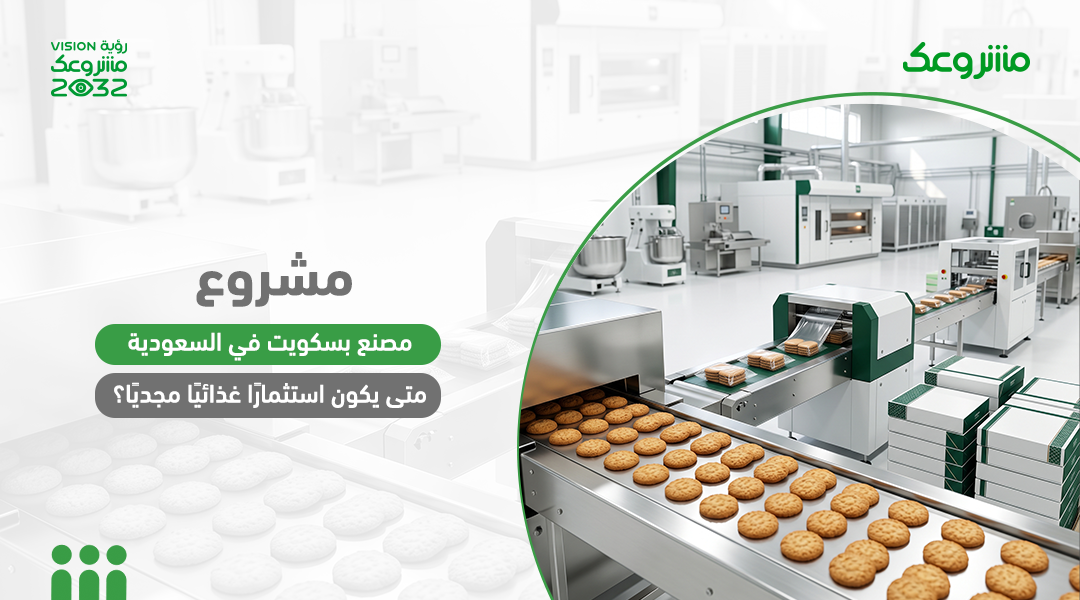
A biscuit factory project is considered one of the key investment opportunities in the food manufacturing sector, particularly given the wide range of biscuit applications and the diverse consumer segments seeking products that meet their needs in terms of price and quality. However, the success of the project does not depend solely on having a modern production line; it also depends on the investor’s ability to select in-demand products, determine the appropriate production capacity, manage operating costs efficiently, and establish distribution channels capable of reaching target markets.
The diversity of biscuit products also creates opportunities to target multiple market segments by offering different varieties in terms of flavors, sizes, ingredients, and packaging. Therefore, conducting market research and assessing demand and competition are essential, along with estimating establishment and operating costs and projected revenues before making an investment decision.
In this article, we explore the key requirements of a biscuit factory project, including the production stages, necessary equipment, costs, and factors affecting profitability. This helps investors develop a clearer understanding of the project’s feasibility and growth pote
A biscuit factory project is a food manufacturing venture focused on producing a wide range of biscuit products using basic ingredients such as flour, sugar, oils or fats, along with various flavors and other additives. The production process involves shaping, baking, and packaging the products in suitable packaging for distribution and sale.
The factory aims to meet the growing demand for biscuits as widely consumed snack products, while offering opportunities to diversify the product range to include plain biscuits, filled biscuits, chocolate-coated biscuits, wafers, and other varieties. The project also provides opportunities to expand production and reach various sales channels, including retail stores, supermarkets, and distributors..
Read More: Dessert Sales Project: A Profitable Business Idea with Flexible Capital
Yes, a biscuit factory project is considered one of the food industry ventures worth considering for investment, driven by its strong profitability potential and the continued demand for biscuits and snack products. According to recent statistics,the global biscuit marketwas valued at USD 113.76 billion in 2025 and is projected to grow from USD 119.53 billion in 2026 to USD 190.37 billion by 2034, registering a compound annual growth rate (CAGR) of 5.99% during the forecast period.
What makes a biscuit factory project an attractive investment opportunity is the range of investment advantages it offers, including the following:
How to start small industrial projects and achieve long-term financial sustainability?
The cost of establishing a biscuit factory project varies depending on the factory’s size, targeted production capacity, level of automation, and type of products. The main cost items include:
Read here: Discover the Best Small Project That Fits Your Resources in 2025
Read here: How to Achieve Financial Success by Investing in Successful Small Projects
A biscuit factory project can gain a competitive advantage in the Saudi market by competing on more than just price and offering products that suit consumer preferences, maintain consistent quality, achieve broad distribution, and have a clear local identity. The market also shows promising growth potential. According to recent estimates, the Saudi biscuit market is projected to grow from approximately USD 648.34 million in 2025 to around USD 957.81 million by 2031, at a compound annual growth rate (CAGR) of approximately 6.72%, supported by the expansion of modern retail channels and e-commerce.
Therefore, the factory can strengthen its competitive position by diversifying flavors and sizes, introducing products that align with the growing preference for healthier options, developing flavors inspired by local tastes, improving packaging design, and building a strong distribution network that includes supermarkets, convenience stores, and online platforms. These efforts can help increase brand visibility and reach different consumer segments.
Read Here: Best Projects in Saudi Arabia: Your Guide to Investment Opportunities Aligned with Vision 2030.
Based on global data and statistics indicating continued growth in demand for various types of biscuit products in the Saudi market, I made a strategic decision to expand my biscuit factory project. However, as the development phase began, I encountered a series of operational and competitive challenges, including limited production capacity and a declining ability to meet growing demand. This resulted in a weaker market share and a limited range of products and target markets, in addition to rising production costs and increasing difficulty in competing effectively.
Faced with these challenges, I recognized the need to work with a specialized consulting firm to develop a well-planned growth strategy, which led me to turn to Mashroo3k Consulting.
The company’s team of experts prepared a comprehensive expansion study to assess and evaluate the feasibility of the proposed expansion, which became a key turning point for the project. The study focused on developing a scientific approach to increasing production and sales capacity to meet market demand and access new sales channels, whether by introducing new product lines or increasing supply volumes to strengthen market share.
The consulting plan also focused on reducing production costs to improve operational efficiency and enhance competitiveness. Thanks to this systematic and data-driven approach, the previous challenges were successfully addressed, transforming the factory into a well-organized investment venture capable of expanding and achieving efficient and sustainable production.
The appropriate production capacity for a biscuit factory project is determined based on expected demand, target market size, investment budget, factory space, and production line capacity. It is generally advisable to start with a production capacity that matches actual market demand, with the ability to gradually increase production as sales grow. The factory should also avoid operating at a capacity that exceeds its marketing capabilities, as this may increase operating costs and inventory levels without generating an appropriate return.
The raw materials used in biscuit manufacturing include flour, sugar, oils or fats, as well as milk or milk powder and eggs, depending on the type of product. Other ingredients may include starches, cocoa, flavorings, leavening agents, and salt. The formulation varies according to the type of biscuit and the desired recipe. Packaging materials are also considered essential production supplies, as they help preserve product quality and safety.
The most in-demand biscuit varieties vary depending on the target customer segment and sales channels. However, sweet biscuits and cookies are among the major product categories in demand in the Saudi market, particularly chocolate-flavored, cream-filled, and coated biscuits. Wafers, plain biscuits, and savory crackers also have a strong presence, alongside growing interest in healthier options such as low-sugar and high-fiber biscuits.
In conclusion, given the diverse demand for biscuit products and the growing opportunities for innovation in the food manufacturing sector, a biscuit factory project represents a viable investment opportunity that can be developed according to market size and the targeted production capacity.
The success of the project, however, depends on accurately understanding market needs, selecting a suitable production line, controlling operating costs, and offering products with competitive quality, along with establishing an effective marketing and distribution network. Therefore, the investment decision should not be based solely on general expectations, but rather on a comprehensive financial, technical, and market analysis that clarifies the required investment, expected returns, and potential risks.
With proper planning and effective management, the project can develop into a scalable business capable of adapting to market changes and pursuing future growth. Take the first step by conducting a comprehensive feasibility study to evaluate the investment opportunity and make a decision based on clear, reliable data.

To contact us and request a feasibility study for a Biscuit Factory Project.
The kebab restaurant project is one of the food-service ventures that combines strong demand for grilled meals with the opportunity to target a diverse customer base, including individuals, families, and lovers of traditional Middle Eastern cuisine. With growing competition in the restaurant sector, however, the project’s success is no longer determined by food taste alone. […]
Read moreA children’s toy store project is not limited to selling toys; it is built on understanding what attracts children and what families look for when choosing products that combine entertainment and educational value. With the wide variety of educational toys, skill-development games, recreational toys, and gifts available, the store has opportunities to meet the needs […]
Read moreA residential complex project is no longer simply an investment in a collection of real estate units. It has evolved into an integrated development model that combines comfortable living, diverse services, and long-term investment value. As cities expand and residents’ needs evolve, demand is growing for residential complexes that offer a comprehensive environment suited to […]
Read moreThe veterinary clinic project comes at a time when animal care is no longer limited to treating illnesses or injuries, but has expanded to include health monitoring, vaccinations, routine checkups, and care for both pets and livestock. However, many animal owners face challenges in accessing specialized veterinary services that combine prompt response, high-quality care, and […]
Read more
خصم 25% على خدمات مشروعك استفد من العرض الآن، فالفرصة متاحة لفترة محدودة فقط
سجّل بياناتك واحصل على خصم 25% الآن


