هذا النص هو مثال لنص يمكن أن يستبدل في نفس المساحة، لقد تم توليد هذا النص من مولد النص العربى، حيث يمكنك أن تولد مثل هذا النص أو العديد من النصوص الأخرى إضافة إلى زيادة عدد الحروف التى يولدها التطبيق.
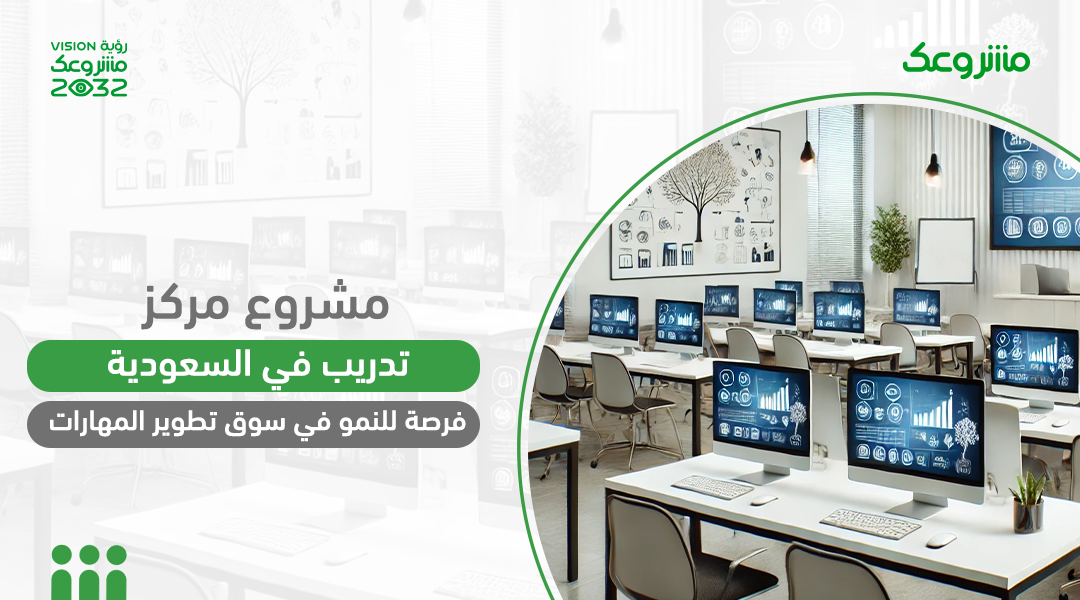
A training center project is no longer simply an idea for establishing classrooms that offer educational courses. It has become an investment opportunity that keeps pace with the rapid changes in the labor market and meets the growing need among individuals and organizations to acquire new skills and develop professional competencies. As job requirements continue to evolve and interest in lifelong learning increases, opportunities are expanding for training centers that offer specialized programs combining high-quality content, qualified trainers, and the actual needs of trainees. However, turning this opportunity into a successful business requires more than just providing facilities and equipment. It calls for a clear vision that begins with market research and identifying in-demand specializations, then extends to selecting the right location, estimating costs, and developing an effective marketing strategy to reach target audiences. So, how can you establish a competitive training center that generates sustainable returns? What are the key requirements, costs, and factors that determine its success? We explore all this in the following sections.
What Is a Training Center Project?
A training center project is a service-based business specializing in providing training programs and courses designed to develop individuals’ skills and enhance their competencies across various professional and educational fields. The center can target different groups, such as students, job seekers, employees, and business owners, depending on the specializations and programs it offers.
The project relies on providing a suitable training environment equipped with well-prepared classrooms, qualified trainers, and curricula and programs aligned with market needs and target audiences. The center can also offer in-person training, online training, or a combination of both, expanding its customer base and increasing its growth opportunities.
Why Is a Training Center Project an Attractive Investment Opportunity?
A training center project is considered an attractive investment opportunity due to several key advantages, including the following:
Growing demand for courses and training programs.
A diverse target audience, including students, employees, graduates, and business owners.
The ability to offer courses across multiple disciplines and fields.
Multiple revenue streams from courses, workshops, and corporate training.
The flexibility to provide in-person or online training.
Ease of expansion by introducing new programs and specializations.
The opportunity to build a strong brand in the training industry.
Lower expansion costs compared with some other service-based businesses.
The potential to achieve good investment returns through effective management and marketing.
Increasing growth opportunities as the labor market continues to demand skills development.
Market Research for a Training Center Project
Identify target customer segments.
Determine the market’s training needs.
Identify the most in-demand courses and specializations.
Analyze the expected demand for the center’s services.
Assess the number of competing training centers.
Analyze the prices of courses and training programs.
Identify competitors’ strengths and weaknesses.
Study customers’ preferences and training needs.
Select specializations that generate consistent demand.
Determine the most suitable location based on population density and the number of potential customers.
Assess the feasibility of offering in-person and online training.
Identify opportunities to provide training programs for companies and organizations.
Evaluate the most effective marketing channels for reaching customers.
Define the center’s competitive advantage.
Monitor changes in the skills required by the labor market.
Identify opportunities to introduce new programs and specializations in the future.
Review the licenses and regulatory requirements governing training center operations.
Define the project concept and the training specializations the center will offer.
Conduct market research to identify target audiences and demand for training programs.
Analyze competitors, pricing, and the services available in the market.
Prepare a feasibility study to determine project costs, revenues, and financial requirements.
Choose a suitable location that is easily accessible and appropriate for the target audience.
Obtain the necessary licenses, approvals, and permits required to operate the business.
Equip training rooms with suitable seating, devices, equipment, and educational tools.
Recruit qualified trainers with relevant experience and expertise in the target specializations.
Develop training programs and curricula that align with customer needs and labor market requirements.
Set course and program prices based on service quality and market competition.
Hire an administrative team and establish procedures for registration, customer service, and follow-up.
Develop a marketing plan to promote the center, attract trainees, and build a customer base.
Launch the training programs and collect trainee feedback to evaluate and improve service quality.
Assess the project’s financial and operational performance, continuously improve programs, and expand gradually.
Cost of a Training Center Project in Saudi Arabia
The cost of a training center project varies depending on the center’s size, location, number of training rooms, specializations offered, and the level of available facilities and services. The main cost components include:
The cost of renting or preparing suitable premises for the training center.
Interior finishing, decoration, and training room setup costs.
Furniture expenses, including tables, chairs, administrative desks, and reception furniture.
The cost of computers, screens, projectors, and training equipment.
Internet network installation, communication systems, and technical services.
Fees for the licenses, permits, and approvals required to operate the business.
Salaries for trainers, employees, and administrative staff.
The cost of developing curricula, training materials, and educational kits.
Marketing, advertising, and customer acquisition expenses.
Recurring utility and service costs, such as electricity, water, and internet.
The center’s operational and administrative expenses.
Routine maintenance costs for equipment and facilities.
Working capital to cover expenses during the initial operating period.
Costs of developing training programs and introducing new specializations and services.
Services Offered by a Training Center Project
Providing specialized training courses in professional, administrative, and technical fields.
Organizing practical workshops to develop skills and hands-on experience.
Offering training programs to prepare graduates and job seekers for employment opportunities.
Delivering professional development programs for employees and workers across various sectors.
Providing customized training programs for companies and organizations based on their needs.
Offering courses in languages, computer skills, and modern technologies.
Providing online training alongside in-person sessions to reach a wider customer base.
Offering career guidance and consulting services related to selected training programs and specializations.
Conducting tests and assessments to measure trainees’ proficiency and learning outcomes.
Issuing certificates of completion in accordance with applicable regulations and requirements.
Providing equipped rooms for seminars, events, and training sessions.
Offering advanced training programs for experienced professionals seeking to advance their careers.
How to Choose a Suitable Location for a Training Center Project
Choose a location close to the center’s target audience.
Ensure the site is easily accessible through various means of transportation.
Select an area with suitable population density or commercial and educational activity.
Provide sufficient space for training rooms, administration, reception, and other facilities.
Ensure adequate parking is available for trainees and staff.
Choose a location with a suitable noise level to maintain a productive learning environment.
Assess the presence of competing training centers nearby and evaluate their potential impact on the project.
Ensure reliable access to electricity, water, and internet services.
Select premises that allow the required fit-out work and comply with training activity regulations.
Consider visibility and clear signage to help customers locate the center easily.
Compare rental prices across different areas and select a location that fits the budget.
Consider future expansion opportunities if trainee numbers and services increase.
How Does a Feasibility Study Help Reduce the Risks of a Training Center Project?
A feasibility study helps reduce the risks associated with a training center project by analyzing the target market and identifying trainees’ needs and the programs most in demand. This helps investors select suitable specializations and avoid investing in courses that may not attract sufficient interest.
It also helps estimate setup and operating costs, calculate projected revenues and profits, and determine the required capital to minimize the risk of financial difficulties. The technical feasibility study supports the selection of an appropriate location and determines the necessary equipment and training rooms, while the marketing study helps develop effective strategies to attract customers and strengthen the center’s competitive position.
In addition, the feasibility study identifies potential challenges, such as intense competition, changes in demand for training programs, and difficulties recruiting qualified trainers. It also helps develop contingency plans to address these challenges, supporting informed investment decisions and increasing the likelihood of the project’s success and long-term sustainability.
Key Risks That May Hinder the Implementation of a Training Center Project
Intense competition from traditional training centers and online platforms offering a wide range of programs.
Low enrollment in certain courses due to selecting specializations that do not adequately align with customer needs.
Reliance on unqualified trainers, which may affect training quality, trainee satisfaction, and the center’s reputation.
High operating costs, including rent, salaries, equipment, marketing, and essential services.
Ineffective marketing, resulting in limited customer reach and failure to achieve target enrollment numbers.
Failure to update training programs to reflect new skills and specializations in demand in the labor market.
Poor training content quality, which may reduce customer satisfaction and make it difficult to retain trainees.
Changing market needs and the emergence of new specializations and skills, which may reduce demand for certain programs over time.
Price competition, particularly from providers offering low-cost courses or free online training content.
Regulatory risks arising from failure to comply with the licenses and requirements governing training center operations.
Weak financial management, which may lead to difficulties covering expenses or managing cash flow efficiently.
Difficulty building a stable customer base during the initial stages of the project, requiring time and effort to establish trust and a strong market reputation.
My Experience with a Training Center Project
With the training market expanding and the need for individuals and companies in Saudi Arabia to develop skills and enhance competencies growing, I saw a training center project as an investment opportunity with strong potential for growth and expansion. However, as I began implementing the project, I faced several challenges. The most significant were the lack of a comprehensive understanding of the technical and operational requirements, the investment needed to equip the center, and limited liquidity, which affected my ability to provide the necessary facilities and training programs as required.
Therefore, I sought the assistance of Mashroo3k Consulting, where I obtained a comprehensive and accurate feasibility study covering all aspects of the project, from technical requirements, equipment, and training programs to projected costs and revenues, marketing opportunities, and financing needs. The company’s role went beyond preparing the feasibility study; it also helped me prepare the file and supporting documents required to apply to financing institutions, making it easier for me to secure funding from Social Development Bank This funding enabled me to equip the center, provide its essential requirements, develop its services, and enhance its operational capacity. As a result, I was able to offer a diverse range of training programs and meet customer needs more efficiently. By implementing the recommendations outlined in the feasibility study, the project experienced a clear improvement in its operations and performance, becoming better positioned to compete and generate good returns in the Saudi market.
What Are the Requirements for Establishing a Training Center?
The requirements for establishing a training center vary depending on the country and the regulatory authority governing the activity. However, they typically include obtaining the necessary licenses and official approvals, securing suitable premises that meet safety and space requirements, and equipping training rooms with the necessary facilities and services. Other requirements include hiring qualified trainers, offering accredited training programs in accordance with applicable regulations, complying with administrative and organizational standards, renewing the required licenses and accreditations, and maintaining an appropriate level of quality in training and the services provided.
What Courses Can Be Offered at a Training Center?
A training center can offer a diverse range of courses tailored to market needs and target audiences, including management and business administration, marketing and sales, customer service, accounting and finance, and human resources. It can also provide courses in computer skills, digital skills, programming, design, and content creation. Other offerings may include language courses, communication skills, leadership, time management, and teamwork, as well as entrepreneurship programs and vocational and technical training. In addition, the center can design specialized training programs for companies and organizations based on their employees’ needs, while continuously updating course content to keep pace with labor market developments and evolving skill requirements.
In Conclusion: Our Discussion of the Training Center Project
We can see that a training center represents a promising investment opportunity amid the growing demand for skills development and enhanced professional competencies across various fields. The project’s success ultimately depends on understanding market needs, selecting in-demand training programs, recruiting qualified trainers, and implementing effective management and marketing strategies. Careful financial planning and a specialized feasibility study also help determine the expected investment requirements and assess profitability potential before launching the project. By building a strong reputation and delivering an exceptional training experience, a training center can establish a stable customer base and unlock new opportunities for expansion and growth. Therefore, taking well-planned steps from the outset is essential to building a competitive training center that delivers sustainable investment returns.
Contact us to request a feasibility study for a training center project
The kebab restaurant project is one of the food-service ventures that combines strong demand for grilled meals with the opportunity to target a diverse customer base, including individuals, families, and lovers of traditional Middle Eastern cuisine. With growing competition in the restaurant sector, however, the project’s success is no longer determined by food taste alone. […]
A children’s toy store project is not limited to selling toys; it is built on understanding what attracts children and what families look for when choosing products that combine entertainment and educational value. With the wide variety of educational toys, skill-development games, recreational toys, and gifts available, the store has opportunities to meet the needs […]
A residential complex project is no longer simply an investment in a collection of real estate units. It has evolved into an integrated development model that combines comfortable living, diverse services, and long-term investment value. As cities expand and residents’ needs evolve, demand is growing for residential complexes that offer a comprehensive environment suited to […]
The veterinary clinic project comes at a time when animal care is no longer limited to treating illnesses or injuries, but has expanded to include health monitoring, vaccinations, routine checkups, and care for both pets and livestock. However, many animal owners face challenges in accessing specialized veterinary services that combine prompt response, high-quality care, and […]