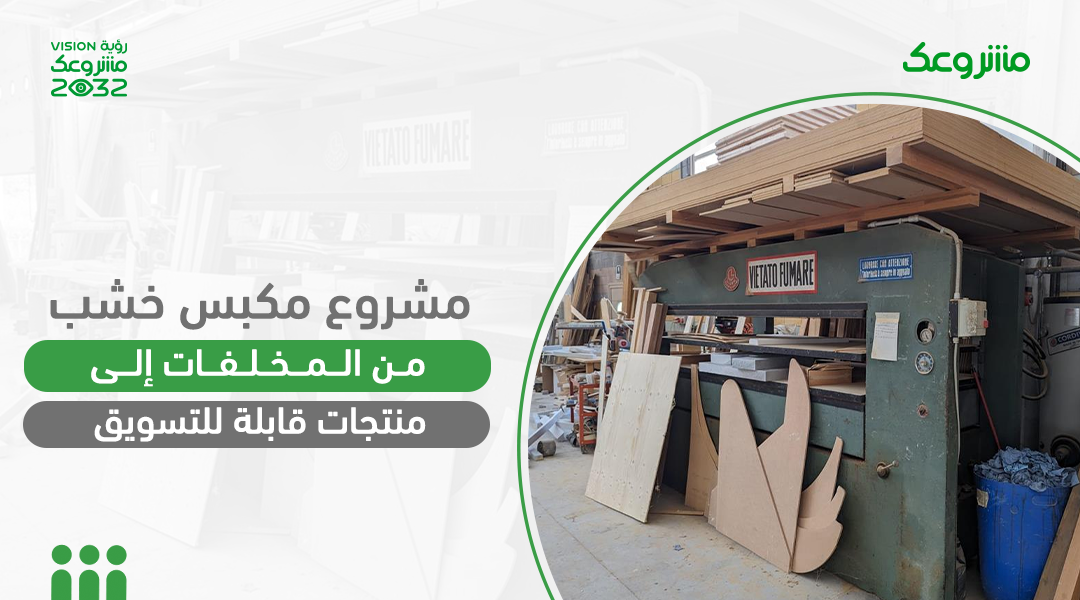
The wood pressing machine project represents an investment opportunity worth exploring, given the continuous expansion of the wood products industry and the growing demand for products used in furniture, interior design, and various industrial applications.
The project offers the potential to manufacture compressed wood products with different specifications to meet the needs of various customer segments, with opportunities to develop production and expand gradually in line with market demand.
The project’s success depends on carefully planning production processes, selecting appropriate equipment and technologies, securing raw materials that meet the required specifications, and determining production capacity in accordance with market needs.
The investment also requires a thorough assessment of capital and operating costs, an analysis of competitors and target customers, and the identification of suitable sales channels and future growth opportunities.
Therefore, a comprehensive feasibility study helps evaluate the required investment, operational needs, and expected revenues, while identifying potential challenges and risks. This provides investors with a clear understanding of the project and supports informed investment decisions.
The wood pressing project is an industrial venture that aims to utilize wood waste and sawdust by compressing, shaping, and converting them into pressed products. These may include wood briquettes used in certain energy applications or panels designed for various industrial uses, depending on the type of press and the technologies employed.
Yes, the wood pressing project represents a promising investment opportunity amid the continued growth of the engineered wood and compressed wood products market. According to the data, the market size reached… The market reached approximately 285.44 million cubic meters in 2025 and is expected to grow to 300.05 million cubic meters in 2026, before increasing to 385.14 million cubic meters by 2031, representing a compound annual growth rate (CAGR) of 5.12% over the period from 2026 to 2031.
This growth reflects the increasing use of wood products in the construction, furniture, and interior furnishing sectors, creating further expansion opportunities for wood pressing projects. These opportunities can be maximized through effective production planning and the selection of equipment and raw materials that meet market requirements.
Read here: Saudi Wood Industry Market Report
Read Here: A Guide to Establishing a Wood Trading Business in Saudi Arabia, from Concept to Operation
| Equipment and Technologies | Purpose |
|---|---|
| Wood Press (Hydraulic or Thermal) | Compressing raw materials and forming wood panels according to the required thickness and density. |
| Raw Material Drying Units | Controlling moisture content to ensure a stable pressing process and improve the properties of the final product. |
| Mechanical Mixer | Mixing wood particles or fibers with binding agents evenly before pressing and forming. |
| Sanding and Finishing Machines | Improving panel surface quality and preparing panels for final processing and use. |
| Trimming and Cutting Equipment | Adjusting wood panel dimensions and trimming their edges after the pressing process. |
| Control and Monitoring Systems | Regulating pressure, temperature, and operating time while monitoring production process efficiency. |
| Waste Extraction and Collection Systems | Collecting sawdust and wood scraps generated during operation and preventing their accumulation in the production area. |
| Raw Material Forming and Distribution Systems | Distributing materials evenly before pressing to produce panels with consistent density and thickness. |
The costs of a wood pressing project are divided into several key categories. The amount varies depending on the project size, production capacity, and type of equipment used. These costs include:
Read here: Wood Recycling Plant Project: A Profitable Venture with a Guaranteed Return on Investment
The long-term sustainability of a wood pressing project depends on several operational factors that help maintain its efficiency and competitiveness in the market. The most important include:
| Operational Challenge | Impact on the Wood Pressing Project | Ways to Overcome It |
|---|---|---|
| Variations in Raw Material Quality | May lead to inconsistencies in final product properties and higher waste rates. | Establish clear raw material inspection standards and work with reliable suppliers. |
| Wood Press Equipment Breakdowns | Can halt production lines and delay customer orders. | Implement a preventive maintenance program and conduct regular equipment inspections. |
| High Energy Consumption | Increases operating costs and reduces profit margins. | Use energy-efficient equipment and regularly monitor energy consumption rates. |
| Inconsistent Product Quality | May affect customer satisfaction and weaken the project’s competitiveness. | Control pressure, temperature, and pressing time according to product specifications. |
| High Waste Generation | Increases raw material costs and reduces production efficiency. | Improve operating methods and make use of reusable wood waste. |
| Intense Market Competition | May put pressure on prices and affect the project’s market share. | Focus on product quality, operational efficiency, and on-time delivery. |
A feasibility study helps evaluate a wood pressing project before implementation by examining the key factors that influence its ability to generate economic returns and maintain operational sustainability. The main areas of assessment include:
This aims to measure demand for wood products, identify target customer segments, and analyze competitors and pricing, helping estimate the available market opportunities.
This involves determining the project location, facility size, and production capacity, as well as selecting the machinery, equipment, raw materials, and necessary facilities in line with the nature of the business and the target production volume.
Read here: 7 Essential Elements Underpinning the Technical Feasibility Study of Projects
This includes determining the costs of establishing and equipping the project, along with operating expenses related to production, labor, energy, maintenance, and marketing..
This helps estimate projected revenues, cash flows, and profits, along with key indicators such as the payback period and return on investment (ROI).
Read Here: Financial Feasibility Studies for Entrepreneurs (Definition, Objectives, and Components)
This focuses on identifying potential market, operational, and financial risks and developing appropriate measures to minimize their impact on the project’s performance.
This helps identify opportunities to increase production capacity, develop new products, and reach new markets and customer segments in the future.
The findings of the analysis are consolidated into a clear overview that helps investors assess the feasibility of implementing a wood pressing project and make informed investment decisions based on a thorough evaluation.
Read here: Marketing:Its Concept, Importance, Types, and the Best Strategies for Implementation
With the growing use of wood products and the increasing opportunities to make use of wood waste, I decided to invest in a wood pressing project. However, during the planning stage, I faced challenges in determining the appropriate production capacity and selecting presses and equipment that matched the target products and market needs. The wide range of available options, along with differences in technical specifications and prices, made decision-making more difficult, particularly given the importance of allocating capital to equipment that would deliver the required efficiency without incurring unnecessary costs.
Therefore, I turned to Mashroo3k Consulting to benefit from its service of sourcing production lines and industrial equipment. The team helped me identify the project’s requirements, select equipment suited to the target production capacity, compare available alternatives and price quotations, and coordinate with suppliers to obtain equipment that matched the nature of the business.
This service helped me develop a clearer understanding of the requirements for establishing the project and make more informed decisions regarding equipment investment, in line with the project’s capabilities and operational objectives.
Thanks to this planning, I became better equipped to allocate investments toward the right equipment, organize production processes on a clear and structured basis, improve operational efficiency, and maintain product quality.
It also helped me prepare for future expansion in line with market demand, strengthen the project’s competitive position, and support sustainable growth in the market.
Read Here:The Role of Artificial Intelligence in Improving Production Line EfficiencyFrequently Asked Questions About a Wood Pressing Project
Establishing a wood pressing project requires obtaining a commercial registration and an industrial license from the relevant authorities, along with environmental and municipal approvals related to the factory location. It is advisable to ensure that all regulatory requirements are met before implementation begins to avoid potential delays during the operational phase.
The investment difference between manual and automatic wood presses is reflected in the required investment, production capacity, and operating costs. A manual press has lower purchase and operating costs, making it a suitable option for small or startup projects. An automatic press, on the other hand, requires a higher initial investment but offers greater productivity and higher manufacturing precision, while reducing reliance on manual labor. Therefore, automatic presses are generally more suitable for medium-sized and large-scale projects seeking to expand and maintain consistent production that meets market demand.
The appropriate space for a wood pressing project depends on its production capacity and equipment size. Sufficient space must be allocated for production lines, raw material and finished product storage, packaging, and material handling areas. It is advisable to determine the required space accurately through a comprehensive technical study that ensures operational efficiency and optimal use of the facility.
Given the opportunities offered by the wood industry and the growing reliance on wood products across various sectors, the wood pressing project is becoming increasingly attractive as an investment opportunity. However, turning this opportunity into a successful business requires careful planning and a thorough assessment of all factors affecting performance and profitability.
Mashroo3k Consulting helps investors evaluate the project comprehensively by analyzing the market and its technical, financial, and marketing aspects, as well as assessing investment requirements, costs, returns, and risks. This provides a clear basis for making informed investment decisions and establishing a solid foundation for a project capable of competing, growing, and generating sustainable returns.

Contact Us to Request a Feasibility Study for a Wood Pressing Project
The kebab restaurant project is one of the food-service ventures that combines strong demand for grilled meals with the opportunity to target a diverse customer base, including individuals, families, and lovers of traditional Middle Eastern cuisine. With growing competition in the restaurant sector, however, the project’s success is no longer determined by food taste alone. […]
Read moreA children’s toy store project is not limited to selling toys; it is built on understanding what attracts children and what families look for when choosing products that combine entertainment and educational value. With the wide variety of educational toys, skill-development games, recreational toys, and gifts available, the store has opportunities to meet the needs […]
Read moreA residential complex project is no longer simply an investment in a collection of real estate units. It has evolved into an integrated development model that combines comfortable living, diverse services, and long-term investment value. As cities expand and residents’ needs evolve, demand is growing for residential complexes that offer a comprehensive environment suited to […]
Read moreThe veterinary clinic project comes at a time when animal care is no longer limited to treating illnesses or injuries, but has expanded to include health monitoring, vaccinations, routine checkups, and care for both pets and livestock. However, many animal owners face challenges in accessing specialized veterinary services that combine prompt response, high-quality care, and […]
Read more
خصم 25% على خدمات مشروعك استفد من العرض الآن، فالفرصة متاحة لفترة محدودة فقط
سجّل بياناتك واحصل على خصم 25% الآن


