هذا النص هو مثال لنص يمكن أن يستبدل في نفس المساحة، لقد تم توليد هذا النص من مولد النص العربى، حيث يمكنك أن تولد مثل هذا النص أو العديد من النصوص الأخرى إضافة إلى زيادة عدد الحروف التى يولدها التطبيق.
The used automotive oil recycling project transforms waste generated daily from oil changes and vehicle maintenance into a valuable resource that can be utilized across various industrial applications. With the growing number of vehicles and the expansion of service centers and maintenance workshops, the volume of used oil requiring safe collection and treatment continues to increase, rather than being disposed of improperly. This creates an opportunity for the project to provide a practical solution to an existing problem while producing materials that can be marketed to industries seeking recycled products. However, investing in this sector depends on more than just the availability of used oil. It also requires efficient collection and treatment processes, the selection of appropriate equipment, a facility that meets regulatory requirements, and access to customers and markets capable of absorbing the final products. Therefore, evaluating the project from technical, marketing, and financial perspectives is an essential step toward understanding its requirements and determining its suitability for the available investment opportunities.
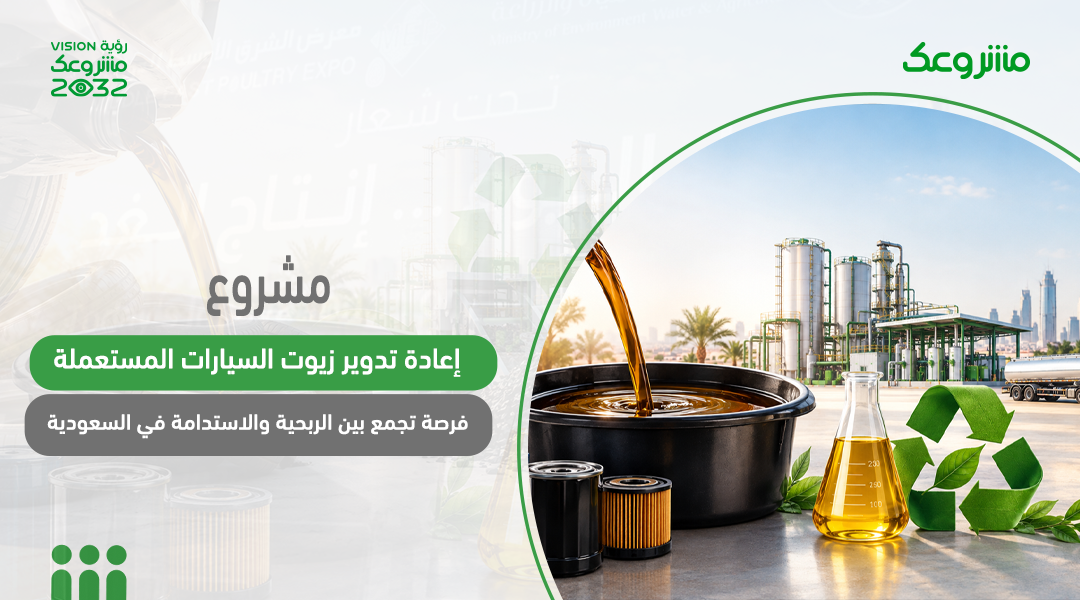
The used automotive oil recycling project focuses on collecting used oil from gas stations and authorized maintenance centers, then subjecting it to a series of purification and treatment processes to remove impurities and contaminants and recover materials suitable for reuse. The process begins with high-efficiency filters and advanced separation equipment to extract water, dirt, and metallic sediments. The oil then undergoes specialized treatment processes to remove unwanted substances and compounds. The treated oil can subsequently be used in various industrial applications, such as lubricating certain types of equipment and machinery, as well as serving as an indirect input in some industries, depending on the product specifications and intended application. The project’s importance extends beyond generating economic value from a used resource. It also helps reduce the demand for certain virgin oils and minimize the environmental risks associated with improper disposal of used oil, thereby supporting resource efficiency and sustainable environmental practices.
Is a Used Automotive Oil Recycling Project Profitable?
Yes, a used automotive oil recycling project can offer promising investment opportunities. According to recent market statistics, the global automotive oil recycling market is expected to grow from USD 21.93 billion in 2025 to USD 31.71 billion by 2031, representing a compound annual growth rate (CAGR) of 6.34% over the forecast period from 2025 to 2031.
Why Are Investors Interested in Used Automotive Oil Recycling Projects?
Providing a recoverable resource by collecting and reprocessing used oil instead of disposing of it.
Access to a broad supply base, including automotive repair workshops, service centers, and oil change stations.
A variety of applications for recycled products, with the potential to serve different industrial uses depending on product quality and specifications.
Benefiting from the growing focus on sustainability, waste management solutions, and recycling.
Contributing to environmental protection and reducing the harmful effects of unsafe used oil disposal.
The opportunity to establish a consistent supply network through contracts with businesses that regularly generate used oil.
Potential for future expansion by improving treatment processes and introducing new products or applications.
Capitalizing on industrial demand for products derived from used oil treatment, with the potential to target multiple sectors depending on the nature of the product.
Generating economic value from waste by transforming used oil from an environmental burden into a resource that can be collected, processed, and marketed.
Market Analysis of the Used Automotive Oil Recycling Project in Saudi Arabia
The engine oil market in Saudi Arabia presents promising investment opportunities for used automotive oil recycling projects. The market was valued at approximately USD 215.6 million in 2025 and is projected to reach USD 289 million by 2034, growing at a compound annual growth rate (CAGR) of 3.31% from 2026 to 2034.
This growth indicates sustained demand for engine oils in the Saudi market, highlighting the importance of exploring opportunities to recover and process used oil into re-refined base oils suitable for various industrial applications, in accordance with the required technical specifications. However, the project’s success depends on the availability of used oil, the efficiency of treatment technologies, and the ability to market finished products at competitive prices.
The Role of the Used Automotive Oil Recycling Project in Supporting the Circular Economy
Reusing used oil instead of disposing of it after the end of its service life.
Reducing resource waste by processing used oil and recovering reusable materials.
Minimizing environmental pollution caused by the improper disposal of used oil.
Reducing reliance on virgin raw materials by reintegrating recovered resources into the production cycle.
Improving waste management efficiency by transforming used oil into materials suitable for various applications.
Supporting recycling-related industries and creating a value chain that begins with oil collection and ends with treatment and product marketing.
Promoting sustainability in the industrial sector in line with the Kingdom’s transition toward a circular economy.
Contributing to the objectives of Saudi Vision 2030 related to environmental protection, resource efficiency, and sustainable development.
Factors Affecting the Cost of a Used Automotive Oil Recycling Project
The cost of a used automotive oil recycling project is influenced by several technical and operational factors that vary according to project size, production capacity, and the technologies employed. The most important factors include:
Project size and production capacity, as well as the planned expansion of collection and treatment operations.
Project location and its proximity to used oil sources and target markets for finished products.
Site preparation costs to accommodate oil reception, storage, and treatment operations.
The type of recycling equipment used, its efficiency, and the technologies it incorporates.
Storage and transportation systems required to collect and transport used oil safely.
The cost of treatment and purification systems, filters, separation units, and auxiliary equipment.
Licensing requirements and environmental regulations governing oil collection, storage, and treatment.
Labor and operating costs required to manage collection, treatment, and maintenance activities.
Energy and water consumption, depending on the treatment technologies employed.
Maintenance and spare parts costs to maintain equipment efficiency and operational continuity.
Packaging, storage, and marketing costs for products derived from recycling.
Requirements for Establishing a Used Automotive Oil Recycling Project
Selecting a suitable site with sufficient space for receiving, storing, and processing used oil.
Obtaining the necessary licenses and permits and complying with applicable environmental and regulatory requirements.
Providing recycling lines and equipment suited to the project’s production capacity and target products.
Installing safe tanks for receiving and storing used oil before and after treatment.
Providing separation, purification, and treatment systems to handle water, sediments, impurities, and unwanted components.
Arranging suitable methods for collecting and transporting used oil from workshops, maintenance centers, and other supply sources.
Installing safety and protection systems to minimize fire and leakage risks and ensure the safe handling of operating materials.
Employing qualified personnel to operate equipment and oversee treatment, maintenance, and quality control.
Establishing a system for managing secondary waste generated during treatment in accordance with environmental requirements.
Implementing quality control procedures to ensure that finished products meet the specifications required for their intended applications.
Developing a marketing and distribution plan targeting potential industries and customers for recycled products.
Production Stages of a Used Automotive Oil Recycling Project
Collecting used oil from automotive repair workshops, service centers, and oil change stations and transporting it to the facility using appropriate methods.
Inspecting and receiving the oil to verify its characteristics and determine its suitability for treatment.
Storing the oil initially in designated, secure tanks designed to prevent leakage and contamination.
Filtering and separating the oil to remove impurities, sediments, water, and solid particles.
Treating and purifying the oil using appropriate technologies to separate unwanted components and improve its properties.
Performing final treatment to achieve the required characteristics according to the product type and intended application.
Conducting quality tests to verify that the finished product complies with the applicable specifications.
Packaging and storing the finished products in suitable containers or tanks in preparation for distribution and marketing to target sectors.
Key Success Factors for a Used Automotive Oil Recycling Project
Establishing a reliable supply network through clear agreements with used oil generators to ensure a consistent flow of raw materials.
Selecting the appropriate treatment technology based on the characteristics of the available feedstock rather than relying on a single technology without evaluating the properties of the collected oils.
Implementing a strict quality control system from the receipt of used oil through to the testing of the final product.
Identifying target products before operations begin and selecting specifications that align with the needs of the target industries.
Managing secondary waste efficiently and establishing clear handling procedures to prevent the recycling process from becoming a new source of pollution.
Establishing an oil traceability system to document sources, quantities received, treatment stages, and testing results.
Relying on preventive maintenance to reduce unexpected breakdowns and maintain production line efficiency.
Continuously training the operations team on treatment technologies, safety procedures, and responses to operational issues.
Selecting a site that supports the supply chain by providing convenient access to both used oil sources and target markets.
Building a reputation based on product quality and environmental compliance to gain customer trust and establish long-term business relationships.
Frequently Asked Questions About the Used Automotive Oil Recycling Project
How Much Do Used Automotive Oil Recycling Machines Cost?
The prices of used automotive oil recycling machines vary significantly, and there is no single standard price that applies to all equipment. Costs depend on the machine’s production capacity, treatment technology, level of automation, recycling line components, country of manufacture, and shipping, installation, and setup expenses. Costs also vary between machines designed for basic filtration and preliminary purification and complete re-refining lines that process used oil into products meeting specific quality standards.
What Products Does a Used Automotive Oil Recycling Project Produce?
A used automotive oil recycling project produces a range of products depending on the treatment technology and the quality of the used oil. The main outputs include re-refined base oils, which can be used in the manufacture of lubricants, as well as certain oils and hydrocarbon materials intended for specific industrial applications.
What Raw Materials Are Required to Implement a Used Automotive Oil Recycling Project?
The raw materials required for a used automotive oil recycling project primarily consist of used oil collected from maintenance workshops, service centers, and oil change stations, along with auxiliary materials used during treatment and purification processes. These materials and operational supplies include used oil, filtration and separation materials, and certain auxiliary substances needed to remove impurities, water, and contaminants, depending on the selected treatment technology, in addition to packaging materials for the finished products.
What Are the Uses of Oil Produced Through Recycling?
The oil produced from used automotive oil recycling can be utilized in a range of industrial applications, depending on its level of treatment, properties, and compliance with the required specifications. These applications include the manufacture of certain lubricants, lubrication of industrial equipment and machinery, and various other technical and industrial uses.
What Are the Types of Automotive Oils?
Automotive oils vary according to engine type, operating conditions, and required technical specifications. The main types include gasoline engine oils, diesel engine oils, multigrade oils, and industrial oils. There are also oils designed for other vehicle systems and components, such as transmission fluids, brake fluids, gear oils, and hydraulic oils.
In Conclusion: Our Article on the Used Automotive Oil Recycling Project
It is clear that this project involves more than simply processing used waste; it transforms an underutilized resource into products that can serve a wide range of industrial applications, enhancing resource utilization and supporting more sustainable practices. However, establishing a viable project requires a thorough assessment of oil sources, treatment technologies, operational requirements, demand for final products, and an evaluation of costs, risks, and marketing opportunities. Therefore, a specialized feasibility study remains the essential starting point, helping investors develop a realistic project outlook and make informed decisions based on clear, well-researched information.
Contact us to request a feasibility study for a used automotive oil recycling project.
The kebab restaurant project is one of the food-service ventures that combines strong demand for grilled meals with the opportunity to target a diverse customer base, including individuals, families, and lovers of traditional Middle Eastern cuisine. With growing competition in the restaurant sector, however, the project’s success is no longer determined by food taste alone. […]
A children’s toy store project is not limited to selling toys; it is built on understanding what attracts children and what families look for when choosing products that combine entertainment and educational value. With the wide variety of educational toys, skill-development games, recreational toys, and gifts available, the store has opportunities to meet the needs […]
A residential complex project is no longer simply an investment in a collection of real estate units. It has evolved into an integrated development model that combines comfortable living, diverse services, and long-term investment value. As cities expand and residents’ needs evolve, demand is growing for residential complexes that offer a comprehensive environment suited to […]
The veterinary clinic project comes at a time when animal care is no longer limited to treating illnesses or injuries, but has expanded to include health monitoring, vaccinations, routine checkups, and care for both pets and livestock. However, many animal owners face challenges in accessing specialized veterinary services that combine prompt response, high-quality care, and […]