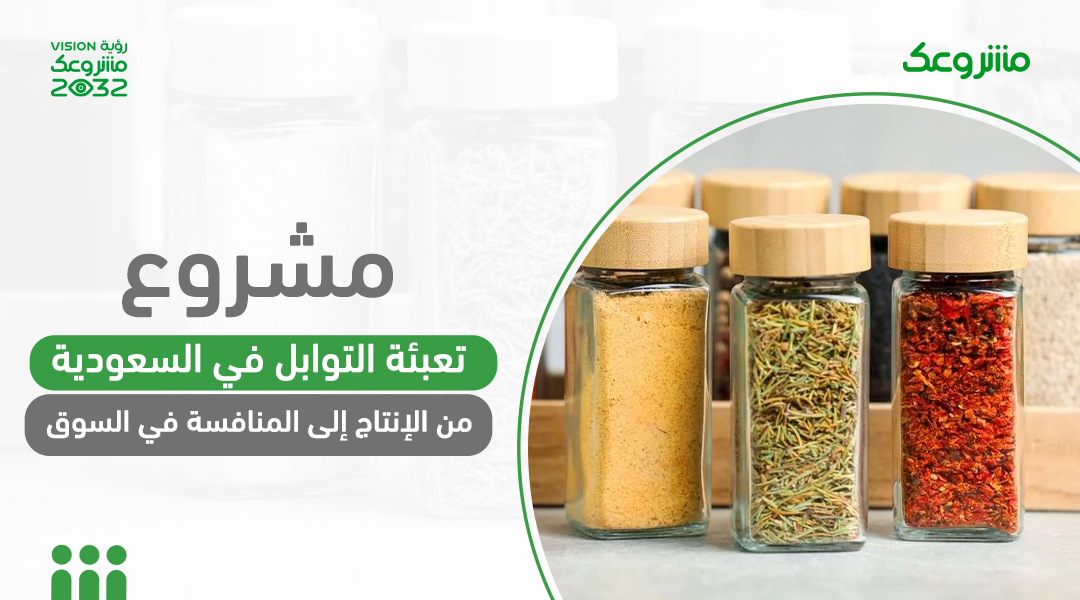
The spice packaging project combines product simplicity with a broad customer base. Spices are essential ingredients in homes, restaurants, and food establishments, and market demand varies from individual spices to ready-made blends and different package sizes. As consumers increasingly focus on food quality, hygienic packaging, and ease of use, the way spices are presented and packaged has become an influential factor in purchasing decisions. This creates opportunities for specialized packaging businesses to meet these needs in an organized and efficient manner.
The project involves several stages, beginning with sourcing spices that meet the required specifications, followed by sorting, preparation, filling, packaging, and storage in accordance with food safety and quality standards. Competing successfully also requires a thorough market study to identify the most in-demand products, suitable packaging sizes, and effective distribution channels. Therefore, a feasibility study is an essential step in identifying the project’s technical, operational, marketing, and financial requirements and developing a clear business model before implementation begins.
The concept of the spice packaging project is based on purchasing spices and aromatic seeds from suppliers, then preparing, sorting, and grinding them when necessary before packaging them in a variety of weights and sizes to meet market needs. The products are then securely sealed and labeled with the required identifying information.
The project aims to meet the needs of individuals, restaurants, hotels, and food establishments by providing ready-to-use spices, with the flexibility to diversify its product range to include individual spices, spice blends, and customized assortments.
The project’s operating model relies on maintaining raw material quality, complying with food safety requirements, and selecting suitable packaging that preserves the products’ characteristics. It also involves developing distribution channels that reach supermarkets, retail stores, and online platforms.
Read Here:Investment Guide for the Spices Packaging Project in Saudi Arabia
Yes, the spice packaging project is considered one of the promising and potentially profitable food businesses. According to the latest statistics, the global spices and seasonings market was valued at USD 21.14 billion in 2025. It is projected to grow from USD 21.98 billion in 2026 to USD 32.88 billion by 2034, registering a compound annual growth rate (CAGR) of 5.16% over the forecast period.
Read here: Food Market Report in Saudi Arabia
The spice packaging project offers several investment advantages that make it an attractive business opportunity. The key advantages include the following:
Read here: The Saudi Food Industry Exhibition: The Ideal Gateway to Investment in the Post-Oil Economy
The costs of a spice packaging project in Saudi Arabia can be calculated by dividing them into several main categories, including the following:
Read Here: Herbal and Spice Shop Project: Secrets to Profiting from Natural and Traditional Products
A feasibility study helps evaluate a spice packaging project by analyzing its marketing, technical, and financial aspects, allowing investors to determine how well the project meets market needs and whether it can achieve its targeted returns.
From a marketing perspective, the study helps identify the most in-demand spices, analyze competitors, select suitable package sizes, and determine effective distribution channels.
From a technical perspective, it identifies the project’s requirements for raw materials, filling and packaging equipment, operating space, quality control, and food safety.
From a financial perspective, the study outlines establishment and operating costs, projected revenues, profit margins, and the break-even point. This helps estimate the required capital and assess the project’s economic viability.
The feasibility study also helps identify potential risks, such as fluctuations in spice prices, inconsistent supplier quality, and intense competition, while developing appropriate strategies to address them. This supports informed investment decisions before implementation begins.
Read here: Feasibility Study (Definition, Objectives, Steps, Components, and Template)
Sales of my spice packaging business in Saudi Arabia began to decline gradually, despite continued demand for spice products and the diversity of the project’s offerings. After analyzing the reasons behind this decline, I discovered that the problem was not related to the products themselves, but rather to difficulties in reaching target customers, dependence on a limited number of customers, and intensifying price competition in the market. In addition, the project’s weak marketing and digital presence reduced its ability to reach new customer segments and introduce them to its products.
I realized that allowing the situation to continue could limit the project’s growth opportunities, and that increasing production or lowering prices would not be the right solution without a clear marketing strategy. Therefore, I decided to seek the assistance of Mashrouk Consulting to obtain a promotional plan service. The promotional plan aims to reorganize marketing efforts and direct them toward the most suitable customers and channels.
The plan began with an analysis of the project’s marketing position and an understanding of the market, competitors, and target audience. A comprehensive implementation roadmap was then developed, covering the definition of marketing messages, the selection of appropriate promotional channels and tools, budget allocation, timelines, and clear performance indicators.
This plan helped me move from scattered marketing efforts to a more organized approach, strengthen the project’s digital presence, diversify customer acquisition channels, and reduce dependence on a limited number of customers. I also became able to monitor promotional activities, measure their effectiveness, and make development decisions based on clear, measurable results.
By reorganizing its marketing efforts, the project became better equipped to address competitive challenges and reach new customer segments. A period of decline turned into an opportunity to restructure its growth strategy. Through this experience, I realized that the success of a spice packaging project depends not only on product quality but also on having a clear promotional plan that places the product in front of the right customer through the right channel.
Read here:Why Do Companies Need a Promotional Plan?
The spice packaging project offers a diverse range of products to meet the needs of individuals, restaurants, and food establishments. These include black pepper, cumin, coriander, cinnamon, turmeric, paprika, cardamom, ginger, cloves, sumac, nutmeg, and dried red pepper, along with other spices commonly used in food preparation.
The project can also expand into ready-made spice blends, such as kabsa, biryani, shawarma, and barbecue seasoning mixes, as well as developing customized blends for restaurants and food establishments according to their specific requirements. This allows the business to diversify its product range and serve different customer segments.
The primary raw materials for the project are the spices and aromatic seeds used in production, such as black pepper, cumin, coriander, cinnamon, turmeric, paprika, cardamom, ginger, cloves, sumac, and dried red pepper, in addition to the ingredients required for spice blends based on the targeted product range.
The project also requires packaging materials, including bags, plastic or glass containers, sealing caps, labels, and materials used for outer packaging. These materials should be selected according to quality standards, food safety requirements, the nature of the products, and the targeted packaging sizes.
The products of a spice packaging project require safe, food-grade packaging suitable for the nature of each product. The packaging materials should help preserve the quality, flavor, and aroma of the spices during storage and distribution. Airtight packaging is preferred to minimize exposure to air and moisture, and containers should be available in a variety of sizes and weights to meet the needs of consumers, restaurants, and food establishments.
The packaging should also be easy to open, use, and store, with a practical and attractive design that enhances product presentation at points of sale. Clear labels containing the essential product information in accordance with applicable regulatory requirements should be added to each package. In addition, maintaining a consistent visual identity across all packaging helps strengthen brand recognition and enables customers to easily identify the project’s products.
The spice packaging project represents a food business model that can be developed to meet market needs and serve diverse customer segments. However, turning the idea into a scalable business requires more than simply acquiring equipment and raw materials. Selecting the right products, maintaining packaging quality, determining production capacity, and building an effective distribution network are all decisions that influence operational performance and financial results.
A comprehensive feasibility study therefore helps analyze the market and competition, identify technical and operational requirements, estimate expected costs and revenues, and anticipate potential challenges while developing suitable solutions. With these elements clearly defined, it becomes easier to establish a realistic vision for the project and determine the steps needed to implement and expand it in line with market conditions.

Contact us to request a feasibility study for a spice packaging project.
The kebab restaurant project is one of the food-service ventures that combines strong demand for grilled meals with the opportunity to target a diverse customer base, including individuals, families, and lovers of traditional Middle Eastern cuisine. With growing competition in the restaurant sector, however, the project’s success is no longer determined by food taste alone. […]
Read moreA children’s toy store project is not limited to selling toys; it is built on understanding what attracts children and what families look for when choosing products that combine entertainment and educational value. With the wide variety of educational toys, skill-development games, recreational toys, and gifts available, the store has opportunities to meet the needs […]
Read moreA residential complex project is no longer simply an investment in a collection of real estate units. It has evolved into an integrated development model that combines comfortable living, diverse services, and long-term investment value. As cities expand and residents’ needs evolve, demand is growing for residential complexes that offer a comprehensive environment suited to […]
Read moreThe veterinary clinic project comes at a time when animal care is no longer limited to treating illnesses or injuries, but has expanded to include health monitoring, vaccinations, routine checkups, and care for both pets and livestock. However, many animal owners face challenges in accessing specialized veterinary services that combine prompt response, high-quality care, and […]
Read more
خصم 25% على خدمات مشروعك استفد من العرض الآن، فالفرصة متاحة لفترة محدودة فقط
سجّل بياناتك واحصل على خصم 25% الآن


