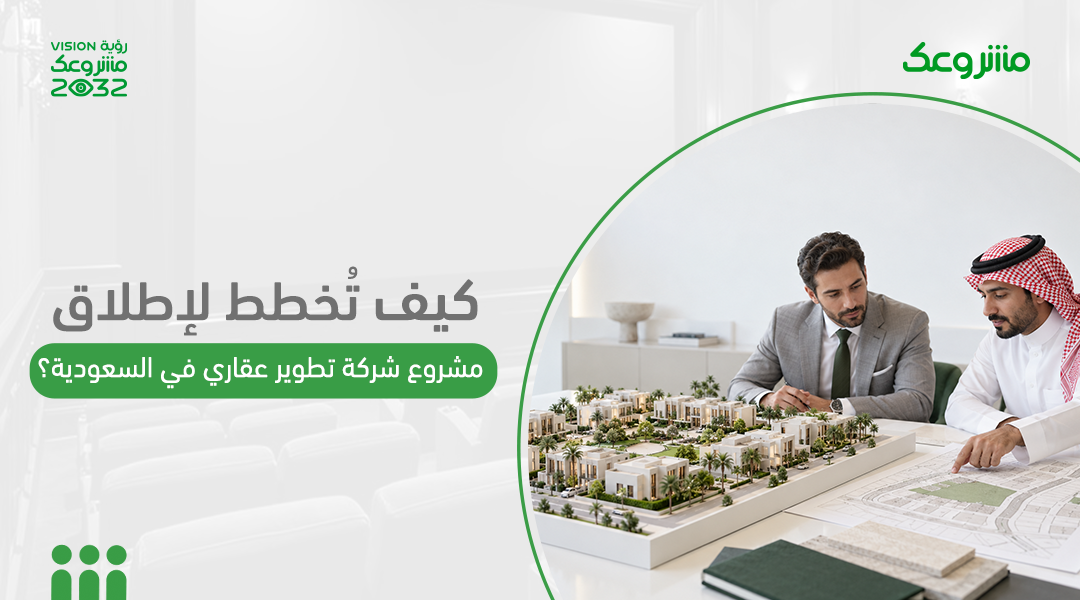
A real estate development company project begins with a simple question: How can land be transformed into a real estate project that creates genuine value and attracts market demand? A developer’s success is not limited to constructing buildings; it also depends on the ability to identify suitable real estate opportunities, understand customer needs, select a location that serves the project’s purpose, and manage the entire development process—from the initial idea and planning to construction, marketing, and sales.
With the diversity of residential, commercial, and administrative projects, the real estate market offers multiple opportunities for companies with a clear vision and the ability to make well-informed decisions. At the same time, this business involves challenges related to land selection, financing requirements, construction management, competitor analysis, and marketing units at the right time.
Therefore, a project’s strength does not begin with the construction of its first building, but with a thorough assessment of the market and investment opportunity, along with the selection of a business model capable of creating sustainable value and adapting to changes in the real estate sector.
A real estate development company operates by transforming property opportunities into integrated projects that meet market needs and add value to the targeted land and locations. The development process begins with market research and demand analysis, followed by selecting suitable land and determining its optimal use, whether for a residential, commercial, administrative, or mixed-use project.
The company then oversees the planning, design, and construction phases, while developing marketing and sales strategies to ensure the project is presented effectively to its target audience. A developer’s responsibilities do not end with construction; they extend to managing every stage of the development process and monitoring timelines, costs, and construction quality.
Read Here: Real Estate Development Project: Your Gateway to Secure Investment and Sustainable Returns
Yes, a real estate development company is considered a promising investment opportunity. The global real estate development market was valued at USD 7.65 billion in 2026 and is projected to reach USD 11.42 billion by 2035, growing at a compound annual growth rate (CAGR) of 4.5% over the 2026–2035 period.
These indicators point to growth opportunities in the real estate sector, enhancing the project’s investment appeal, particularly when supported by suitable location selection, thorough market demand analysis, and the development of projects that meet customer needs and align with modern real estate trends.
The real estate sector in Saudi Arabia is witnessing significant expansion, supported by rising demand for residential units and continued growth in construction activities. Forecasts indicate that the Saudi real estate market could reach USD 109.63 billion by 2030, with an annual growth rate of 7.89%. This is expected to coincide with an increase in the number of construction and building permits to 245,530 by the same year, alongside growth in the number of contracting companies to 385,719. These indicators reflect the expanding scope of urban development activity and the diverse investment opportunities available in the sector.
Residential demand indicators reveal another dimension of the market’s potential, with the number of occupied housing units in the Kingdom expected to increase from 8,527,831 in 2024 to 10,361,926 by 2030. The Saudi construction market is also projected to grow from SAR 277.91 billion to SAR 360.99 billion, alongside expectations that the value of construction project contracts will reach SAR 1.8 trillion by 2030, compared with the contracting sector’s current contribution of more than 6% of GDP, according to the data provided.
In terms of competition, the Kingdom had approximately 20,812 contractors in 2024, including 19,179 Saudi contractors and 1,633 non-Saudi contractors. The building materials market is also expected to grow from SAR 4,658.63 million in 2024 to SAR 7,600.40 million by 2030. These indicators highlight the importance of studying the needs of target regions, identifying the most in-demand real estate segments, and analyzing land, construction, and financing costs. This enables a real estate development company to select suitable projects and build an investment strategy aligned with the changing dynamics of the Saudi market.
Read Here: Saudi Arabia Real Estate Development Market Report
The cost of establishing a real estate development company in Saudi Arabia varies depending on the company’s size, project type, location, land area, and development scope. Costs can be divided into the following categories:
For more information about the requirements for a real estate development project, click here.
A real estate development company can build a competitive advantage by delivering projects that closely align with market needs, while focusing on execution quality and customer experience. Key factors include:
A feasibility study helps reduce the risks of a real estate development company project by analyzing its various aspects before implementation and identifying challenges that could affect costs, timelines, or projected returns. The different types of feasibility studies work together to provide investors with a clear overview that supports informed decision-making, as follows:
It helps analyze the real estate market, determine demand for residential and commercial units, study competitors and customer needs, and identify suitable locations and property segments. This reduces the risk of weak sales or developing units that do not meet market requirements.
Read Here: Marketing Feasibility Study: Definition, Importance, Preparation Process, and Key Tools
It evaluates proposed sites and land, identifies engineering and construction requirements, determines the necessary resources and equipment, and estimates the expected implementation timeline. This helps identify technical issues at an early stage and minimize the risk of project delays or construction cost overruns.
Read here: 7 Essential Elements Underpinning the Technical Feasibility Study of Projects
It helps estimate the costs of land acquisition, design, construction, and marketing, as well as calculate projected revenues, cash flows, and rates of return. This makes it easier to determine financing requirements and avoid cash shortages or investment decisions that fail to deliver the targeted returns.
Read Here:Financial Feasibility Studies for Entrepreneurs (Definition, Objectives, and Components)
It helps verify land ownership and the validity of legal documents, while identifying the required licenses, municipal and regulatory requirements, and building regulations. This reduces the risk of legal disputes, work stoppages, or delays in obtaining the necessary approvals.
Read here: How a Legal Feasibility Study Ensures Success and Sustainability for Your Project
It defines the company’s organizational structure, administrative responsibilities, staffing requirements, and mechanisms for supervising projects and monitoring contractors and suppliers. This helps improve coordination among work teams, reduce operational errors, and prevent delays in completing the various project stages.
Read here: Feasibility Study (Definition, Objectives, Steps, Components, and Template)
Read here: Everything You Need to Know About SWOT Analysis and How to Apply It
When I decided to enter the Saudi real estate market, I identified promising opportunities in residential and commercial development. However, I faced the challenge of securing the liquidity needed to implement projects and generating sales before construction was complete.
After exploring the available options, I sought the expertise of Mashroo3k Consulting to benefit from its Off-Plan Sales service, which helps real estate developers market and sell units before construction is completed, in accordance with the regulations and requirements applicable in the Kingdom.
The service helped me understand the requirements for preparing a project for off-plan sales, identifying the target customer segment, and developing a framework for marketing and sales mechanisms. It also helped me assess the financial aspects related to projected revenues and construction requirements.
This support gave me a clearer vision of how to launch the project in the market, improve its ability to attract buyers, and use sales proceeds to support cash flow throughout the development stages, contributing to more effective project planning and management.
Read Here:Off-Plan Sales: A New Perspective Redefining the Real Estate Investment Market
The requirements for establishing a real estate development company vary depending on the country and the nature of the business. Generally, they include determining the company’s legal structure and officially registering it, obtaining the commercial registration and licenses required to conduct the business, and securing premises that meet applicable regulatory requirements. The company must also define the nature of its activities and target projects, provide adequate capital, recruit qualified professionals, and comply with relevant building, planning, and real estate development regulations. If the company undertakes specific real estate projects, each project may require additional approvals and permits depending on its location and nature.
A real estate development company is responsible for managing a real estate project from the initial concept assessment through to its market launch. Its responsibilities include conducting market research, identifying suitable opportunities, selecting land and locations, determining their optimal use, preparing plans and designs, supervising construction, and monitoring quality and project timelines. The company also manages costs, financing, marketing, and sales. In addition, it coordinates with contractors, consultants, and relevant authorities, follows up on licensing and approval procedures, and manages properties and assets after project completion in accordance with its business model.
The main difference lies in the nature of their activities. A real estate development company focuses on creating and developing projects, beginning with land selection and assessing its potential use, followed by planning, design, and construction, and ultimately marketing, selling, or operating the completed project.
Real estate investment, on the other hand, focuses primarily on allocating capital to real estate assets or projects to generate returns through sales, rental income, or property value appreciation. Investors may also invest in existing properties without participating in their development.
Accordingly, real estate development involves managing the process of creating real estate value and developing projects, while real estate investment centers on owning or financing assets and benefiting from their returns.
We can conclude that a real estate development company is not simply about constructing buildings; it is about the ability to understand the market and transform real estate opportunities into well-planned projects that create genuine value for customers and the market. The company’s ability to sustain and grow in a changing real estate environment depends on selecting the right location, analyzing demand, managing financing and construction, and developing an effective marketing strategy.
Therefore, advance planning and a comprehensive feasibility study are essential starting points for making more informed decisions and minimizing risks before committing resources. With a clear vision, a specialized team, and effective management of every stage of development, the company can establish a strong foundation for a diverse portfolio of projects with long-term growth potential.

Contact Us to Request a Feasibility Study for a Real Estate Development Company Project.
The kebab restaurant project is one of the food-service ventures that combines strong demand for grilled meals with the opportunity to target a diverse customer base, including individuals, families, and lovers of traditional Middle Eastern cuisine. With growing competition in the restaurant sector, however, the project’s success is no longer determined by food taste alone. […]
Read moreA children’s toy store project is not limited to selling toys; it is built on understanding what attracts children and what families look for when choosing products that combine entertainment and educational value. With the wide variety of educational toys, skill-development games, recreational toys, and gifts available, the store has opportunities to meet the needs […]
Read moreA residential complex project is no longer simply an investment in a collection of real estate units. It has evolved into an integrated development model that combines comfortable living, diverse services, and long-term investment value. As cities expand and residents’ needs evolve, demand is growing for residential complexes that offer a comprehensive environment suited to […]
Read moreThe veterinary clinic project comes at a time when animal care is no longer limited to treating illnesses or injuries, but has expanded to include health monitoring, vaccinations, routine checkups, and care for both pets and livestock. However, many animal owners face challenges in accessing specialized veterinary services that combine prompt response, high-quality care, and […]
Read more
خصم 25% على خدمات مشروعك استفد من العرض الآن، فالفرصة متاحة لفترة محدودة فقط
سجّل بياناتك واحصل على خصم 25% الآن


