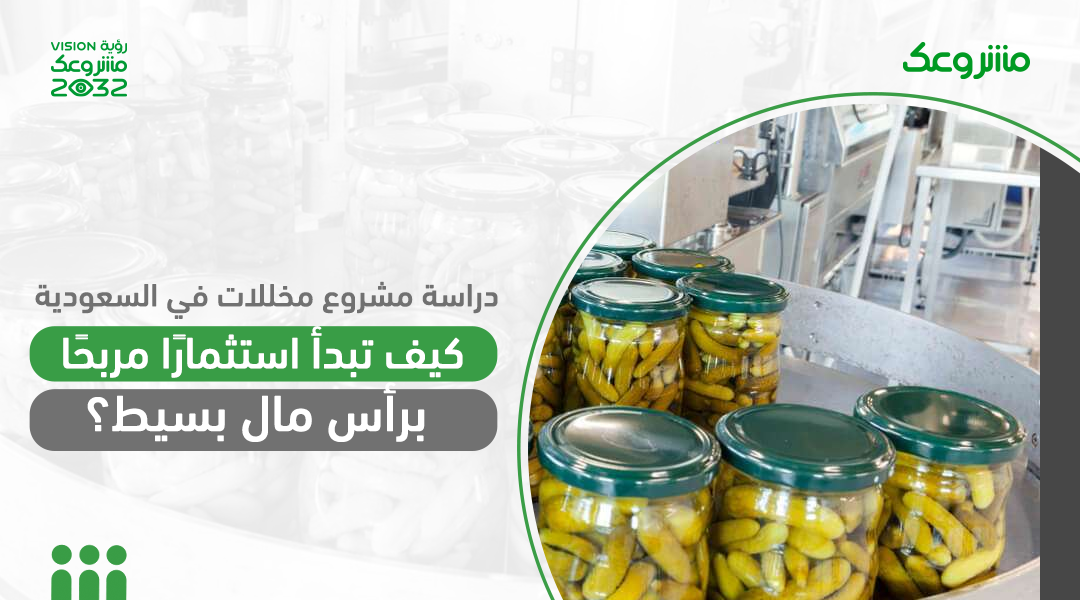
A pickles project in Saudi Arabia is considered one of the promising food projects that enjoys growing attention in light of the rising demand for processed food products and the diversity of consumption patterns within the local market. Pickles are among the essential items that accompany many meals, which ensures stable demand for them throughout the year. The project is also characterized by lower operating costs compared to many other industrial activities, along with ease of production and the possibility of diversifying products to meet the different tastes of consumers. With the continuous growth witnessed by the food industries sector in the Kingdom, the chances of success of this project and achieving rewarding returns for investors increase. In this article, we highlight the most important requirements of a pickles project, its estimated costs, the steps for establishing it, and the main factors that support its success and continuity in the market.
A pickles project is a food project that aims to produce, manufacture, and package various types of pickles using fresh vegetables such as cucumbers, carrots, turnips, peppers, and olives, then preserving them in pickling solutions according to specific standards that ensure quality and distinctive taste. The project targets individuals, restaurants, hotels, and food stores, given the continuous demand for pickles as one of the essential products accompanying many meals. This project is characterized by relative ease of implementation, diversity of its products, and the possibility of starting it on a small scale and then expanding gradually according to the size of demand and the target market.
Read Here: 20 Small Business Ideas That Can Generate Huge Profits in 2026
Yes, global economic indicators confirm that a pickles project is classified today among the most economically viable projects from an investment perspective, which is clearly reflected in the numbers; the size of the global pickles market reached about 26.64 billion US dollars in 2025, a figure that reflects the scale of the transformation witnessed by global demand for this sector. This upward trajectory does not stop there; expectations indicate that the market will continue its development path with remarkable stability, starting from 28.15 billion dollars in 2026 to exceed the threshold of 43.32 billion dollars by 2034, achieving a compound annual growth rate of 5.54% during the forecast period.
Read here: How to Achieve Financial Success by Investing in Successful Small Projects
To start a pickles project professionally and ensure product quality and safety, a set of basic tools and equipment must be prepared to help in the production, pickling, and packaging stages. The most important of these tools are the following:
The cost of starting a pickles project depends on the size of the project and the targeted production capacity. However, the most prominent items that determine the cost include the following:
Read here: Discover the Best Small Project That Fits Your Resources
Launching a successful pickles project requires following a set of practical steps that ensure operational efficiency and the project’s ability to compete in the market. The most important of these are:
Read here: How to Start a Small Business and Ensure Its Profitability
| Potential Risks | Ways to Overcome Them |
|---|---|
| Fluctuations in Agricultural Raw Material Prices | Contract with multiple suppliers and continuously monitor prices to ensure supply stability. |
| Decline in Product Quality | Apply quality and food safety standards and adhere to approved pickling recipes and procedures. |
| Low Demand for Products | Conduct thorough market research and offer a diverse range of products that meet customer needs. |
| Strong Market Competition | Focus on quality, distinctive packaging, and building a strong brand identity. |
| Product Damage During Storage | Provide suitable storage conditions and follow proper preservation procedures. |
| Marketing and Distribution Challenges | Develop an effective marketing plan and cooperate with various distributors and retail stores. |
| Rising Operating Costs | Continuously monitor expenses and improve resource utilization efficiency. |
| Non-Compliance with Legal and Health Requirements | Obtain the necessary licenses and comply with all regulations and standards governing the activity. |
| Weak Cash Flows During the Initial Stage | Allocate sufficient working capital and manage cash flow efficiently. |
| Poorly Informed Investment Decisions | Rely on a professional feasibility study and conduct a thorough market analysis before implementation. |
Read here: How to Start Investing in Successful Small Saudi Projects
My experience with the pickles project began from my conviction that there was a promising investment opportunity that meets the growing needs of the local market. However, the path was not free of challenges. In the early stages, I faced difficulties related to the strategic planning of the project, in addition to challenges in securing the necessary funding and liquidity to launch with an appropriate operational capacity. From here came the cooperation with Mashroo3k Consulting Company, which played a pivotal role in transforming the idea into an executable project. Its specialized team prepared an integrated feasibility study covering the marketing, technical, financial, and administrative aspects, which gave me a clear vision of the market, operating mechanisms, and the requirements for success. The support was not limited to preparing the study; it extended to assisting in arranging the financing file and providing appropriate solutions to obtain funding from the Saudi Industrial Development Fund. Thanks to this organized professional support, the project obtained financing approval and moved to the actual operation stage with high efficiency, achieving production stability and the ability to meet market needs with confidence and sustainability.
Read here: The best successful small projects for youth
The price per kilogram of pickles varies depending on several factors, including the type of pickle, the quality of the vegetables used, the production method, packaging quality, brand, and target market segment. Prices also differ between wholesale and retail sales, as well as between traditional products and those made with special recipes or premium-quality ingredients. Therefore, investors planning a pickles project are advised to conduct a market study and analyze competitors’ prices before setting their selling prices, ensuring a balance between market competitiveness and an appropriate profit margin.
The cost of establishing a pickles factory varies depending on the project size, targeted production capacity, type of equipment, factory location, licensing requirements, and technical preparations. Costs are also affected by the required workforce, the level of automation used in production and packaging, as well as the cost of raw materials, containers, and packaging materials. Therefore, there is no single fixed cost applicable to all projects, as each factory has its own operational and investment requirements. This highlights the importance of preparing a detailed feasibility study to accurately estimate costs and determine the appropriate investment size based on the investor’s objectives and financial capabilities.
Some premium pickles are among the most expensive products in the market due to the rarity of their ingredients, high production quality, and distinctive presentation. Premium or organic olive pickles produced in limited quantities are often positioned within this category, particularly when prepared using carefully selected ingredients or subjected to extended pickling processes that give them a distinctive flavor. Brand reputation and packaging also play an important role in increasing the product’s price. Some of these products are marketed through specialty markets as gourmet foods targeting consumers who prioritize quality and exclusivity over conventional pricing.
The proper method of making pickles involves precise steps that help ensure good taste, food safety, and product quality. First, fresh, healthy vegetables free from damage are selected, thoroughly washed, and cut according to the type of pickle being prepared. Next, the pickling solution is prepared, typically consisting of water, salt, and vinegar in carefully measured proportions that contribute to preservation and provide the desired flavor. Spices such as garlic, chili peppers, or dill may also be added depending on the type of pickle.
The vegetables are then placed in clean, sanitized containers, and the pickling solution is poured over them until they are completely submerged to minimize exposure to air. The containers are tightly sealed and left in suitable conditions for a period that varies according to the type of pickle and the desired level of fermentation or pickling. Proper storage in a clean and relatively cool environment is also essential to achieve the best results.
The success of pickles depends on several precise factors that directly affect taste, quality, and shelf life. One of the most important is selecting fresh, healthy vegetables free from defects, as the quality of the raw materials is the foundation of a successful product. Maintaining the proper balance of the pickling solution is also essential, particularly the salt and vinegar levels, as they influence both flavor and preservation.
Strict hygiene throughout preparation and packaging is another critical factor in preventing contamination that could spoil the product. In addition, storing pickles under appropriate conditions away from excessive heat and direct sunlight helps maintain quality for a longer period. Innovation in flavors and spices, combined with attractive packaging, should also not be overlooked, as these elements can strengthen consumer confidence and increase the product’s market appeal.
The shelf life of pickles varies depending on the preparation method, the concentration of salt and vinegar used, storage conditions, and the type of packaging. In general, pickles can have a relatively long shelf life compared with many other food products, provided they are stored in tightly sealed containers and protected from air and contamination.
Storage in a cool, dry environment can significantly help maintain product quality and prevent spoilage. However, shelf life may be reduced if proper hygiene standards are not followed or if the pickling solution is not properly balanced, potentially resulting in changes in taste or a decline in product quality over time.
A pickles project in Saudi Arabia represents a promising investment opportunity for those seeking to enter the food manufacturing sector. It combines relatively straightforward operations, stable demand, and the potential to generate attractive and sustainable returns. However, success in this project does not depend on enthusiasm alone. Instead, it is built on three key pillars: careful planning, a strong commitment to quality standards, and smart selection of marketing channels.
When these elements come together, the project can achieve genuine growth and establish a strong position in the market. Therefore, if you are looking to establish a pickles project on solid foundations that minimize risks and maximize the chances of success, seeking the expertise of specialized consultants and preparing a professional feasibility study is not merely an added advantage—it is the true starting point for achieving your investment goals.

To contact us to request a feasibility study for a pickles project
The kebab restaurant project is one of the food-service ventures that combines strong demand for grilled meals with the opportunity to target a diverse customer base, including individuals, families, and lovers of traditional Middle Eastern cuisine. With growing competition in the restaurant sector, however, the project’s success is no longer determined by food taste alone. […]
Read moreA children’s toy store project is not limited to selling toys; it is built on understanding what attracts children and what families look for when choosing products that combine entertainment and educational value. With the wide variety of educational toys, skill-development games, recreational toys, and gifts available, the store has opportunities to meet the needs […]
Read moreA residential complex project is no longer simply an investment in a collection of real estate units. It has evolved into an integrated development model that combines comfortable living, diverse services, and long-term investment value. As cities expand and residents’ needs evolve, demand is growing for residential complexes that offer a comprehensive environment suited to […]
Read moreThe veterinary clinic project comes at a time when animal care is no longer limited to treating illnesses or injuries, but has expanded to include health monitoring, vaccinations, routine checkups, and care for both pets and livestock. However, many animal owners face challenges in accessing specialized veterinary services that combine prompt response, high-quality care, and […]
Read more
خصم 25% على خدمات مشروعك استفد من العرض الآن، فالفرصة متاحة لفترة محدودة فقط
سجّل بياناتك واحصل على خصم 25% الآن


