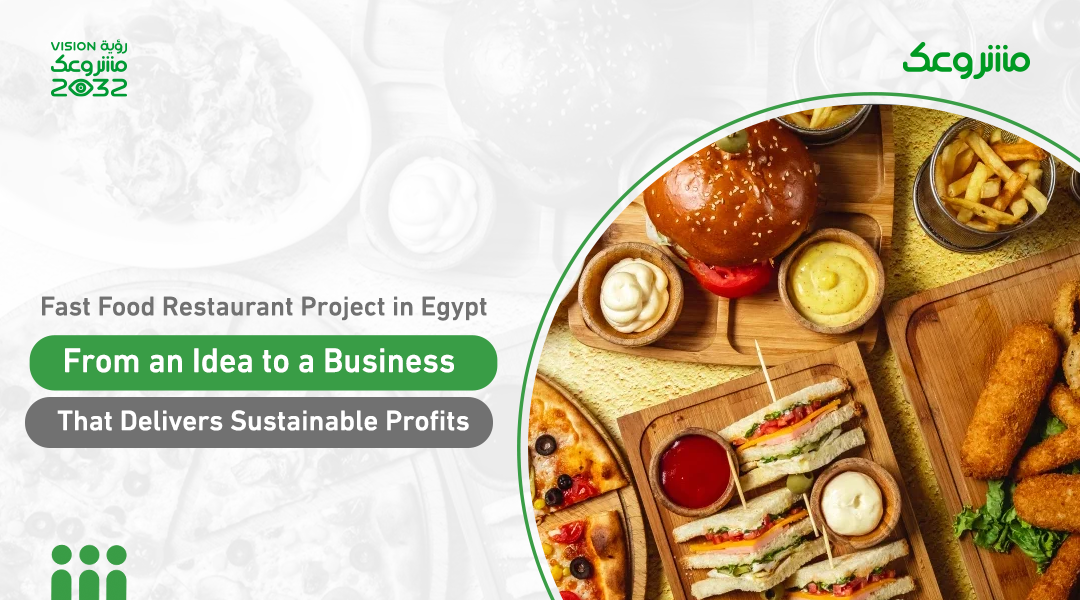
A fast food restaurant project is considered one of the most attractive investment opportunities for entrepreneurs due to the growing demand for fast food, rapid capital turnover, and the potential for expansion and strong returns when managed professionally. However, the success of the project depends not only on serving high-quality meals or choosing a prime location, but also on careful planning and the preparation of a comprehensive feasibility study. Such a study defines the required investment, analyzes the market and competitors, identifies the target customer segment, and evaluates the project’s technical, financial, and operational aspects. This approach helps minimize risks, optimize costs, and support informed investment decisions from the outset. In this article, we explore everything you need to know about starting a fast food restaurant project—from investment opportunities and startup requirements to key success factors and the importance of a feasibility study in building a successful and sustainable business.
A fast food restaurant project is a service-based business that focuses on preparing and serving ready-to-eat meals characterized by quick preparation and fast service, catering to customers seeking convenient, high-quality meals at affordable prices. The project typically offers a diverse menu that includes burgers, fried chicken, pizza, sandwiches, French fries, and beverages, with the option to provide dine-in, takeaway, and delivery services. It has the potential to attract a broad customer base, including employees, students, families, and individuals, making it a business with consistent demand and strong investment potential when planned and managed professionally.
Read here: Broasted Chicken Restaurant Project: A Promising Investment Opportunity in the Fast Food Industry
Global market indicators show that a fast food restaurant project is a promising investment opportunity, supported by the continuous growth in demand for fast food and the increasing popularity of food delivery and online ordering services. The global fast food market was valued at USD 760.90 billion in 2025 and is projected to grow to USD 808.84 billion in 2026, reaching approximately USD 1,318.64 billion by 2034, at a compound annual growth rate (CAGR) of 6.30% during the forecast period. These figures reflect the market’s expanding size and sustained growth, making investment in a fast food restaurant an attractive opportunity to generate strong returns, particularly when supported by a professional feasibility study, a strategic location, and high-quality products that meet customer expectations.
A fast food restaurant project offers numerous advantages that make it an attractive investment opportunity for many investors. The most notable of these include:
Read here: 15 Restaurant Feasibility Studies provided by Mashroo3k Consulting.
Read here: Steps to Start a Shawarma Restaurant Project: From Idea to Execution
The cost of opening a fast food restaurant project in Egypt varies depending on several factors, including the restaurant’s size, location, type of menu, level of equipment, and number of employees. Therefore, it is not possible to determine a fixed cost. However, a professional feasibility study can accurately estimate the required investment based on the specific nature of the project. The main cost components include:
A market analysis for a fast food restaurant project includes several key elements, as follows:
Competitor analysis helps identify market strengths and weaknesses while building a competitive advantage for the project. It includes the following:
Choosing the right location is one of the most important factors in the success of a fast food restaurant project. The following criteria should be considered:
| Challenge | How to Overcome It |
|---|---|
| Intense market competition | Offer high-quality products, deliver exceptional service, and build a strong brand identity that differentiates the restaurant from competitors. |
| Rising operating costs | Manage expenses efficiently, minimize waste, and review costs regularly. |
| Fluctuating raw material prices | Partner with multiple suppliers and purchase essential ingredients according to a well-planned procurement strategy to reduce the impact of price fluctuations. |
| Declining sales during certain seasons | Launch promotional offers, diversify the menu, and target new customer segments. |
| Difficulty retaining customers | Enhance the customer experience, implement loyalty programs, and focus on fast, high-quality service. |
| Inventory management challenges | Use an inventory management system to monitor stock levels and prevent shortages or product spoilage. |
| Maintaining food quality | Train staff regularly, adhere to food quality and safety standards, and continuously monitor the quality of raw ingredients. |
| Shortage of qualified staff | Recruit skilled employees and provide ongoing training programs to improve staff performance and operational efficiency. |
I began my journey of establishing a fast food restaurant project in Cairo based on my belief that the restaurant industry is one of the fastest-growing and most profitable sectors. However, I also understood that the success of the project depends not only on the quality of the food but also on careful planning and well-informed investment decisions. As I moved forward with the implementation, I encountered several challenges, most notably determining the appropriate investment size, estimating the actual costs, selecting the most suitable operating model, and securing the financing needed to launch the business. Since I wanted to build the project on a solid foundation, I decided to seek the support of Mashroo3k Consulting. Their team prepared a comprehensive feasibility study that provided me with a clear understanding of market demand, the target audience, competitors, expected costs, and projected revenues, in addition to developing an operational and marketing plan that enabled me to launch the project with confidence.
Furthermore, Mashroo3k Consulting’s role extended beyond preparing the feasibility study. The team also supported me in preparing the financing file and fulfilling all the requirements needed to secure funding from the Micro, Small, and Medium Enterprise Development Agency (MSMEDA). This significantly accelerated the financing process and enabled me to obtain the capital required to launch the project. After securing the funding, I was able to implement the project according to a clear plan, equip the restaurant with the necessary equipment, and begin operations efficiently from day one. Over time, the results of this professional planning became evident as the restaurant successfully attracted customers, achieved stable sales, and strengthened its competitive position. The expert consulting support provided by Mashroo3k Consulting played a key role in transforming the business idea into a successful and sustainable investment.
The profitability of fast food restaurants depends on several factors, including location, customer traffic, product quality, operational efficiency, and the marketing strategies implemented. With the growing demand for fast food across various markets, the project can achieve attractive returns when costs are managed effectively, exceptional service is provided, and customer satisfaction is maintained, making it one of the investment projects with promising growth opportunities.
Fast food restaurant concepts vary to suit different customer segments and market demands. Popular ideas include burger restaurants, shawarma restaurants, pizza outlets, fried chicken restaurants, sandwich shops, quick-service seafood restaurants, healthy fast-food concepts, Mexican cuisine restaurants, food trucks, and restaurants focused on takeaway and delivery services. Choosing the right concept depends on analyzing the target market’s needs, the level of competition, the available budget, and the customer segment the business intends to serve.
You can attract customers by offering high-quality meals at competitive prices, ensuring fast service, and maintaining a clean and welcoming environment. Running regular promotions and discounts can also encourage repeat visits. In addition, marketing through social media platforms, partnering with food delivery applications, implementing customer loyalty programs, and actively listening to customer feedback all help build a loyal customer base and increase restaurant traffic.
Opening a fast food restaurant in Egypt requires compliance with several legal and health regulations. These include obtaining a commercial registration, a tax card, and the necessary operating licenses from the local municipality and relevant authorities. The restaurant must also comply with occupational health and safety requirements, food safety and hygiene standards, and provide appropriate ventilation and sanitation systems. Additionally, all employees must obtain the required health certificates, and the restaurant premises must meet the approved engineering and environmental regulations to ensure legal and safe operation.
The three essential elements of any successful restaurant are food quality, service quality, and customer experience. Success begins with serving fresh, flavorful meals, supported by fast and professional service delivered by a well-trained team. Equally important is providing a clean, comfortable, and welcoming environment that creates a positive dining experience, encourages repeat visits, and motivates customers to recommend the restaurant to others.
The secrets to a restaurant’s success lie in combining high-quality products, efficient management, and the ability to meet customer needs. This begins with serving meals that consistently deliver excellent taste and quality, while ensuring fast service, maintaining high standards of cleanliness, and hiring a skilled and well-trained team. Effective cost control and inventory management are also essential to maintaining profitability. In addition, continuously updating the menu, listening to customer feedback, building a strong brand identity, and delivering a compelling value proposition all contribute to strengthening the restaurant’s market position, increasing customer loyalty, and achieving sustainable growth.
In conclusion, a fast food restaurant project remains one of the most promising business opportunities, offering significant potential for success and attractive financial returns, provided it is built on careful planning and a clear strategic vision from the very beginning. Every decision—whether related to location, equipment, pricing, or marketing—has a direct impact on the project’s performance and competitive advantage. Therefore, preparing a professional feasibility study is the first step toward building a successful and sustainable investment. If you are planning to launch your project with confidence, Mashroo3k Consulting provides a comprehensive feasibility study covering the marketing, technical, financial, and administrative aspects of the project, helping you transform your business idea into a successful venture based on sound analysis and practical planning.

Contact Us to Request a Feasibility Study for a Fast Food Restaurant Project
The kebab restaurant project is one of the food-service ventures that combines strong demand for grilled meals with the opportunity to target a diverse customer base, including individuals, families, and lovers of traditional Middle Eastern cuisine. With growing competition in the restaurant sector, however, the project’s success is no longer determined by food taste alone. […]
Read moreA children’s toy store project is not limited to selling toys; it is built on understanding what attracts children and what families look for when choosing products that combine entertainment and educational value. With the wide variety of educational toys, skill-development games, recreational toys, and gifts available, the store has opportunities to meet the needs […]
Read moreA residential complex project is no longer simply an investment in a collection of real estate units. It has evolved into an integrated development model that combines comfortable living, diverse services, and long-term investment value. As cities expand and residents’ needs evolve, demand is growing for residential complexes that offer a comprehensive environment suited to […]
Read moreThe veterinary clinic project comes at a time when animal care is no longer limited to treating illnesses or injuries, but has expanded to include health monitoring, vaccinations, routine checkups, and care for both pets and livestock. However, many animal owners face challenges in accessing specialized veterinary services that combine prompt response, high-quality care, and […]
Read more
خصم 25% على خدمات مشروعك استفد من العرض الآن، فالفرصة متاحة لفترة محدودة فقط
سجّل بياناتك واحصل على خصم 25% الآن


