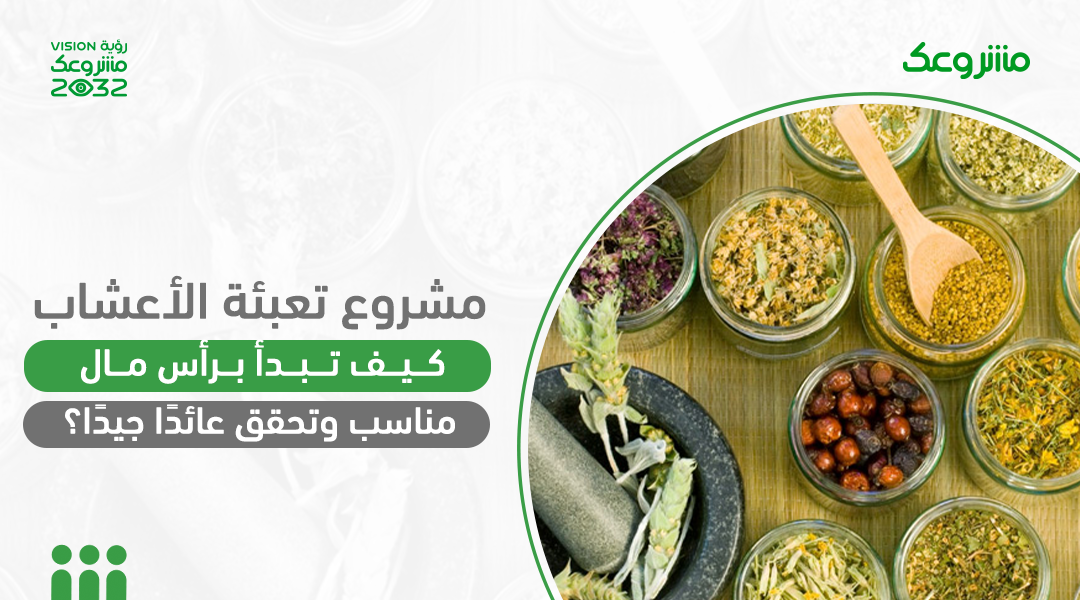
The herb packaging project is no longer merely an activity focused on packaging natural products for household use. It has become part of a rapidly growing market in which consumers seek reliable, clean products packaged in ways that preserve their quality, particularly as health awareness continues to increase. This makes the herb packaging project an investment opportunity that combines a simple product with the potential to develop into a scalable and expandable business.
However, the project’s success depends on more than simply packaging herbs. It also requires selecting suitable raw materials, ensuring accuracy in preparation and packaging processes, maintaining packaging quality, setting appropriate prices, implementing effective marketing strategies, and choosing the right sales channels.
This article explores the key aspects investors need to consider before launching the project, from establishment requirements and equipment to costs, marketing, and growth opportunities, helping them develop a clear vision and make a well-informed investment decision.
An herb packaging project is a production-based business that involves preparing natural and aromatic herbs, such as mint, anise, chamomile, and hibiscus, then sorting, weighing, and packaging them in suitable containers to preserve their quality and facilitate marketing. The project aims to meet the needs of consumers, herbal shops, and supermarkets, while relying on product quality and selecting suitable suppliers to ensure competitiveness and growth in the market.
Read Here: Investment Guide for the Spices Packaging Project in Saudi Arabia
Yes, an herb packaging project is considered a promising business that can generate good returns, particularly with growing interest in natural products and the development of sustainable packaging solutions. The market reached… Plant-Based Packaging Market Value The global plant-based packaging market was valued at approximately USD 350.43 billion in 2025 and is expected to increase to USD 369.64 billion in 2026, reaching USD 597.63 billion by 2034, at a compound annual growth rate (CAGR) of 6.19%. These figures highlight growth opportunities in the plant-based packaging sector, whose development can be leveraged in herb packaging using suitable, sustainable materials. However, assessing the project’s actual profitability requires studying herb demand, operating costs, packaging expenses, and distribution costs.
Read here: Food Market Report in Saudi Arabia
The success of an herb packaging project depends on adhering to quality and product safety standards throughout preparation, packaging, and storage. This helps preserve the herbs’ properties and strengthen customer confidence. The most important standards include:
Read Here: Herbal and Spice Shop Project: Secrets to Profiting from Natural and Traditional Products
| Challenge | How to Overcome It |
|---|---|
| Fluctuating raw material quality | Select reliable suppliers and inspect herbs before use. |
| Intense market competition | Focus on product quality, develop a strong brand identity, improve packaging design, and offer customers a competitive value proposition. |
| Rising operating costs | Diversify supply sources, negotiate purchase prices, and regularly review production costs to minimize the impact of price fluctuations. |
| Difficulty expanding distribution | Build a network of distributors and gradually expand sales outlets. |
| Herbs being affected by storage conditions | Provide suitable storage facilities, control humidity and ventilation, and follow proper product preservation practices. |
| Changing market requirements | Monitor consumer trends and customer preferences, and adapt products, sizes, and packaging to meet market needs. |
| Packaging errors and inconsistent weights | Use suitable equipment and conduct regular checks on package weights, seal integrity, and packaging quality. |
Market research contributes to the success of an herb packaging project by determining demand for different types of herbs and identifying customer preferences and the most popular products. This helps investors select suitable varieties and determine package sizes and packaging methods that meet consumer needs.
It also helps analyze competitors and compare prices, product quality, and distribution methods, while identifying target customer segments and appropriate sales channels, such as herbal shops, supermarkets, and natural product stores.
Furthermore, market research provides valuable insights into expansion opportunities and potential challenges, supporting the development of effective marketing strategies and the setting of competitive prices that reflect production costs and customers’ purchasing power.
As a result, market research helps reduce investment risks, improve the efficiency of operational and marketing decisions, and increase the chances of achieving sales growth and sustainable profitability.
Read here: Why Is Market Research Essential for Business Success?
Read here: Marketing: Its Concept, Importance, Types, and the Best Strategies for Implementation
Mashroo3k Consulting helps investors assess the feasibility of an herb packaging project by analyzing investment and operating costs, estimating expected revenues and profits, and evaluating financial indicators that support informed investment decisions.
Read here: Feasibility Study (Definition, Objectives, Steps, Components, and Template)
Mashroo3k Consulting conducts market research on natural and aromatic herbs, identifies the most in-demand varieties, and analyzes competitors and customer needs. This helps investors select suitable products, identify target customer segments, and determine the most appropriate distribution channels.
The feasibility study helps identify a suitable location and facility size based on the nature of the business. It also determines the equipment and machinery required for sorting, weighing, filling, and packaging herbs in line with the target production capacity and available investment budget.
Mashroo3k Consulting helps organize operational stages by identifying the requirements for receiving, sorting, preparing, storing, and packaging herbs. It also outlines the operational needs and resources required to ensure efficient workflows while minimizing waste and errors.
The company helps develop a marketing plan targeting potential customers, such as herbal shops, supermarkets, and wholesalers. This includes identifying suitable distribution channels and establishing pricing and promotional strategies that support product reach and increase sales opportunities.
Mashroo3k Consulting identifies potential challenges, such as fluctuations in raw herb prices, changes in demand levels, and rising operating costs. The company then provides recommendations to help investors address these challenges, improve resource management, and reduce financial and operational risks.
Selecting suitable herbs depends on analyzing market needs and consumer preferences, identifying the varieties with the highest demand, and assessing their suitability for the nature of the business. Investors should also consider raw material availability, consistent quality, and cost, while selecting reliable suppliers who can ensure a continuous supply that meets the required specifications.
The project faces several challenges, including intense market competition, seasonal fluctuations in raw material prices, the susceptibility of certain herbs to deterioration when improperly stored, and limited profit margins during the initial stages.
Herbs should be stored in a cool, dry place away from direct sunlight, in tightly sealed containers that protect them from moisture and air. Different varieties should be stored separately to prevent odors from mixing, and regular inspections should be conducted to ensure the herbs remain free from deterioration and pests.
This can be achieved by partnering with herbal shops, retail stores, and various sales outlets to ensure broad geographical coverage. Investors can also target distributors and wholesalers to reach larger markets and launch an online sales channel that enables direct customer access. Each channel’s performance should be evaluated regularly to focus resources on the most effective distribution methods.
The herb packaging project offers promising investment opportunities, given the diverse uses of natural and aromatic herbs and the wide range of marketing channels available. However, achieving success and long-term sustainability requires careful planning, starting with market research and selecting suitable products, followed by sourcing high-quality raw materials and choosing appropriate filling and packaging equipment, and ultimately developing effective marketing and distribution strategies.
This is where a comprehensive feasibility study becomes essential. It helps estimate costs and expected returns, identify potential risks, and support informed investment decisions that improve operational efficiency, strengthen growth opportunities, and promote long-term profitability.

Contact us to request a feasibility study for an herb packaging project.
The kebab restaurant project is one of the food-service ventures that combines strong demand for grilled meals with the opportunity to target a diverse customer base, including individuals, families, and lovers of traditional Middle Eastern cuisine. With growing competition in the restaurant sector, however, the project’s success is no longer determined by food taste alone. […]
Read moreA children’s toy store project is not limited to selling toys; it is built on understanding what attracts children and what families look for when choosing products that combine entertainment and educational value. With the wide variety of educational toys, skill-development games, recreational toys, and gifts available, the store has opportunities to meet the needs […]
Read moreA residential complex project is no longer simply an investment in a collection of real estate units. It has evolved into an integrated development model that combines comfortable living, diverse services, and long-term investment value. As cities expand and residents’ needs evolve, demand is growing for residential complexes that offer a comprehensive environment suited to […]
Read moreThe veterinary clinic project comes at a time when animal care is no longer limited to treating illnesses or injuries, but has expanded to include health monitoring, vaccinations, routine checkups, and care for both pets and livestock. However, many animal owners face challenges in accessing specialized veterinary services that combine prompt response, high-quality care, and […]
Read more
خصم 25% على خدمات مشروعك استفد من العرض الآن، فالفرصة متاحة لفترة محدودة فقط
سجّل بياناتك واحصل على خصم 25% الآن


