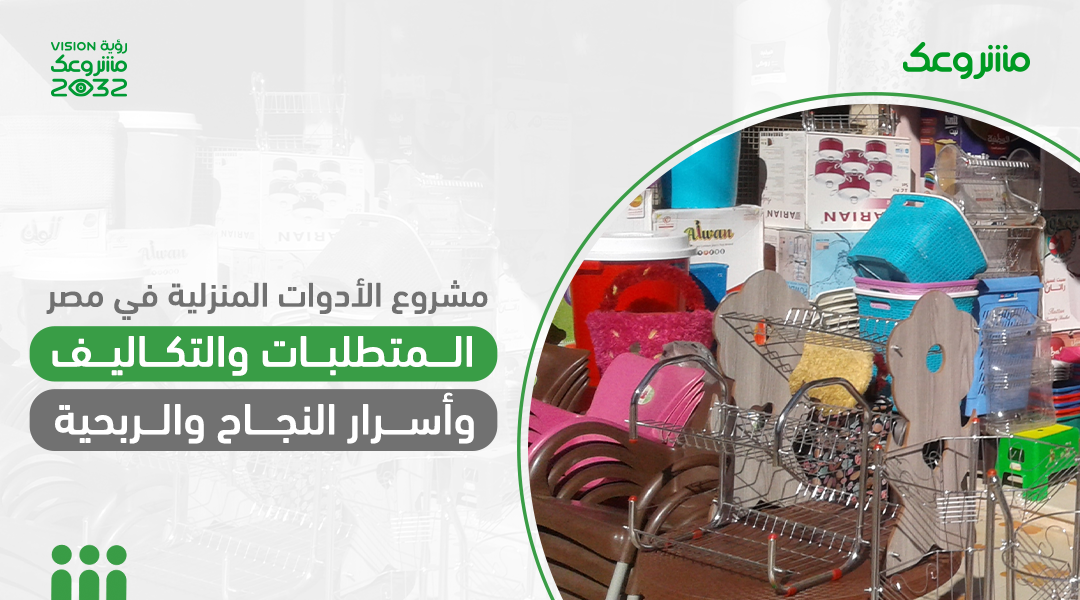
The household products business is considered one of the most stable and attractive commercial ventures for investors, as it is closely linked to the daily needs of individuals and families—needs that remain constant throughout the year. With rapid urban expansion, rising marriage rates, and increasing home renovation activities, this sector continues to experience strong demand, reinforcing its position as a preferred investment option for those seeking both stability and sustainable profitability.
However, success in this field goes beyond simply stocking and displaying products. It requires carefully selecting the most in-demand items, offering a diverse product range that meets the needs of different customer segments and budget levels, and implementing smart marketing strategies that strengthen competitiveness and create broader opportunities for growth.
In this article, we provide a comprehensive overview of everything you need to know about a household products business—from its importance and advantages to its requirements and costs, as well as the key success factors and best practices for maximizing investment returns.
A household products project is a retail business that focuses on selling and supplying a wide range of products and essentials that households need on a daily basis. These include kitchen tools, cookware, cleaning supplies, storage and organization products, small home appliances, and other items that help make everyday life easier for individuals and families.
This type of business enjoys consistent demand throughout the year because its products are closely tied to consumers’ essential needs. One of its key advantages is its flexibility, as it can be launched at different investment levels—through a physical store, an online store, or a combination of both—allowing investors to choose a model that suits their available capital.
The success of a household products business depends on offering high-quality products, maintaining a diverse product selection, and carefully choosing suppliers to ensure customer satisfaction and establish a strong competitive position in the market.
Global market indicators suggest that a household products business is a profitable and investment-worthy venture, supported by the continuous demand for household goods and the growing consumer base worldwide.
The global household products market was valued at approximately USD 342.7 billion in 2025 and is expected to continue growing at a compound annual growth rate (CAGR) of 3.6% from 2026 to 2032, reaching nearly USD 438.96 billion by 2032.
These figures reflect the large size of the market and the ongoing growth opportunities available within the sector. They also highlight that investing in a household products business can generate attractive returns when supported by the right product selection, efficient management, and a well-planned business strategy.
Success in a homeware business requires careful planning from the outset, starting with market research and identifying the target audience, through to selecting suppliers and developing an effective marketing strategy. The key steps to establishing the business include:
Read Here: Your Complete Guide to Starting a Successful Electrical Tools Shop Step by Step
The startup cost of a homeware business varies significantly depending on the size of the project and the type of business, whether it is a small store, a large showroom, or an online store. The estimated cost can be determined based on several key factors that affect the total investment, including:
The success of a homeware business largely depends on the variety of products offered and meeting the needs of different customer segments. The business can include a wide range of essential household supplies that are indispensable in any home, including:
The success of a homeware business depends on a set of key factors that ensure business sustainability and generate consistent profits. The most important include:
| Risks | Mitigation Measures |
|---|---|
| Intense market competition | Choosing a prime location, offering a diverse range of high-quality products, and focusing on marketing and promotional offers to attract customers. |
| Excess inventory or slow-moving products | Managing inventory accurately based on sales analysis and avoiding purchasing large quantities of low-demand products. |
| Supplier price fluctuations | Working with multiple reliable suppliers and regularly comparing prices to ensure the best possible costs. |
| Low demand during certain periods | Launching seasonal marketing campaigns and offering discounts and promotions to stimulate demand. |
| Selecting products with low market demand | Continuously studying customer needs and monitoring market trends before purchasing inventory. |
| Rising operating costs | Reducing unnecessary expenses and improving resource management within the business. |
| Weak marketing and limited customer reach | Leveraging digital marketing and social media platforms to increase visibility and reach more customers. |
| Product damage or breakage | Using safe storage and display methods and working with suppliers that provide well-packaged, high-quality products. |
Choosing the right suppliers is one of the key factors influencing the success of a homeware business, as it directly affects product quality, inventory stability, and the business’s ability to compete in the market. The right supplier can be selected by following these steps:
| Element | Details |
|---|---|
| Strengths | Consistent demand for homeware products throughout the year.Wide product variety that meets the needs of different customer segments.Potential for good profit margins with efficient purchasing management.Easy scalability by adding new products or brands.Ability to sell through both traditional stores and online platforms. |
| Weaknesses | Requires sufficient capital to maintain a diverse inventory.Higher storage costs as inventory volume increases.Potentially slow turnover of some low-demand products.Requires accurate inventory management to avoid overstocking or shortages.Profitability can be affected by rising purchasing or shipping costs. |
| Opportunities | Continued growth of the homeware market locally and globally.Increasing demand for e-commerce and delivery services.Opportunities to expand by offering innovative and eco-friendly products.Potential collaboration with real estate development companies and home furnishing projects.Leveraging seasonal promotions and occasions to increase sales. |
| Threats | Strong competition from major retailers and e-commerce platforms.Fluctuations in raw material prices and transportation and import costs.Changes in consumer preferences and purchasing trends.Entry of new competitors offering competitive prices and promotions.Economic fluctuations that may affect customers’ purchasing power. |
I began my journey of establishing a household products trading and distribution business in the Arab Republic of Egypt, specifically in the city of Alexandria. The start was filled with challenges, most notably the lack of a clear vision for implementing the project and the difficulty of securing the necessary funding to launch it.
At that point, I realized that the project’s success depended on a professional feasibility study based on accurate data and realistic analysis. Therefore, I sought the assistance of Moshroo3k Economic Consulting, which prepared a comprehensive feasibility study covering the marketing, technical, financial, and administrative aspects of the project. The study provided a clear roadmap for every stage of implementation, from selecting the right products to establishing operational procedures and expansion strategies.
The company’s role did not stop at preparing the study. It also supported me in preparing the financing file in accordance with the requirements of funding institutions, which helped me secure financing from the Micro, Small and Medium Enterprise Development Agency (MSMEDA).
Thanks to this integrated support and sound planning, the project was launched with confidence, achieved operational stability, and delivered performance levels and results that exceeded my expectations from the very early stages of operation.
A homeware business aims to meet market demand for essential household products while achieving sustainable profitability through product diversification and effective sales management. The business also seeks to build a loyal customer base, strengthen its brand, and gradually expand by increasing its operational scale or expanding through an online store, ensuring continuous growth and market stability despite increasing competition.
The cost of opening a homeware store varies depending on several factors, such as the project size, location, and level of setup and equipment. In general, the main costs include store rent, display fixtures and shelving, inventory, licenses, operating expenses, and marketing. The larger the store and the more diverse the product range, the higher the cost. However, small stores can be launched with relatively moderate or limited capital and gradually expanded as sales and the business grow.
A homeware business targets a broad range of customers, primarily households across different social segments and newly married couples looking to equip their homes with essential and diverse products. It also targets customers renovating their homes or replacing old household items, as well as individuals seeking practical products for everyday cooking, cleaning, and storage needs. This makes the business closely connected to ongoing market demand.
Yes, a homeware business can be operated entirely online or through a hybrid model combining an online store with a traditional physical store. Online sales provide access to a broader customer base without being limited by geographic location. Products can be showcased through an e-commerce store or social media platforms, with orders received and delivered directly to customers.
When does a household products business start generating profits
A household products business typically begins generating good returns after a period of operation that varies depending on the size of the business and the efficiency of its management. Positive results usually start to appear once a stable customer base has been established, sales operations are well organized, and inventory is managed efficiently. Profitability further increases by offering high-demand products, improving marketing efforts, and continuously attracting new customers, making the business more stable and profitable over time.
A feasibility study is an essential step before establishing a household products business, as it helps investors gain a clear understanding of the market, assess demand and competition, and accurately estimate expected costs and potential revenues. It also assists in selecting the best location for the business, identifying the target customer segment, and reducing potential risks through the development of a clear operational and marketing plan. As a result, it increases the chances of success and supports the achievement of sustainable profits from the very beginning.
We can say that a household products business represents a promising investment opportunity that combines stable demand, product diversity, and future expansion potential, making it an attractive option for those looking to enter the retail sector and achieve rewarding returns. However, the success of the project depends not only on providing products, but also on proper planning, accurate market research, selecting the right suppliers, and implementing an effective marketing strategy that reaches the target customers. If you are seeking to establish a household products business on well-studied foundations that minimize risks and maximize opportunities for success, obtaining a professional feasibility study from Moshroo3k Economic Consulting is the first step toward building a strong and competitive business capable of achieving sustainable growth in the market.

To request a feasibility study for a household products business, contact us
The kebab restaurant project is one of the food-service ventures that combines strong demand for grilled meals with the opportunity to target a diverse customer base, including individuals, families, and lovers of traditional Middle Eastern cuisine. With growing competition in the restaurant sector, however, the project’s success is no longer determined by food taste alone. […]
Read moreA children’s toy store project is not limited to selling toys; it is built on understanding what attracts children and what families look for when choosing products that combine entertainment and educational value. With the wide variety of educational toys, skill-development games, recreational toys, and gifts available, the store has opportunities to meet the needs […]
Read moreA residential complex project is no longer simply an investment in a collection of real estate units. It has evolved into an integrated development model that combines comfortable living, diverse services, and long-term investment value. As cities expand and residents’ needs evolve, demand is growing for residential complexes that offer a comprehensive environment suited to […]
Read moreThe veterinary clinic project comes at a time when animal care is no longer limited to treating illnesses or injuries, but has expanded to include health monitoring, vaccinations, routine checkups, and care for both pets and livestock. However, many animal owners face challenges in accessing specialized veterinary services that combine prompt response, high-quality care, and […]
Read more
خصم 25% على خدمات مشروعك استفد من العرض الآن، فالفرصة متاحة لفترة محدودة فقط
سجّل بياناتك واحصل على خصم 25% الآن


