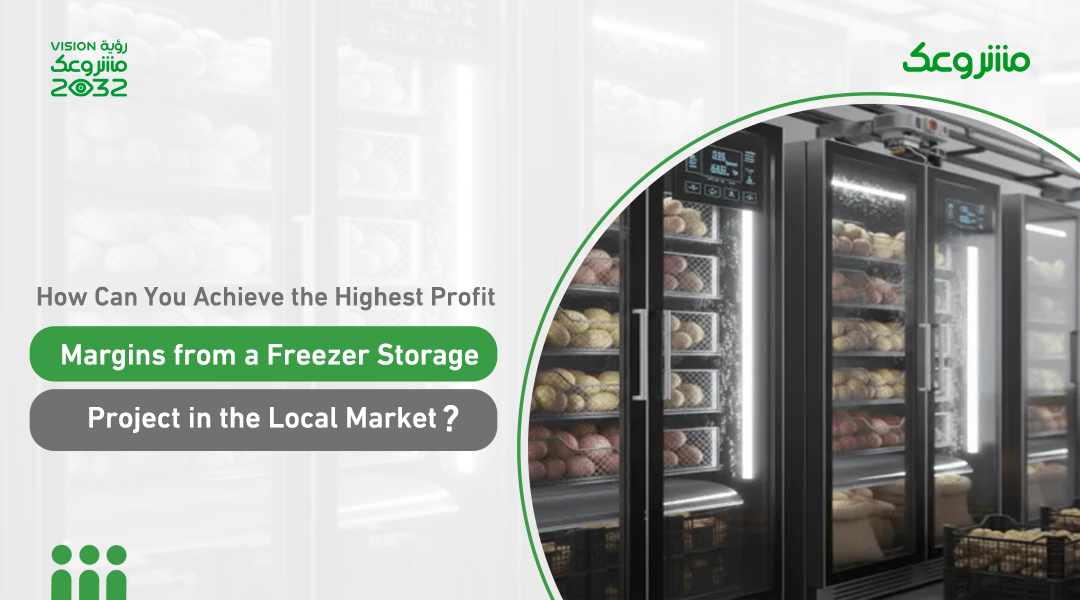
Amid the continuous expansion of the food and pharmaceutical industries and the growing demand for frozen and refrigerated products, a Frozen Storage Facility Project stands out as one of the most attractive investment opportunities, combining stable demand with strong growth potential. Manufacturers, food companies, importers, and distributors rely on cold storage services to preserve product quality and safety until goods reach the end consumer, making this project a critical component of modern supply chains.
Its importance extends beyond merely providing storage space; it also helps reduce product losses, improve the efficiency of transportation and distribution operations, and enhance business continuity. With professional management, a strategically selected location, and high-efficiency refrigeration systems, the project can generate stable returns and promising expansion opportunities, making it a long-term investment option in a market experiencing sustained growth.
A Frozen Storage Facility Project is an investment venture that involves establishing and equipping refrigerated and frozen warehouses designed to store products that require low temperatures to maintain their quality and safety. These products include food items, meat, seafood, frozen fruits and vegetables, dairy products, and certain pharmaceutical products.
The project provides short-term and long-term storage services while adhering to strict safety and quality standards, ensuring that products remain in optimal condition until they are distributed or sold. It is considered an essential part of the supply chain ecosystem, as it helps reduce product losses, improve the efficiency of transportation and distribution operations, and meet the needs of manufacturers, importers, distributors, and food companies. This makes it a business with consistent demand and stable investment returns.
Please read here: Refrigerated and Frozen Storage Facility Project: An Investment That Delivers Steady Returns and High Profit Potential
Yes, a Frozen Storage Facility Project is widely regarded as a financially viable investment, supported by the rapid growth of the global commercial refrigeration equipment market. The market reached an estimated value of approximately USD 51.66 billion in 2025 and is projected to grow to USD 54.19 billion in 2026, continuing its upward trajectory to reach USD 82.78 billion by 2034, representing a compound annual growth rate (CAGR) of 7.19%.
These indicators reflect the steadily increasing demand for refrigeration and cold storage services, driven by rising consumption of frozen products and the ongoing development of supply chains across various industries. As a result, investing in a Frozen Storage Facility Project goes beyond meeting current market needs; it provides investors with the opportunity to benefit from a sector expected to experience sustained growth and generate stable returns in the years ahead.
The cost of starting a Frozen Storage Facility Project includes several essential investment and operational components, most notably:
The success and long-term sustainability of a Frozen Storage Facility Project depend on a combination of operational and managerial factors that ensure product quality, maximize operational efficiency, and maintain customer satisfaction. The more effectively the facility is managed, the greater its ability to compete in the market and generate strong investment returns in a sector experiencing growing demand for refrigerated and frozen storage services. Key success factors include:
A Frozen Storage Facility Project is not limited to providing refrigerated and frozen storage space. It can also offer a wide range of value-added services that meet the needs of manufacturers, importers, distributors, and food companies, helping to increase revenue and strengthen the project’s competitive position. Some of the most important services include:
Read Here: Why Is a Potato Cold Storage Facility Project Considered a Golden Opportunity in Agricultural Markets?
| Risk | Impact | Ways to Overcome It |
|---|---|---|
| High operating costs (electricity and maintenance) | Reduced profit margins | Use energy-efficient refrigeration systems, perform regular maintenance, and minimize operational waste. |
| Refrigeration and freezing system failures | Product spoilage and significant financial losses | Invest in high-quality equipment, implement preventive maintenance programs, and provide backup generators for emergencies. |
| Power outages | Operational disruptions and inventory damage | Install backup power generators and early-warning monitoring systems. |
| Poor inventory management | Product loss or expiration | Implement accurate digital Warehouse Management Systems (WMS) and inventory tracking solutions. |
| Intense market competition | Pricing pressure and reduced profitability | Differentiate services through blast freezing, refrigerated transportation, and superior customer service quality. |
| Safety and fire hazards | Operational losses and business interruptions | Comply with safety regulations and install advanced fire detection and suppression systems. |
| Seasonal demand fluctuations | Unstable revenue streams | Diversify the customer base and service offerings to offset periods of lower demand. |
I began my journey toward establishing a Frozen Storage Facility Project in the Kingdom of Saudi Arabia after recognizing the growing demand for refrigerated and frozen storage services and my desire to invest in a sector with strong growth potential. However, turning the idea into reality was not an easy process. I faced several challenges, most notably developing a comprehensive operational plan, identifying the project’s technical requirements, and securing the necessary funding to build and equip the facility with advanced refrigeration systems.
While searching for a specialized consulting firm to help me move forward with confidence, I contacted Mashrooak Consulting Company. The company provided me with a comprehensive feasibility study covering the marketing, technical, financial, and administrative aspects of the project, giving me a clear understanding of every stage of development.
The support extended beyond preparing the feasibility study. The team also assisted me in preparing the financing file and fulfilling all requirements needed to obtain funding from the Social Development Bank. Thanks to this integrated support, the project was launched with high operational efficiency and became capable of delivering refrigerated and frozen storage services in accordance with the highest quality standards, while achieving operational stability and creating promising opportunities for future growth and expansion.
The cost of establishing a freezing storage facility is determined by a variety of factors and can vary significantly from one project to another. Key considerations include the size of the facility, the targeted storage capacity, and the type of refrigeration and freezing technologies used. The level of thermal insulation and the quality of construction materials also play a major role in determining the overall investment cost.
The project location is another important factor, as land prices, construction expenses, and installation costs can differ considerably from one area to another. In addition, the total cost includes infrastructure requirements such as backup power systems, storage and handling equipment, safety and monitoring systems, as well as initial operating expenses including labor, maintenance, and licensing fees.
As a result, the final cost of a freezing storage facility project depends on the investor’s objectives, the scale of operations, and the range of services intended to be offered.
A Meat Freezing Storage Facility Project is a service-oriented and investment-based venture that aims to provide a specialized facility for preserving and freezing various types of meat, including beef, poultry, lamb, and other meat products. The facility operates at very low temperatures to maintain product quality and extend shelf life for long periods without spoilage.
The project relies on highly efficient refrigeration and freezing rooms equipped with advanced systems that precisely control temperature and humidity levels, ensuring a safe storage environment that complies with food safety and health standards. This type of project is an essential component of the food supply chain, serving slaughterhouses, meat distribution companies, restaurants, hotels, supermarkets, and other food-related businesses.
In addition, the facility helps reduce meat losses, improve storage and distribution efficiency, and ensure product availability during periods of high demand or long-term storage requirements, making it a valuable and sustainable investment within the food industry.
Yes, a Frozen Storage Facility Project can be highly profitable, particularly because it provides an essential service within the food industry and supply chain sector. Demand for frozen product storage and preservation continues to grow steadily, creating ongoing opportunities for revenue generation.
Profitability is primarily driven by leasing storage space to clients and offering value-added services such as handling, inventory management, and refrigerated distribution. However, the actual level of profitability depends on several key factors, including occupancy rates, the number and size of contracted customers, operational efficiency, and the ability to control major expenses such as electricity consumption, maintenance, and labor costs.
With effective management, strong client relationships, and optimized operating costs, a frozen storage facility can generate stable income and attractive long-term returns.
Frozen Storage Facility prices vary significantly depending on several factors. The overall cost is influenced by the size and storage capacity of the freezing room, the type and efficiency of the refrigeration system, the quality of thermal insulation, and the construction materials used. In addition, the level of integrated technology—such as smart control systems and temperature monitoring solutions—plays an important role in determining the final cost.
The intended use of the facility also affects pricing, whether it is designed solely for storage or includes additional services such as blast freezing or refrigerated distribution. Furthermore, the project location, construction expenses, and installation costs are key factors in calculating the total investment required.
As a result, an accurate price estimate can only be determined after conducting a detailed assessment of the project based on the investor’s requirements, operational objectives, and desired storage capacity.
The cost of establishing refrigerated and frozen storage rooms depends on a wide range of factors, causing it to vary significantly from one project to another. These factors include the size and storage capacity of the rooms, the required temperature range—whether for refrigeration or deep freezing—the type of refrigeration systems used, and their energy efficiency. In addition, the quality of thermal insulation and the construction materials used for walls, ceilings, and flooring play a major role in determining overall costs.
The project location, construction and installation expenses, and the level of technology incorporated into the facility—such as smart control systems, temperature monitoring solutions, safety systems, and backup generators—also have a substantial impact on the final investment cost.
It is clear that this project is no longer merely a facility for storing products; it has become a vital link in the supply chain ecosystem that the food, pharmaceutical, and distribution sectors depend on to ensure products reach end consumers while maintaining their quality and efficiency. As food production and logistics activities continue to expand, the demand for refrigeration and freezing services is steadily increasing, creating significant opportunities for growth and stable returns.
However, capitalizing on these opportunities requires careful planning, the selection of appropriate equipment and technologies, and effective operational management. With the right approach, the project can evolve from an investment concept into a sustainable commercial asset capable of competing successfully in the market and generating long-term value.

To Contact Us and Request a Feasibility Study for a Frozen Storage Facility Project
The kebab restaurant project is one of the food-service ventures that combines strong demand for grilled meals with the opportunity to target a diverse customer base, including individuals, families, and lovers of traditional Middle Eastern cuisine. With growing competition in the restaurant sector, however, the project’s success is no longer determined by food taste alone. […]
Read moreA children’s toy store project is not limited to selling toys; it is built on understanding what attracts children and what families look for when choosing products that combine entertainment and educational value. With the wide variety of educational toys, skill-development games, recreational toys, and gifts available, the store has opportunities to meet the needs […]
Read moreA residential complex project is no longer simply an investment in a collection of real estate units. It has evolved into an integrated development model that combines comfortable living, diverse services, and long-term investment value. As cities expand and residents’ needs evolve, demand is growing for residential complexes that offer a comprehensive environment suited to […]
Read moreThe veterinary clinic project comes at a time when animal care is no longer limited to treating illnesses or injuries, but has expanded to include health monitoring, vaccinations, routine checkups, and care for both pets and livestock. However, many animal owners face challenges in accessing specialized veterinary services that combine prompt response, high-quality care, and […]
Read more
خصم 25% على خدمات مشروعك استفد من العرض الآن، فالفرصة متاحة لفترة محدودة فقط
سجّل بياناتك واحصل على خصم 25% الآن


