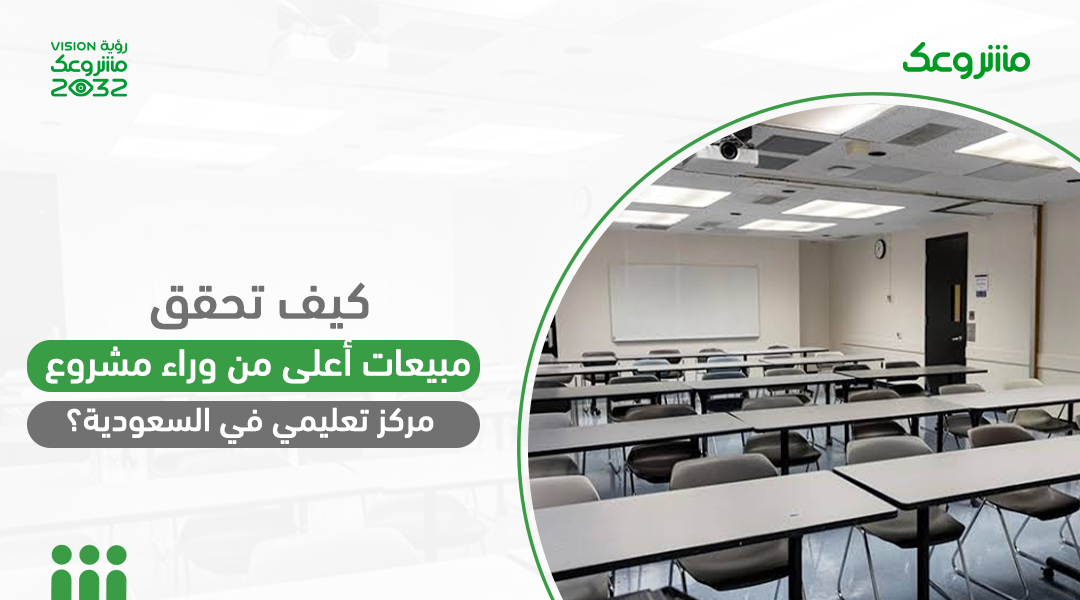
An educational center project offers investors an opportunity to enter a sector with continuous demand for education and skills development, particularly as educational pathways expand and interest grows in programs that help students and trainees achieve better results. Today, an educational center can offer more than traditional lessons by providing integrated services, including academic support, training programs, skills development, and professional preparation. Success depends on selecting specializations that meet market needs, providing a well-equipped learning environment, and hiring qualified staff to deliver high-quality education. However, investing in this type of project requires a clear understanding of the market, target audience, operational requirements, and revenue generation strategies. A comprehensive feasibility study helps investors plan the project effectively and capitalize on available market opportunities.
An educational center project is a service-based business that aims to provide academic lessons, tutoring programs, and training courses for different age groups. It offers a suitable learning environment with specialized teachers who help improve academic performance and develop essential skills. The project is based on identifying students’ needs and the target market, while providing a variety of high-quality educational services that meet customers’ expectations and generate sustainable investment returns.
Read also: Best Projects in Saudi Arabia: Your Guide to Investment Opportunities Aligned with Vision 2030
Yes, an educational center project represents a promising investment opportunity amid growing demand for educational services and skills development programs. This trend is reflected in the global educational services market, which is projected to grow from approximately USD 1.71 trillion in 2026 to USD 2.84 trillion by 2035, at a compound annual growth rate (CAGR) of 5.8% during the period from 2026 to 2035.
These indicators support the investment potential of the project, particularly when investors select the right educational specializations, deliver high-quality services, and carefully assess market needs and target audiences. These factors can enhance the center’s ability to attract customers and generate sustainable returns.
Many investors are drawn to educational center projects because they offer several key investment advantages, including:
The education market in Saudi Arabia is experiencing significant growth, driven by the expansion of educational infrastructure, increased investment in modern technologies, and growing interest in digital learning and skills development. The market was valued at approximately USD 29.26 billion in 2025, with estimates indicating that it will reach around USD 32.79 billion in 2026 and potentially grow to USD 72.77 billion by 2033.
These indicators highlight the expanding investment opportunities within the education sector, particularly given the diverse needs of students and learners and the growing demand for educational and training services. This creates favorable conditions for the success of an educational center project, provided that investors conduct thorough market research, identify their target audiences, and deliver high-quality educational programs that meet their needs.
Read also: Education Report in the Kingdom of Saudi Arabia
Establishing an educational center requires a set of essential elements to ensure that the center is fully prepared to deliver its services efficiently. The most important requirements include:
Competitor analysis is an essential step in assessing the market for an educational center project. It helps identify existing educational centers and evaluate the services and programs they offer, their pricing, teaching quality, instructors’ qualifications, and the variety of educational tools they use.
The analysis should also examine competitors’ strengths and weaknesses and identify the unmet needs of students and parents. This helps reveal opportunities for differentiation in the market.
The project can strengthen its competitive position by offering specialized educational programs, recruiting qualified staff, providing a suitable learning environment, adopting competitive pricing, and delivering flexible services that meet the needs of its target audience.
These efforts can help the center build a strong customer base, maintain business continuity, and achieve sustainable growth in the educational services market.
Add a Saudi Arabia contextUse more consistent terminology
Read also: Competitor Analysis: The Key to Sustainability and Success in the Business World
Choosing a suitable location for an educational center project requires a careful assessment of the area and the needs of its residents to ensure easy access and maximize the center’s ability to attract students. This involves considering the following factors:
The cost of an educational center project varies depending on several factors, most notably the center’s location and size, the types of educational services offered, the level of equipment, and the number of classrooms and staff required. The main cost components include:
As my educational center project grew and demand for its services increased, I began to recognize the opportunities offered by the education sector in the Kingdom of Saudi Arabia, particularly amid the diversity of educational and training needs and rising demand for programs that help students and learners develop their knowledge and skills. This growth sparked my interest in further developing the project, expanding its services, and reaching a wider audience.
However, as the project expanded, I began facing marketing challenges that affected my ability to achieve the desired growth. Marketing efforts were spread across multiple channels without a clear strategy, target audiences were not precisely defined, and advertising messages did not always communicate the true value of the center’s services. In addition, I lacked a clear mechanism for evaluating campaign results and measuring the effectiveness of marketing expenditure, making it more difficult to attract new customers.
I realized that sustaining the project’s growth required more than delivering high-quality services. Marketing needed to evolve from scattered activities into a structured system built on data and a genuine understanding of the market. Therefore, I turned to Mashroaak Consulting for specialized support.
The Mashroaak Consulting team began by analyzing the market and competitors and identifying target audiences and their needs. The team then developed a comprehensive marketing plan that included defining marketing objectives, selecting the most appropriate channels to reach customers, refining marketing messages, organizing campaigns and content, and establishing performance indicators to monitor results and continuously improve marketing activities.
With the implementation of the plan, the marketing process became more organized and clearly defined. The center was better able to focus its efforts on audiences most interested in its services and use its marketing budget more efficiently, while monitoring results and making decisions based on clear performance indicators.
Strengthen the Closing Call to ActionTighten the Personal Experience Section
The suitable space for establishing an educational center depends on the type of services offered, the number of classrooms, and the targeted student capacity. The facility should provide comfortable classrooms, a reception and waiting area, administrative offices, and essential facilities, with additional space allocated for activities or computer labs when needed. It is also preferable to choose a premises that allows for future expansion while ensuring that its size and layout comply with the regulatory requirements applicable to the activity.
The licensing requirements for an educational center project in Saudi Arabia vary depending on the nature of the business and the programs offered. Therefore, the first step is to determine the type of center and the relevant licensing authority. In general, the requirements include completing the establishment’s registration, obtaining the appropriate license, preparing premises that meet the required standards, recruiting qualified staff, and complying with the regulations and standards governing the activity. If the center offers training programs, it must obtain a license from the Technical and Vocational Training Corporation (TVTC) and activate its training programs in accordance with the approved procedures.
An educational center differs from a training center in terms of the services it provides and the audiences it serves. An educational center primarily focuses on supporting the learning process through lessons, revision sessions, tutoring, and academic programs. A training center, on the other hand, focuses on delivering specialized courses and programs designed to develop trainees’ professional or technical knowledge and skills.
Read also: Training Center Project in Saudi Arabia: An Opportunity for Growth in the Skills Development Market
An educational center can offer a wide range of subjects and programs based on the needs of its target audience. These may include core academic subjects, tutoring and revision programs, language courses, digital skills, and computer training. The center can also provide programs that develop critical thinking, creativity, and problem-solving skills, as well as educational programs for children and exam preparation courses. In addition, interactive workshops and educational activities can support the learning process and enhance the value of the services provided to learners.
Its success depends not only on offering a variety of educational services but also on combining high-quality content, qualified staff, an understanding of learners’ needs, and effective resource management. With the diverse opportunities available in the education and training sector, the project can become a sustainable and scalable business when established with a clear vision and decisions based on a thorough assessment of the market, costs, and operational requirements.
Therefore, the most important step before launching the project is to evaluate its feasibility and determine the most suitable service model and target audience. This helps reduce risks and enhance the chances of long-term success.

For inquiries or to request a feasibility study for an educational center project, please contact us.
The kebab restaurant project is one of the food-service ventures that combines strong demand for grilled meals with the opportunity to target a diverse customer base, including individuals, families, and lovers of traditional Middle Eastern cuisine. With growing competition in the restaurant sector, however, the project’s success is no longer determined by food taste alone. […]
Read moreA children’s toy store project is not limited to selling toys; it is built on understanding what attracts children and what families look for when choosing products that combine entertainment and educational value. With the wide variety of educational toys, skill-development games, recreational toys, and gifts available, the store has opportunities to meet the needs […]
Read moreA residential complex project is no longer simply an investment in a collection of real estate units. It has evolved into an integrated development model that combines comfortable living, diverse services, and long-term investment value. As cities expand and residents’ needs evolve, demand is growing for residential complexes that offer a comprehensive environment suited to […]
Read moreThe veterinary clinic project comes at a time when animal care is no longer limited to treating illnesses or injuries, but has expanded to include health monitoring, vaccinations, routine checkups, and care for both pets and livestock. However, many animal owners face challenges in accessing specialized veterinary services that combine prompt response, high-quality care, and […]
Read more
خصم 25% على خدمات مشروعك استفد من العرض الآن، فالفرصة متاحة لفترة محدودة فقط
سجّل بياناتك واحصل على خصم 25% الآن


