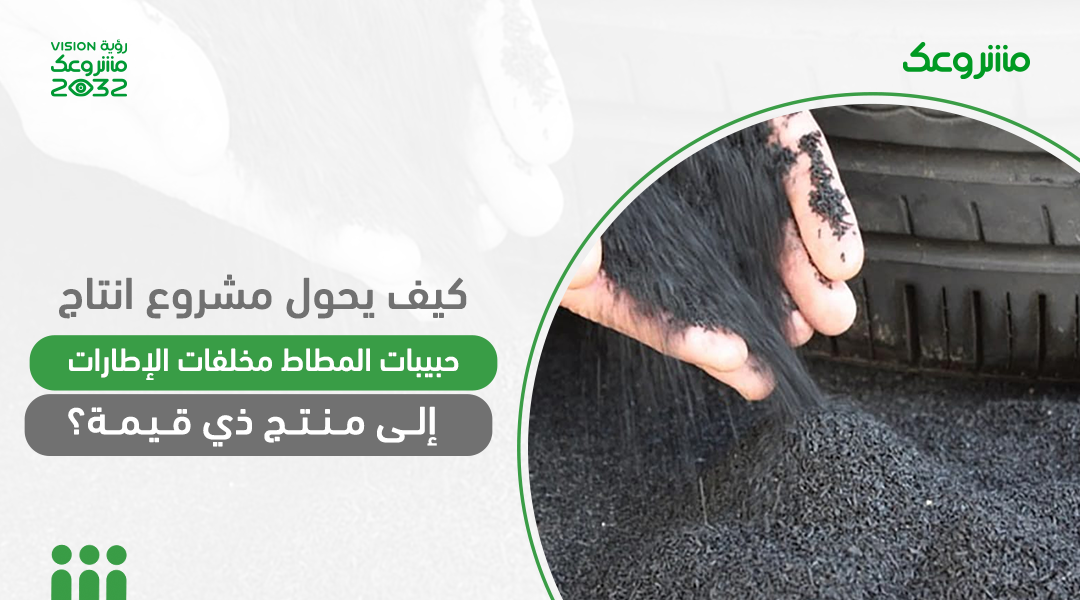
The rubber granules production project opens up a unique investment opportunity by transforming tires and rubber waste, which pose environmental challenges, into reusable materials for a wide range of industrial, construction, and sports applications. As interest in waste recycling and reducing environmental impact continues to grow, so does the need for solutions that recover the value of these materials and reintroduce them into the production cycle.
Rubber granules have emerged as a versatile product used in manufacturing sports field surfaces and athletic tracks, landscaping certain areas, and various other applications that benefit from their flexibility and durability. However, turning this opportunity into a sustainable business requires more than simply investing in equipment. It involves understanding market conditions, identifying raw material sources, selecting appropriate production technologies, and determining target customers and required product specifications.
Therefore, careful planning and a feasibility study are essential starting points for assessing the project’s potential and identifying the most suitable operational and marketing strategies before making an investment decision.
Read here:The best recycling project ideas to boost the growth of the circular economy
The rubber granules production project involves collecting used tires and rubber waste and recycling them through a series of industrial processes, including sorting, shredding, grinding, and separation, to produce rubber granules in various sizes and specifications. These granules are used in a wide range of applications, such as sports field and facility flooring, walkways, certain rubber products, and insulation materials, depending on their purity and particle size.
The project combines the environmental benefit of managing waste that is difficult to dispose of with the production of a reusable raw material that serves multiple industries. It also offers the flexibility to diversify products based on market demand and the needs of target customers.
Read here: Car Tire Recycling Project: Turning Damaged Tires into High-Value Products
Yes, a rubber granules production project is an industrial venture worth considering for investment, given the market’s projected growth and the expanding use of rubber granules across various sectors. The global rubber granules market was valued at approximately USD 2.94 billion in 2025 and is expected to reach USD 5.10 billion by 2035, representing a compound annual growth rate (CAGR) of 6.30% from 2026 to 2035.
These projections point to potential growth in demand for rubber products, particularly those used in sports flooring and children’s playgrounds. This highlights the importance of conducting a thorough feasibility study to evaluate the project’s market potential, technical requirements, and financial viability before making an investment decision.
The market analysis for a rubber granules production project depends on studying demand for rubber granules and the industries that use them in their manufacturing processes, particularly sports field construction companies, rubber flooring manufacturers, construction contractors, and rubber product manufacturers.
The product’s diverse applications create multiple marketing opportunities for the project, especially given the ability to produce granules in different sizes and specifications to meet customer requirements. Market analysis also requires examining local competitors and imported products, comparing prices and quality levels, and assessing the availability of used tires as one of the primary sources of raw materials.
Identifying target customers and securing supply contracts with them, while maintaining product quality and consistent deliveries, can strengthen the project’s competitiveness and help assess its prospects in the target market.
Read here: How You Can Implement a Recycling Project
The cost of a rubber granules production project is divided into several investment and operating expenses. The size of each expense depends on the production capacity, project location, and type of production line. The main cost components include:
A rubber granules production project supports the circular economy by converting used tires into reusable raw materials for a wide range of industries. This helps reduce waste accumulation and improve resource utilization. Such projects are becoming increasingly important in the Saudi market as the Kingdom works to develop its recycling sector. According to plans announced by the Ministry of Environment, Water and Agriculture, Saudi Arabia aims to increase its waste recycling rate to 95%, contributing more than SAR 120 billion to GDP.
The Saudi tire recycling market was valued at approximately USD 58.6 million in 2025 and is projected to reach USD 71.4 million by 2033. These indicators highlight the growing focus on generating economic value from waste, reinforcing the importance of studying rubber granules production projects and evaluating their investment potential and environmental benefits.
Read here: Discover How to Turn Waste into Wealth Through Recycling
The ideal location for a rubber granules production project is within a well-equipped industrial zone. The site should facilitate efficient operations, reduce transportation costs, and allow room for future expansion. The key location requirements include:
Read here: Everything You Need to Know About SWOT Analysis and How to Apply It
The steps involved in rubber manufacturing vary depending on the type and source of the rubber. However, when it comes to recycled rubber, the process begins with collecting used tires and rubber waste, sorting them, and removing non-rubber components. The materials are then cut into small pieces and gradually ground to the required size.
Next, metal wires, fibers, and other impurities are separated from the rubber using suitable separation equipment. The rubber then undergoes fine grinding and screening to produce uniform granules in different sizes and specifications. In the final stage, the granules are inspected to ensure their quality and purity, then packaged and stored in preparation for supplying them to industries that use recycled rubber in various products and applications.ما
A rubber granules production project offers a range of products that vary according to granule size, purity level, and intended application. The main products include rubber granules in different sizes, used in sports field and facility flooring, running tracks, and recreational areas. The project may also produce shredded rubber for certain construction and industrial applications, as well as fine rubber powder for manufacturing specific rubber products and insulation materials.
In addition, metal wires and fibers recovered during tire processing can be separated for reuse or supplied to specialized recycling facilities.
The primary raw materials required for a rubber granules production project are used tires and recyclable rubber waste, which are collected, sorted, and prepared before being fed into the production line. These materials may include tires of various types and sizes, depending on the intended final product.
The project also requires packaging materials to store and transport the rubber granules. Depending on the production technology and the required product specifications, certain auxiliary materials may also be needed. Selecting suitable raw materials is essential to minimize impurities and maintain the quality of the finished granules.
Rubber granules are used in a wide range of applications thanks to their flexibility, shock-absorbing properties, and resistance to wear. Their main uses include sports field flooring, running tracks, and recreational areas. They are also used to manufacture rubber flooring for factories, gyms, and certain facilities.
In addition, rubber granules can be incorporated into asphalt mixtures and various construction applications, as well as used in the production of diverse rubber products, insulation materials, and protective materials.
The most suitable application depends on the granules’ size, purity, and technical properties. This allows the project to diversify its product range to meet the needs of different industries and customer segments.
This project goes beyond recycling waste that is difficult to dispose of. It offers an industrial model that transforms waste into a product suitable for a variety of applications, creating opportunities for growth as interest in sustainable solutions and the circular economy continues to expand.
However, the availability of raw materials and the wide range of potential applications are not enough on their own to guarantee the project’s viability. Its success depends on the accuracy of market research, the selection of suitable equipment, the determination of production capacity, an understanding of customer needs, and the development of a comprehensive marketing and operational plan.
This is why preparing a feasibility study for a rubber granules production project before implementation is essential. It provides a clearer understanding of the project’s requirements, opportunities, and challenges, enabling investment decisions to be based on reliable data.

Contact us to request a feasibility study for a rubber granules production project.
The kebab restaurant project is one of the food-service ventures that combines strong demand for grilled meals with the opportunity to target a diverse customer base, including individuals, families, and lovers of traditional Middle Eastern cuisine. With growing competition in the restaurant sector, however, the project’s success is no longer determined by food taste alone. […]
Read moreA children’s toy store project is not limited to selling toys; it is built on understanding what attracts children and what families look for when choosing products that combine entertainment and educational value. With the wide variety of educational toys, skill-development games, recreational toys, and gifts available, the store has opportunities to meet the needs […]
Read moreA residential complex project is no longer simply an investment in a collection of real estate units. It has evolved into an integrated development model that combines comfortable living, diverse services, and long-term investment value. As cities expand and residents’ needs evolve, demand is growing for residential complexes that offer a comprehensive environment suited to […]
Read moreThe veterinary clinic project comes at a time when animal care is no longer limited to treating illnesses or injuries, but has expanded to include health monitoring, vaccinations, routine checkups, and care for both pets and livestock. However, many animal owners face challenges in accessing specialized veterinary services that combine prompt response, high-quality care, and […]
Read more
خصم 25% على خدمات مشروعك استفد من العرض الآن، فالفرصة متاحة لفترة محدودة فقط
سجّل بياناتك واحصل على خصم 25% الآن


