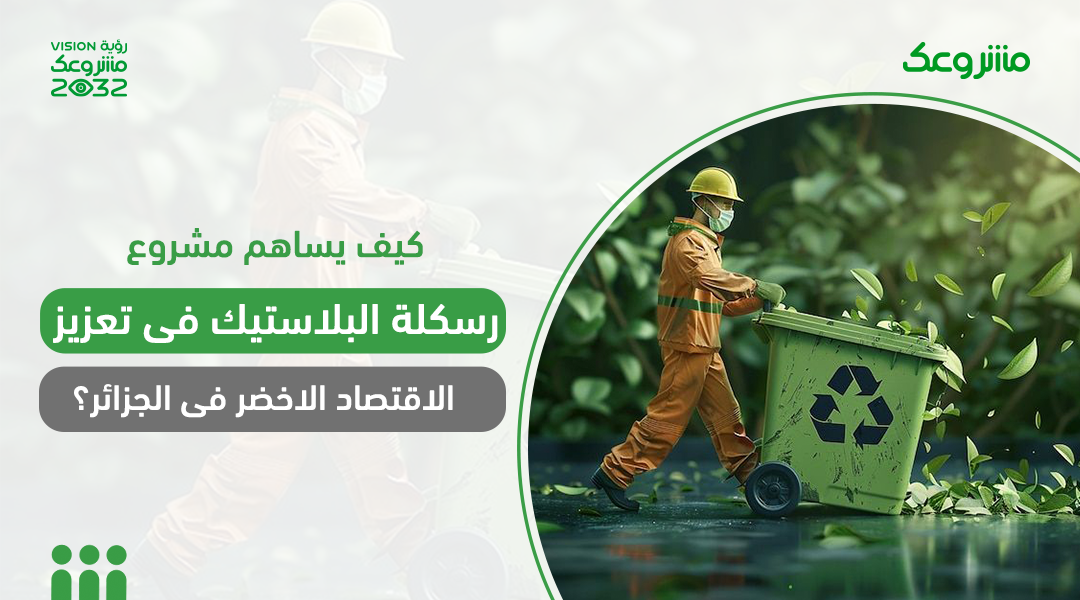
The plastic recycling project in Algeria is currently considered a promising investment opportunity that combines strong economic returns with sustainable environmental impact. This is driven by the continuous increase in plastic waste and the limited availability of local processing facilities, creating a relatively untapped market with low competition and a growing need for alternative manufacturing solutions.
The project’s competitive advantage lies in the low cost of inputs, as used plastic materials are widely available at minimal prices. At the same time, its outputs—such as recycled plastic granules and sheets—enjoy steadily increasing demand from industrial, construction, and packaging sectors.
This trend is further supported by the growing governmental focus on promoting the green economy, which enhances the project’s financial feasibility and reduces operational risks. Moreover, the project contributes to reducing environmental pollution and improving the urban landscape in both cities and rural areas.
As a result, it represents a flexible and scalable investment model that can start with moderate capital suitable for medium investors and grow gradually through well-planned production strategies. Over time, it can evolve into a fully integrated industrial facility with tangible economic and social impact, transforming waste into a strategic resource that strengthens local industrial sustainability.
A plastic recycling project is an industrial activity based on collecting plastic waste, processing it, and converting it into raw materials or new usable products instead of disposing of it in ways that harm the environment.
The success of this project relies on three key integrated pillars:
In Algeria, this project gains exceptional momentum due to several factors, including the growing support for circular economy policies, the abundance of raw materials generated from daily waste that remains largely underutilized, and the increasing demand for sustainable industrial alternatives.
All these elements make the project a comprehensive investment model that successfully balances strong economic feasibility with positive environmental impact, while offering real potential for expansion at both local and regional levels.
Yes, the plastic recycling project is considered a highly profitable investment opportunity, supported by strong and consistent global market growth.
Market indicators show that the recycled plastics market is expected to grow from USD 72.66 billion in 2025 to USD 77.93 billion in 2026, continuing its upward trajectory to reach حوالي USD 111.10 billion by 2031. This reflects a compound annual growth rate (CAGR) of approximately 7.35% خلال الفترة 2026–2031.
These figures do not just represent numerical growth; they indicate a structural shift in global demand toward recycled materials. This shift is driven by increasing environmental awareness and the efforts of major industries to diversify supply chains and reduce reliance on virgin plastics.
As a result, the plastic recycling project goes beyond being merely an environmental initiative—it stands out as a lucrative and scalable economic opportunity, supported by proven financial feasibility and strong potential for sustainable growth in the medium and long term.
Please read here: Plastic Recycling Project… with “Mishroo3k,” make sustainability your path to profit
Why is the plastic recycling project a successful and sustainable investment option?
The plastic recycling project offers multiple advantages that make it one of the strongest investment opportunities today, especially in promising markets such as Algeria. أبرز هذه المزايا تشمل:
Read here: The best recycling project ideas to boost the growth of the circular economy
Cost of a Plastic Recycling Project in Algeria
The cost of a plastic recycling project can vary significantly depending on the project size and operational scale. However, there are essential cost components that must be considered when planning such a project:
Main Steps to Start a Plastic Recycling Project
Starting a plastic recycling project in Algeria requires a structured and well-planned approach. The key steps include:
Machines and Equipment Required to Start a Plastic Recycling Project
| Challenges | Solutions (Mishroo3k Role) |
|---|---|
| Securing stable raw material sources | Mishroo3k helps investors build effective partnerships with waste collectors and local factories to ensure a continuous and stable supply of plastic waste, avoiding shortages or disruptions. |
| Variation in plastic waste quality | Mishroo3k provides specialized consulting on optimal sorting systems and technical standards, enabling precise raw material selection and quality control from the receiving stage to ensure market-ready output. |
| High cost of equipment and maintenance | Mishroo3k offers a comprehensive comparative study of available machinery in terms of quality, price, and efficiency, along with a well-planned maintenance strategy to reduce breakdowns and extend equipment lifespan. |
| Licensing and legal procedures | Mishroo3k prepares all required documentation professionally and coordinates directly with relevant government authorities, speeding up licensing and simplifying administrative procedures for investors. |
| Fluctuations in recycled plastic prices | Mishroo3k develops flexible marketing and pricing strategies based on market dynamics and seasonal changes, helping stabilize profits and reduce financial risks. |
| Environmental and health challenges | Mishroo3k designs integrated waste management and occupational safety plans to ensure a safe working environment and full environmental compliance, protecting both workers and the surrounding area. |
| Market competition | Mishroo3k identifies and enhances each project’s unique strengths and builds tailored marketing strategies that help create a strong brand identity and a solid market presence that is difficult to replicate. |
| Low environmental awareness in society | Mishroo3k supports awareness campaigns and builds partnerships with local communities and institutions to encourage responsible waste collection and sorting behaviors. |
Tips to Ensure the Success and Sustainability of a Plastic Recycling Project
Read here: How to start small industrial projects and achieve long-term financial sustainability?
The National Bank of Algeria, through its investment loan, provides a real financing opportunity for anyone seeking to establish, expand, or modernize a plastic recycling project. The financing can cover up to 80% of the project value, with loan durations ranging from medium-term financing of 2 to 7 years and long-term financing exceeding 7 years, in line with the nature of the equipment and its depreciation cycle.
In addition, the bank offers a deferred repayment period ranging from 12 to 36 months, giving the investor sufficient time to scale up operations and achieve stable returns before starting repayments.
To benefit from this loan, only the required documents must be submitted, primarily a well-prepared technical and economic feasibility study. This is fully prepared by “Mashroo3k Consulting Company” to ensure the highest chances of approval.
How is plastic recycled?
Plastic recycling goes through a complete and sequential process that begins with collecting plastic waste from various sources. The materials are then carefully sorted according to type, color, and quality to ensure a clean raw input and a high-quality final product.
After sorting, a thorough cleaning stage takes place to remove all impurities, dust, and contaminants. The plastic is then shredded into small flakes, which are fed into melting machines where they are processed and transformed into plastic pellets known as granules.
These granules serve as ready raw materials used in many industries such as plastic bags, containers, pipes, and industrial components.
In this way, the circular economy is completed, where waste is transformed from an environmental burden into a valuable industrial resource with real added value.
Read here: Discover how to turn waste into wealth through recycling
The cost of a plastic recycling project is flexible enough to make it accessible to a wide range of investors. It does not require a large initial capital, as it can start with a moderate budget that matches available resources and then expand gradually.
Costs are distributed across several main components, including site preparation and setup, purchasing essential machinery such as shredding, washing, and grinding machines—which vary in price depending on capacity and quality.
Additional costs include ongoing operational expenses such as workers’ salaries and electricity and water bills, as well as securing raw plastic materials from various sources and obtaining the necessary licenses and legal permits to operate the project officially and properly.
What are the benefits of recycling?
The benefits of plastic recycling go beyond environmental impact, extending into broad economic and social dimensions, making it a fundamental pillar of sustainable development.
Environmentally, recycling helps reduce pollution, minimize waste accumulation in landfills and oceans, decrease pressure on natural resources by reducing dependence on petroleum-based raw materials, and lower carbon emissions associated with virgin plastic production.
Economically, it creates job opportunities in collection, sorting, and processing, and supplies local industries with lower-cost recycled raw materials, enhancing competitiveness and supporting the circular economy.
Socially, it raises environmental awareness among individuals and improves overall quality of life, making recycling a real investment in a cleaner and more sustainable future for future generations.
Please read here: On the International Day for the Elimination of Waste, discover the most important investment opportunities to achieve sustainability.
No, not all types of plastic are equally recyclable. Some types, such as polyethylene terephthalate (PET) and high-density polyethylene (HDPE), are the most widely accepted in recycling processes because they are easier to process and have strong demand in secondary markets.
On the other hand, plastics like polyvinyl chloride (PVC), polystyrene (Styrofoam), and thin plastic bags present greater technical challenges due to their complex chemical structures, contamination issues, or low market value after processing.
Therefore, proper sorting based on recycling codes (from 1 to 7) and understanding the characteristics of each plastic type is a crucial step to ensure efficient recycling and maximize resource utilization.
How can we benefit from plastic containers?
Plastic containers can be used in smart and practical ways that combine reuse and recycling. At the household level, they can be cleaned and reused for storing dry food, tools, or toys, or even transformed into plant pots by adding drainage holes.
They can also be used in handicrafts and small creative projects, where they are redesigned or decorated to make storage organizers, decorative items, educational toys, and more.
At the industrial level, these containers can be collected, shredded, and melted to produce plastic granules used in manufacturing new bottles, pipes, and a wide range of plastic products.
In this way, plastic containers shift from simple waste into an economic and environmental resource that generates value while contributing to environmental protection.
Read here: How You Can Implement a Recycling Project
It becomes clear that this sector is not merely a traditional industrial activity, but rather a strategic investment deeply rooted in the pillars of sustainable development, successfully balancing strong financial returns with environmental responsibility.
With the accelerating demand for recycled materials, this industry opens wide opportunities for investors and entrepreneurs capable of transforming waste into value-added resources—provided that flexible operational planning is adopted and strict adherence to quality and production efficiency standards is maintained.
What is considered today an environmental challenge or discarded waste can, tomorrow, become a promising investment opportunity that generates sustainable returns.
Ultimately, the key question remains: Are you ready to take the first step and transform this project idea into an industrial reality that leads you toward success and leadership?

To contact us and request a feasibility study for a plastic recycling project
The kebab restaurant project is one of the food-service ventures that combines strong demand for grilled meals with the opportunity to target a diverse customer base, including individuals, families, and lovers of traditional Middle Eastern cuisine. With growing competition in the restaurant sector, however, the project’s success is no longer determined by food taste alone. […]
Read moreA children’s toy store project is not limited to selling toys; it is built on understanding what attracts children and what families look for when choosing products that combine entertainment and educational value. With the wide variety of educational toys, skill-development games, recreational toys, and gifts available, the store has opportunities to meet the needs […]
Read moreA residential complex project is no longer simply an investment in a collection of real estate units. It has evolved into an integrated development model that combines comfortable living, diverse services, and long-term investment value. As cities expand and residents’ needs evolve, demand is growing for residential complexes that offer a comprehensive environment suited to […]
Read moreThe veterinary clinic project comes at a time when animal care is no longer limited to treating illnesses or injuries, but has expanded to include health monitoring, vaccinations, routine checkups, and care for both pets and livestock. However, many animal owners face challenges in accessing specialized veterinary services that combine prompt response, high-quality care, and […]
Read more
خصم 25% على خدمات مشروعك استفد من العرض الآن، فالفرصة متاحة لفترة محدودة فقط
سجّل بياناتك واحصل على خصم 25% الآن


