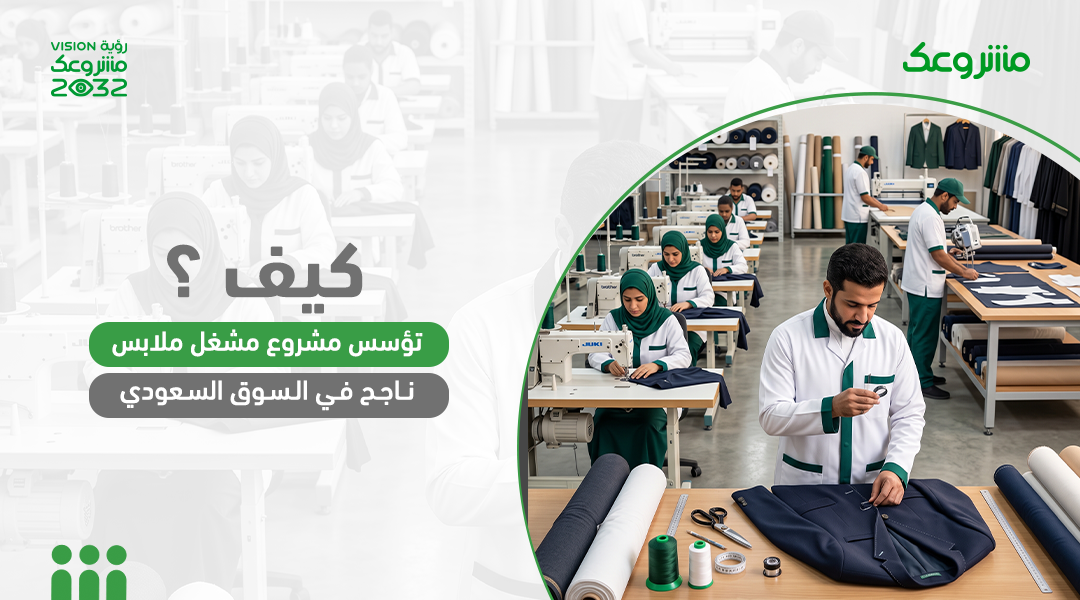
How to Establish a Successful Garment Workshop in the Saudi Market - Mashroo3k
Published08 Sep 2026 0 comments 116 Observation
How to Establish a Successful Garment Workshop in the Saudi Market

A garment workshop project is one of the business ventures that attracts considerable interest from investors and entrepreneurs, particularly with the continued demand for clothing and the growing diversity of market needs for ready-made and locally designed products. The success of this type of business depends not only on providing sewing machines and raw materials, but also on proper planning, selecting the right products, identifying the target customer segment, maintaining high manufacturing quality, and implementing effective marketing strategies.
The project can also be launched as a small-scale workshop with limited resources and gradually expanded as demand increases and a solid customer base is established. Therefore, conducting a thorough assessment of the project before starting helps determine the required capital, equipment, workforce, and expected costs and profitability.
In this context, we explore the key steps for establishing a garment workshop project, from selecting the appropriate location, equipment, and raw materials to developing effective marketing strategies and maximizing the project’s opportunities for success and growth in the clothing market.

What Is the Idea Behind a Garment Workshop Project?

A garment workshop project is a business specialized in manufacturing and preparing ready-made garments in various styles by transforming fabrics and other materials into finished products based on specific designs and sizes. The workshop typically involves several stages, including model design, fabric cutting, sewing, finishing, ironing, and packaging. It can also undertake custom production for clothing brands or manufacture a wide range of garments, including women’s, men’s, and children’s clothing, as well as workwear.

The project targets individual customers, clothing stores, e-commerce retailers, and fashion brands. As demand increases, the workshop can expand its production capacity and enter into manufacturing agreements with different clients and businesses.

Is a Garment Workshop Project Worth Investing In?

Yes, a garment workshop project is considered one of the promising investment ventures with strong profitability potential, driven by the continued demand for clothing and the ongoing growth of the global apparel market. The global clothing market was valued at USD 1,749.67 billion in 2025 and is projected to grow from USD 1,804.08 billion in 2026 to USD 2,307.04 billion by 2034, registering a compound annual growth rate (CAGR) of 3.52% during the forecast period.

Read More: Ready-Made Garment Market Report in Saudi Arabia

Why Do Investors Prefer Investing in Garment Workshop Projects?

  • Consistent demand for clothing, as it is an essential product required by various consumer segments.
  • The ability to start with a suitable investment size by setting up a small workshop and gradually expanding its capabilities.
  • A diverse range of products, including women’s clothing, men’s clothing, children’s wear, homewear, and other garments.
  • The ability to expand operations by adding new machines and increasing production capacity according to demand.
  • Multiple sales channels, including clothing stores, wholesalers, e-commerce stores, and social media platforms.
  • The potential to generate attractive returns by controlling material and production costs and minimizing waste.
  • Production flexibility, allowing the workshop to produce different designs, sizes, and quantities based on customer requirements.
  • The opportunity to build a private brand by offering distinctive designs and maintaining good manufacturing quality.
  • Diverse target markets, enabling the project to serve individuals, retailers, companies, and wholesalers.
  • The potential to develop the business from a small workshop into a garment factory or a specialized clothing brand.
  • Creating employment opportunities in sewing, cutting, finishing, packaging, administration, and marketing.
  • The ability to leverage e-commerce to reach customers in different locations and expand the project’s sales reach.

Read More: Best Successful Small Business Ideas for Young Entrepreneurs in 2026

Read More: Future-Proof Projects in Arab Countries: Key Investment Opportunities

What Products Can Be Manufactured in a Garment Workshop Project?

  • Women’s clothing, such as dresses, abayas, blouses, and skirts.
  • Men’s clothing, such as shirts, trousers, and traditional garments.
  • Children’s clothing in various age groups and designs.
  • Homewear, such as pajamas and comfortable clothing.
  • Sportswear, such as T-shirts and athletic pants.
  • School uniforms and uniforms for institutions and companies.
  • Workwear and uniforms for restaurants, hotels, and other facilities.
  • Winter clothing, such as jackets, coats, and heavy garments.

What Equipment and Tools Are Needed for a Garment Workshop Project?

  • Industrial sewing machines.
  • Overlock machines for finishing fabric edges.
  • Button and buttonhole machines.
  • Fabric cutting machines.
  • Cutting tables and material preparation tables.
  • Steam irons and garment pressing equipment.
  • Finishing and quality inspection tables and equipment.
  • Scissors and manual cutting tools.
  • Measuring tools, such as rulers and measuring tapes.
  • Marking tools for defining cutting and sewing lines.
  • Tools for assembling, disassembling, and maintaining sewing machines.
  • Shelves and cabinets for storing fabrics and raw materials.
  • Hangers and garment racks for storing finished products.
  • Packaging and packing equipment.
  • Scales for weighing materials and products when needed.
  • Computers and software for model design, production planning, and production management.

How to Start a Garment Workshop Project

  • Determine the types of garments the workshop will produce and identify the target customer segment.
  • Study market needs, competitors, and prevailing prices.
  • Choose a suitable location that is easily accessible and provides the necessary utilities and services.
  • Determine the workshop’s required space based on the production volume and equipment needed.
  • Prepare the workshop according to the different stages of cutting, sewing, finishing, and storage.
  • Purchase suitable sewing machines and cutting, pressing, and finishing equipment.
  • Source fabrics, threads, accessories, and other production supplies.
  • Hire skilled workers for sewing, cutting, and finishing.
  • Establish a clear production workflow and implement quality control procedures.
  • Set product prices based on production costs and prevailing market prices.
  • Select suitable sales and distribution channels, such as clothing stores, wholesalers, and e-commerce platforms.
  • Launch marketing campaigns through social media to promote the products and attract customers.
  • Monitor sales and costs and identify the best-selling products to improve the business and gradually increase production.

Read More: How to Establish a Clothing Brand in Saudi Arabia and Compete in the Fashion Market

How to Calculate the Cost of a Garment Workshop Project in Saudi Arabia

The cost of a garment workshop project in Saudi Arabia is calculated by identifying all the investment and operating expenses required to launch and operate the business, while taking into account the workshop’s size, location, and targeted production capacity. The main cost items include:

  • Site rental and preparation costs, including finishing, electrical work, lighting, and interior fittings.
  • The purchase of sewing, cutting, and overlock machines, along with other production equipment.
  • Furniture and workshop equipment, such as cutting tables, storage shelves, and pressing equipment.
  • Raw materials, including fabrics, threads, buttons, zippers, and other accessories.
  • Licensing fees and regulatory procedures associated with establishing the business.
  • Employee salaries and wages during the initial operating period.
  • Packaging and packing costs for preparing products for sale.
  • Marketing and advertising expenses to attract customers and promote the workshop and its products.
  • Monthly operating expenses, such as electricity, water, maintenance, and transportation.
  • Working capital to cover expenses during the initial months until sales begin generating regular cash flows.

Stages of Operating a Garment Workshop Project

  • Receiving and inspecting raw materials to ensure their quality and compliance with the required specifications.
  • Designing garment models and preparing patterns according to the required sizes and designs.
  • Spreading and preparing fabrics for cutting, with the layers arranged according to the type of product.
  • Cutting fabrics using the appropriate cutting equipment based on the specified patterns.
  • Assembling and numbering garment pieces to ensure easy organization during sewing.
  • Sewing and assembling garment components using sewing and overlock machines.
  • Attaching accessories such as buttons, zippers, and labels according to the design.
  • Finishing and pressing the garments to achieve the desired final appearance.
  • Conducting quality inspections to ensure proper stitching, accurate sizing, and that the products are free from defects.
  • Packing and packaging the finished products and preparing them for storage or distribution.
  • Storing finished products properly to maintain their quality before sale.
  • Distributing and marketing the products through various sales channels while monitoring customer orders.

How Does a Feasibility Study Contribute to the Success of a Garment Workshop Project?

  • Evaluating the feasibility of the investment idea and determining its suitability for market needs.
  • Analyzing the market and competitors and identifying target customer segments and the most in-demand products.
  • Determining the required investment and estimating establishment and operating costs.
  • Selecting suitable equipment and raw materials based on the targeted production capacity.
  • Estimating expected revenues and profits based on production and sales volumes.
  • Identifying revenue sources and suitable sales channels for the products.
  • Assessing potential risks and challenges and developing appropriate solutions to address them.
  • Determining the project’s workforce requirements and allocating tasks and responsibilities.
  • Establishing clear financial indicators to help monitor project performance and support investment decision-making.
  • Identifying future expansion and growth opportunities based on project performance and market demand.

Read here: How does a clothing factory feasibility study help you build a profitable and stable project?

Criteria for Selecting a Suitable Location for a Garment Workshop

  • Proximity to target markets and customers to facilitate product distribution and customer access.
  • Easy access to the location, with suitable roads and transportation options.
  • Sufficient space to accommodate sewing machines, cutting and finishing areas, and storage facilities.
  • Availability of essential utilities, such as electricity, water, and proper ventilation.
  • Proximity to fabric and raw material suppliers to facilitate sourcing and reduce transportation costs.
  • Easy loading and unloading of goods, with adequate space for receiving and dispatching materials and products.
  • Availability of labor in the surrounding area to facilitate the recruitment of tailors and skilled workers.
  • Rent that fits within the project’s budget while taking other operating costs into account.
  • Compliance with business requirements and licensing regulations, ensuring that the location is suitable for operating a garment workshop.
  • Avoiding locations that may restrict future expansion and selecting a site that allows production capacity to increase over time.
  • Availability of adequate security and protection for equipment, raw materials, and finished products.
  • Analyzing competitor locations and considering sites near suitable commercial and industrial areas.

Read More: Secrets to the Success of a Children’s Clothing Tailoring Business in the Saudi Market

Ways to Double Sales for a Garment Workshop Project

  • Diversify the product range and offer designs that meet the needs of different customer segments.
  • Focus on the quality of materials and finishing to build a strong reputation and encourage repeat purchases.
  • Offer distinctive designs that keep pace with fashion trends and help the workshop stand out from competitors.
  • Enable online sales through an e-commerce store and social media platforms.
  • Partner with clothing stores and wholesalers to sell larger volumes of production.
  • Offer well-planned promotions and discounts to encourage purchases and increase order volumes.
  • Target companies and institutions with special offers for manufacturing uniforms and workwear.
  • Launch seasonal products tailored to holidays, special occasions, and different seasons.
  • Leverage content marketing by showcasing the manufacturing process, product quality, and new designs.
  • Encourage repeat purchases through loyalty programs and exclusive offers for returning customers.
  • Provide made-to-order manufacturing services to produce the designs, sizes, and quantities required by customers.
  • Improve packaging and product presentation to add value and enhance the workshop’s image among customers.
  • Collect customer feedback and use it to develop products and improve the overall purchasing experience.
  • Measure the performance of different sales channels and focus on the products and markets generating the highest sales volumes.

Read More: 5 Tips to Ensure the Profitability of a Garment Manufacturing Project

How Can the Risks Facing a Garment Workshop Project Be Minimized?

RiskHow to Mitigate It
Rising fabric and raw material pricesWork with multiple suppliers, regularly compare prices, and purchase materials based on actual production needs.
Weak demand for certain productsStudy market demand, update designs, and avoid producing large quantities of products with limited demand.
Intense competitionFocus on product quality, distinctive designs, competitive pricing, and customer service.
Declining product qualityImplement clear quality control procedures and inspect products at different stages of production.
Sewing machine breakdownsConduct regular maintenance and keep essential spare parts and backup equipment available when needed.
Shortage of skilled workersCarefully select workers and provide appropriate training and incentives to retain skilled employees.
Rising operating costsMonitor expenses, minimize material waste, and improve energy efficiency.
Excess inventoryMonitor sales and production based on demand and avoid

My Experience with a Garment Workshop Project

With the continued growth of the fashion sector and increasing demand for locally made products in Jeddah, I decided to establish a garment workshop project as part of the expansion taking place in the local market. However, the initial phase involved several complex practical challenges, most notably project planning, securing sustainable financing, and critical financial issues, including the high estimated costs of initial operations, difficulties in managing cash flow, and the high cost of equipment and machinery.
To overcome these challenges, I turned to Mashroo3k Consulting, which prepared a comprehensive feasibility study for me, including a clear and detailed financial plan covering the management of operating expenses and effective working capital management based on a scientific approach designed to ensure the project’s financial sustainability.
Based on the reliable data and accurate financial report provided by the company, I completed the financing requirements with the Social Development Bank and obtained approval. This enabled the workshop to begin operations with stable production and increased operational capacity.

Frequently Asked Questions About a Garment Workshop Project

How Do I Start a Clothing Brand?

To start a clothing brand, begin by defining a clear brand concept and identifying the target audience. Then, study the market and competitors and choose a distinctive brand name and identity. Next, develop an initial collection of designs, select suitable materials, and work with a reliable workshop or manufacturer to produce samples and test their quality before starting full-scale production.

Set product prices based on costs and the targeted profit margin, then establish sales channels such as an e-commerce store and social media platforms, while paying attention to product photography and packaging. Finally, launch a marketing campaign to introduce the brand to the market and monitor customer feedback and sales performance to improve the products and gradually expand the business.

How Much Money Do I Need to Open a Clothing Store?

You need to account for the cost of renting and fitting out the store, interior design and storefront, display shelves and fixtures, point-of-sale systems, licenses, initial inventory, marketing, employee salaries, and working capital.

What Skills Are Required for Workers in a Garment Workshop?

Workers in a garment workshop need a range of essential skills, most importantly proficiency in operating sewing machines and the ability to prepare patterns and perform precise fabric cutting. They should also understand the characteristics of different fabrics and how to handle them properly.

Workers should be skilled in finishing and pressing garments, able to identify and correct manufacturing defects, and committed to maintaining production quality and efficiency. Accuracy in sizing, the ability to read and interpret designs, teamwork, and adherence to production deadlines are also essential skills for ensuring smooth and efficient operations.

What Is the Difference Between a Garment Workshop and a Clothing Factory?

The main difference between a garment workshop and a clothing factory lies in the scale of operations and production capacity. A garment workshop is generally smaller in terms of space, number of machines, and workforce, and typically focuses on producing limited quantities or fulfilling custom orders.

A clothing factory, on the other hand, relies on integrated production lines to manufacture large quantities in a more structured and specialized manner. Factories also generally require greater investment and more extensive facilities and equipment. A garment workshop, however, can be launched with a smaller investment and gradually expanded as demand and sales grow.

In Conclusion: Garment Workshop Project

A garment workshop project represents a promising opportunity for those looking to enter the clothing manufacturing sector and capitalize on the continued demand for diverse products. However, success does not depend solely on the amount of capital invested; it requires thorough market research, selecting products that meet customer needs, sourcing high-quality materials, and relying on skilled workers, along with developing a clear production and marketing plan.
Monitoring costs, minimizing waste, and maintaining product quality are also among the key factors that can help increase profitability and build a strong reputation for the workshop. With proper planning and continuous development, the project can start on a small scale and gradually expand into a stronger and more competitive business.
Therefore, it is important to carefully evaluate all aspects of the project before implementation and invest in product quality, marketing, and customer service to establish a successful and sustainable garment workshop.

To contact us and request a feasibility study for a Garment Workshop Project


Similar Articles

How to Turn a Kebab Restaurant Project into a Distinctive Brand in Egypt?

The kebab restaurant project is one of the food-service ventures that combines strong demand for grilled meals with the opportunity to target a diverse customer base, including individuals, families, and lovers of traditional Middle Eastern cuisine. With growing competition in the restaurant sector, however, the project’s success is no longer determined by food taste alone. […]

Read more

Children’s Play Center Project in Saudi Arabia: How to Create an Experience That Attracts Children and Families?

A children’s toy store project is not limited to selling toys; it is built on understanding what attracts children and what families look for when choosing products that combine entertainment and educational value. With the wide variety of educational toys, skill-development games, recreational toys, and gifts available, the store has opportunities to meet the needs […]

Read more

Residential Complex Project in Saudi Arabia: An Investment That Creates Value Beyond Residential Units

A residential complex project is no longer simply an investment in a collection of real estate units. It has evolved into an integrated development model that combines comfortable living, diverse services, and long-term investment value. As cities expand and residents’ needs evolve, demand is growing for residential complexes that offer a comprehensive environment suited to […]

Read more

Veterinary Clinic Project in Egypt: A Promising Investment Opportunity in the Animal Care Sector

The veterinary clinic project comes at a time when animal care is no longer limited to treating illnesses or injuries, but has expanded to include health monitoring, vaccinations, routine checkups, and care for both pets and livestock. However, many animal owners face challenges in accessing specialized veterinary services that combine prompt response, high-quality care, and […]

Read more

Green Friday

فرصة لا تتكرر

GREEN FRIDAY

خصم 25% على خدمات مشروعك استفد من العرض الآن، فالفرصة متاحة لفترة محدودة فقط
سجّل بياناتك واحصل على خصم 25% الآن