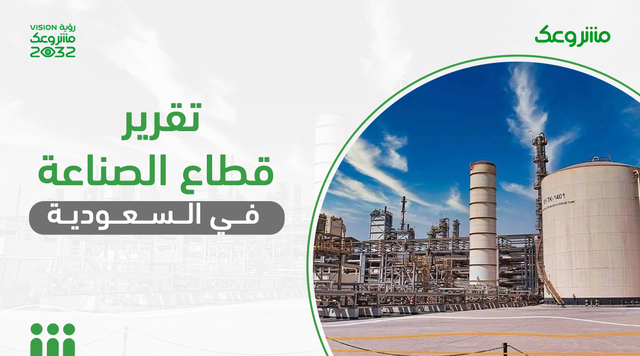
The industrial sector in Saudi Arabia represents a fundamental economic pillar that is indispensable to the comprehensive development journey. It actively contributes to diversifying national income sources and reducing dependence on crude oil revenues, which is a key strategic objective of Saudi Vision 2030.
This sector is characterized by broad diversity, including petrochemicals, metals, food industries, pharmaceuticals, construction materials, and cement industries. This diversity enables it to absorb a large share of the national workforce and provide sustainable job opportunities, thereby enhancing localization and reducing unemployment.
Moreover, the industrial sector contributes to achieving economic security by strengthening local production and reducing reliance on imports. It is also considered a fertile environment for attracting foreign direct investment, which helps transfer knowledge and technology and further enriches the national economy.
Industrial cities play a vital role in this context as dynamic hubs that support the growth of national industry and provide the necessary infrastructure for the prosperity of productive enterprises. This, in turn, strengthens the Kingdom’s position as a competitive industrial destination at both the regional and international levels, placing it in an advanced position on the path toward a sustainable knowledge-based economy that fulfills the aspirations of future generations.
At the end of 2022, the Saudi government announced its National Industrial Strategy, launched by Crown Prince Mohammed bin Salman. This strategy represents a comprehensive roadmap aimed at accelerating the diversification of the Kingdom’s industrial base through a set of integrated pillars.
These include enhancing non-oil exports, attracting more foreign direct investment, encouraging the private sector to actively participate in driving industrial production, and increasing the local content ratio in non-oil sectors in line with the objectives of Saudi Vision 2030.
The strategy focuses on 118 industrial products distributed across 12 sub-sectors, carefully selected to reflect the Kingdom’s competitive advantage at both regional and global levels. It also identifies more than 800 investment opportunities worth up to 1 trillion SAR, with a focus on five core industries that form the backbone of modern industrial clusters: automotive and spare parts manufacturing, metals processing, general machinery, construction materials, and plastic packaging.
The strategy aims to achieve three major strategic objectives aligned with the goals of Saudi Vision 2030. These include building a flexible national industrial economy capable of adapting to changes, and transforming the Kingdom into an integrated regional industrial hub that meets both local and regional demand.
To achieve these goals, a substantial budget of approximately 68 billion SAR has been allocated, of which 51 billion SAR is dedicated to developing industrial infrastructure. It is also worth noting that the National Industrial Strategy targets tripling industrial GDP, increasing industrial exports to 557 billion SAR by 2030, and further reaching 892 billion SAR by 2035.
In addition, the strategy seeks to raise the number of factories in the Kingdom to 36,000 by the same year, thereby strengthening Saudi Arabia’s position as an influential industrial power on the global economic map.
Read here: What are the objectives of the National Industrial Strategy in Saudi Arabia?
Read here: How do SME financing programs drive the economic transformation journey in the Kingdom?
| Industrial Activity | Expected Number of Factories |
|---|---|
| Manufacture of food products | 2,216 |
| Manufacture of beverages | 448 |
| Manufacture of textiles | 130 |
| Manufacture of wearing apparel | 307 |
| Manufacture of leather and related products | 23 |
| Manufacture of wood and of products of wood and cork (except furniture); manufacture of articles of straw and plaiting materials | 323 |
| Manufacture of paper and paper products | 680 |
| Printing and reproduction of recorded media | 36 |
| Manufacture of coke and refined petroleum products | 140 |
| Manufacture of chemicals and chemical products | 1,400 |
| Manufacture of basic pharmaceutical products and pharmaceutical preparations | 158 |
| Manufacture of rubber and plastics products | 1,686 |
| Manufacture of other non-metallic mineral products | 2,339 |
| Manufacture of basic metals | 690 |
| Manufacture of fabricated metal products (except machinery and equipment) | 1,709 |
| Manufacture of computer, electronic and optical products | 127 |
| Manufacture of electrical equipment | 476 |
| Manufacture of machinery and equipment n.e.c. | 532 |
| Manufacture of motor vehicles, trailers and semi-trailers | 174 |
| Manufacture of other transport equipment | 33 |
| Manufacture of furniture | 670 |
| Other manufacturing industries | 593 |
| Electricity, gas, steam and air conditioning supply | 146 |
| Water collection, treatment and supply (including ice production) | 29 |
| Waste collection, treatment and disposal activities; materials recovery | 4 |
| Total | 15,069 |
Read Here: Everything You Need to Know About SWOT Analysis and How It Is Applied

To communicate and learn more about Mashroo3k company and its services
The kebab restaurant project is one of the food-service ventures that combines strong demand for grilled meals with the opportunity to target a diverse customer base, including individuals, families, and lovers of traditional Middle Eastern cuisine. With growing competition in the restaurant sector, however, the project’s success is no longer determined by food taste alone. […]
Read moreA children’s toy store project is not limited to selling toys; it is built on understanding what attracts children and what families look for when choosing products that combine entertainment and educational value. With the wide variety of educational toys, skill-development games, recreational toys, and gifts available, the store has opportunities to meet the needs […]
Read moreA residential complex project is no longer simply an investment in a collection of real estate units. It has evolved into an integrated development model that combines comfortable living, diverse services, and long-term investment value. As cities expand and residents’ needs evolve, demand is growing for residential complexes that offer a comprehensive environment suited to […]
Read moreThe veterinary clinic project comes at a time when animal care is no longer limited to treating illnesses or injuries, but has expanded to include health monitoring, vaccinations, routine checkups, and care for both pets and livestock. However, many animal owners face challenges in accessing specialized veterinary services that combine prompt response, high-quality care, and […]
Read more
خصم 25% على خدمات مشروعك استفد من العرض الآن، فالفرصة متاحة لفترة محدودة فقط
سجّل بياناتك واحصل على خصم 25% الآن


