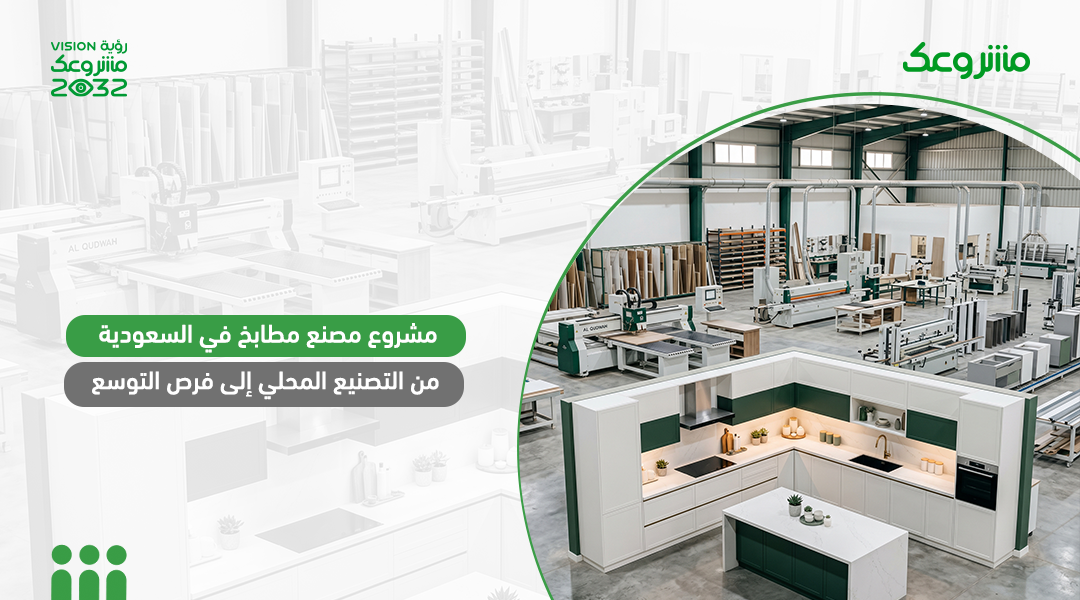
A kitchen factory project is one of the industrial ventures that can benefit from the continued growth in demand for modern kitchens, particularly as designs become more diverse and consumers increasingly seek solutions that combine style, functionality, and optimal use of space.
The project gives investors the opportunity to build an integrated business that starts with selecting materials and designing products and extends to manufacturing, finishing, and customization according to different specifications suitable for individuals as well as residential and commercial projects.
The variety of materials and designs also allows the factory to offer products across different price ranges, helping it reach a broader range of customer segments. With the growing demand for customized designs, the factory can further develop its ability to fulfill orders based on different dimensions and requirements, while also offering ready-made models for the market.
This highlights the importance of proper project planning, starting with assessing demand and competition, followed by determining the required facilities and production capacity, and ultimately selecting sales and marketing channels that support the project’s growth and strengthen its
A kitchen factory project specializes in designing, manufacturing, and installing kitchens according to customers’ dimensions and requirements, using a variety of materials such as wood, aluminum, acrylic, laminate, and PVC. The process begins with inspecting the site and taking measurements, followed by preparing the design and selecting suitable materials and colors. This is followed by cutting and preparing the materials, manufacturing and assembling the kitchen units, and then installing them and adding various accessories, such as drawers, hinges, shelves, and units for electrical appliances.
The project targets homeowners, new apartment owners, newlyweds, as well as construction companies and interior designers. Its ability to compete depends on manufacturing quality, measurement accuracy, design variety, and adherence to delivery schedules, along with offering competitive prices and installation and warranty services that meet customer expectations.
Read Here: 20 Small Business Ideas That Can Generate Huge Profits in 2026
Yes, a kitchen factory project is considered one of the industrial ventures worth investing in. According to current statistics, the global kitchen cabinets market was valued at USD 107.86 billion in 2025 and is projected to grow from USD 115.64 billion in 2026 to USD 218.23 billion by 2034, registering a compound annual growth rate (CAGR) of 8.26% during the forecast period.
Read here: Industrial Sector Report in Saudi Arabia
A kitchen factory project is considered a promising investment opportunity due to its many advantages, including:
Read More: How to Start a Home Furniture Business in Saudi Arabia at Minimal Cost?
The cost of establishing a kitchen factory project varies depending on several factors, most notably the factory’s size, location, targeted production capacity, types of materials used, level of machinery and equipment, and workforce size. The main cost items include:
Production costs may be affected by fluctuations in the prices of wood, panels, aluminum, and hardware, which can impact product prices. This challenge can be addressed by diversifying suppliers, negotiating suitable supply agreements, and managing inventory efficiently.
The factory may face competition from local manufacturers, workshops, and specialized brands. This can be addressed by offering distinctive designs, consistent quality, and additional services, while building a clear and recognizable brand identity.
The use of unsuitable materials or weak quality control may result in defects in finished products. This can be addressed by selecting reliable suppliers, inspecting raw materials, and implementing continuous quality control throughout all production stages.
Some production lines require specialized investments and equipment, as well as regular maintenance. These costs can be controlled by selecting equipment that matches the targeted production capacity, implementing a preventive maintenance schedule, and keeping essential spare parts available.
Producing kitchens with different dimensions and designs can make the production process more complex. This can be managed by using design and order management software and carefully reviewing measurements and specifications before manufacturing begins.
Poor production planning or weak coordination with installation teams may lead to order delays. This can be addressed by scheduling production effectively and closely monitoring the manufacturing, preparation, delivery, and installation stages.
Kitchen manufacturing requires technicians with experience in cutting, assembly, finishing, and installation. This challenge can be addressed by recruiting skilled workers and providing continuous training and development.
Poor cutting plans may increase material waste and raise product costs. Waste can be reduced by using cutting and optimization software and improving the utilization of panels and other raw materials.
Design trends, materials, and colors continue to evolve, which may make some products less appealing over time. This can be addressed by monitoring market trends and continuously updating the product catalog and designs.
Read Here: Marketing: Its Concept, Importance, Types, and the Best Approach to Implement It
Taking advantage of the rapid growth of the construction and real estate development sector in Saudi Arabia, along with positive global indicators pointing to rising demand for kitchen manufacturing across various types, I decided to develop my existing business into an integrated kitchen factory. However, the project’s rapid growth revealed a number of complex administrative challenges, including overlapping authorities, unclear responsibilities and reporting lines, and weak coordination among the sales, design, production, warehouse, and field installation teams. This resulted in slower decision-making and made performance monitoring and measurement more difficult. Faced with these organizational challenges, I realized that sustaining the project’s growth required restructuring the company’s internal framework, which led me to turn to Mashroo3k Consulting.
The consulting team provided comprehensive solutions through the implementation of a full administrative restructuring service, which brought about a fundamental reorganization of the work environment. The service included developing a clear task and authority matrix, significantly improving the clarity of roles and responsibilities across all departments. This restructuring accelerated decision-making by clearly defining authorities, facilitated the flow of information between departments, helped reduce operational errors, and reinforced the principles of transparency and organizational accountability. Thanks to this systematic organizational development, the project overcame its operational challenges and evolved into a well-structured business with streamlined operations and strong production capabilities.
Read here: How do SME financing programs drive the economic transformation journey in the Kingdom?
Taking advantage of the rapid growth of the construction and real estate development sector in Saudi Arabia, along with positive global indicators pointing to rising demand for kitchen manufacturing across various product categories, I decided to develop my existing business into an integrated kitchen factory. However, the project’s rapid growth revealed a number of complex administrative challenges, including overlapping authorities, unclear responsibilities and reporting lines, and weak coordination among the sales, design, production, warehouse, and field installation teams. This resulted in slower decision-making and made performance monitoring and measurement more difficult.
Faced with these organizational challenges, I realized that sustaining the project’s growth required restructuring the company’s internal framework, which led me to turn to Mashroo3k Consulting.
The consulting team provided comprehensive solutions through the implementation of a full administrative restructuring service, which brought about a fundamental reorganization of the work environment. The service included developing a clear task and authority matrix, significantly improving the clarity of roles and responsibilities across all departments.
This restructuring accelerated decision-making by clearly defining authorities and responsibilities, facilitated the flow of information between departments, helped reduce operational errors, and reinforced the principles of transparency and organizational accountability. Thanks to this systematic organizational development, the project overcame its operational challenges and evolved into a well-structured business with streamlined operations and strong production capabilities.
This opens the door to an investment opportunity that combines industrial activity with recurring demand for a diverse range of kitchen products, particularly as customers increasingly seek customized designs and space-efficient solutions. The project’s success opportunities increase when it combines high manufacturing quality, product variety, adherence to delivery schedules, and the ability to keep pace with modern design trends.
Building strong relationships with customers, developers, and fit-out companies can also support product reach and expand the customer base. Through proper planning, a clear understanding of market needs, and continuous improvement of production and marketing processes, the factory can develop into a competitive brand capable of achieving sustainable growth and expansion in the kitchen market.

To contact us and request a feasibility study for a Kitchen Factory Project
The kebab restaurant project is one of the food-service ventures that combines strong demand for grilled meals with the opportunity to target a diverse customer base, including individuals, families, and lovers of traditional Middle Eastern cuisine. With growing competition in the restaurant sector, however, the project’s success is no longer determined by food taste alone. […]
Read moreA children’s toy store project is not limited to selling toys; it is built on understanding what attracts children and what families look for when choosing products that combine entertainment and educational value. With the wide variety of educational toys, skill-development games, recreational toys, and gifts available, the store has opportunities to meet the needs […]
Read moreA residential complex project is no longer simply an investment in a collection of real estate units. It has evolved into an integrated development model that combines comfortable living, diverse services, and long-term investment value. As cities expand and residents’ needs evolve, demand is growing for residential complexes that offer a comprehensive environment suited to […]
Read moreThe veterinary clinic project comes at a time when animal care is no longer limited to treating illnesses or injuries, but has expanded to include health monitoring, vaccinations, routine checkups, and care for both pets and livestock. However, many animal owners face challenges in accessing specialized veterinary services that combine prompt response, high-quality care, and […]
Read more
خصم 25% على خدمات مشروعك استفد من العرض الآن، فالفرصة متاحة لفترة محدودة فقط
سجّل بياناتك واحصل على خصم 25% الآن


