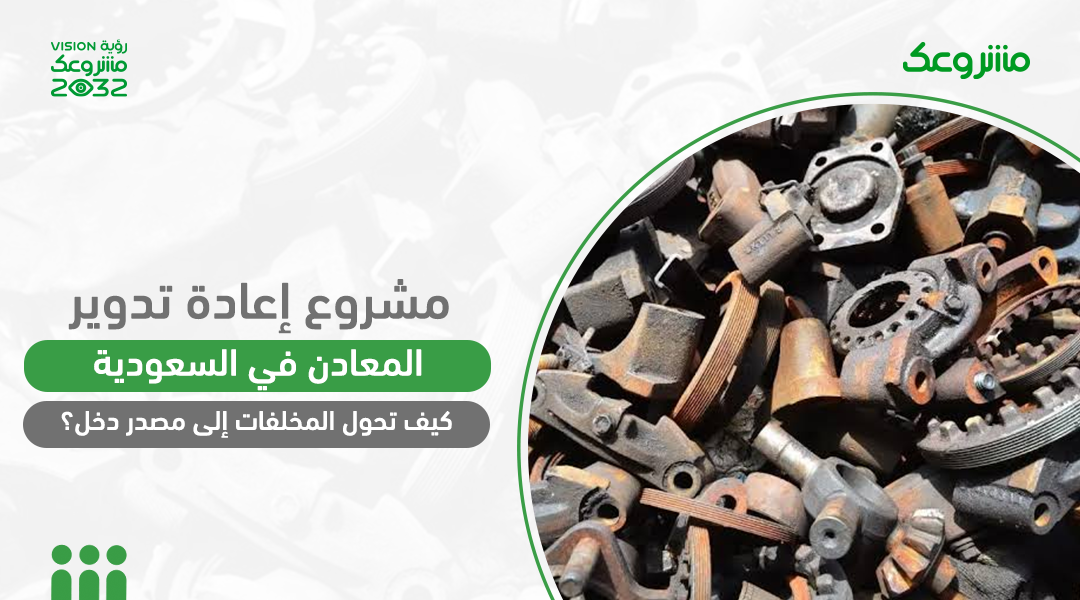
A metal recycling project transforms metal waste into a sustainable investment opportunity with economic and environmental value. Instead of disposing of used metals in landfills, they can be collected, sorted, processed, and reconditioned for reintroduction into production lines, meeting the needs of various industries.
The importance of this project is growing as markets increasingly focus on optimizing resource use, reducing reliance on new raw materials, and minimizing waste generated by industrial and commercial activities. Investing in this sector also offers an opportunity to combine economic returns with a positive environmental impact, making it one of the projects that support the principles of the circular economy and sustainability.
The project creates a wide range of employment opportunities, starting with the collection and sorting of metal scrap, followed by processing and preparation, and extending to the marketing and sale of recycled materials to factories and other end users.
Therefore, the project represents an investment model with strong potential for growth and expansion, particularly when managed according to a well-developed plan based on a clear understanding of market needs and operational requirements.
The idea behind a metal recycling project is to establish a specialized facility for collecting, sorting, and processing metal waste generated by factories, workshops, construction sites, and individuals, and then converting it into reusable metal materials for various industries.
The project involves receiving metals such as iron, aluminum, copper, and steel, then sorting them according to type and quality, removing impurities and non-metallic materials, and carrying out cutting, compacting, melting, or other processing operations based on the characteristics of each metal. The recycled materials are then prepared and sold either as raw materials or as processed metal products that can be used in manufacturing processes.
Read More: Best Recycling Project Ideas to Promote the Growth of the Circular Economy
Yes, a metal recycling project represents an industrial opportunity supported by a global market that continues to grow, driven by increasing demand for recycled metals and the efforts of various industries to improve resource efficiency and reduce reliance on virgin raw materials.
According to the latest data, the global metal recycling market was valued at approximately USD 384.7 billion in 2025 and is expected to reach USD 407.2 billion in 2026, before growing to USD 653.4 billion by 2034, at a CAGR of 6.1% during the forecast period.
This growth reflects the expanding scope of the sector and the increasing opportunities associated with collecting, processing, and reintegrating used metals into production chains.
Read More: Discover How to Turn Waste into Wealth Through Recycling
The cost of a metal recycling project varies depending on the project size, target production capacity, and types of metals to be processed. It is also affected by site, equipment, raw material, and operating costs. The main cost items can be divided as follows:
A metal recycling project supports Saudi Arabia’s transition toward a circular economy by transforming metal waste from discarded materials into resources that can be processed and reused, helping extend the life cycle of metals and reduce the need for disposal.
This aligns with the efforts of the National Center for Waste Management (MWAN), which works to develop the waste management sector based on circular economy principles and promote investment in waste collection, sorting, processing, and recycling activities.
According to the Center, the National Waste Management Strategy aims by 2040 to process approximately 1.2 billion tons of waste, establish 848 major treatment facilities, contribute around SAR 650 billion to GDP, and generate 76,000 jobs, while creating private-sector opportunities estimated at approximately SAR 420 billion.
In this context, a metal recycling project can support several aspects of the circular economy by:
Read More: On Saudi Green Day 2026:
Read More: How Can You Start a Recycling Project?
With Saudi Arabia’s growing focus on sustainability and resource efficiency, I saw the metal recycling sector as an investment opportunity aligned with the principles of the circular economy. I therefore started a specialized project focused on collecting, sorting, and processing metal scrap and converting it into materials that could be reused across various industrial sectors.
As the project expanded, I encountered several challenges that affected operational efficiency, including rising scrap purchasing and transportation costs, variations in raw material quality, difficulty identifying the most profitable operations, and the need for more accurate cash flow management. I therefore decided to seek the assistance of Mashroak Consulting through its Financial Performance Analysis and Evaluation service. The team analyzed revenues, costs, profit margins, and performance indicators, while identifying expenditure items that required review.
The analysis helped me understand the reasons behind rising costs and evaluate the relationship between the volume of purchased scrap and the returns generated from it. It also helped improve purchasing and pricing decisions and cash flow management. By implementing the recommendations, I was able to improve resource efficiency, review expenses, optimize operational processes, and establish clear performance indicators for monitoring the project.
The experience demonstrated that financial analysis is not limited to assessing a project’s current financial position; it can also support more accurate decision-making, sustainable growth, and improved returns.
Read More: Everything You Need to Know About Financial Statement Analysis (Its Importance, Steps, and Types)
The scrap metal needed for a metal recycling project can be sourced from various suppliers and locations, most notably factories and industrial facilities that generate metal waste, automotive, metalworking, and aluminum workshops, construction companies and demolition and construction sites, as well as waste collection and sorting centers and specialized scrap metal suppliers.
The project can also benefit from discarded equipment, vehicles, and appliances that contain recyclable metal
The raw materials required for a metal recycling project depend on the types of metals targeted by the project. They primarily include scrap iron, steel, aluminum, copper, zinc, brass, and stainless steel, as well as mixed metals recovered from discarded equipment, vehicles, appliances, and damaged metal structures.
Yes, a metal recycling project requires obtaining a range of regulatory licenses and approvals before operations begin. Requirements vary depending on the project’s location, the nature of the activity, and the types of metals being handled. They typically include an industrial activity license, environmental approvals, municipal and civil defense permits, as well as any other permits related to the collection, transportation, storage, and processing of metal waste.
In conclusion, a metal recycling project represents an investment model capable of transforming waste into real economic value, particularly as the use of metals continues to expand across various sectors and the demand for more efficient resource utilization solutions increases.
The project’s opportunities extend beyond simply recycling scrap metal. They also include developing a scalable industrial operation by improving sorting and processing methods and enhancing the quality of recycled products to meet customer requirements.
The project also supports the principles of the circular economy by returning resources to the production cycle and reducing waste, giving it both economic and environmental significance.
With the right equipment, reliable sources of raw materials, and a strong network of customers and suppliers, it is possible to establish a project with good potential for growth and long-term sustainability.
Therefore, a feasibility study for a metal recycling project remains an important step toward understanding investment requirements, evaluating the market, and assessing costs and expected returns before making an implementation decision.
Waste Management Project: A Gateway to the Transition Toward Sustainable Green Development

Contact Us to Request a Feasibility Study for a Metal Recycling Project.
The kebab restaurant project is one of the food-service ventures that combines strong demand for grilled meals with the opportunity to target a diverse customer base, including individuals, families, and lovers of traditional Middle Eastern cuisine. With growing competition in the restaurant sector, however, the project’s success is no longer determined by food taste alone. […]
Read moreA children’s toy store project is not limited to selling toys; it is built on understanding what attracts children and what families look for when choosing products that combine entertainment and educational value. With the wide variety of educational toys, skill-development games, recreational toys, and gifts available, the store has opportunities to meet the needs […]
Read moreA residential complex project is no longer simply an investment in a collection of real estate units. It has evolved into an integrated development model that combines comfortable living, diverse services, and long-term investment value. As cities expand and residents’ needs evolve, demand is growing for residential complexes that offer a comprehensive environment suited to […]
Read moreThe veterinary clinic project comes at a time when animal care is no longer limited to treating illnesses or injuries, but has expanded to include health monitoring, vaccinations, routine checkups, and care for both pets and livestock. However, many animal owners face challenges in accessing specialized veterinary services that combine prompt response, high-quality care, and […]
Read more
خصم 25% على خدمات مشروعك استفد من العرض الآن، فالفرصة متاحة لفترة محدودة فقط
سجّل بياناتك واحصل على خصم 25% الآن


