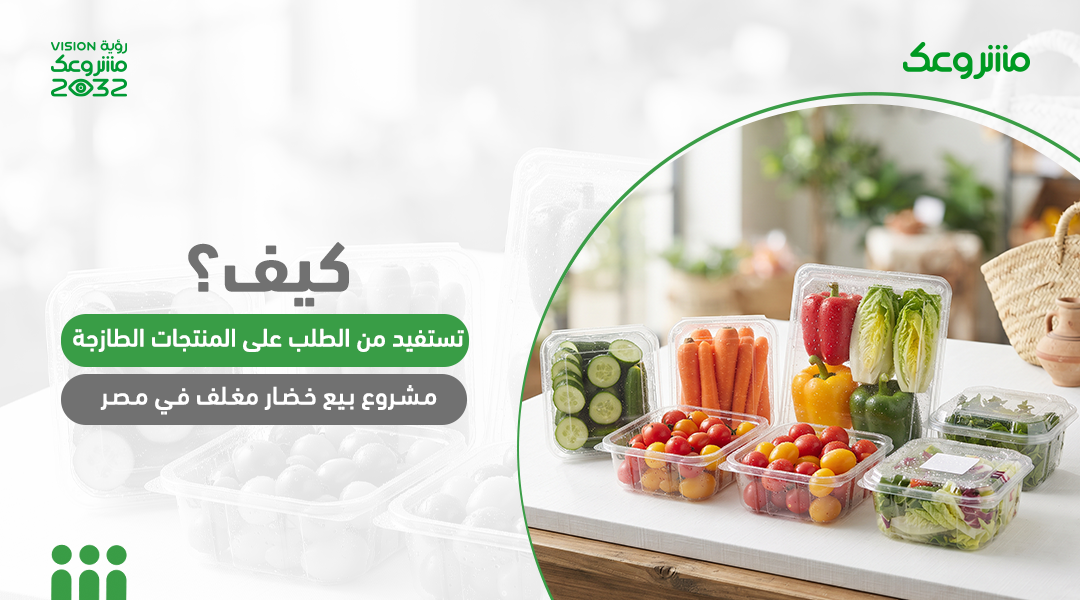
Packaged Vegetable Sales Project in Egypt: How Can You Benefit from the Demand for Fresh Produce? - Mashroo3k
Published24 Aug 2026 0 comments 78 Observation
Packaged Vegetable Sales Project in Egypt: How Can You Benefit from the Demand for Fresh Produce?

A packaged vegetable sales project is one of the promising business ideas attracting increasing interest, particularly with the growing demand for ready-to-use and hygienically prepared products that save consumers time and effort. The project offers the opportunity to provide vegetables after sorting, cleaning, preparing, and packaging them in a practical way that helps preserve their quality while giving them an attractive appearance.
The project can also target a broad range of customers, from households and individuals to restaurants, hotels, and large retail stores. With proper planning and careful selection of the vegetables in demand, this idea can be transformed into a scalable business capable of generating good returns.
In this article, we will explore in detail the key requirements for a packaged vegetable sales project, the equipment needed to get started, how to select suitable products, expected costs, and effective marketing methods. We will also highlight the main factors contributing to the project’s success, as well as the challenges that need to be addressed to ensure sustainability and increase the potential for profitability amid existing market competition.

What Is a Packaged Vegetable Sales Project?

A packaged vegetable sales project is a commercial business that involves preparing and packaging fresh vegetables in specially designed packages of different weights, then marketing and selling them to consumers in an organized and convenient manner. The project may offer vegetables either whole or cut and ready for cooking, providing a practical product that meets customers’ needs while saving them time and effort when preparing vegetables.

Read Here: Vegetable Shop Project: A Low-Cost Investment with Stable Returns

Is a Packaged Vegetable Sales Project Profitable?

Yes, a packaged vegetable sales project is considered one of the promising and potentially profitable commercial ventures. According to market statistics, the global agricultural products packaging market was valued at USD 41.37 billion in 2025 and is expected to grow from USD 43.53 billion in 2026 to USD 65.45 billion by 2034, registering a compound annual growth rate (CAGR) of 5.23% during the forecast period.

Read Here: Best Successful Small Projects for Youth in 2026

What Are the Main Advantages of Investing in a Packaged Vegetable Sales Project?

A packaged vegetable sales project offers several advantages that make it a business idea with strong growth potential, particularly with changing consumer habits and increasing interest in ready-to-use and conveniently packaged products. The key advantages of investing in this project include:

  • Consistent market demand due to the daily reliance of households and restaurants on vegetables.
  • Product variety, with the ability to sell vegetables whole, cut, or prepared for cooking.
  • Flexible capital requirements, allowing the project to start on a small scale and expand gradually.
  • A diverse customer base, ranging from individuals and households to restaurants, hotels, and retail stores.
  • Increased product value through proper sorting, cleaning, preparation, and packaging.
  • Multiple sales channels, including direct sales, supplying stores, and online orders.
  • The potential to generate good returns when purchasing, preparation, and distribution costs are managed effectively.
  • Easy expansion by adding new products and increasing production capacity as demand grows.
  • The opportunity to build a brand through distinctive packaging and a clear brand identity.
  • Saving customers time and effort by providing ready-to-use vegetables.
  • The ability to supply restaurants and hotels with regular quantities based on each customer’s needs.
  • Multiple opportunities for business development by adding salad mixes, ready-to-cook vegetables, and delivery services.

Key Requirements for Starting a Packaged Vegetable Sales Project

  • Conduct a market study to determine demand levels, prices, competitors, and the best-selling products.
  • Choose a suitable location with sufficient space for preparation, storage, and packaging.
  • Secure a reliable source of vegetables to ensure fresh produce with consistent quality.
  • Prepare the workspace appropriately to facilitate sorting, cleaning, preparation, and packaging operations.
  • Provide preparation equipment and tools, such as worktables and sorting, washing, and cutting equipment, depending on the products offered.
  • Provide suitable packaging equipment and packages in different weights and sizes.
  • Set up appropriate preservation and storage facilities to maintain vegetable quality and reduce spoilage and waste.
  • Select safe packaging materials suitable for use with food products.
  • Provide an accurate weighing scale to standardize package weights, quantities, and prices.
  • Hire suitable workers who are capable of handling vegetables and carrying out preparation, packaging, and cleaning operations.
  • Obtain the necessary licenses and permits in accordance with local laws and requirements applicable to food-related businesses.
  • Establish a hygiene and quality-control system to ensure product safety and maintain consistent quality standards.
  • Set product prices after calculating the costs of vegetables, preparation, packaging, transportation, and marketing.
  • Select suitable sales channels to reach individuals, restaurants, stores, and supermarkets.
  • Develop a marketing plan covering social media, promotional offers, and direct communication with potential customers.

Read Here: Vegetable and Fruit Drying Project: Steps to Success from Establishment to Marketing

Cost of a Packaged Vegetable Sales Project in Egypt

The cost of a packaged vegetable sales project in Egypt is determined by the scale of the business, the operating model, and the level of equipment and facilities used. The total cost includes several key items that should be calculated before launching the project to determine the appropriate capital requirements. The main cost items include:

  • The cost of renting and preparing the project site according to the requirements of preparation and packaging operations.
  • The cost of purchasing vegetables from suppliers, while selecting sources that provide fresh produce of suitable quality.
  • The cost of preparation equipment and tools used for sorting, washing, cutting, and drying.
  • The cost of packaging equipment, containers, bags, and labels used to present the products.
  • The cost of refrigeration and storage facilities to maintain vegetable quality and reduce spoilage.
  • The cost of scales and measuring tools to accurately determine package weights.
  • The cost of labor required for preparation, packaging, cleaning, and distribution operations.
  • The cost of licenses and permits required to operate the business in accordance with applicable regulations.
  • The cost of transportation and distribution, whether for delivering products to customers or supplying stores and restaurants.
  • The cost of marketing and advertising to promote the products and attract customers.
  • Working capital to cover daily expenses and purchase vegetables and packaging materials during the initial operating period.

Equipment and Facilities for a Packaged Vegetable Sales Project

  • Stainless steel preparation tables for sorting, cleaning, and preparing vegetables.
  • Suitable washing sinks for cleaning vegetables before packaging.
  • Cutting and preparation tools according to the types of products offered by the project.
  • Vegetable drying machines to remove excess moisture before packaging.
  • Refrigerators and cooling units to keep vegetables fresh and reduce spoilage.
  • An electronic scale for accurately determining package weights.
  • A packaging or bag-sealing machine to securely close packages.
  • Food-grade containers and bags suitable for storing vegetables and presenting them to customers.
  • A labeling machine or printer for displaying the product name, weight, date, and required information on packages.
  • Boxes and containers designated for vegetables during transportation, preparation, and storage.
  • Storage shelves for organizing packages, packaging materials, and various supplies.
  • Cleaning and sanitization tools and supplies to maintain a suitable working environment for food products.
  • Internal transportation equipment to facilitate the movement of vegetables and packages between receiving, preparation, and storage areas.
  • A suitable power supply to operate refrigeration, packaging equipment, and other machinery used in the project.
  • An effective ventilation and lighting system to provide a suitable working environment and improve the organization of the preparation area.

Read here: Discover the Best Small Project That Fits Your Resources

Challenges of a Packaged Vegetable Sales Project and How to Address Them

Rapid Spoilage of Vegetables

Vegetables are highly sensitive to temperature, humidity, and storage duration, which can lead to a decline in quality and increased waste. This can be addressed by providing suitable refrigeration facilities, continuously monitoring product conditions, and selling older stock first.

Rising and Fluctuating Vegetable Prices

Vegetable prices vary depending on the season and the level of market supply, which may affect product costs and profit margins. The impact of price fluctuations can be reduced by working with multiple suppliers, monitoring prices regularly, and adjusting purchase quantities according to demand levels.

Increased Waste

Waste may result from purchasing quantities that exceed customer demand or from damage to some vegetables during preparation and storage. This can be reduced by monitoring sales, analyzing the most in-demand products, and purchasing quantities based on actual consumption rates.

Competition from Traditional Vegetable Shops

Some customers may prefer buying loose vegetables because of their lower prices or familiarity with traditional purchasing methods. This can be addressed by focusing on the project’s advantages, such as cleanliness, preparation, organized packaging, time savings, and delivery services.

Maintaining Consistent Hygiene and Quality Standards

Handling food products requires continuous attention to hygiene during receiving, washing, preparation, and packaging. Therefore, clear cleaning and sanitization procedures should be established, and employees should be trained to follow them consistently.

Inventory Management Challenges

Managing multiple products in different weights and sizes makes inventory monitoring particularly important, especially given the short shelf life of fresh vegetables. An electronic inventory system can be used to track quantities, sales, and preparation dates, helping identify products that need to be restocked.

Delivery and Online Ordering Challenges

Relying on an online application adds the responsibility of managing orders, preparing them, and delivering them on time. This can be addressed by organizing orders, defining delivery areas, selecting suitable transportation methods, and tracking each order from the time it is received until it reaches the customer.

Criteria for Selecting the Right Supplier for a Packaged Vegetable Sales Project

  • The quality and freshness of the vegetables and their suitability for packaging and sale.
  • Consistent quality in every supply shipment to maintain customer satisfaction.
  • Commitment to delivery schedules to ensure product availability and prevent sales interruptions.
  • The ability to provide the required quantities according to the project’s demand.
  • A diverse range of vegetable varieties to meet project requirements and reduce the number of suppliers.
  • Competitive purchase prices that help maintain a healthy profit margin.
  • A reliable source of vegetables with proper attention to product safety and quality.
  • Fast transportation from the supplier to the project site to preserve freshness.
  • Flexibility to increase or decrease quantities according to sales volume and demand.
  • Compliance with the required specifications regarding size, grade, and quality for each type of vegetable.
  • A clear mechanism for replacing damaged or non-compliant products.
  • Clear payment and supply terms, with all financial details agreed upon before starting the business relationship.
  • The ability to provide products consistently throughout the project’s operating period.
  • Geographic proximity to the project site to reduce vegetable transportation time and costs.
  • The ability to provide seasonal varieties during periods of increased demand.
  • A good reputation and market experience, with a supplier that has a strong track record with customers.
  • A quick response to orders, particularly during periods of increased sales or when additional quantities are required.
  • The ability to support the project’s growth by providing larger quantities as the number of customers and sales increases.

Ways to Increase the Profits of a Packaged Vegetable Sales Project

  • Reduce vegetable waste and spoilage through effective inventory management and purchasing appropriate quantities.
  • Select suppliers offering competitive prices while maintaining the quality and freshness of vegetables.
  • Provide packages in different weights to meet customers’ needs and budgets.
  • Offer a variety of packages combining several vegetable varieties in a single package.
  • Improve packaging quality and appearance to make products more attractive to customers.
  • Set product prices carefully to achieve an appropriate profit margin while maintaining competitiveness.
  • Offer seasonal promotions and discounts to encourage customers to increase their purchase volumes.
  • Encourage orders through the online application by offering special deals and customer benefits.
  • Provide an organized delivery service to expand the project’s reach to more customers.
  • Target restaurants, hotels, and supermarkets to secure recurring orders in larger quantities.
  • Offer suitable prices for bulk orders while maintaining a healthy profit margin.
  • Maintain continuous social media marketing to showcase new products, prices, and promotional offers.
  • Improve the customer experience both in-store and through the application to increase sales and retain customers.
  • Monitor the most profitable products and focus on them instead of low-selling items.
  • Reduce operating expenses by optimizing labor, electricity consumption, packaging materials, and transportation.
  • Monitor inventory daily to avoid product shortages or the accumulation of quantities that may lead to spoilage.
  • Take advantage of seasons and occasions during which demand for certain types of vegetables increases.
  • Introduce new products strategically based on customer requests and sales data.
  • Monitor competitors’ prices to ensure competitive pricing without compromising profit margins.
  • Continuously analyze sales to identify strengths and the products generating the highest returns, then adjust the sales strategy accordingly.

Read here: How to Achieve Financial Success by Investing in Successful Small Projects

My Experience with a Packaged Vegetable Sales Project

With the growing consumer trend toward prepared and ready-to-cook foods in the Arab Republic of Egypt, I decided to invest in a packaged vegetable sales project to benefit from this increasing demand. However, launching the project presented several complex challenges, most notably the lack of a clear planning strategy, difficulties in securing financing, and financial pressures resulting from the rising cost of packaging materials, fluctuating cash flows, and extended collection periods from retail outlets.
To overcome these challenges, I contacted Mashroo3k Consulting, whose professional team prepared a comprehensive feasibility study that accurately defined the investment strategy and operational cycle. The study also provided financial solutions that helped organize the budget and optimize operating expenses. This complete financing file enabled me to meet the requirements for obtaining funding from the Micro, Small and Medium Enterprises Development Agency (MSMEDA), which helped address liquidity imbalances, ensure the continuity of packaging and distribution operations, and improve the project’s productivity and operating efficiency, enabling it to operate at a higher and more effective capacity than before.

Frequently Asked Questions About a Packaged Vegetable Sales Project

What Types of Vegetables Are Suitable for a Packaged Vegetable Sales Project?

Suitable vegetables for a packaged vegetable sales project include a wide range of varieties that are in high demand, such as cucumbers, tomatoes, carrots, zucchini, peppers, eggplants, potatoes, onions, lettuce, arugula, parsley, cilantro, dill, and cabbage. Some vegetables can also be offered cut and ready for cooking. It is preferable to select varieties based on demand levels, ease of preparation and packaging, and their ability to maintain quality during storage and delivery.

What Is the Profit Margin on Vegetable Sales?

The profit margin on vegetable sales varies depending on the type of vegetables, purchase prices, transportation, storage, preparation, and packaging costs, as well as the sales method and sales volume. In a packaged vegetable sales project, the added value generated through sorting, cleaning, preparation, and packaging can help achieve a better profit margin than selling vegetables loose.

How Much Does It Cost to Open a Vegetable Shop?

The cost of opening a vegetable shop varies depending on the shop’s location and size, level of preparation, inventory volume, and type of equipment used. The main costs include renting and preparing the shop, purchasing vegetables, providing refrigerators and cooling equipment, scales, display and storage equipment, as well as packaging, labor, licensing, transportation, and marketing expenses.

What Are the Secrets to Success in the Fruit and Vegetable Business?

The success of a fruit and vegetable business depends on several key factors, most importantly selecting fresh, high-quality products, working with reliable suppliers, and purchasing quantities that match demand to reduce spoilage and waste. Proper storage and transportation are also essential for maintaining product quality. In addition, choosing a suitable location, offering competitive prices, maintaining cleanliness and organization, and understanding customer needs can help increase sales.

Read here: How to Start a Small Business and Ensure Its Profitability in 2026

Conclusion: A Packaged Vegetable Sales Project

In conclusion, a packaged vegetable sales project represents a promising business opportunity for those seeking an idea that combines consistent demand with the potential for future expansion. However, the project’s success depends on more than simply providing and packaging vegetables. It is closely linked to product quality, proper hygiene and storage, selecting suitable packaging materials, setting well-planned prices, and implementing effective marketing strategies.

Before launching the project, it is important to conduct a thorough market study, understand customer needs, assess the level of competition, and accurately determine the expected costs. This helps establish the business on clear foundations, reduce risks, and increase the potential for achieving good returns.

With proper management, continuous product development, and reliable customer service, the project can grow from a small business idea into a scalable commercial venture with a strong presence in the market.

Contact us to request a feasibility study for a packaged vegetable sales project.


Similar Articles

How to Turn a Kebab Restaurant Project into a Distinctive Brand in Egypt?

The kebab restaurant project is one of the food-service ventures that combines strong demand for grilled meals with the opportunity to target a diverse customer base, including individuals, families, and lovers of traditional Middle Eastern cuisine. With growing competition in the restaurant sector, however, the project’s success is no longer determined by food taste alone. […]

Read more

Children’s Play Center Project in Saudi Arabia: How to Create an Experience That Attracts Children and Families?

A children’s toy store project is not limited to selling toys; it is built on understanding what attracts children and what families look for when choosing products that combine entertainment and educational value. With the wide variety of educational toys, skill-development games, recreational toys, and gifts available, the store has opportunities to meet the needs […]

Read more

Residential Complex Project in Saudi Arabia: An Investment That Creates Value Beyond Residential Units

A residential complex project is no longer simply an investment in a collection of real estate units. It has evolved into an integrated development model that combines comfortable living, diverse services, and long-term investment value. As cities expand and residents’ needs evolve, demand is growing for residential complexes that offer a comprehensive environment suited to […]

Read more

Veterinary Clinic Project in Egypt: A Promising Investment Opportunity in the Animal Care Sector

The veterinary clinic project comes at a time when animal care is no longer limited to treating illnesses or injuries, but has expanded to include health monitoring, vaccinations, routine checkups, and care for both pets and livestock. However, many animal owners face challenges in accessing specialized veterinary services that combine prompt response, high-quality care, and […]

Read more

Green Friday

فرصة لا تتكرر

GREEN FRIDAY

خصم 25% على خدمات مشروعك استفد من العرض الآن، فالفرصة متاحة لفترة محدودة فقط
سجّل بياناتك واحصل على خصم 25% الآن