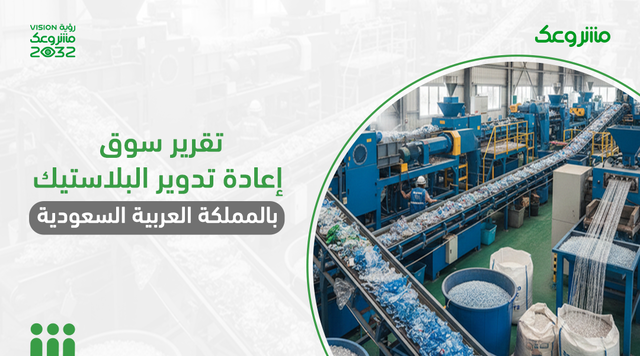
The plastic recycling sector in the Kingdom of Saudi Arabia has witnessed increasing attention in recent years, as it is considered one of the vital sectors supporting a sustainable economy and environmental protection. This direction comes within the framework of Saudi Vision 2030, which aims to enhance environmental sustainability, reduce reliance on waste, and transform it into economically valuable resources.
With the growing volume of plastic waste resulting from population growth and industrial expansion, recycling has become a necessity rather than an option. This report highlights the current state of the plastic recycling sector in the Kingdom and the key developments it is experiencing. It also discusses the types of recyclable plastic waste.
Ultimately, the report aims to provide a comprehensive overview that helps in understanding the importance of this sector in supporting the circular economy and achieving long-term environmental sustainability within the Kingdom.
Plastic recycling is the process of collecting used plastic waste, then processing and re-manufacturing it into new, reusable products instead of disposing of it in the environment. This process aims to reduce environmental pollution caused by plastic accumulation and decrease the consumption of raw materials such as oil and gas used in producing new plastics.
Plastic recycling goes through several key stages, starting with collection and sorting according to plastic type, followed by cleaning to remove impurities. It is then shredded and melted to be reformed into granules or raw materials that can be used to manufacture new products such as containers, bags, household items, and construction materials.
Please read here: Plastic Recycling Project: With “Mashroo3k”, Make Sustainability Your Path to Profit
Read here: Discover how to turn waste into wealth through recycling
Read here: How You Can Implement a Recycling Project
The plastic recycling market in the Kingdom of Saudi Arabia reached approximately USD 587.06 million in 2025, and is expected to witness gradual growth driven by increasing environmental sustainability awareness and expanding investments in this vital sector.
The market is projected to reach around USD 612.71 million by the end of 2026, maintaining an upward trajectory in the following years. Forecasts also indicate that it will continue to grow, reaching approximately USD 727.04 million by 2030, with a compound annual growth rate (CAGR) of about 4.37% during the period from 2025 to 2030.
This reflects the strong national direction toward strengthening recycling activities and supporting the circular economy within the Kingdom, in alignment with Vision 2030 objectives aimed at achieving sustainability and reducing the environmental impact of waste.
Please read here: Best Projects in Saudi Arabia: Your Guide to Investment Opportunities Aligned with Vision 2030
The global plastic recycling market has witnessed significant growth in recent years, increasing from USD 48.09 billion in 2025 to USD 52.16 billion in 2026, with a compound annual growth rate (CAGR) of 8.5%. This rapid growth reflects the rising global focus on environmental sustainability and reducing plastic waste.
Forecasts indicate that this positive trend will continue in the coming years, with the market expected to reach approximately USD 71.1 billion by 2030, at a CAGR of around 8.0%. This highlights the expansion of investments in advanced recycling technologies and the growing implementation of circular economy practices worldwide.
The Kingdom of Saudi Arabia, through its National Recycling Strategy, aims to achieve ambitious goals that support environmental sustainability and enhance the circular economy. The strategy targets recycling up to 95% of waste, contributing approximately SAR 120 billion to the GDP.
It also seeks to achieve environmental sustainability by recycling up to 100 million tons of waste annually, in addition to creating more than 100,000 job opportunities for both men and women, in line with the objectives of Saudi Vision 2030.
In this context, the average waste generation per capita in the Kingdom is about 1.7 kg per day, while total plastic waste production reaches approximately 7 million tons annually, reflecting the scale of the environmental challenge.
The main challenge lies in reducing harmful environmental behaviors and replacing them with sustainable, eco-friendly practices that support a more sustainable future.
Please read here: On Saudi Green Day 2026, the Kingdom adopts sustainability as a pathway for the future.

To get in touch and learn more about Mashroo3k Company and its services.
The kebab restaurant project is one of the food-service ventures that combines strong demand for grilled meals with the opportunity to target a diverse customer base, including individuals, families, and lovers of traditional Middle Eastern cuisine. With growing competition in the restaurant sector, however, the project’s success is no longer determined by food taste alone. […]
Read moreA children’s toy store project is not limited to selling toys; it is built on understanding what attracts children and what families look for when choosing products that combine entertainment and educational value. With the wide variety of educational toys, skill-development games, recreational toys, and gifts available, the store has opportunities to meet the needs […]
Read moreA residential complex project is no longer simply an investment in a collection of real estate units. It has evolved into an integrated development model that combines comfortable living, diverse services, and long-term investment value. As cities expand and residents’ needs evolve, demand is growing for residential complexes that offer a comprehensive environment suited to […]
Read moreThe veterinary clinic project comes at a time when animal care is no longer limited to treating illnesses or injuries, but has expanded to include health monitoring, vaccinations, routine checkups, and care for both pets and livestock. However, many animal owners face challenges in accessing specialized veterinary services that combine prompt response, high-quality care, and […]
Read more
خصم 25% على خدمات مشروعك استفد من العرض الآن، فالفرصة متاحة لفترة محدودة فقط
سجّل بياناتك واحصل على خصم 25% الآن


