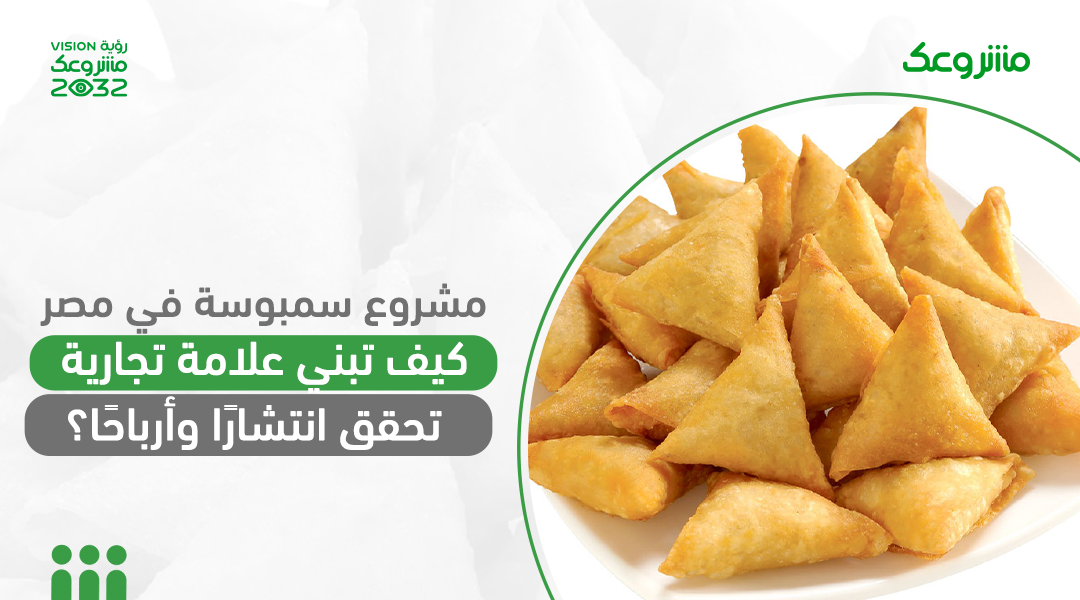
The Samosa Project is one of the most promising food business opportunities, combining ease of implementation with high market demand. This makes it an attractive investment for entrepreneurs looking to enter the food industry and achieve rewarding returns. Thanks to the widespread popularity of samosas across various occasions and seasons—especially during the holy month of Ramadan—demand for this product continues to grow significantly, creating excellent opportunities for investors and small business owners.
However, as with any successful venture, profitability depends on more than just offering a high-quality product. It requires careful planning and a comprehensive feasibility study to identify the project’s requirements, estimate costs, analyze the market and competitors, and develop an effective operational and marketing strategy.
In this article, we will explore everything you need to know about starting a Samosa Project professionally, from the essential startup requirements to the key success factors that ensure long-term growth and sustainability.
A Samosa Project is a food business that focuses on producing or selling samosas in various forms, whether fresh, frozen, or ready-to-fry, while offering a wide range of fillings to suit different customer preferences, such as cheese, meat, chicken, and vegetables. The project serves individuals, restaurants, hotels, supermarkets, and catering companies.
It is considered a promising business opportunity due to the consistently high demand for samosas throughout the year, especially during the holy month of Ramadan, festive seasons, and special occasions. The project can be launched with a reasonable investment and expanded gradually by increasing production capacity, introducing new product varieties, or expanding distribution through retail stores and e-commerce platforms.
Depending on the investment size and target market, the project can be established as a small manufacturing facility, a production kitchen, or a specialized retail outlet.
The Samosa Project is considered one of the most promising investment opportunities, driven by the growing demand for ready-to-eat and convenient food products, as well as the diversity of sales channels and the expanding consumer base. These positive market indicators are reflected in the continuous growth of the global samosa market, which was valued at approximately USD 7.1 billion in 2025 and is projected to reach USD 11.4 billion by 2034, registering a compound annual growth rate (CAGR) of 5.4%. This growth highlights attractive investment opportunities for entrepreneurs and investors seeking to enter this expanding sector.
Investors choose to invest in a Samosa Project because of the many investment advantages it offers, the most notable of which include:
Please read here: Ramadan Projects: How to Start Your Investment and Achieve the Highest Financial Returns During the Holy Month
The startup cost of a Samosa Project depends on several key factors, including:
The success of a Samosa Project depends on investing in the right equipment to ensure efficient production and high product quality. The essential machinery and equipment include:
Selecting the right location is one of the most important factors for the success of a Samosa Project. The following criteria should be considered:
To increase the profitability of a Samosa Project and achieve sustainable returns, consider implementing the following strategies:
A comprehensive market analysis should include the following:
A comprehensive competitor analysis should include the following:
The success of a Samosa Project depends on several essential factors, including:
Fluctuations in the prices of flour, cooking oils, and other production inputs can increase operating costs and reduce profit margins. This challenge can be addressed by establishing long-term agreements with reliable suppliers, regularly comparing supplier prices, and managing inventory efficiently to minimize the impact of price volatility.
The food industry is highly competitive, with numerous manufacturers and brands competing for market share. To stand out, businesses should focus on producing high-quality products, offering a diverse range of sizes and fillings, building a strong brand identity, and implementing an effective marketing strategy to increase brand awareness and customer loyalty.
Errors during production or storage can negatively affect product quality, customer satisfaction, and brand reputation. This risk can be minimized by implementing strict food safety and quality control standards, conducting regular product inspections, and performing routine maintenance on production equipment to ensure consistent quality.
Building an effective distribution network and reaching customers across different regions can be challenging. This can be overcome by diversifying sales channels, partnering with distributors and major retail stores, and leveraging digital marketing to promote products and expand market reach.
Labor, energy consumption, equipment maintenance, and transportation expenses can significantly impact profitability. Businesses can address this challenge by improving operational efficiency, optimizing resource utilization, implementing preventive equipment maintenance, and continuously monitoring operating expenses to keep costs within planned budgets.
When I decided to launch a Samosa Project in Cairo, I believed that product quality would be the primary factor for success. However, I quickly realized that the success of any business depends first and foremost on proper planning. At the beginning, I faced several challenges, most notably the lack of a clear business vision, difficulty in accurately estimating actual costs, and the need for adequate financing to ensure a strong launch and long-term sustainability.
Recognizing that sound investment decisions require accurate and reliable information, I sought the expertise of Mashroo3k Consulting to prepare a comprehensive feasibility study. The study included an in-depth market and competitor analysis, identification of target customer segments, development of an operational plan, technical and financial assessments, and a tailored marketing strategy designed to suit the nature of the project and effectively reach the target audience.
The benefits extended far beyond preparing the feasibility study. I also gained a clear roadmap for managing the business and maximizing the efficient use of resources, which helped me avoid many of the common mistakes entrepreneurs make during the startup phase.
In addition, the team at Mashroo3k Consulting supported me in preparing the financing file in accordance with the requirements of the Micro, Small and Medium Enterprise Development Agency (MSMEDA). This significantly accelerated the process of securing the funding needed to launch the project.
With the business launched according to a well-structured plan, production operations became more efficient and organized, operational performance improved considerably, and I was able to consistently meet customer demand with high-quality products.
The comprehensive feasibility study and professional consulting services provided by Mashroo3k Consulting played a vital role in transforming the business idea into a well-planned investment project with strong foundations and excellent potential for sustainable growth and expansion.
The price of samosas varies depending on the type of product (samosa pastry sheets or ready-to-cook samosas), the brand, package size, and point of sale. Therefore, when preparing a feasibility study for a Samosa Project, it is recommended to analyze competitors’ pricing in the target market to establish a competitive price that ensures a healthy profit margin.
The ingredients required to make samosas vary depending on the type of dough and filling. A traditional recipe typically consists of flour, water, salt, and an appropriate amount of oil for the dough, while fillings may include minced meat, chicken, cheese, or vegetables seasoned with suitable spices. In commercial production, standardized recipes and precise measurements are used to ensure consistent product quality and flavor across every production batch, helping to increase customer satisfaction and build a successful brand.
The best samosa dough is one that is flexible, easy to shape, and capable of maintaining a crispy texture after frying or baking. The choice of dough depends on the quality of the ingredients and the preparation method, with both fresh and ready-made dough being suitable for different applications. For a Samosa Project, it is recommended to use dough with consistent quality and standardized specifications to facilitate production and deliver the taste and texture that meet customer expectations while strengthening the project’s competitive position.
Samosas can be prepared with a wide variety of fillings to suit different consumer preferences. Popular options include minced meat, chicken, cheese, mixed vegetables, potatoes, and spinach. Businesses can also develop innovative fillings that align with market trends and target customer preferences. In a Samosa Project, offering a diverse selection of high-quality fillings while maintaining consistent flavor and ingredient quality helps attract a broader customer base, increase sales, and enhance market competitiveness.
The licenses required to start a Samosa Project vary depending on the country and local regulations. However, they generally include obtaining a commercial registration, a business operating license or municipal permit, and the necessary health permits for food production facilities, in addition to complying with food safety and occupational health regulations. It is advisable to consult the relevant authorities before launching the project to ensure compliance with all legal requirements and avoid operational delays.
It is evident that the Samosa Project is a promising investment opportunity, combining strong market demand, diverse marketing channels, and the potential to generate attractive returns when planned and executed based on sound business principles. However, the success of the project depends on more than just the quality of the product. It begins with understanding the market, analyzing competitors, accurately estimating costs, and developing an effective operational and marketing plan that ensures long-term sustainability and competitiveness.
If you are planning to launch a Samosa Project with confidence, Mashroo3k Consulting provides a comprehensive professional feasibility study covering the market, technical, financial, and administrative aspects of the project. The company also offers tailored investment solutions that help you make informed decisions, minimize risks, and maximize your chances of success—allowing you to build your business on a solid foundation and achieve your investment goals with a competitive edge in the market.

For inquiries or to request a feasibility study for a Samosa Project, please contact us.
The kebab restaurant project is one of the food-service ventures that combines strong demand for grilled meals with the opportunity to target a diverse customer base, including individuals, families, and lovers of traditional Middle Eastern cuisine. With growing competition in the restaurant sector, however, the project’s success is no longer determined by food taste alone. […]
Read moreA children’s toy store project is not limited to selling toys; it is built on understanding what attracts children and what families look for when choosing products that combine entertainment and educational value. With the wide variety of educational toys, skill-development games, recreational toys, and gifts available, the store has opportunities to meet the needs […]
Read moreA residential complex project is no longer simply an investment in a collection of real estate units. It has evolved into an integrated development model that combines comfortable living, diverse services, and long-term investment value. As cities expand and residents’ needs evolve, demand is growing for residential complexes that offer a comprehensive environment suited to […]
Read moreThe veterinary clinic project comes at a time when animal care is no longer limited to treating illnesses or injuries, but has expanded to include health monitoring, vaccinations, routine checkups, and care for both pets and livestock. However, many animal owners face challenges in accessing specialized veterinary services that combine prompt response, high-quality care, and […]
Read more
خصم 25% على خدمات مشروعك استفد من العرض الآن، فالفرصة متاحة لفترة محدودة فقط
سجّل بياناتك واحصل على خصم 25% الآن


