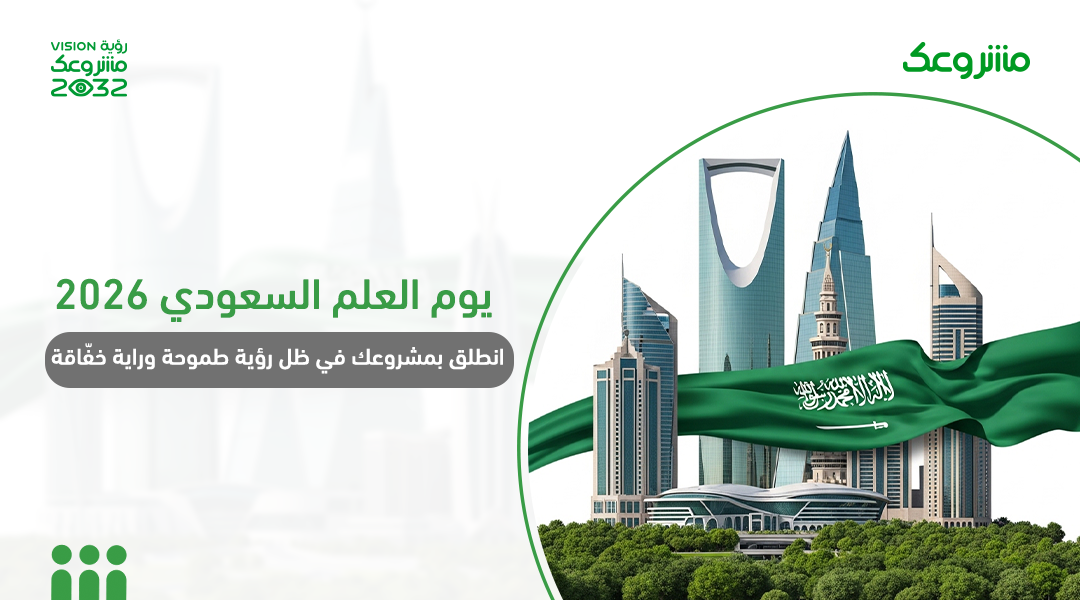
Saudi Flag Day represents more than just a fleeting national occasion; it reflects the story of a country that has built a rising developmental model based on a strong identity and a clear strategic vision. The flag of the Kingdom of Saudi Arabia is emerald green, bearing the Shahada, which reflects the Kingdom’s identity and principles, and below it a horizontally placed sword with its hilt on the right. These symbols are not merely sovereign emblems but a sign of political and economic stability that has strengthened investor confidence and established the Kingdom as an attractive business destination
The royal decree issued by the Custodian of the Two Holy Mosques, King Salman bin Abdulaziz, designated March 11 as a day to celebrate the flag, reaffirming the values of unity and strength established by the founder of the First Saudi State, Imam Muhammad bin Saud. On this day, feelings of loyalty and pride for a nation that has become a model of comprehensive development are renewed. The flag is not merely a historical symbol reflecting the nation’s past, but also a gateway to a promising future led by Vision 2030 toward new horizons of progress and prosperity. The Saudi flag stands as a witness to the journey of the nation and its generations, narrating the story of an entire people striving to achieve their greatest ambitions within a stable and growth-promoting environment.
March 11 of each year marks Saudi Flag Day, a distinguished national occasion established by the royal decree issued in 2023 by the Custodian of the Two Holy Mosques, King Salman bin Abdulaziz Al Saud, designating this date to celebrate the Saudi flag as an enduring national symbol. The selection of this day is rooted in deep historical significance, commemorating the moment when the founding King, Abdulaziz bin Abdul Rahman Al Saud – may God have mercy on him – formally adopted the flag with its recognized meanings and implications. These symbols embody the values of unity, strength, justice, and prosperity upon which the state was built, making this celebration both a tribute to the national heritage and a renewal of loyalty to the enduring Saudi identity.
The story of the Saudi flag dates back to the eras of the First Saudi State in 1727 and the Second Saudi State in 1824, when the flag was raised in green, embroidered with silk, featuring the Shahada at its center and a white section near the flagpole. In 1902, the flag underwent a notable development with the addition of two crossed swords, which were later replaced by a single sword positioned above the Shahada before finally settling below it, while the flag became entirely green, symbolizing growth and fertility. This evolutionary process culminated in 1937 when King Abdulaziz – may God have mercy on him – approved Shura Council Resolution No. 354, which defined the flag’s dimensions and design as they are recognized today, reflecting a struggle spanning three centuries to consolidate unity and national cohesion.
Saudi Flag Day serves as a fundamental pillar in strengthening national identity, embodying the values of belonging and pride in the Kingdom’s rich history, in alignment with the objectives of Vision 2030. This ambitious vision extends beyond economic and developmental transformation to include the consolidation of national identity and the revival of historical and cultural values, making the Saudi flag a witness to past glories and an inspiration for a brighter future. This day represents an important occasion to ignite a sense of pride and patriotism among the nation’s citizens, contributing to:
Saudi Flag Day embodies the comprehensive economic renaissance taking place in the Kingdom of Saudi Arabia, reinforcing the path of development and achievement under the ambitious Vision 2030. This vision aims to achieve a qualitative economic transformation by diversifying national income sources and reducing reliance on oil, alongside promoting investments in vital and diverse sectors. Thanks to bold and innovative economic reforms, the Kingdom has become an attractive investment destination regionally and globally, creating unprecedented investment opportunities. In this context, a range of promising sectors has emerged as key pillars of the economic transformation, most notably:
Saudi Flag Day reflects the features of the economic transformation led by the Kingdom through the National Industrial Strategy launched by Crown Prince Mohammed bin Salman, as one of the key pathways to achieving the objectives of Vision 2030. This strategy provides a comprehensive framework to restructure the industrial sector and enhance its competitiveness by localizing supply chains, increasing the domestic content ratio, and empowering the private sector to become a principal partner in development.
The industrial reality demonstrates the extent of progress achieved, with the Kingdom hosting approximately 12,589 factories, including 9,991 operational factories and 2,598 under construction, with total investments nearing 1.19 trillion Saudi riyals. The industrial sector also provides around 927,000 jobs, with a Saudization rate exceeding 36%. Moreover, the Kingdom aims to increase the value of industrial exports to 557 billion riyals by 2030, reaching 892 billion riyals by 2035, thereby advancing economic diversification and cementing Saudi Arabia’s position as a leading industrial power regionally and globally.
Read here: What are the objectives of the National Industrial Strategy in Saudi Arabia?
The service sector is one of the main pillars of Saudi Arabia’s economic transformation, driving economic diversification and promoting sustainability in line with the objectives of Saudi Vision 2030. Its contribution extends beyond supporting growth, impacting the improvement of quality of life, consolidating social stability, and enhancing the Kingdom’s position as a tourist destination and a competitive logistics hub that attracts investments and strengthens regional and global presence. Its activities are distributed across five main areas, each making significant contributions to the nation’s GDP:
These figures highlight the rapid growth of the sector, supported by the stimulation of domestic consumption, attraction of investments, and development of tourism, digital services, and logistics sectors, reinforcing its role as a key driver of the non-oil economy.
Read here: Commercial Sector Report in the Kingdom of Saudi Arabia
The agricultural production sector is a vital pillar in Saudi Arabia’s economic transformation, holding a priority within the objectives of Vision 2030 to enhance food security and increase self-sufficiency. The Kingdom has adopted a modern approach that leverages advanced agricultural technologies and expands investments in smart farming, greenhouses, and aquaculture, boosting production efficiency and resource sustainability. The sector also benefits from comprehensive government support, including technical and financial empowerment, aimed at developing local production and reducing reliance on imports, making it one of the most attractive sectors for entrepreneurs and investors.
Statistical indicators highlight the sector’s available opportunities. In livestock, the Kingdom hosts approximately 3.9 million male sheep and 18 million females, more than 1.2 million male goats and 6 million females, over 441,000 male camels and more than 1.7 million females, and around 474,000 cows, which annually produce over 2.7 billion liters of milk and nearly 672,000 tons of organic fertilizer. Egg production exceeds 8.4 billion eggs annually, while poultry, rabbits, and other birds number over 3.2 million. The Kingdom achieves notable self-sufficiency rates of 61% for red meat, 71% for poultry, 129% for dairy, and 100% for table eggs, with annual livestock imports exceeding 3.5 million tons and exports surpassing 1.2 million tons.
In the plant and fishery sectors, agricultural holdings cover approximately 5.9 million hectares, with more than 893,000 hectares cultivated to yield over 11.5 million tons, alongside marine catch and aquaculture producing around 214,000 metric tons annually. This demonstrates the diversity of the production base and the expansive investment opportunities within Saudi Arabia’s agricultural sector.
Read here: Saudi Agricultural Sector Market Report
The agricultural production sector is a cornerstone of Saudi Arabia’s economic transformation and a priority within Vision 2030’s objectives to enhance food security and increase self-sufficiency. The Kingdom has adopted a modern approach that integrates advanced agricultural technologies and expands investments in smart farming, greenhouses, and aquaculture, thereby improving production efficiency and resource sustainability. The sector also benefits from comprehensive government support, including technical and financial empowerment, aimed at developing local production and reducing reliance on imports, making it one of the most attractive sectors for entrepreneurs and investors.
Statistical data highlight the sector’s significant opportunities. In livestock, Saudi Arabia has approximately 3.9 million male sheep and 18 million females, over 1.2 million male goats and 6 million females, more than 441,000 male camels and 1.7 million females, and around 474,000 cows, which produce annually over 2.7 billion liters of milk and nearly 672,000 tons of organic fertilizer. Egg production exceeds 8.4 billion eggs per year, while poultry, rabbits, and other birds number over 3.2 million. The Kingdom achieves notable self-sufficiency rates of 61% for red meat, 71% for poultry, 129% for dairy, and 100% for table eggs, with annual livestock imports exceeding 3.5 million tons and exports surpassing 1.2 million tons.
In the crop and fishery sectors, agricultural holdings cover approximately 5.9 million hectares, including over 893,000 hectares under cultivation yielding more than 11.5 million tons. Marine catch and aquaculture add roughly 214,000 metric tons annually, underscoring the diversity of the production base and the wide-ranging investment opportunities available in Saudi Arabia’s agricultural sector.
Read here: Health Sector Report in the Kingdom of Saudi Arabia
The tourism sector is a central pillar in Saudi Arabia’s strategy to diversify the national economy, leveraging the Kingdom’s rich cultural, religious, and natural assets, and supported by continuous development of infrastructure and services. These efforts have translated into tangible growth in visitor numbers and spending, particularly among international tourists, strengthening the Kingdom’s position as a distinctive global destination. These successes are reflected in the figures: in 2024, the Kingdom welcomed a record 115.9 million visitors with total spending reaching 283.8 billion SAR, while the momentum continued in the first half of 2025 with over 60.9 million visitors and spending exceeding 161.4 billion SAR. The sector contributed 3.3% to GDP, with notable growth in international arrivals, underscoring its vitality and pivotal role in supporting sustainable development.
In this context, the Kingdom’s tourism infrastructure has expanded significantly, with 4,900 hotels and 9,693 non-hotel accommodation units, and the travel and tourism market is projected to reach 18.23 billion SAR by 2030. Religious tourism leads international visits, while recreational trips account for the largest share of domestic tourism, reflecting diverse demand and multiple investment opportunities within the sector.
Read here: Saudi Tourism Sector Report
The recycling sector in Saudi Arabia is a strategic cornerstone within the framework of environmental sustainability and the circular economy. It aims to reduce waste and minimize reliance on natural resources, in line with the objectives of Vision 2030 to diversify income sources beyond traditional oil dependency. The Ministry of Environment, Water, and Agriculture has translated this ambitious vision into action by seeking to increase the recycling rate from the current 3–4% to a targeted 95%, while building the capacity to process around 100 million tons annually. This is being achieved through 65 investment initiatives valued at over 55 billion SAR, which are expected to add approximately 120 billion SAR in economic value and create more than 100,000 job opportunities.
These targets address the volume of municipal waste, which reaches about 20.8 million tons, distributed among organic materials (8.13 million tons) and inorganic materials (7.29 million tons) as the largest components, in addition to plastics (2.13 million tons), paper and cardboard (1.46 million tons), metals (950,000 tons), textiles (716,000 tons), and glass (622,000 tons). This highlights the significant investment and environmental opportunities available. Through this commitment, the Kingdom reinforces its position as a leading nation in achieving global sustainable development goals, moving toward a cleaner and more sustainable future.
Read here: How You Can Implement a Recycling Project
The construction sector in Saudi Arabia is a fundamental pillar of economic development, benefiting from the strategic support of Vision 2030, which aims to enhance infrastructure and implement large-scale urban projects. The Kingdom targets total investments exceeding 11.2 trillion SAR (approximately $3 trillion) in construction projects by 2030, making it the largest urban development arena in the world. The sector currently demonstrates substantial execution momentum, with ongoing projects valued at around 5.6 trillion SAR (approximately $1.5 trillion). It contributes approximately 225 billion SAR to GDP, representing 5.2% of the total, making it one of the strongest non-oil drivers of the national economy. The construction market is expected to grow from $97.8 billion in 2024 to $121.6 billion by 2030, with a compound annual growth rate (CAGR) of 3.7%, while the real estate market is projected to increase from $74.99 billion in 2025 to $109.63 billion by 2030, driven by the transformation of real estate into a strategic and attractive investment asset.
The sector’s growth dynamism is reflected in the rise of annual building permits from 179,493 in 2024 to an expected 245,530 by 2030, at a CAGR of 5.4%, highlighting sustained strong residential and commercial demand. Residential projects account for 165 billion SAR of the sector’s share, representing 31% of the total market, and are expected to reach 213.7 billion SAR by 2028. The sector includes 281,818 active contracting firms, 97% of which are small and micro enterprises.
Aligned with the shift toward sustainability, the green building materials market is projected to grow from $4.8 billion in 2024 to $8.54 billion by 2030, signaling a strategic move toward environmentally friendly, zero-emission buildings. This enhances Saudi Arabia’s position as a leader in sustainable construction and strengthens the sector’s attractiveness for both domestic and international investment.
Read here: Construction and Building Sector Report in Saudi Arabia
The e-commerce sector in Saudi Arabia is experiencing rapid expansion, driven by digital transformation and Vision 2030, which aims to strengthen the digital economy and increase this vital sector’s contribution to GDP. The market was valued at approximately $21.3 billion in 2024 and is expected to grow significantly, reaching $64 billion by 2033, with a compound annual growth rate (CAGR) of 13%. This accelerated growth reflects a major shift in consumer behavior toward digital shopping, fueled by advanced digitization and the proliferation of diverse platforms.
The e-commerce market plays a crucial role in supporting Vision 2030 objectives by developing the financial sector and enhancing electronic payments. By the end of 2024, 79% of retail transactions for individuals were conducted electronically, up from 70% in 2023, and the total number of cashless electronic transactions reached approximately 12.6 billion in 2024, compared to 10.8 billion the previous year. The widespread adoption of digital payment methods demonstrates significant momentum, with 26.2 million credit card users, 47.7 million debit card users, 18.5 million digital payment users, and 24.7 million mobile shoppers. Additionally, 43.8% of users rely on credit and debit cards, reflecting substantial progress in digital transformation and the maturity of the e-commerce market. This development supports the establishment of a sustainable cashless economy, driving economic growth and reinforcing Saudi Arabia’s position as a global digital destination.
Read here: Saudi E-Commerce Market Report
The education sector in Saudi Arabia is one of the most attractive areas for investment, supported by a strategic government focus on developing a comprehensive educational system and enabling it with digital transformation and innovation tools. Demand is increasing significantly for international schools, specialized training centers, and e-learning platforms, while promising opportunities exist for innovative projects such as smart learning and virtual reality technologies that enhance the learning experience.
The sector provides a conducive investment environment through regulatory and financial facilitation aimed at attracting both domestic and international capital. The Saudi education market comprises approximately 6.72 million students across 36,800 schools, supported by 513,000 teachers, including 245,000 in primary education, and over 106,000 administrative staff managing educational operations. These figures reflect an ongoing need for both qualitative and quantitative expansion in educational infrastructure and services, reinforcing the Kingdom’s position as a major education market.
| Saudi Flag Day | Saudi Founding Day | Saudi National Day | |
| History | 11 March | 22 February | 23 September |
| Historical Background | Its official adoption to enhance the status of the flag as a symbol of patriotism and belonging | It commemorates the founding of the First Saudi State in 1727 by Imam Muhammad bin Saud. | The official unification of the Kingdom was declared by King Abdulaziz in 1932. |
| The Goal and the Meaning | Honoring the national flag, strengthening loyalty and national belonging, and instilling the values of respecting national symbols. | Introducing the roots of the state and its history, and highlighting the depth of national identity and Saudi heritage | Celebrating the unification of the Kingdom, fostering national pride, and highlighting contemporary achievements |
| Scope of the Celebration | Government and private institutions, schools, and certain community events | All regions of the Kingdom, with a focus on historical cities | Across the entire Kingdom, featuring extensive official and public events |
| Symbols and Events | Flag raising, symbolic and educational activities, awareness programs on the significance of the flag | Historical and cultural shows, lectures, heritage activities, and the revival of traditional occasions | National, artistic, and cultural performances, media campaigns, parades, fireworks displays, and decorating cities and streets with the flag and national symbols |
No, Flag Day is not an official holiday in Saudi Arabia. It is a national occasion celebrated on March 11 each year by royal decree issued in 2023, but the executive regulations of the Labor Law do not include it in the list of official holidays for the public and private sectors.
Saudis celebrate September 23 each year as the Kingdom’s “National Day,” officially adopted in 1965 and made an official holiday in 2005. The day commemorates the unification of the Kingdom of Saudi Arabia by its founder, King Abdulaziz bin Abdul Rahman Al Saud – may God have mercy on him – on September 23, 1932, following a struggle of over 30 years during which he successfully united Najd, Hejaz, and other regions under a single banner, proclaiming the birth of a sovereign state with a strong identity. This day stands as an enduring symbol of national unity and political stability, reflecting a historic achievement that has become a source of pride for generations and highlighting the inspiring developmental journey that has elevated the Kingdom to its leading regional and global position today.
Please read here: On the 95th Saudi National Day, the Kingdom renews its commitment to the path of progress in line with Vision 2030.
February 22 in the Kingdom of Saudi Arabia is “Founding Day,” a national occasion established by a royal decree from the Custodian of the Two Holy Mosques, King Salman bin Abdulaziz Al Saud, in 2022, making it an official holiday. It commemorates the founding of the First Saudi State by Imam Muhammad bin Saud on February 22, 1727, when he made Diriyah the capital of his historic launch. This day symbolizes deep roots and a proud national identity, recalling three centuries of nation-building and civilization. It strengthens feelings of pride in a country founded on the principles of unity and honor, making Founding Day an annual occasion to renew the pledge to a glorious history and inspire generations with the values of determination and perseverance in continuing the path of development and prosperity under the banner of unification.
Read here: What makes Saudi Founding Day an unforgettable national milestone?
The official emblem of the Kingdom of Saudi Arabia, adopted in 1950, is an authentic national symbol consisting of two crossed Arab swords topped by a tall palm tree, forming a visual composition that reflects the depth of the nation’s heritage and identity. The crossed swords symbolize strength, resilience, and sacrifice in defending the homeland and the values of Arabism and Islam, while the palm tree represents vitality, growth, and prosperity, being a tree of life and generosity in the Saudi environment. This distinctive emblem is used on official documents, government institutions, and diplomatic missions, serving as a mark that reflects the unity of national identity and reinforces the core values upon which the Kingdom is founded—honor, justice, and prosperity—making it an enduring symbol that combines historical authenticity with a forward-looking vision in representing the state both locally and internationally.
The Saudi National Day slogan is not fixed; rather, the Kingdom launches a renewed visual identity each year that reflects the spirit of the stage and carries an inspiring national message. For example, last year’s slogan, “Our Pride by Nature,” embodied pride in the authentic Saudi identity and its enduring values such as generosity, ambition, and giving. These annual visual identities aim to strengthen feelings of belonging and pride among citizens, highlighting the Saudi character that combines authenticity with modernity. Each national occasion thus becomes an opportunity to renew the pledge to a nation that continues its achievements under the banner of unification, reinforcing its position as a leading country that unites a rich heritage with an ambitious future vision.
The unification of the Kingdom of Saudi Arabia began in 1902 with the recapture of Riyadh by King Abdulaziz bin Abdul Rahman Al Saud – may God have mercy on him – marking the start of a three-decade-long struggle of continuous efforts. During this period, he successfully unified the regions of Najd, Hejaz, and their dependencies, culminating in the official establishment of the Kingdom of Saudi Arabia on September 23, 1932, as a sovereign state with a strong identity. This date is celebrated as the Kingdom’s National Day, symbolizing the achievement of national unity and independence, and representing a historic accomplishment that has become a source of pride for generations.
Before 1932, the political entity in the Arabian Peninsula was officially known as the “Kingdom of Hejaz and Najd and its Dependencies,” a name adopted by King Abdulaziz bin Abdul Rahman Al Saud – may God have mercy on him – after unifying Hejaz with Najd in 1927. This marked the culmination of the unification process, which went through multiple stages and historical names, including the “Sultanate of Najd” from 1921 to 1926, and then the “Kingdom of Hejaz and the Sultanate of Najd and its Dependencies” in 1926. On September 23, 1932, following a gathering of scholars and notable figures in the city of Ta’if, the name “Kingdom of Saudi Arabia” was officially declared, reflecting complete unity and the full integration of all regions under the banner of unification and the leadership of the Al Saud family.
The founder of the Kingdom of Saudi Arabia is King Abdulaziz bin Abdul Rahman Al Saud. He began his journey by unifying the regions of Najd, Hejaz, and the other scattered areas of the Arabian Peninsula, culminating in the official establishment of the Kingdom of Saudi Arabia on September 23, 1932. King Abdulaziz is regarded as a symbol of national unity and the founder of the modern state.

For inquiries regarding our Saudi Flag Day offers
The kebab restaurant project is one of the food-service ventures that combines strong demand for grilled meals with the opportunity to target a diverse customer base, including individuals, families, and lovers of traditional Middle Eastern cuisine. With growing competition in the restaurant sector, however, the project’s success is no longer determined by food taste alone. […]
Read moreA children’s toy store project is not limited to selling toys; it is built on understanding what attracts children and what families look for when choosing products that combine entertainment and educational value. With the wide variety of educational toys, skill-development games, recreational toys, and gifts available, the store has opportunities to meet the needs […]
Read moreA residential complex project is no longer simply an investment in a collection of real estate units. It has evolved into an integrated development model that combines comfortable living, diverse services, and long-term investment value. As cities expand and residents’ needs evolve, demand is growing for residential complexes that offer a comprehensive environment suited to […]
Read moreThe veterinary clinic project comes at a time when animal care is no longer limited to treating illnesses or injuries, but has expanded to include health monitoring, vaccinations, routine checkups, and care for both pets and livestock. However, many animal owners face challenges in accessing specialized veterinary services that combine prompt response, high-quality care, and […]
Read more
خصم 25% على خدمات مشروعك استفد من العرض الآن، فالفرصة متاحة لفترة محدودة فقط
سجّل بياناتك واحصل على خصم 25% الآن


