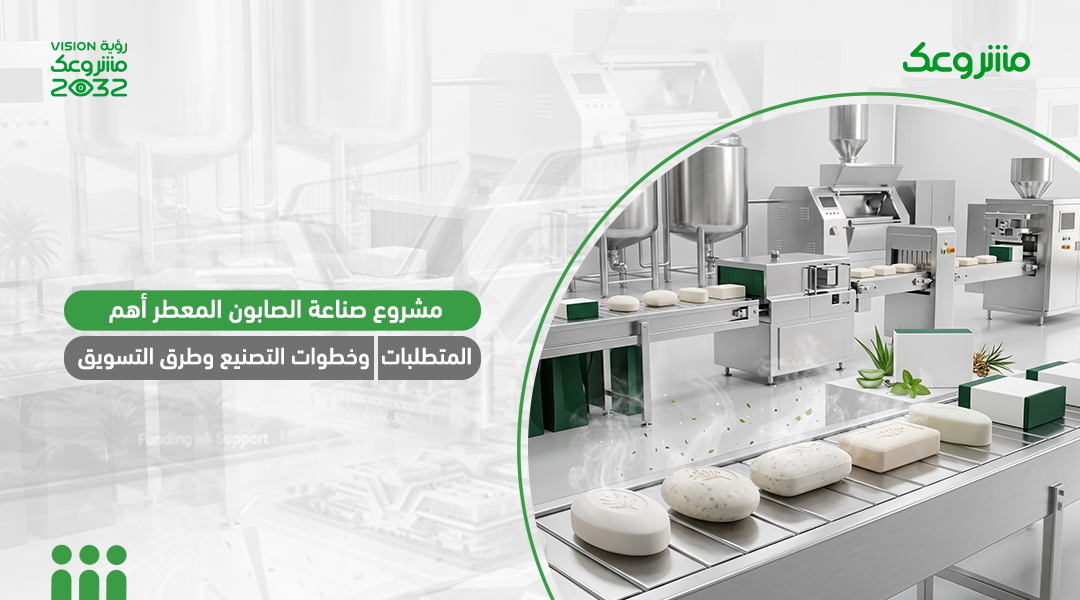
The scented soap manufacturing project represents a promising investment opportunity, amid the growing growth of the personal care and cosmetics sector and the rising interest of consumers in product quality and the diversity of their scents and designs. The success of the project depends on selecting high-quality raw materials and perfumes, and offering products in various shapes and sizes that suit the needs of different customers, in addition to paying attention to packaging and designing a distinctive commercial identity. Marketing also plays a fundamental role in reaching the target audience, especially with the spread of e-commerce and social media in the Saudi market. Before starting to implement the project, it is essential to conduct a comprehensive market study to determine the size of demand and analyze competitors, in addition to calculating production and operating costs, identifying the necessary licenses and requirements, and then preparing a clear plan that helps manage resources, reduce risks, and achieve an appropriate return on investment.
The scented soap manufacturing project is a production project that aims to manufacture various types of soap intended for daily use, with the addition of perfumes, oils, and natural ingredients that give it distinctive scents and various skin care properties. The project relies on preparing the raw materials and mixing them according to specific formulas, then pouring the soap, shaping it, drying it, and packaging it in different sizes and designs, in line with the needs of individuals, hotels, beauty salons, and gifts. The project can offer products with multiple scents, colors, and shapes, which helps diversify products and target different segments of customers.
Read here: Soap Project: How to Build a Brand from Natural Manufacturing
Global market indicators point to promising growth opportunities for the perfumed soap manufacturing project, driven by sustained demand for hygiene and personal care products, as well as consumers’ diverse preferences. The global soap market was valued at approximately USD 50.68 billion in 2025 and is expected to reach USD 53.52 billion in 2026, growing to USD 87.36 billion by 2034, at a compound annual growth rate (CAGR) of 6.32% during the forecast period. These indicators reflect the expanding market size and continued growth in demand, supporting the project’s potential to generate good returns, particularly by offering products with distinctive fragrances, consistent quality, and a variety of designs that meet customers’ needs.
The perfumed soap manufacturing project represents a promising investment opportunity due to its diverse applications and broad customer base, in addition to the ability to develop products in line with market trends and consumer preferences. Key factors supporting the project’s investment potential include:
Read here: How to Achieve Financial Success by Investing in Successful Small Projects
| Challenge | How to Overcome It |
|---|---|
| Intense market competition | Offer distinctive products in terms of quality, fragrances, and packaging while maintaining competitive prices. |
| High raw material costs | Select reliable suppliers, negotiate the best prices, and purchase raw materials according to the project’s actual needs. |
| High production waste | Control the quantities of raw materials and mixing ratios according to precise production formulas. |
| Product damage or changes in product characteristics | Provide appropriate storage conditions away from heat, moisture, and direct sunlight. |
| Difficulty expanding as demand increases | Develop a clear production plan and gradually upgrade equipment and workforce in line with sales growth. |
| High marketing and promotional costs | Rely on digital marketing and social media platforms to reach customers at a reasonable cost. |
| Storage and packaging issues | Provide a suitable storage area and use high-quality packaging that preserves the soap’s quality and fragrance. |
The equipment required varies depending on the project size and production method. However, a perfumed soap manufacturing project generally requires a range of equipment and facilities to help with mixing ingredients, molding, drying, and packaging the products. The key requirements include:
The costs of a perfumed soap manufacturing project are divided between establishment costs and operating expenses required to maintain production. These costs vary depending on the project size, production capacity, and location. The main cost items include:
Read here: Discover the Best Small Project That Fits Your Resources in 2025
Mashroo3k Consulting supports you in turning your idea for a perfumed soap manufacturing project into a viable and implementable business through a comprehensive feasibility study that helps you understand the market, identify investment and operational requirements, and make more informed decisions. Our support includes:
Read here: How do you find the best feasibility study company in the Arab world?
The production costs of perfumed soap can be reduced by selecting suitable suppliers, purchasing raw materials in quantities that match the production volume, minimizing manufacturing waste, and using energy-efficient equipment. It is also important to choose practical packaging and avoid unnecessary expenses. Effective production planning and continuous monitoring of expenses can further improve operational efficiency and help maintain a suitable profit margin.
SWOT analysis helps assess the current position of a perfumed soap manufacturing project by identifying its strengths, weaknesses, opportunities, and threats that may affect its success. It also helps evaluate the project’s capabilities and available resources, identify areas that require improvement, capitalize on market opportunities, and prepare for potential challenges and risks. Accordingly, SWOT analysis supports the development of more precise strategies and informed decisions that strengthen the project’s competitiveness and growth potential.
Read Here: Everything You Need to Know About SWOT Analysis and How It Is Applied
Yes, the scented soap manufacturing project needs to obtain the necessary licenses and permits to carry out the activity, while complying with the requirements and conditions set by the authorities concerned with industrial activities and personal care products in the Kingdom of Saudi Arabia.
The basic raw materials include the oils and fats used in soap manufacturing, along with aromatic oils, colors, moisturizing ingredients, and other additives that help improve the product’s properties and give it the appropriate scent, appearance, and texture.
The scented soap manufacturing project stands out as an investment opportunity worth considering, supported by the continuous need for hygiene and personal care products and the diversity of consumer preferences in the market. The success of this project depends on a set of integrated factors, the most important of which are paying attention to product quality, carefully selecting the raw materials used, closely monitoring market movements and competitors, and applying an effective marketing approach accompanied by appropriate pricing. Preparing a comprehensive feasibility study also remains an unavoidable step before starting, as it gives the project owner a clear picture of the costs, requirements, and available opportunities for success, and establishes a solid business plan that supports implementation, expansion, and achieving a good return on investment.

To contact us to request a feasibility study for the scented soap manufacturing project
The kebab restaurant project is one of the food-service ventures that combines strong demand for grilled meals with the opportunity to target a diverse customer base, including individuals, families, and lovers of traditional Middle Eastern cuisine. With growing competition in the restaurant sector, however, the project’s success is no longer determined by food taste alone. […]
Read moreA children’s toy store project is not limited to selling toys; it is built on understanding what attracts children and what families look for when choosing products that combine entertainment and educational value. With the wide variety of educational toys, skill-development games, recreational toys, and gifts available, the store has opportunities to meet the needs […]
Read moreA residential complex project is no longer simply an investment in a collection of real estate units. It has evolved into an integrated development model that combines comfortable living, diverse services, and long-term investment value. As cities expand and residents’ needs evolve, demand is growing for residential complexes that offer a comprehensive environment suited to […]
Read moreThe veterinary clinic project comes at a time when animal care is no longer limited to treating illnesses or injuries, but has expanded to include health monitoring, vaccinations, routine checkups, and care for both pets and livestock. However, many animal owners face challenges in accessing specialized veterinary services that combine prompt response, high-quality care, and […]
Read more
خصم 25% على خدمات مشروعك استفد من العرض الآن، فالفرصة متاحة لفترة محدودة فقط
سجّل بياناتك واحصل على خصم 25% الآن


