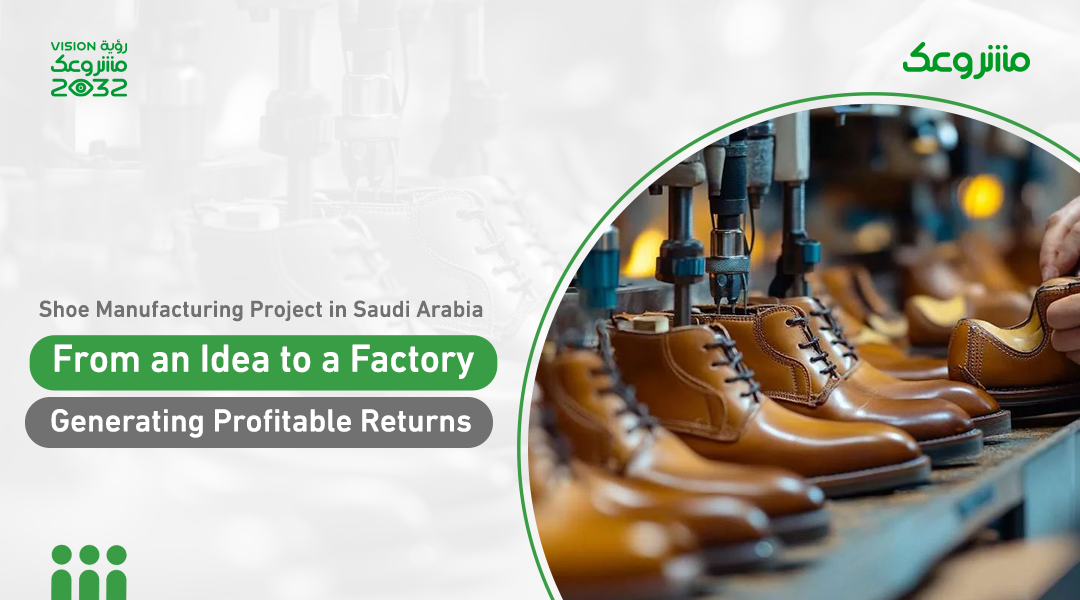
The Shoe Manufacturing Project is gaining increasing attention as one of the most promising industrial investment opportunities, driven by consistent market demand and strong growth potential. This is largely due to the diverse needs of consumers across various footwear segments, including athletic, formal, medical, and everyday shoes.
The success of the project depends on the ability to deliver products that combine high quality, modern designs, and competitive pricing, while utilizing suitable raw materials and advanced manufacturing technologies to maximize efficiency and reduce production costs.
In addition, the project requires a comprehensive market study and a thorough analysis of customer needs and competitors, supported by a well-structured operational and marketing strategy that enhances sales performance and builds a strong brand identity.
In this article, we explore the key aspects of a Shoe Manufacturing Project, from the initial setup requirements to the critical success factors that contribute to long-term sustainability and profitability.
A Shoe Manufacturing Project is an industrial venture focused on producing a wide variety of footwear, including athletic shoes, formal shoes, medical footwear, and children’s shoes, using diverse raw materials and modern manufacturing technologies to meet market demand.
The project covers every stage of the production process, from footwear design and raw material selection to cutting, stitching, assembly, finishing, packaging, and marketing. Its success depends on delivering high-quality products, maintaining precision in manufacturing, and continuously innovating in design.
In addition, conducting thorough market research and identifying the target customer segment are essential to achieving sustainable growth. With the increasing demand for footwear in both local and international markets, a shoe manufacturing business represents a promising industrial investment with strong potential for attractive returns.
Yes, a Shoe Manufacturing Project is considered a strategic investment opportunity with growing economic potential, driven by the continuous demand for fashion and sports products, the global shift toward more active lifestyles, and the rapid expansion of e-commerce sales channels.
The strength and vitality of this sector are reflected in global market indicators, with the global footwear market estimated at approximately USD 495.46 billion in 2025. The market is expected to continue its strong upward momentum, reaching around USD 529.25 billion in 2026 and growing steadily to approximately USD 912.13 billion by 2034, representing a compound annual growth rate (CAGR) of 7.04% during the forecast period.
Read here: Industrial Sector Report in Saudi Arabia
Investors choose to invest in a Shoe Manufacturing Project due to its strong fundamentals that make it one of the promising industrial ventures. The key reasons for this growing interest include:
Please read here: How to Find the Best Investment in Saudi Arabia? A Smart Investor’s Guide to Promising Opportunities
The cost of a Shoe Manufacturing Project depends on several factors that vary from one project to another, such as the factory size, production capacity, target footwear type, and level of equipment and facilities used. The main cost items to consider include:
The production process in a Shoe Manufacturing Project goes through several sequential stages to ensure the production of a high-quality product. These stages include:
The required equipment varies depending on the project size and production capacity; however, the main essential tools and equipment include:
The success of a Shoe Manufacturing Project depends significantly on selecting a suitable location that facilitates production and distribution operations. The following criteria should be considered:
Selecting the right suppliers contributes to ensuring product quality and maintaining a stable production process. The following criteria can be considered:
The quality of the final product in a Shoe Manufacturing Project depends on selecting the appropriate raw materials. The most important materials include:
The increase in the prices of leather, fabrics, soles, and adhesives is one of the major challenges facing a Shoe Manufacturing Project, as it directly affects production costs and profit margins, especially with price fluctuations or reliance on a single supplier.
This challenge can be overcome by diversifying suppliers, negotiating competitive prices, purchasing raw materials in suitable quantities, and searching for high-quality alternatives at lower costs.
The footwear market faces strong competition among local companies and global brands, making customer acquisition and retention more challenging. Therefore, it is essential to focus on offering high-quality products with innovative designs, building a strong brand identity, and providing added value that gives the project a competitive advantage.
Changing fashion trends and customer preferences continuously may lead to a decline in product demand if the project fails to keep pace with these changes. To overcome this challenge, it is essential to monitor the latest footwear trends, regularly analyze market requirements, and continuously develop designs and introduce new models that meet customer expectations.
Using low-quality materials or having errors during the manufacturing process may result in producing footwear that does not meet customer expectations, leading to higher return rates and negatively affecting the project’s reputation.
This challenge can be addressed by selecting reliable raw materials, implementing strict quality control standards, and inspecting products throughout all production stages before launching them in the market.
The project may face challenges in achieving market visibility and reaching target customer segments, especially amid increasing competition. This challenge can be overcome by diversifying sales channels, establishing a presence on e-commerce platforms, collaborating with distributors, and implementing effective marketing campaigns that specifically target potential customers.
Poor planning may lead to shortages of raw materials or excessive accumulation of finished products in storage, negatively affecting operational efficiency and increasing costs.
This challenge can be addressed by implementing an effective inventory management system, monitoring demand rates, and planning production according to actual market needs.
Operating costs include labor wages, energy consumption, maintenance, and transportation expenses. These factors may affect the project’s profitability if they are not managed efficiently.
This challenge can be addressed by using modern energy-efficient equipment, developing an accurate expense management plan, and continuously monitoring operational performance.
The success of a Shoe Manufacturing Project depends on having skilled and experienced workers across various manufacturing stages. A shortage of qualified personnel may lead to lower product quality and increased production errors.
This challenge can be overcome by recruiting qualified workers and providing continuous training programs to enhance employees’ skills and improve production efficiency.
Using diverse marketing channels helps increase the visibility of Shoe Manufacturing Project products and reach target customers. The most effective marketing methods include:
When I decided to invest in a Shoe Manufacturing Project, I was aware that the Saudi market was witnessing increasing demand for high-quality locally manufactured products. However, from the beginning, I faced several real challenges that affected the project’s progress. The most significant challenges included inadequate planning, uncertainty regarding the appropriate investment size, difficulty estimating operating costs, selecting suitable production lines, as well as challenges related to sourcing raw materials, pricing products, reaching effective marketing channels, and securing the necessary financing for expansion.
At that point, I decided to seek the expertise of Mashroo3k Consulting, whose team prepared a professional feasibility study covering the project’s marketing, technical, financial, and administrative aspects. The study provided a clear understanding of market requirements, identified the appropriate production capacity, determined the required production lines, estimated expected costs and revenues, and established effective project management strategies.
The consulting team also helped address the financial challenges by preparing a professional financing file that met the requirements of financing institutions, which contributed to securing funding from the Saudi Industrial Development Fund (SIDF).
Thanks to this comprehensive support, the project now operates according to a clear operational plan, with improved production efficiency, enhanced product quality, and a stronger ability to meet the growing demand in the Saudi market while achieving better operational results.
Read here: How do SME financing programs drive the economic transformation journey in the Kingdom?
The cost of a shoe manufacturing factory depends on several factors, most notably the factory size, production capacity, type of footwear produced, level of equipment and facilities, as well as raw material costs, labor expenses, licensing fees, and operating costs.
The cost of manufacturing a shoe varies depending on the type of footwear, quality of raw materials, manufacturing method, production volume, and labor costs. For example, the cost of producing athletic shoes differs from leather or formal shoes. Additionally, large-scale production reduces the unit cost compared to limited production.
In general, the cost of manufacturing a shoe includes raw materials, labor, equipment depreciation, packaging, and operating expenses.
A variety of raw materials are used in shoe manufacturing, and the selection depends on the type of footwear and its intended use. The main materials include natural leather and synthetic leather for producing the shoe upper, rubber, polyurethane (PU), and EVA materials for manufacturing soles, as well as fabrics used in athletic and casual shoes.
Other essential materials include synthetic threads, adhesives, foam, and inner linings to provide comfort and durability, in addition to laces, zippers, and various accessories that contribute to the final appearance and quality of the footwear.
The selection of equipment for a Shoe Manufacturing Project depends on several factors, including the type of footwear to be produced, production volume, and the project’s operational capacity. It is recommended to choose equipment that meets current production requirements while allowing for future expansion, with a focus on quality, efficiency, ease of maintenance, and the availability of spare parts.
The equipment should also be purchased from reliable suppliers and verified for compatibility with the various manufacturing stages. This helps improve product quality, increase production efficiency, and reduce downtime and long-term operating costs.
The appropriate production capacity when starting a Shoe Manufacturing Project depends on the available capital, expected market demand, and the factory’s operational capabilities. It is recommended to begin with a production capacity that aligns with actual market demand to avoid high operating costs or excessive inventory accumulation.
The project should also consider the possibility of gradually increasing production as sales grow and the customer base expands. Determining the right production capacity helps achieve optimal resource utilization, improve operational efficiency, and enhance the project’s long-term profitability.
We can conclude that a Shoe Manufacturing Project represents a promising investment opportunity due to the continuous demand for its products and the diversity of its target customer segments. However, achieving success requires careful planning, selecting suitable raw materials and equipment, maintaining high production quality, and adopting an effective marketing strategy alongside continuous development.
This highlights the importance of preparing a professional feasibility study that helps evaluate the investment opportunity, determine expected costs and returns, and develop a comprehensive operational plan that minimizes risks and increases the chances of project success.
If you are planning to invest in a Shoe Manufacturing Project, seeking the expertise of Mashroo3k Consulting provides you with a clear vision and a well-developed strategy to launch your project with confidence and achieve your investment goals.

Contact us to request a feasibility study for a Shoe Manufacturing Project
The kebab restaurant project is one of the food-service ventures that combines strong demand for grilled meals with the opportunity to target a diverse customer base, including individuals, families, and lovers of traditional Middle Eastern cuisine. With growing competition in the restaurant sector, however, the project’s success is no longer determined by food taste alone. […]
Read moreA children’s toy store project is not limited to selling toys; it is built on understanding what attracts children and what families look for when choosing products that combine entertainment and educational value. With the wide variety of educational toys, skill-development games, recreational toys, and gifts available, the store has opportunities to meet the needs […]
Read moreA residential complex project is no longer simply an investment in a collection of real estate units. It has evolved into an integrated development model that combines comfortable living, diverse services, and long-term investment value. As cities expand and residents’ needs evolve, demand is growing for residential complexes that offer a comprehensive environment suited to […]
Read moreThe veterinary clinic project comes at a time when animal care is no longer limited to treating illnesses or injuries, but has expanded to include health monitoring, vaccinations, routine checkups, and care for both pets and livestock. However, many animal owners face challenges in accessing specialized veterinary services that combine prompt response, high-quality care, and […]
Read more
خصم 25% على خدمات مشروعك استفد من العرض الآن، فالفرصة متاحة لفترة محدودة فقط
سجّل بياناتك واحصل على خصم 25% الآن


