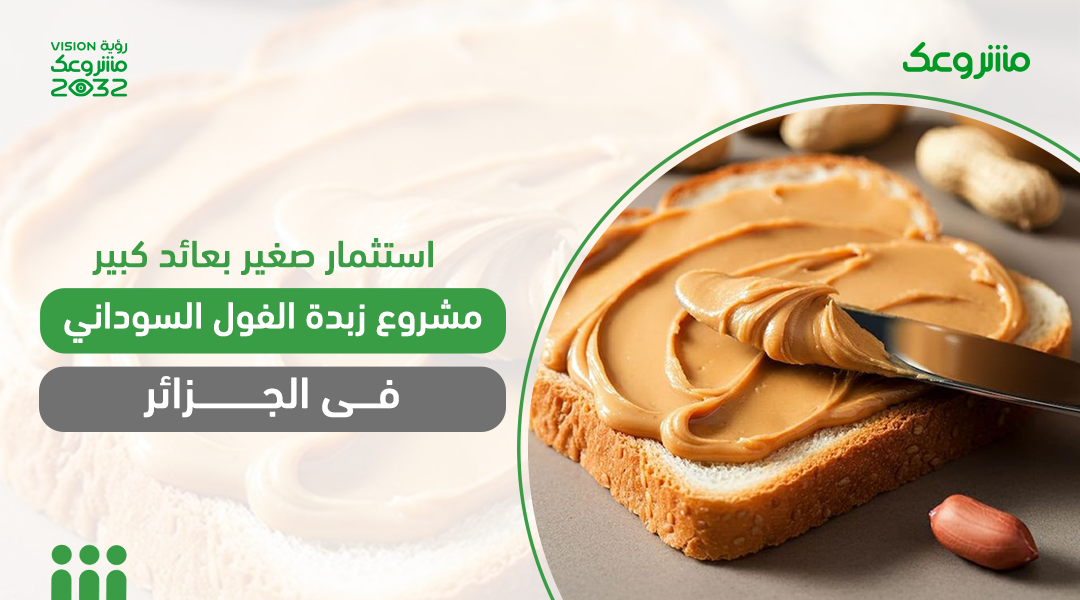
The peanut butter project has become one of the most prominent investment opportunities in the healthy food sector, driven by the growing consumer awareness of the importance of proper nutrition and the shift toward balanced dietary lifestyles.
Peanut butter is no longer just a traditional consumer product; it has evolved into a key component in sports nutrition and plant-based diets. This transformation makes it an attractive destination for investors seeking strong returns and sustainable growth.
This guide provides a comprehensive roadmap for launching the project with confidence and professionalism, including the essential requirements for starting, a detailed and transparent cost structure, as well as the latest production and marketing strategies designed to achieve differentiation, competitiveness, and long-term sustainability in a dynamic and evolving market.
The peanut butter project is an integrated industrial and commercial activity aimed at transforming raw peanuts into a high-value food product characterized by its content of proteins and healthy fats beneficial to the body.
The project relies on a precise and organized production chain that begins with selecting the best types of peanuts, followed by roasting under controlled conditions to enhance flavor and improve quality. This is then followed by grinding to obtain a smooth or creamy texture suitable for consumption.
After that, optional ingredients may be added depending on the targeted product type, such as honey, salt, or vegetable oils, to improve taste and consistency. The final stage involves packaging the product in hygienic and sterilized containers that preserve quality and ensure safety during storage and distribution.
Read here: 20 small business ideas that will generate high profits in 2026
Global indicators suggest that the peanut butter project is one of the promising ventures with high economic viability. The global peanut butter market was valued at approximately USD 7.75 billion in 2025, reflecting the increasing global demand for this food product.
The market is expected to continue growing steadily, rising from USD 8.38 billion in 2026 to around USD 15.50 billion by 2034, with a compound annual growth rate (CAGR) of about 8.00% during the forecast period. This confirms the strength of investment opportunities in this sector.
Read Here: Best Successful Small Projects for Youth in 2026
Advantages of Investing in the Peanut Butter Project
Read here: Why does the nuts retail project deserve a place in your investment portfolio?
Tools and Equipment Required to Start a Peanut Butter Project
What is the cost of a peanut butter project?
The cost of a peanut butter project depends on several key factors that determine the required level of investment. These costs vary according to the production scale, type of equipment used, and operational capacity. The main cost components include:
Read here: Discover the Best Small Project That Fits Your Resources
Steps to Start a Peanut Butter Project
Read here: How to start a small business and ensure its profitability in 2026
Tips to Ensure the Success and Sustainability of a Peanut Butter Project
Read here: How to Achieve Financial Success by Investing in Successful Small Projects
| Challenges Facing the Peanut Butter Project | Ways to Overcome Them |
|---|---|
| High cost of raw materials and price fluctuations | Contract with reliable suppliers and purchase in bulk when prices are low |
| Difficulty in maintaining consistent product quality | Apply fixed production standards, follow specifications, and implement quality control |
| Strong market competition | Offer a differentiated product in taste and packaging and build a strong brand |
| Weak marketing at the beginning | Rely on digital marketing and social media, targeting interested customers |
| Storage problems and product spoilage | Use airtight packaging and provide proper storage conditions away from heat and humidity |
| High initial cost of equipment | Start with basic equipment and expand gradually as profits grow |
| Difficulty reaching customers in early stages | Sell through small shops, supermarkets, and online platforms |
| Lack of production experience | Provide proper training or consult experts at the beginning of the project |
| Changing consumer tastes | Diversify flavors and continuously develop the product according to market needs |
| Legal and health-related issues | Comply with all required licenses and approved food safety standards |
When I decided to launch the peanut butter project in Algeria, I was firmly convinced of the idea, and local demand looked promising. However, reality quickly revealed two major obstacles that almost derailed the dream at its early stage: the lack of precise structural planning and the shortage of funding needed for setup and production.
The vision was there, but the numbers were unclear and the pathways were uncertain.
At that point, my meeting with “Mishroo3k Consulting Company” marked the real turning point in the journey. The company prepared a fully integrated feasibility study, through which it systematically organized all operational, market, and logistical aspects with high precision, transforming the idea into a clear and executable action plan.
More importantly, it developed a well-structured financing file that strengthened the project’s credibility before the National Bank of Algeria, which offers financing of up to 80% of the project value, with a deferred repayment period ranging from 12 to 36 months.
Thanks to the professional follow-up and specialized expertise of the company’s team, I did not only overcome these two challenges, but I also established a production line that exceeds all my expectations in both quality and efficiency.
Today, I am fully convinced that a professional consulting partner is not a luxury, but rather the backbone that transforms ambition into a sustainable reality.
The price per kilogram of peanut butter is determined by several key factors that directly affect its market value, most notably the quality of the peanuts used, the strength of the brand, and the nature of the manufacturing process—whether traditional or advanced industrial production.
Packaging specifications also play an important role in increasing the product’s market value, in addition to the distribution channels through which it is sold.
The yield per feddan of peanuts varies depending on several factors, including soil quality, the type of cultivated variety, the efficiency of irrigation and fertilization programs, and adherence to modern agricultural practices.
Generally, the average production per feddan ranges from about one ton to one and a half tons, and this yield can increase with the application of advanced agricultural techniques and favorable climatic conditions.
The peanut butter production process begins with selecting high-quality peanuts and cleaning them from impurities, followed by a controlled roasting stage to enhance flavor and remove the skins.
After that, the peanuts are ground using specialized grinders to transform them into a smooth paste. Finally, the product is packaged in sterilized, tightly sealed containers to ensure its quality and nutritional value are preserved until it reaches the consumer.
The main ingredient in peanut butter is peanuts. The peanuts are roasted and then ground until they turn into a smooth, creamy texture that forms the base of the product.
In some varieties, small amounts of other ingredients may be added, such as salt, sugar, honey, or sometimes vegetable oils, to improve taste or texture. However, peanuts remain the primary component, making up the largest proportion of the product and giving it its distinctive nutritional value.
Yes, peanut butter does have a defined shelf life, but it is considered a product with a relatively long storage duration.
Its shelf life depends on the type of peanut butter and the production method used. Commercial peanut butter (which contains preservatives) typically lasts longer and may remain usable for several months or even up to a year when stored in a cool, dry place.
On the other hand, natural peanut butter (without additives or preservatives) has a shorter shelf life compared to processed varieties.
It is clear that the peanut butter project is not merely an executable idea, but rather a comprehensive investment opportunity that combines ease of implementation with strong market demand. However, achieving success does not depend solely on product quality; it is based on an integrated system that includes precise strategic planning, adherence to the highest quality standards across all production stages, as well as adopting effective marketing methods that strengthen the product’s presence and competitiveness in the market.
From this perspective, a strong brand is formed—one that is capable of generating stable and sustainable returns. Continuous development, innovation, and a deep understanding of customer needs remain essential factors for ensuring long-term continuity in a constantly changing market environment. Successful projects are those that adapt to market shifts and turn them into opportunities for growth.
Therefore, starting with a clear vision and well-planned steps, along with a genuine commitment to excellence, paves the way for establishing the project firmly and achieving a tangible impact in the food processing industry sector.

For inquiries and to request a feasibility study for the peanut butter project
The kebab restaurant project is one of the food-service ventures that combines strong demand for grilled meals with the opportunity to target a diverse customer base, including individuals, families, and lovers of traditional Middle Eastern cuisine. With growing competition in the restaurant sector, however, the project’s success is no longer determined by food taste alone. […]
Read moreA children’s toy store project is not limited to selling toys; it is built on understanding what attracts children and what families look for when choosing products that combine entertainment and educational value. With the wide variety of educational toys, skill-development games, recreational toys, and gifts available, the store has opportunities to meet the needs […]
Read moreA residential complex project is no longer simply an investment in a collection of real estate units. It has evolved into an integrated development model that combines comfortable living, diverse services, and long-term investment value. As cities expand and residents’ needs evolve, demand is growing for residential complexes that offer a comprehensive environment suited to […]
Read moreThe veterinary clinic project comes at a time when animal care is no longer limited to treating illnesses or injuries, but has expanded to include health monitoring, vaccinations, routine checkups, and care for both pets and livestock. However, many animal owners face challenges in accessing specialized veterinary services that combine prompt response, high-quality care, and […]
Read more
خصم 25% على خدمات مشروعك استفد من العرض الآن، فالفرصة متاحة لفترة محدودة فقط
سجّل بياناتك واحصل على خصم 25% الآن


