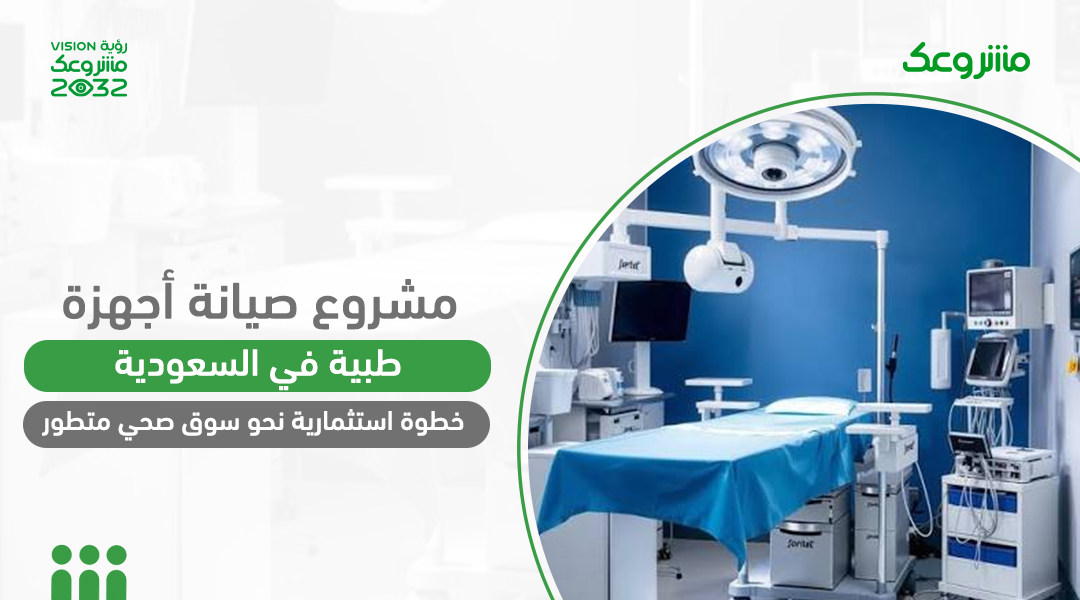
A medical equipment maintenance project represents an investment opportunity directly linked to the continuity and efficiency of healthcare services in Saudi Arabia, particularly with the growing reliance on medical devices and technologies in hospitals, medical centers, clinics, and laboratories. As the number of devices increases and their functions become more advanced, the need for regular maintenance, inspection, and repair services also grows to ensure their readiness, reduce unexpected breakdowns, and minimize the costs associated with operational downtime.
The project’s appeal is not limited to the consistent demand for its services; it also extends to the diversity of its customer base and the opportunity to provide specialized maintenance solutions tailored to the needs of different healthcare facilities. The rapid development of medical technologies also creates opportunities for maintenance service providers to expand their expertise and keep pace with modern medical equipment.
Therefore, a medical equipment maintenance project is emerging as one of the service-based projects of growing importance. However, its success requires a thorough understanding of the market, careful selection of suitable services, and the provision of the necessary expertise and equipment in line with operational requirements and applicable regulations.
A medical equipment maintenance project is a specialized business that provides inspection, repair, and calibration services for medical devices and equipment used in hospitals, healthcare centers, clinics, and laboratories. Its main objective is to maintain operational efficiency, ensure accurate performance, and promote the safe use of medical equipment.
The project includes preventive and routine maintenance, fault diagnosis and repair, replacement of damaged components, and post-maintenance testing to ensure that equipment meets operational and safety requirements. The project can serve a wide range of medical equipment, including patient monitoring devices, anesthesia machines, sterilization equipment, and laboratory and diagnostic devices.
With the continued expansion of medical technology and the increasing variety of equipment used in healthcare facilities, the demand for specialized maintenance services is also growing. These services help extend the service life of medical equipment, reduce breakdowns, and minimize unexpected downtime.
Read here: Key Healthcare Sector Projects
Yes, a medical equipment maintenance project is considered one of the promising and profitable businesses in the health-care sector. According to recent statistics, the global medical equipment maintenance market was valued at USD 59.71 billion in 2025 and is expected to grow from USD 64.90 billion in 2026 to USD 124.89 billion by 2034, representing a compound annual growth rate (CAGR) of 8.5% during the forecast period
A medical equipment maintenance project contributes to supporting the Saudi healthcare sector by ensuring the readiness of the devices and equipment used in hospitals and healthcare centers. This helps maintain the continuity of medical services and reduce unexpected breakdowns and downtime.
The importance of this activity is increasing with the continued expansion of Saudi Arabia’s healthcare system. The number of healthcare professionals in the Kingdom has exceeded 803,000 practitioners, while the coverage of essential healthcare services reached 97.5% of population clusters, according to the report… Health Sector Transformation Program for 2025. The project also supports the Kingdom’s efforts to improve the quality and efficiency of healthcare services and localize medical technologies, which are key objectives of the Health Sector Transformation Program and Saudi Vision 2030.
Preventive and routine maintenance, calibration, and repair services help extend the operational life of medical equipment, improve the accuracy of diagnostic results, enhance safety for patients and healthcare professionals, and reduce the costs associated with frequent equipment replacement. With the announcement of healthcare investments and initiatives exceeding SAR 124 billion, the need for specialized services that support the Kingdom’s growing healthcare infrastructure and expanding medical equipment base is also increasing.
Read here:Health Sector Report in the Kingdom of Saudi Arabia
A medical equipment maintenance project is considered an increasingly important service-based business due to its direct connection to the continued operation of hospitals, medical centers, and clinics. The key factors supporting the project’s investment appeal include:
The nature of a medical equipment maintenance project requires specialized technical equipment and tools to inspect devices, diagnose faults, and carry out maintenance work efficiently. The main requirements include:
Read Here: Medical Supplies Project: A Promising Investment in the Growing Healthcare Sector
The cost of a medical equipment maintenance project varies depending on the project size, scope of services, and types of equipment targeted for maintenance. The key factors affecting total costs include:
My experience with a medical equipment maintenance project began when I recognized the need among healthcare facilities for specialized services that ensure the efficiency of their equipment and maintain continuous operation. I decided to turn this opportunity into a project offering maintenance, inspection, calibration, and repair services.
As I began planning, I realized that the project’s success depended on more than simply providing equipment and technicians. It required a clear vision that defined the target equipment, the level of demand for the services, the operating model, and the expected costs. As a result, I faced several challenges, particularly in determining the appropriate equipment, selecting qualified technical staff, and developing a financial plan that would help me manage the project efficiently.
To turn the idea into an actionable plan, I sought the support of the experts at Mashroo3k Consulting to prepare a comprehensive feasibility study covering the project’s market, technical, operational, and financial aspects. The study helped me accurately identify the project’s requirements and develop a clearer understanding of its operational needs and growth opportunities.
The study also helped me prepare a comprehensive investment proposal and apply for financing from the Social Development Bank. With this support, I was able to secure the essential equipment and launch the project on a more structured foundation, with greater readiness for future expansion.
The responsibilities of a medical equipment maintenance technician include inspecting equipment and diagnosing faults, carrying out preventive maintenance and repairs, replacing damaged components, and conducting tests and calibration to ensure the equipment is functioning properly after maintenance. The technician is also responsible for documenting maintenance activities, monitoring equipment performance, and complying with safety and quality procedures throughout the maintenance process.
Diagnostic, critical care, laboratory, surgical, and sterilization equipment requires regular maintenance due to its frequent use and importance in delivering healthcare services. Key examples include X-ray and ultrasound machines, ventilators and patient monitoring devices, anesthesia machines, laboratory testing equipment, and sterilization equipment, as well as electrocardiogram (ECG) machines, infusion pumps, and other equipment whose continuous operation requires technical efficiency and regular maintenance.
A wide range of healthcare entities can benefit from medical equipment maintenance services, including government and private hospitals, medical centers and clinics, laboratories and diagnostic centers, radiology centers, dental clinics and centers, physical therapy and rehabilitation centers, healthcare facilities, and residential care facilities.
In addition, companies that supply and distribute medical devices and equipment may require maintenance and technical support services for the equipment they provide to their customers.
We can conclude that a medical equipment maintenance project represents an opportunity that combines the importance of its services with sustained demand. Medical equipment has become an essential component of healthcare facilities, and maintaining its efficiency requires specialized maintenance and reliable technical services. By providing professional maintenance solutions, supported by qualified personnel and appropriate equipment, the project can build a strong customer base while strengthening its competitiveness and capacity for growth.
The wide range of medical equipment and healthcare facilities that can benefit from these services also creates multiple opportunities for future growth and service development. Therefore, investing in this activity requires a clear vision that begins with studying the market and analyzing customer needs, followed by defining the operating model, costs, and required resources. This provides the project with a solid foundation and helps investors make more informed and confident decisions.

For inquiries or to request a feasibility study for a medical equipment maintenance project, please contact us.
The kebab restaurant project is one of the food-service ventures that combines strong demand for grilled meals with the opportunity to target a diverse customer base, including individuals, families, and lovers of traditional Middle Eastern cuisine. With growing competition in the restaurant sector, however, the project’s success is no longer determined by food taste alone. […]
Read moreA children’s toy store project is not limited to selling toys; it is built on understanding what attracts children and what families look for when choosing products that combine entertainment and educational value. With the wide variety of educational toys, skill-development games, recreational toys, and gifts available, the store has opportunities to meet the needs […]
Read moreA residential complex project is no longer simply an investment in a collection of real estate units. It has evolved into an integrated development model that combines comfortable living, diverse services, and long-term investment value. As cities expand and residents’ needs evolve, demand is growing for residential complexes that offer a comprehensive environment suited to […]
Read moreThe veterinary clinic project comes at a time when animal care is no longer limited to treating illnesses or injuries, but has expanded to include health monitoring, vaccinations, routine checkups, and care for both pets and livestock. However, many animal owners face challenges in accessing specialized veterinary services that combine prompt response, high-quality care, and […]
Read more
خصم 25% على خدمات مشروعك استفد من العرض الآن، فالفرصة متاحة لفترة محدودة فقط
سجّل بياناتك واحصل على خصم 25% الآن


