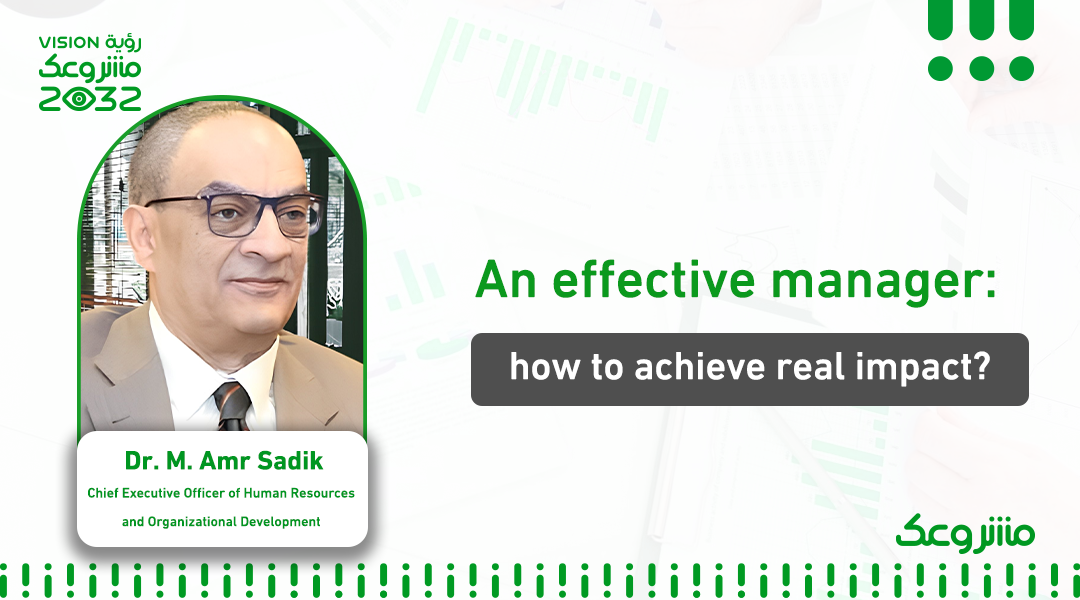
In today’s management world, where pressures are increasing and priorities are becoming more complex, many leaders find themselves immersed in the details of daily tasks without asking: Does what we do truly make a difference? This question has troubled me throughout my life until my reading led me to The Effective Executive by Peter Drucker, one of the most prominent management thinkers of the twentieth century, often referred to as the “father of modern management.”
What attracted me to this book was not only the depth of its theoretical insights but also its practical simplicity and focus on small changes in habits and thinking that can create a significant impact on leadership and managerial performance. Drucker does not offer magical solutions; rather, he guides us to understand that effectiveness is not an innate gift or a special talent, but a habit that can be learned and developed through self-discipline and conscious direction of efforts. The author skillfully highlights the fundamental difference between efficiency and effectiveness, noting that true success in management does not lie in working faster or achieving more, but in choosing the right tasks that deliver the desired impact.
From this, Drucker identifies five essential practices for the effective executive, starting with managing time efficiently, extending to focusing on contribution rather than mere performance, leveraging strengths, clearly setting priorities, and making strategic decisions wisely. These practices serve as a practical roadmap for any manager aspiring to be effective in complex and fast-changing work environments. Perhaps my receipt of the Peter Drucker Management Award in 2015 from UOSF University in Panama stands as a testament to the impact of Drucker’s thinking on my professional journey and my deep understanding of true leadership and the conscious practice of managerial effectiveness.
Effectiveness is not a gift one is born with; it is a skill that can be acquired through conscious practice and self-discipline. Even highly competent or hardworking individuals may not be truly effective if they do not direct their efforts toward the right and truly important matters.
Effective managers don’t begin by organizing tasks—they begin by organizing their time, as it is the primary pillar for productive effort. Time is a scarce and limited resource that cannot be recovered, so protecting and investing it wisely is the first step toward effective leadership.
Focus on Results, Not Effort
Effectiveness is not measured by the number of hours you work or tasks you complete, but by the results you achieve and the value you add. Always ask yourself: “What is truly expected of me in this role?” Instead of focusing on routine activities, concentrate on the real impact you are meant to create.
Leverage Strengths to Maximize Performance
Peter Drucker emphasizes that effective managers do not waste energy fixing weaknesses—they focus on making strengths productive and effective. Direct your efforts toward developing:
By investing in existing high abilities and unique talents, you can achieve exceptional results instead of wasting energy on matters with limited impact.
Set Priorities and Stick to Them: Don’t Waste Effort on the Unimportant
Drucker states: “There is no benefit in doing something that shouldn’t be done at all.” True effectiveness lies in choosing what is worth accomplishing, not just completing what is available. Clearly identify:
Once priorities are set, commit to them and be bold enough to say “no” to secondary or unnecessary tasks. Managing attention and tasks requires courage in choice before intelligence in execution.
Make Effective Decisions: Seek Realism, Not Perfection
An effective manager is measured not by the number of decisions made, but by the quality of those decisions and their ability to produce real results. Good decisions rely not only on intuition but on:
Drucker stresses that the goal is not to reach the “perfect decision” but the “right and actionable decision” within existing realities. Effectiveness in decision-making always means balancing logic and practical implementation.
They Know How to Use Their Time
Effective managers understand that time is their most valuable resource. They organize it carefully, avoid wasting it on unimportant or repetitive tasks, allocate specific periods for core responsibilities, and minimize distractions that divert them from strategic work.
They Focus on Contribution and Results
It’s not enough to work hard; managers must achieve real results. Effective managers constantly ask: “How can I contribute to the progress of this project or organization?” rather than merely focusing on daily operations.
They Build on Strengths
Instead of addressing weaknesses, effective managers leverage their strengths and those of others. They use these strengths to enhance performance within themselves and their teams, leading to faster and better outcomes.
They Set Clear Priorities
Effectiveness means choosing what matters most and focusing on it, while letting go of less important tasks. Successful managers don’t try to do everything—they identify key priorities and stick to them, ensuring optimal use of resources.
They Make Sound and Thoughtful Decisions
Decision-making is not about quick reactions; it is a deliberate process that requires gathering information, evaluating options, and analyzing consequences. Effective managers always make decisions based on a deep understanding of reality, avoiding haste or personal bias.
In Conclusion
Effective management is a learned skill built on conscious practice, strategic prioritization, and disciplined decision-making. By focusing on time management, results, strengths, priorities, and informed choices, leaders can achieve meaningful impact and guide their organizations toward sustained success.
The Effective Executive is not just a traditional management guide; it is a genuine and personal call to anyone holding a leadership role to reconsider how they manage their time, set priorities, and make decisions. Peter Drucker clearly emphasizes that effectiveness is not an innate trait with which some are born, but a skill that can be learned, and practicing it is what distinguishes an ordinary leader from an outstanding one. Since true success at work is not built on effort alone but on the right direction and optimal use of resources, effectiveness becomes the cornerstone of successful leadership.

To get in touch and learn more about Mashroo3k Company and its services
The kebab restaurant project is one of the food-service ventures that combines strong demand for grilled meals with the opportunity to target a diverse customer base, including individuals, families, and lovers of traditional Middle Eastern cuisine. With growing competition in the restaurant sector, however, the project’s success is no longer determined by food taste alone. […]
Read moreA children’s toy store project is not limited to selling toys; it is built on understanding what attracts children and what families look for when choosing products that combine entertainment and educational value. With the wide variety of educational toys, skill-development games, recreational toys, and gifts available, the store has opportunities to meet the needs […]
Read moreA residential complex project is no longer simply an investment in a collection of real estate units. It has evolved into an integrated development model that combines comfortable living, diverse services, and long-term investment value. As cities expand and residents’ needs evolve, demand is growing for residential complexes that offer a comprehensive environment suited to […]
Read moreThe veterinary clinic project comes at a time when animal care is no longer limited to treating illnesses or injuries, but has expanded to include health monitoring, vaccinations, routine checkups, and care for both pets and livestock. However, many animal owners face challenges in accessing specialized veterinary services that combine prompt response, high-quality care, and […]
Read more
خصم 25% على خدمات مشروعك استفد من العرض الآن، فالفرصة متاحة لفترة محدودة فقط
سجّل بياناتك واحصل على خصم 25% الآن


