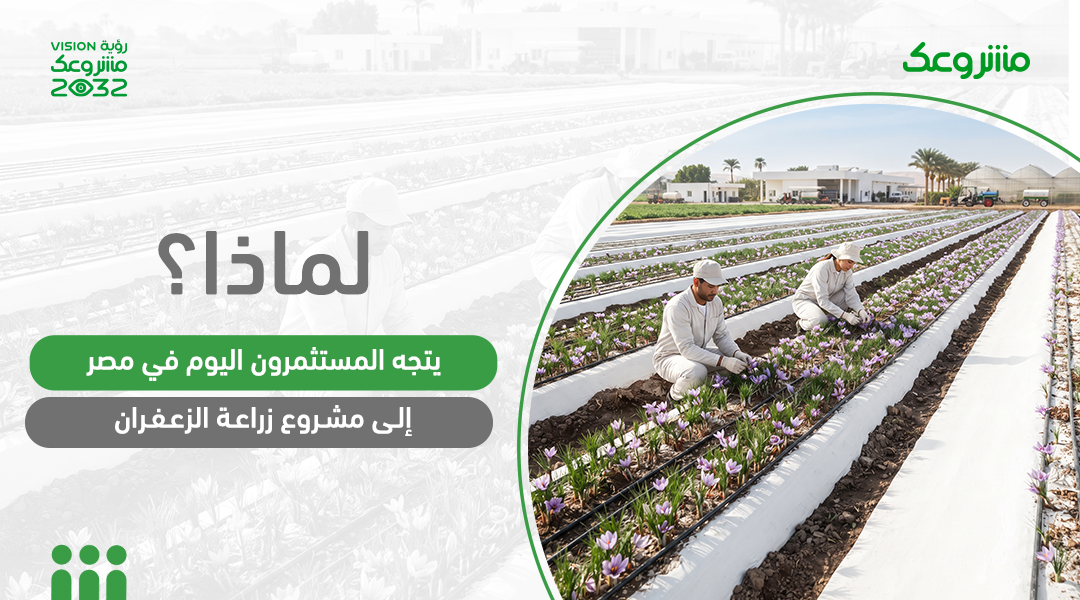
The saffron cultivation project is a promising agricultural investment opportunity that combines high economic value with the potential to benefit from growing demand for saffron, one of the world’s most expensive spices, widely used in the food, fragrance, and pharmaceutical industries.
Saffron has a high market value compared with many traditional crops, making it an attractive option for investors seeking to enter the agricultural sector with a crop that offers potentially high returns. However, the project’s success depends on more than cultivation alone. It requires careful assessment of soil conditions and climate, selection of suitable varieties, and provision of the necessary planting, harvesting, and drying supplies.
In addition, identifying target markets and appropriate sales channels is essential. Therefore, thorough planning and a comprehensive assessment of the project’s technical, marketing, and financial aspects are fundamental to evaluating its feasibility, reducing risks, and maximizing its chances of long-term success and profitability.
A saffron cultivation project is an agricultural business specializing in the production of saffron, one of the most expensive spices in the world. It involves planting saffron corms in a suitable environment with appropriate soil conditions, temperatures, and irrigation.
The project involves growing and caring for the plants until they flower, then harvesting the red saffron threads, drying, sorting, and packaging them in preparation for marketing and sale. One of its key advantages is the potential to make productive use of relatively small agricultural areas.
The project’s success depends on the quality of the corms, the suitability of climatic conditions, and the precision of cultivation, harvesting, drying, and storage processes. Selecting appropriate marketing channels is also essential to reaching target customers.
Read Here: A Guide to Investing in a Spice Packaging Project
Yes, saffron cultivation is considered one of the potentially profitable ventures in the agricultural sector. The global saffron market was valued at USD 489.35 billion in 2025 and is projected to grow from USD 528.63 billion in 2026 to USD 980.42 billion by 2034, registering a compound annual growth rate (CAGR) of 8.03% over the forecast period.
Read Here: 5 Reasons Why an Olive Cultivation Project Is a Smart Investment Choice
Read Here: How to Start a Thyme Cultivation Project in Egypt
The cost of a saffron cultivation project varies depending on the size and location of the land, soil conditions, irrigation system, production volume, and level of equipment used. It is influenced by several key factors, including the following:
A market study for a saffron cultivation project helps determine demand levels and identify opportunities for the product, particularly because saffron is used across several sectors, including the food industry, cosmetics, and certain pharmaceutical products and supplements. Recent market studies indicate that global demand for saffron continues to expand, driven by its use as a premium spice and natural ingredient. The market study should cover the following elements:
Read Here: Herbal and Spice Shop Project: Secrets to Profiting from Natural and Traditional Products
| Risks | Mitigation Measures |
|---|---|
| Unsuitable soil for saffron cultivation | Conduct a soil analysis before planting and select land with good drainage. |
| Climate fluctuations and unsuitable temperatures | Choose a suitable location, monitor weather conditions, and take the necessary preventive measures. |
| Agricultural pests and diseases | Inspect plants regularly and implement appropriate pest and disease control programs. |
| Damaged or low-quality saffron corms | Purchase corms from reliable sources and inspect them before planting. |
| Overwatering or poor drainage | Use a suitable irrigation system and avoid waterlogging around the corms. |
| Low productivity | Follow the recommended planting, irrigation, and fertilization schedules and provide appropriate crop care. |
| Saffron damage during drying | Use suitable drying methods and control temperature and humidity. |
| Difficulty marketing the crop | Identify target customers in advance and build a network of traders, restaurants, and manufacturers. |
| Rising production input costs | Select suppliers carefully, negotiate prices, and purchase supplies according to actual needs. |
| Lack of experience in saffron cultivation | Consult specialists or agricultural engineers with experience in saffron cultivation. |
My journey with the saffron cultivation project in the Arab Republic of Egypt began with an understanding of the crop’s high economic value and its distinguished position in the market as one of the world’s most expensive and valuable spices, in addition to its diverse applications in the food industry and other sectors. Despite the clarity of the initial concept, I faced several challenges during the early implementation stages. The most significant were the need to develop a precise plan for the cultivation and production stages, as well as the difficulty of estimating actual costs and allocating financial resources in a way that would ensure operational efficiency and the project’s long-term sustainability.
To overcome these challenges, I sought the expertise of Mashroo3k Consulting, whose team prepared a comprehensive feasibility study that helped me better understand the project’s requirements and develop a clear plan for its implementation and production stages. The study also helped me organize costs, identify financing needs, and determine suitable funding sources.
In addition, the Mashroo3k Consulting team helped me prepare the financing application in accordance with the requirements of funding institutions, enabling me to secure financing from the Micro, Small and Medium Enterprise Development Agency (MSMEDA).
Thanks to sound planning and professional consulting support, I was able to overcome the initial obstacles. The project became more organized and efficient, with improved resource management, better production quality, and a stronger ability to achieve its investment objectives.
Yes, saffron can be cultivated in Egypt, but successful cultivation depends on selecting areas and land with suitable growing conditions, particularly well-drained soil, a favorable climate, and appropriate temperatures during the different growth stages. It is also essential to select high-quality corms, provide a suitable irrigation system while avoiding overwatering, and pay close attention to planting, harvesting, and drying schedules.
The cost of growing saffron on one feddan in Egypt varies depending on the price of corms, land preparation, the irrigation system, labor, fertilizers, harvesting, and drying operations. In general, corms account for one of the largest cost components in the first year. Therefore, a fixed figure cannot be determined without knowing the planting density, corm variety, and source.
The budget should also include land, irrigation, labor, drying, and packaging costs, while taking into account that some of these expenses may be initial setup costs that do not recur at the same level in subsequent growing seasons.
The price of one kilogram of saffron in Egypt ranges from EGP 70,000 to EGP 100,000 at retail, depending on the variety, origin, and quality. Prices for small packages indicate that one gram may sell for approximately EGP 95–330 at some stores.
Saffron is expensive for several reasons, the most important being the difficulty and high cost of harvesting and processing it. Its flowers are collected by hand, after which the delicate red threads are separated and carefully dried.
Each flower produces only a very small quantity of saffron, meaning that obtaining large quantities requires a substantial number of flowers and suitable cultivation areas. The crop is also sensitive during drying and storage. In addition, saffron is highly valued in the food and fragrance industries and in certain other applications. High demand, combined with the limited supply of high-quality saffron, further contributes to its high price.
Red saffron is the dried part of the stigmas of the saffron flower. It is characterized by its red or crimson color, strong aroma, and distinctive flavor. It is used in cooking to add color and flavor to foods and beverages and is also used in certain food and fragrance industries.
High-quality red saffron is considered one of the most expensive spices, particularly when its threads are whole, clean, and have a strong color and aroma.
This agricultural venture presents promising investment opportunities due to the high value of saffron, its diverse applications, and the availability of markets seeking high-quality products. However, achieving strong results requires a comprehensive investment approach that begins with understanding cultivation requirements and selecting suitable growing conditions. The process does not end with harvesting; it also extends to drying, packaging, storage, and marketing.
Furthermore, analyzing market demand, prices, and expected costs helps build a realistic picture of potential profitability and supports more informed, lower-risk investment decisions. Therefore, combining agricultural expertise with effective management and sound marketing can enhance the project’s ability to generate attractive returns and expand in the saffron market in the future.

Contact Us to Request a Feasibility Study for a Saffron Cultivation Project
The kebab restaurant project is one of the food-service ventures that combines strong demand for grilled meals with the opportunity to target a diverse customer base, including individuals, families, and lovers of traditional Middle Eastern cuisine. With growing competition in the restaurant sector, however, the project’s success is no longer determined by food taste alone. […]
Read moreA children’s toy store project is not limited to selling toys; it is built on understanding what attracts children and what families look for when choosing products that combine entertainment and educational value. With the wide variety of educational toys, skill-development games, recreational toys, and gifts available, the store has opportunities to meet the needs […]
Read moreA residential complex project is no longer simply an investment in a collection of real estate units. It has evolved into an integrated development model that combines comfortable living, diverse services, and long-term investment value. As cities expand and residents’ needs evolve, demand is growing for residential complexes that offer a comprehensive environment suited to […]
Read moreThe veterinary clinic project comes at a time when animal care is no longer limited to treating illnesses or injuries, but has expanded to include health monitoring, vaccinations, routine checkups, and care for both pets and livestock. However, many animal owners face challenges in accessing specialized veterinary services that combine prompt response, high-quality care, and […]
Read more
خصم 25% على خدمات مشروعك استفد من العرض الآن، فالفرصة متاحة لفترة محدودة فقط
سجّل بياناتك واحصل على خصم 25% الآن


