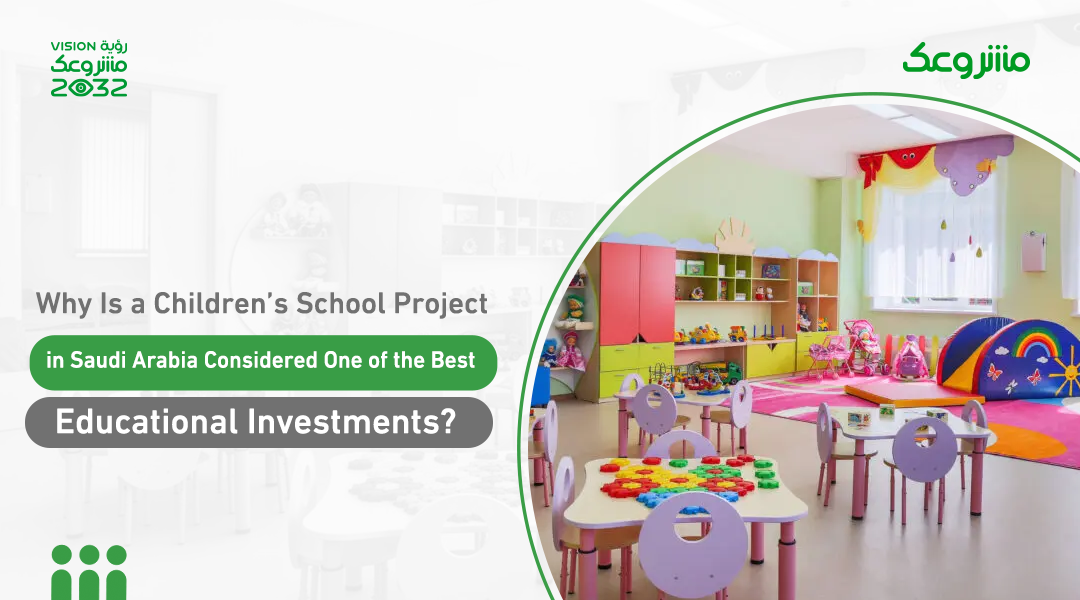
A Children’s School Project is one of the most rewarding educational investments, combining meaningful social impact with strong financial potential. The early childhood education sector continues to experience steady growth, driven by increasing parental awareness of the importance of developing children’s skills during their formative years. As demand rises for educational institutions that offer a safe learning environment and modern academic programs, attractive opportunities have emerged for investors and entrepreneurs seeking to enter this promising market.
However, the success of a Children’s School Project goes beyond providing a well-equipped building and modern facilities. It requires careful planning that begins with conducting thorough market research, identifying the target audience, selecting the ideal location, and developing an effective operational and marketing strategy to ensure the school’s long-term sustainability and competitive advantage. In this article, we explore the key elements of establishing a successful children’s school, along with the critical factors that contribute to achieving sustainable growth and long-term success.
A children’s school project is an educational venture that aims to provide educational and developmental services for children in their early learning stages by creating a safe and stimulating environment that helps them acquire basic knowledge and develop their academic, social, and creative skills. The project relies on implementing age-appropriate educational curricula, in addition to providing interactive, sports, and artistic activities that contribute to building children’s personalities and enhancing their abilities.
The project requires preparing an educational facility that complies with regulatory requirements, providing qualified educational and administrative staff, and equipping classrooms and necessary facilities to ensure the delivery of a high-quality educational experience. With the increasing interest of families in obtaining distinguished education for their children, a children’s school project has become one of the promising ventures with strong growth potential and sustainable returns when planned and implemented based on a comprehensive feasibility study
Please read here: Kindergarten Project: A Sustainable Investment Combining Financial Viability and Social Value
Yes, establishing a children’s school project (early childhood education) is considered a strategic investment opportunity with rewarding returns, driven by the growing awareness of the importance of early educational foundations and the increasing demand for safe, stimulating, and advanced learning environments.
The strength and growth potential of this sector are clearly reflected in global market indicators, as the early childhood education market size reached approximately USD 308.26 billion in 2025 and is expected to grow to USD 337.4 billion in 2026, representing a compound annual growth rate (CAGR) of 9.5%. Studies also anticipate the continuation of this upward trend, with the total market size projected to reach USD 482.07 billion by 2030, achieving a CAGR of 9.3% during this period.
Steps to Establish a Children’s School Project
Costs of a Children’s School Project
The cost of establishing a children’s school project varies depending on several factors, including the project’s location, the size of the school, its student capacity, and the level of facilities and educational services provided. The main cost items include:
Essential Equipment Required for a Children’s School Project
Read here: Steps to establish a kids’ play center project from idea to profit
How to Choose the Right Location for a Children’s School Project
Read here: Practical Steps for Establishing a Children’s Nursery Project
Success Factors for a Children’s School Project
How to Increase the Profitability of a Children’s School Project
Read Here: Everything You Need to Know About SWOT Analysis and How It Is Applied
The idea of establishing a children’s school project emerged after conducting a clear market needs assessment, particularly with the urban expansion in the Kingdom and the growing demand for schools that provide high-quality education and a safe environment for children.
Despite recognizing the strong investment opportunity, I faced several challenges, most notably the lack of precise planning, difficulty in determining the appropriate capacity, developing the administrative structure, estimating operating costs, and setting tuition fees that achieve a balance between competitiveness and profitability. In addition, there were challenges related to attracting qualified educational staff and developing an effective marketing plan to reach parents.
At that point, I sought the assistance of the experts at Mashroo3k Consulting Company, who prepared a comprehensive feasibility study covering the marketing, technical, financial, and administrative aspects of the project. They supported me in analyzing the market, identifying the target segment, developing the operational structure, organizing administrative procedures, and preparing an accurate financial plan and a marketing strategy suitable for the nature of the project.
They also helped me overcome administrative challenges related to task distribution, preparing operational regulations, and organizing workflow within the school, which positively reflected on management efficiency and performance quality from the beginning of operations.
The support did not stop there; the company also prepared the required financing file, which contributed to obtaining funding from the Social Development Bank. Thanks to this comprehensive support, the school was launched according to a well-planned strategy, enhancing its ability to attract students and improving its efficiency in delivering educational services and achieving better operational results.
Please read here: Best Projects in Saudi Arabia: Your Guide to Investment Opportunities Aligned with Vision 2030
The success of a children’s school project can be enhanced by integrating complementary services and supporting businesses that improve the quality of education while creating additional revenue streams. These include a school cafeteria offering healthy meals, school transportation services to ensure safe and convenient student travel, and a school bookstore supplying educational materials and learning resources.
Schools can also establish specialized centers for language learning, coding, robotics, arts, and sports activities to enrich students’ skills both inside and outside the classroom. Additionally, offering extended care programs after school hours or creating a learning difficulties and speech therapy center for students requiring specialized educational support can significantly increase the school’s value proposition and attract more parents.
Opening a school requires conducting a comprehensive feasibility study, selecting a suitable location, obtaining the necessary licenses and approvals, equipping the facility with classrooms and educational amenities, and recruiting qualified educational and administrative staff. The project also requires sufficient capital and a well-structured operational and marketing plan to attract students and ensure the school’s long-term sustainability.
The requirements for establishing a school vary depending on the country and the regulations governing the education sector. However, the key requirements generally include obtaining all necessary licenses and official approvals, selecting a building that complies with safety and security standards, providing appropriate classrooms and educational facilities, hiring qualified educational and administrative personnel, complying with approved educational regulations and standards, and equipping the school with the necessary educational resources and learning tools to ensure a safe, high-quality learning environment.
The school consists of a range of essential facilities that ensure the educational process operates efficiently. These include equipped classrooms, the school administration, teachers’ rooms, a library, educational laboratories, activity halls, playgrounds and outdoor areas, restrooms, a first-aid room, and a school cafeteria.
In addition, the school includes security and safety systems, storage areas for supplies, and parking facilities, providing a safe, integrated educational environment for students and staff.
The steps for establishing the school begin with preparing a feasibility study and identifying educational requirements, followed by selecting a suitable location and purchasing the land. This is then followed by preparing engineering designs and obtaining the necessary licenses.
After that, construction works are carried out, and classrooms and essential facilities are equipped, such as administrative offices, libraries, laboratories, playgrounds, and restrooms, along with the installation of security and safety systems.
In the final stage, the school is furnished, educational resources are provided, educational and administrative staff are recruited, and operational tests are conducted before welcoming students.
We conclude that, in light of the continuous growth witnessed in the education sector, a children’s school project represents a promising investment opportunity that combines achieving economic returns with contributing to the preparation of future generations.
However, achieving a successful and sustainable project requires relying on professional planning and a comprehensive study of all technical, financial, and marketing aspects to ensure well-informed investment decisions and minimize potential risks.
If you aspire to implement a competitive educational project capable of achieving its objectives, preparing a comprehensive feasibility study is the first step toward transforming your idea into a successful project on the ground.

To contact us and request a feasibility study for a children’s school project.
The kebab restaurant project is one of the food-service ventures that combines strong demand for grilled meals with the opportunity to target a diverse customer base, including individuals, families, and lovers of traditional Middle Eastern cuisine. With growing competition in the restaurant sector, however, the project’s success is no longer determined by food taste alone. […]
Read moreA children’s toy store project is not limited to selling toys; it is built on understanding what attracts children and what families look for when choosing products that combine entertainment and educational value. With the wide variety of educational toys, skill-development games, recreational toys, and gifts available, the store has opportunities to meet the needs […]
Read moreA residential complex project is no longer simply an investment in a collection of real estate units. It has evolved into an integrated development model that combines comfortable living, diverse services, and long-term investment value. As cities expand and residents’ needs evolve, demand is growing for residential complexes that offer a comprehensive environment suited to […]
Read moreThe veterinary clinic project comes at a time when animal care is no longer limited to treating illnesses or injuries, but has expanded to include health monitoring, vaccinations, routine checkups, and care for both pets and livestock. However, many animal owners face challenges in accessing specialized veterinary services that combine prompt response, high-quality care, and […]
Read more
خصم 25% على خدمات مشروعك استفد من العرض الآن، فالفرصة متاحة لفترة محدودة فقط
سجّل بياناتك واحصل على خصم 25% الآن


