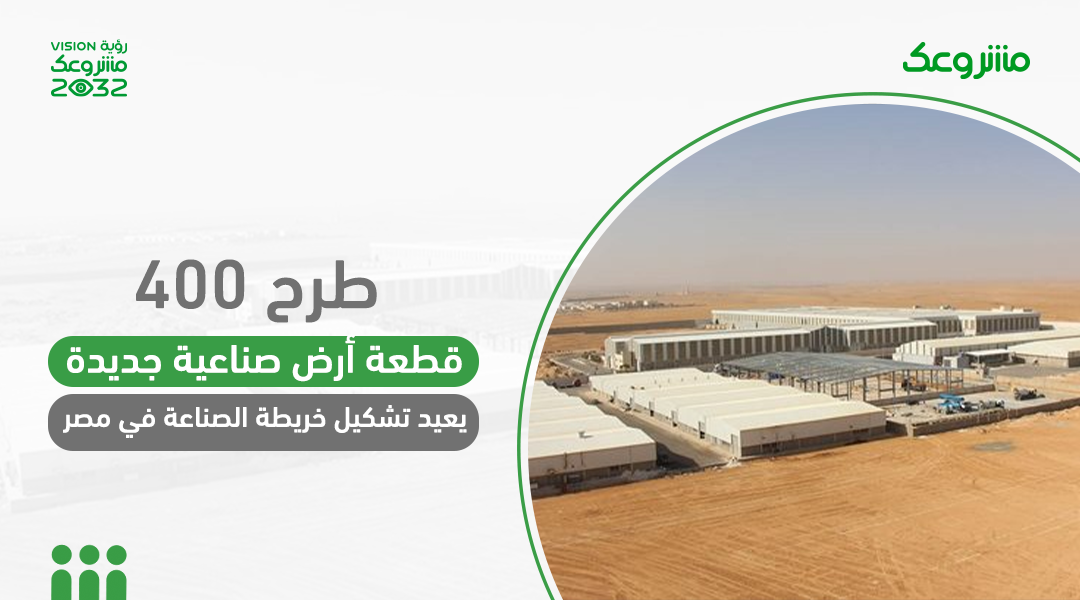
Industry in Egypt is one of the most prominent drivers of comprehensive economic growth and a fundamental pillar of the sustainable development path pursued by the state in the long term. Industry is no longer merely a productive sector contributing to GDP; it has become a crucial element in shaping the national economy and defining its future direction in the coming phase.
In this context, the Egyptian state adopts a clear strategic approach aimed at strengthening local production, localizing key and transformational industries, and continuously working to reduce reliance on imports and limit the depletion of foreign currency reserves. This is achieved through the establishment of an integrated framework of incentive policies and legislative measures that create an attractive and conducive environment for industrial investment in all its forms and directions.
In line with this ambitious vision on the ground, the recent announcement made by the Industrial Development Authority represents a real qualitative shift in supporting and developing industrial investment. Four hundred fully serviced industrial land plots have been made available through the Egypt Industrial Digital Platform, which in itself reflects transparency in dealing with investors.
These plots are distributed across a wide range of governorates throughout the country, leading to a more balanced geographical distribution of industrial activity and achieving equitable regional development, which has always been a key objective in the state’s development plans. It is also worth noting that this offering opens broad and promising opportunities for investors to establish diverse and integrated production projects that strengthen the national industrial landscape.
However, the true value of this offering is not limited to its scale or geographical distribution. It extends to deeper and more strategic dimensions, represented in directing targeted industrial activities toward specific sectors that serve local market needs and address existing gaps, while also strengthening and stabilizing supply chains in the face of rapid global economic fluctuations. This reinforces industrial integration and reduces structural gaps in the national production system.
Accordingly, this offering becomes a genuine expression of a serious national will that places industry at the forefront of the next phase’s priorities.
The new industrial land offering by the Industrial Development Authority—which includes 400 serviced industrial plots with a total area of approximately 900,000 square meters, distributed across 24 industrial zones in 15 governorates during the period from June 3 to June 11—represents a strategic step to expand the industrial investment base and stimulate the establishment of diverse production projects across the country.
The true value of this initiative is reflected in the variety of available plot sizes, ranging from 300 square meters to 22,000 square meters. This opens the door for a wide spectrum of investors, from small and medium-sized enterprises to large-scale investors, allowing each category to participate in the national industrial ecosystem according to its capabilities and ambitions.
The impact of this initiative is further enhanced by the fact that land allocation is directed toward predefined industrial activities targeting highly important sectors such as food industries, engineering industries, pharmaceuticals, and construction materials. This well-planned orientation serves the needs of the Egyptian market and strengthens productive integration between different industries, ultimately forming a robust industrial system capable of competing at both regional and international levels.
Please read here: The Egyptian Industry Support Initiative… a cornerstone for transitioning toward a competitive national economy.
The distribution map of the 400 industrial land plots across 24 industrial zones in 15 governorates reveals an integrated development vision that goes beyond simply providing land. It aims to reshape the national industrial landscape on more balanced and sustainable foundations.
This map extends across diverse governorates covering the Nile Delta, Upper Egypt, Sinai, and the coastal regions—from Cairo, Beheira, Gharbia, and Kafr El-Sheikh in the north, passing through Ismailia and Port Said in the east, reaching Fayoum, Minya, Assiut, Sohag, Qena, Luxor, and Aswan in the south, in addition to North Sinai and Matrouh on the outskirts.
This wide geographical spread reflects a genuine commitment to reducing traditional industrial concentration and distributing its benefits across all regions of the country.
This balanced map has a direct positive impact on less industrially fortunate governorates, as it provides them with real investment opportunities within their own regions. This contributes to creating new job opportunities, stimulating local economic growth, and reducing internal migration toward major cities, which has increasingly placed pressure on urban infrastructure.
In addition, this well-planned geographical distribution directly supports supply and production chains by enabling the establishment of feeder industries closer to raw material sources or target markets. This reduces transportation costs, improves operational efficiency, and ultimately enhances the competitiveness of Egyptian products both locally and internationally.
This is especially significant because the offering is linked to assigning specific industrial activities for each area, ensuring that investment is directed toward the sectors most needed in each governorate. This strengthens industrial planning, avoids randomness, and promotes a more disciplined and effective expansion model.
Please read here: Your Farm in Egypt” initiative… Invest in what never loses value… invest in land
Food industries occupy a prominent and central position among the targeted industrial activities in the new offering by the Industrial Development Authority, due to their direct strategic importance to the daily life of Egyptian citizens and the stability of the national economy.
Through allocating serviced industrial land for this sector, the state aims to strengthen local production capacity of essential food commodities and meet the growing demand of the Egyptian market in a more self-sufficient way, with less reliance on imports.
Expanding this sector serves as a vital pillar for enhancing national food security, as it contributes to reducing the food import bill that consumes a significant portion of foreign currency reserves. It also creates real added value by transforming local raw materials and agricultural products into processed food goods ready for consumption or export.
This, in turn, integrates the agricultural and industrial production chains, maximizing economic returns at both the local and export levels.
Engineering industries are one of the pillars of the national industrial system and among the most influential sectors in building long-term productive economic capabilities. Therefore, their inclusion among the targeted industrial activities in the new offering by the Industrial Development Authority clearly reflects a deep understanding of their pivotal role in achieving comprehensive industrial integration.
These industries extend to the manufacturing of equipment, machinery, and various spare parts that represent the essential operational backbone of most other production sectors. This makes them a highly supportive industry, where any development or improvement is directly reflected across the entire industrial system.
Investing in this sector becomes even more important when considering that reliance on imported industrial components places a growing financial burden on local factories and limits their competitiveness. Therefore, localizing the production of machinery and spare parts within Egypt effectively frees manufacturers from import dependency and enables them to rely on locally produced components with lower costs and more secure supply chains.
This, in turn, directly contributes to reducing production costs, improving operational efficiency, and enhancing the competitiveness of Egyptian industry at the local, regional, and international levels.
Chemical industries are considered a fundamental supporting pillar and a vital lifeline of the national industrial system, which has made them one of the targeted sectors in the new offering by the Industrial Development Authority.
Their products vary widely and include plastics, detergents, fertilizers, and a broad range of raw materials and intermediate chemicals that supply essential sectors such as food, textiles, construction, agriculture, and pharmaceuticals. This sector has a multiplier effect that goes beyond its direct outputs, creating positive transformations across the interconnected production chains.
Supporting this sector aims to address a major structural gap in the Egyptian economy, which is the heavy reliance on imported intermediate materials. Localizing their production transforms import spending into real productive investment, strengthens integration between sectors, and establishes a more resilient production base capable of withstanding global market fluctuations.
It focuses on localizing the production of medicines and medical preparations within Egypt, contributing to reducing reliance on imports in this sensitive and strategic sector. This also supports health security and enhances Egypt’s capacity to expand pharmaceutical exports in the future.
It includes cement, steel, ceramics, and finishing materials. These are essential industries that support urban development projects. Expanding this sector helps meet the growing local demand and reduces the need to import construction materials from abroad.
This activity is considered one of Egypt’s important traditional industries. The new industrial offering aims to revitalize it and increase its productivity. This helps strengthen local manufacturing of garments and textiles and enhances export capacity.
It focuses on producing components used in larger industries, such as spare parts and production inputs. Supporting this activity aims to reduce reliance on imported industrial inputs and ensure the stability of supply chains.
In general, this approach is based on reducing imports, deepening local manufacturing, and increasing value-added within the Egyptian economy. It also contributes to enhancing the competitiveness of industry in Egypt and strengthening its ability to expand and export in global markets.
In support of industry in Egypt and to facilitate investment procedures, applications for new industrial land plots are submitted entirely online through the Egypt Industrial Digital Platform. This ensures transparency, faster procedures, and reduced paper-based transactions.
The application process follows a set of basic requirements that investors must prepare and upload during submission.
The application process begins by accessing the official platform dedicated to industrial land offerings, then creating an investor account or logging in if an account already exists, in order to browse the available opportunities and select the appropriate plot for the intended industrial activity.
The investor browses the current offering, which includes 400 industrial land plots, and selects the location, size, and suitable industrial activity for their project, in line with their investment plan and production requirements.
Read here: How to choose the best project in Egypt.
Preparing and uploading the required documents.
To complete the application, a set of essential documents must be prepared and uploaded electronically, including:
Reviewing data and completing the application electronically
After uploading the documents, all entered data is reviewed and verified for accuracy, and then the application is officially submitted through the platform without the need for any paper-based procedures or physical attendance.
Paying application fees (if applicable)
The application review fee or reservation seriousness fee is paid electronically according to the instructions specified in the terms and conditions booklet, benefiting from the incentives and facilitation announced in the new offering.
Entering the electronic evaluation stage
After submission, the application undergoes a precise electronic evaluation system based on defined criteria for selecting serious investors, ensuring fairness and transparency without direct human intervention.
Announcement of results and completion of allocation procedures
In the final stage, the allocation results are announced (on June 29), and successful investors are notified to complete the legal procedures, receive the land, and begin actual project implementation.
Government incentives and their impact on attracting industrial investment in Egypt
As part of supporting industry in Egypt and stimulating industrial investment, the new offering of 400 serviced industrial land plots has been accompanied by a set of government incentives and facilitations aimed at creating an attractive investment environment and encouraging both local and foreign investors to enter the industrial sector.
How the new offering achieves a qualitative leap for industry in Egypt
The new offering of 400 serviced industrial land plots represents a pivotal step that brings a qualitative transformation to industry in Egypt, as it goes beyond simply providing land for investment and instead reshapes industrial planning and investment management in a more efficient and professional manner.
If you are considering taking advantage of the new offering of 400 industrial land plots, now is the right time to take a real step toward investing in industry in Egypt—especially given the diverse opportunities and strong incentives provided to serious investors.
This is where Mashroo3k Consulting comes in as a strategic partner that helps turn this opportunity into a successful project on the ground. It provides a certified technical, economic, and financial feasibility study that covers all aspects of the project with accuracy and professionalism.
Mashroo3k prepares a comprehensive feasibility study that includes analyzing the investment idea, determining expected costs, estimating revenues and profits, studying the market and competitors, and evaluating the technical aspects of the project. This ensures that you, as an investor, have a clear vision before making any decision.
What distinguishes Mashroo3k Consulting from others is its speed of execution, as feasibility studies are prepared and delivered in the shortest possible time without compromising quality or accuracy. This helps investors apply within the specified deadlines for land offerings and seize available opportunities without delay.
The company also provides comprehensive advisory support that helps you choose the appropriate industrial activity, understand the requirements of the offering, and increase your chances of acceptance within the electronic evaluation system, thereby enhancing the likelihood of project success from the very beginning.
Therefore, if you are serious about entering the world of industrial investment, contacting Mashroo3k Consulting is your first step toward a well-planned investment based on scientific foundations, aligned with developments in Egypt’s industrial sector and supporting your chances of success in the market.
We can conclude that the new offering of 400 industrial land plots through the Egypt Industrial Digital Platform reflects a clear direction toward reshaping the industrial structure in Egypt on more efficient, transparent, and sustainable foundations. It goes beyond simply providing new investment opportunities, extending to supporting industrial localization, deepening local manufacturing, and reducing import gaps, which contributes to strengthening the national economy.
With the diversity of land sizes, the wide geographical distribution, and the incentives offered to investors, in addition to the adoption of a fair and transparent electronic evaluation system, this initiative represents an important step toward a more competitive and attractive industrial environment. Accordingly, this initiative serves as a new pillar that supports industrial growth in Egypt and reinforces its position as one of the key drivers of development in the coming phase.

For inquiries regarding the offering of industrial land in Egypt…
The kebab restaurant project is one of the food-service ventures that combines strong demand for grilled meals with the opportunity to target a diverse customer base, including individuals, families, and lovers of traditional Middle Eastern cuisine. With growing competition in the restaurant sector, however, the project’s success is no longer determined by food taste alone. […]
Read moreA children’s toy store project is not limited to selling toys; it is built on understanding what attracts children and what families look for when choosing products that combine entertainment and educational value. With the wide variety of educational toys, skill-development games, recreational toys, and gifts available, the store has opportunities to meet the needs […]
Read moreA residential complex project is no longer simply an investment in a collection of real estate units. It has evolved into an integrated development model that combines comfortable living, diverse services, and long-term investment value. As cities expand and residents’ needs evolve, demand is growing for residential complexes that offer a comprehensive environment suited to […]
Read moreThe veterinary clinic project comes at a time when animal care is no longer limited to treating illnesses or injuries, but has expanded to include health monitoring, vaccinations, routine checkups, and care for both pets and livestock. However, many animal owners face challenges in accessing specialized veterinary services that combine prompt response, high-quality care, and […]
Read more
خصم 25% على خدمات مشروعك استفد من العرض الآن، فالفرصة متاحة لفترة محدودة فقط
سجّل بياناتك واحصل على خصم 25% الآن


