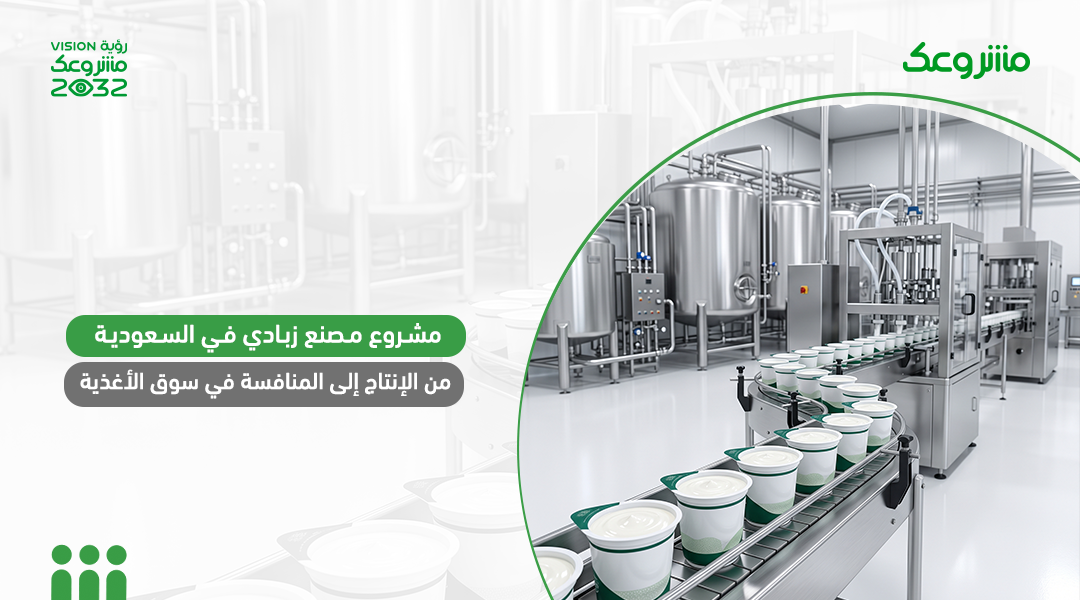
A yogurt factory project is a food manufacturing venture that combines consistent demand with opportunities for product diversification, making it an attractive option for investors seeking to enter the food manufacturing sector. Yogurt is a product that features regularly in consumers’ daily diets, with a wide variety of options available to suit different tastes and needs. This creates opportunities for the factory to develop a competitive product portfolio.
As the dairy industry continues to evolve, the success of a yogurt factory has become closely linked to the quality of raw materials, the efficiency of production lines, the precision of manufacturing and packaging processes, and compliance with food safety standards. Identifying the target market and understanding consumer behavior are also essential factors in determining suitable products and distribution channels.
Therefore, conducting a comprehensive assessment of a yogurt factory project helps identify its operational requirements, understand market opportunities, and anticipate potential challenges, giving investors a clearer vision for taking practical steps toward establishing a competitive and scalable busine
Read More: Future-Proof Projects in Arab Countries: Key Investment Opportunities
A yogurt factory project is a food manufacturing venture specialized in producing yogurt from fresh milk through a series of stages that include receiving and inspecting the milk, heat treatment, adding suitable starter cultures, and allowing the mixture to ferment until it reaches the desired texture and taste. The yogurt is then filled and packaged in dedicated containers and stored at appropriate temperatures.
The factory can produce a variety of yogurt products, including plain yogurt and fruit-flavored yogurt, as well as different flavors designed to meet consumer needs. This also creates opportunities to distribute the products through supermarkets, retail stores, restaurants, and hotels.
Read More: Dairy and Cheese Project in Saudi Arabia: How to Build a Strong Brand in the Food Industry
Yes, a yogurt factory project is considered one of the promising investment ventures in the food manufacturing sector. According to the latest statistics, the global yogurt market was valued at USD 3.13 billion in 2025 and is projected to grow from USD 3.38 billion in 2026 to USD 6.26 billion by 2034, registering a compound annual growth rate (CAGR) of 8.00% during the forecast period.
Read Here: Best Projects in Saudi Arabia: Your Guide to Investment Opportunities Aligned with Vision 2030.
Read here: Why is market research considered an essential tool for business success?
Read here: How to start investing in successful small projects in Saudi Arabia?
The cost of establishing a yogurt factory project varies depending on the factory’s size, targeted production capacity, level of facilities, and technologies used. The main cost items include:
Read here: How to find profitable business ideas that match your budget?
Production costs may be affected by fluctuations in the prices of milk, sugar, manufacturing ingredients, and packaging materials. This challenge can be addressed by diversifying suppliers, establishing stable supply agreements, and regularly reviewing operating costs.
Yogurt is a sensitive product that requires precision during manufacturing and storage. This can be managed by implementing strict quality control procedures and testing raw materials and finished products throughout the different stages of production.
Yogurt requires appropriate refrigeration conditions during storage and transportation. This challenge can be addressed by equipping the factory with suitable refrigeration facilities, using properly refrigerated transport vehicles, and continuously monitoring temperatures.
Poor storage or inefficient distribution may lead to product spoilage. This can be minimized by implementing an effective inventory management system and ensuring rapid distribution based on production and expiration dates.
Equipment breakdowns can disrupt production and deliveries. The associated risks can be reduced through regular maintenance, maintaining essential spare parts, and relying on specialized technicians.
Variations in texture or taste between production batches may affect customer confidence. This can be addressed by standardizing production procedures and carefully monitoring ingredients, temperatures, and fermentation times.
Electricity, water, and refrigeration consumption may place pressure on operating expenses. This can be reduced by using energy-efficient equipment, monitoring consumption, and carrying out regular maintenance.
With the continued growth of the food manufacturing sector and rising demand for dairy products in Saudi Arabia, I decided to invest in a yogurt manufacturing factory, driven by my belief in the promising opportunities available in a market characterized by stable demand and diverse consumer needs.
As I moved from the planning stage to operations, I encountered several challenges, including difficulties in accurately determining the project’s investment requirements and navigating the financing process, along with certain administrative challenges within the factory, such as overlapping authorities, weak coordination between departments, and the absence of clear mechanisms for monitoring performance and measuring results.
To address these challenges, I turned to Mashroo3k Consulting, where the team helped me prepare a comprehensive feasibility study covering the project’s technical, operational, and financial aspects. They also assisted me in preparing a complete financing package that met the requirements of financing institutions, including the Saudi Industrial Development Fund (SIDF).
In addition, the team worked on developing the factory’s administrative structure, clarifying authorities and responsibilities, organizing tasks, and establishing more effective mechanisms for monitoring performance and improving workflow. Once the study was completed and the financing and operational requirements were clearly defined, I was able to secure the necessary financing to expand operations and upgrade the production lines.
Alongside addressing the administrative challenges, these efforts helped improve operational efficiency and strengthen the factory’s ability to compete, enabling the yogurt factory project to continue its growth with greater stability and sustainability.
My experience with Mashroo3k Consulting confirmed to me that thoughtful planning, a comprehensive feasibility study, and well-structured management are essential factors in transforming an investment idea into a successful and scalable business.
Read here: How do SME financing programs drive the economic transformation journey in the Kingdom?
Yes, a yogurt factory project must meet the health and regulatory requirements and obtain the necessary licenses for food establishments, as it involves the manufacturing of dairy products. These requirements include complying with food safety standards, preparing the factory in accordance with approved health regulations, obtaining the necessary approvals from the relevant authorities, and implementing quality and food safety control systems before the products are placed on the market.
The cost of a yogurt-making machine varies depending on its type, production capacity, level of automation, and included equipment. Therefore, there is no single standard price for all machines. Small-scale equipment may be suitable for projects with limited production, while factories typically require integrated production lines that include pasteurization, homogenization, fermentation, filling, and cooling. The cost is also affected by the machine brand, manufacturing materials, supplier, and installation and maintenance services.
Yogurt fermentation typically takes around 4 to 8 hours. However, the duration may vary depending on the type of bacterial starter cultures, fermentation temperature, milk composition, and desired texture. Monitoring acidity and texture is among the key indicators used to determine when fermentation is complete. The yogurt is then transferred to refrigeration to slow bacterial activity and preserve the product’s characteristics.
It is not possible to say that laban rayeb is universally better than yogurt, or vice versa, as the choice depends on the nature of the product and the intended use. Both are fermented dairy products, but they differ in texture, taste, production methods, and nutritional characteristics. Yogurt is characterized by a thicker texture and a wide variety of types and flavors, while laban rayeb has a liquid consistency and a tangy taste and is widely consumed as a beverage or used in certain recipes.
A yogurt factory project can be developed into a competitive food manufacturing business, particularly given the potential to diversify products and reach different consumer segments. However, success depends not only on production, but also on product quality, operational efficiency, and the ability to build a trusted brand that reaches customers at the right time.
Through proper planning, selecting suitable technologies, and maintaining high standards of quality and food safety, investors can establish a strong foundation for a business with the potential for growth and expansion. Therefore, thoroughly assessing all aspects of the project before launch provides investors with a clearer understanding of the market, requirements, and opportunities, helping them make well-informed decisions that strengthen the yogurt factory’s ability to compete and remain sustainable in a rapidly evolving market.

To contact us and request a feasibility study for a Yogurt Factory Project.
The kebab restaurant project is one of the food-service ventures that combines strong demand for grilled meals with the opportunity to target a diverse customer base, including individuals, families, and lovers of traditional Middle Eastern cuisine. With growing competition in the restaurant sector, however, the project’s success is no longer determined by food taste alone. […]
Read moreA children’s toy store project is not limited to selling toys; it is built on understanding what attracts children and what families look for when choosing products that combine entertainment and educational value. With the wide variety of educational toys, skill-development games, recreational toys, and gifts available, the store has opportunities to meet the needs […]
Read moreA residential complex project is no longer simply an investment in a collection of real estate units. It has evolved into an integrated development model that combines comfortable living, diverse services, and long-term investment value. As cities expand and residents’ needs evolve, demand is growing for residential complexes that offer a comprehensive environment suited to […]
Read moreThe veterinary clinic project comes at a time when animal care is no longer limited to treating illnesses or injuries, but has expanded to include health monitoring, vaccinations, routine checkups, and care for both pets and livestock. However, many animal owners face challenges in accessing specialized veterinary services that combine prompt response, high-quality care, and […]
Read more
خصم 25% على خدمات مشروعك استفد من العرض الآن، فالفرصة متاحة لفترة محدودة فقط
سجّل بياناتك واحصل على خصم 25% الآن


