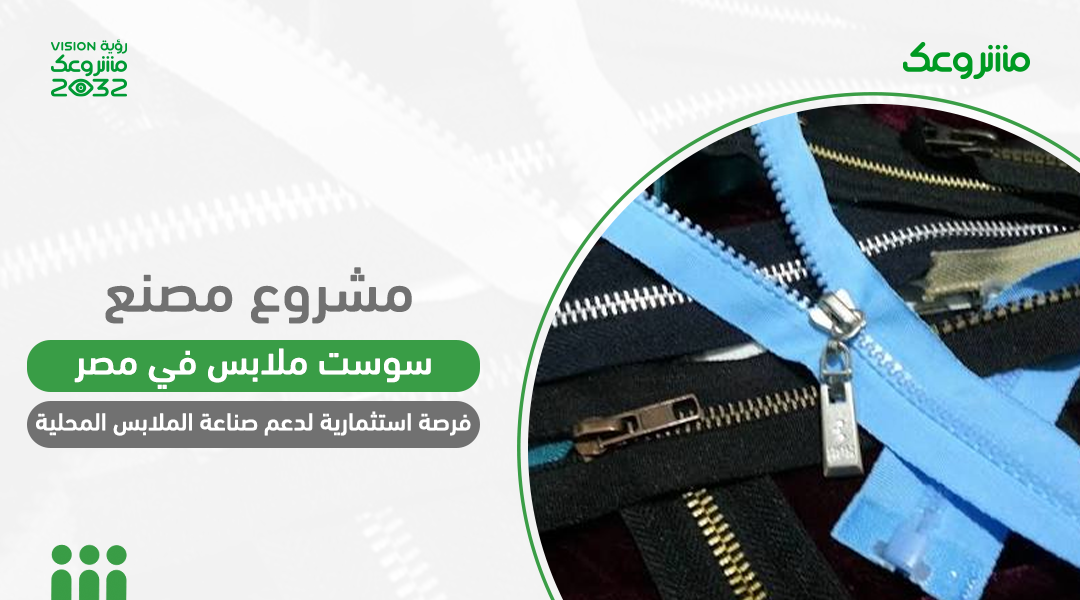
Clothing Elastic Factory Project in Egypt: An Investment Opportunity to Support the Local Garment Industry - Mashroo3k
Published13 Oct 2026 0 comments 164 Observation
Clothing Elastic Factory Project in Egypt: An Investment Opportunity to Support the Local Garment Industry

A clothing zipper factory project represents a promising industrial investment opportunity, as zippers are used in manufacturing a wide range of products, including clothing, bags, footwear, and home furnishings. As the needs of garment factories and tailoring workshops continue to grow, the importance of this product increases, creating investment opportunities in supporting industries within the textile sector.
However, the success of the project involves more than simply purchasing machinery and starting production. It requires thorough market research, selecting suitable raw materials, identifying the most in-demand zipper types and sizes, and developing an effective marketing and sales strategy.
Estimating the required capital, operating costs, and expected production capacity also helps investors evaluate the project’s feasibility and make informed investment decisions.
In this article, we explore the key requirements for establishing a clothing zipper factory, from equipment and raw materials to projected costs and profits, while highlighting the most important factors contributing to the project’s success.

What Is a Clothing Zipper Factory Project?

A clothing zipper factory project is an industrial business specializing in the production of various types of metal and plastic zippers used in the garment industry, including trousers, jackets, and dresses, as well as bags and many other products.
The project relies on specialized machinery and production lines that enable the manufacture of zippers in different sizes, lengths, and designs, while adhering to quality standards to ensure product durability and ease of use.
The factory aims to meet the needs of garment manufacturers, tailoring workshops, and bag manufacturers by offering a diverse range of products at competitive prices and with appropriate quality standards. This helps strengthen its potential to build a stable customer base and expand its presence in the market.

Is a Clothing Zipper Factory Project Profitable?

Yes, a clothing zipper factory project can represent a promising investment opportunity in the industrial sector, supported by the continued growth of the global zipper market. Recent statistics indicate that the global zipper market reached USD 20.08 billion in 2026. With continued market expansion, its value is expected to reach USD 39.17 billion by 2035, representing a compound annual growth rate (CAGR) of 7.71% over the period from 2026 to 2035.

Advantages of Investing in a Clothing Zipper Factory Project
Correct the market growth rateAdd the investment advantages

  • High Product Demand: Many industries rely on clothing zippers, supporting consistent demand across markets.
  • Versatile Applications: Zippers are used in manufacturing clothing, bags, footwear, home furnishings, and many other products.
  • Product Variety: The factory can produce zippers in different sizes, designs, and materials to meet diverse customer needs.
  • A Broad Customer Base: The factory can serve ready-made garment manufacturers, tailoring workshops, bag and footwear manufacturers, and sewing supplies retailers.
  • Future Expansion Potential: Production capacity can be increased, and new machinery and production lines can be added as demand and sales grow.
  • Diverse Sales Channels: Products can be supplied directly to factories and workshops or sold through traders and distributors to reach a broader customer base.
  • Growth and Expansion Opportunities: Improving product quality, developing packaging methods, and building a strong distribution network can enhance the factory’s competitiveness.
  • Access to New Markets: The business can expand from the local market into international markets by achieving appropriate quality standards, production capacity, and competitive pricing.

How to Start a Clothing Zipper Factory Project

  • Conduct a comprehensive feasibility study to assess investment opportunities, analyze the market and competitors, and estimate expected costs and returns.
  • Identify target customer segments, such as ready-made garment factories, tailoring workshops, and bag manufacturers.
  • Select the types of zippers the factory will produce, including metal, plastic, and nylon zippers.
  • Determine the appropriate production capacity based on expected demand and the factory’s operational capabilities.
  • Choose a suitable location in an industrial zone with access to essential utilities and transportation.
  • Determine the required factory space to accommodate machinery, storage areas, production facilities, and inspection zones in an organized layout.
  • Obtain the necessary industrial and commercial licenses and comply with all applicable legal and environmental requirements.
  • Select appropriate production lines and machinery based on the targeted zipper types and sizes.
  • Establish contracts with reliable suppliers to ensure the timely delivery of raw materials and production supplies that meet the required quality standards.
  • Implement a quality control system to ensure zipper durability, smooth opening and closing, and compliance with the required specifications.
  • Conduct trial runs of production lines and test equipment performance and product quality before commencing commercial production.
  • Set product prices in line with manufacturing costs, competitors’ prices, and customers’ purchasing power.
  • Develop a marketing plan targeting garment and bag manufacturers, as well as sewing supplies retailers, through direct visits and digital marketing.
  • Monitor financial and production performance regularly to improve efficiency and enhance the factory’s competitiveness.

What Are the Main Cost Components of a Clothing Zipper Factory Project in Egypt?

  • The cost of purchasing land or renting a factory and preparing the building.
  • The cost of production lines, machinery, and equipment required for zipper manufacturing.
  • The cost of raw materials and manufacturing supplies.
  • Licensing fees and legal procedures required to commence operations.
  • Equipment installation and trial-run costs.
  • Utility expenses, including electricity, water, and ventilation.
  • Salaries and wages for technical and administrative staff.
  • Packaging and storage costs.
  • Transportation, distribution, and marketing expenses.
  • Routine maintenance and spare parts costs.
  • Working capital to cover initial operating expenses.
  • A financial reserve to cover unexpected expenses and fluctuations in raw material prices.

What Machinery and Equipment Are Needed to Establish a Clothing Zipper Factory?

  • Machines for manufacturing and shaping metal or plastic zipper teeth according to the required specifications.
  • Machines for attaching and securing zipper teeth to textile tapes.
  • Coil zipper manufacturing machines used to produce nylon zippers.
  • Machines for installing sliders and top and bottom stops.
  • Zipper cutting machines for producing the required lengths and sizes according to customer needs.
  • Dyeing and coloring machines to produce zippers in a variety of colors that match garment designs.
  • Pressing and forming machines for securing metal components and improving the quality of the finished product.
  • Inspection and testing equipment to measure tensile strength and ensure smooth opening and closing and durable zipper teeth.
  • Packaging equipment to prepare finished zippers for storage and distribution.
  • Material handling and storage equipment, such as shelving and carts for moving raw materials and finished products within the factory.

Production Stages of a Clothing Zipper Factory Project

  • Raw Material Preparation: Inspect textile tapes, metals, and plastic materials to ensure their quality and compliance with the required specifications.
  • Textile Tape Manufacturing: Use weaving machines to produce the tapes onto which zipper teeth are attached.
  • Zipper Tooth Formation: Shape metal or plastic teeth, or prepare coil elements, according to the type of zipper being manufactured.
  • Tooth Attachment: Secure the teeth to the textile tapes using specialized equipment to ensure proper alignment and strong attachment.
  • Dyeing and Finishing: Dye and finish the tapes in the required colors to improve the products’ final appearance.
  • Slider and Stop Installation: Install the slider and top and bottom stops to ensure smooth zipper operation.
  • Zipper Cutting: Cut zippers to the required lengths and sizes according to the needs of garment and bag manufacturers.
  • Quality Testing: Conduct tests to verify tooth durability, attachment strength, and smooth slider movement.
  • Packaging: Package the finished products appropriately to protect them during storage and transportation.

10 Risks That Could Hinder the Implementation of a Clothing Zipper Factory Project

  • High Factory Setup Costs: Establishing the factory may require a substantial initial investment, particularly due to the high cost of machinery and equipment.
  • Fluctuating Raw Material Prices: Price fluctuations can increase production costs and affect profit margins and selling prices.
  • Poor Raw Material Quality: Low-quality materials may result in zippers that fail to meet specifications, damaging the factory’s reputation and customer trust.
  • Machinery Breakdowns: Equipment failures can interrupt production, delay order deliveries, and increase maintenance costs.
  • Intense Market Competition: Attracting customers may become more difficult, especially when competing with factories offering lower-priced products.
  • Weak Demand or Changing Customer Needs: These factors may reduce sales and lead to excess inventory.
  • Difficulty Reaching Target Customers: Limited access to potential buyers may prevent the factory from building a stable sales and distribution network.
  • Shortage of Skilled Technical Workers: A lack of qualified personnel may affect operational efficiency and product quality while increasing training requirements.
  • Rising Operating Costs: Higher electricity, maintenance, and transportation expenses may increase unit costs and reduce profitability.
  • Failure to Meet Licensing and Regulatory Requirements: Noncompliance may delay the start of operations, result in fines, or disrupt business activities.

Clarify the production scope and equipmentSeparate fixed and operating costs

Read here: Risk management in projects: What is it, what is its importance, and how can it be implemented?

SWOT Analysis of a Clothing Zipper Factory Project

Strengths

  • Consistent demand for zippers as essential components in the garment and textile industries.
  • Product diversity and the ability to manufacture zippers in various sizes, designs, and materials.
  • A wide range of target industries, including clothing, bags, footwear, and home furnishings.
  • The potential to establish long-term supply relationships with factories, workshops, and sewing supplies retailers.
  • The ability to expand production capacity and introduce new products as demand grows.

Weaknesses

  • High initial investment required to purchase and install production machinery.
  • The need for skilled technical workers with experience in operating equipment and monitoring manufacturing quality.
  • Dependence on a reliable supply of raw materials with consistent specifications to maintain product quality.
  • The need for regular machinery maintenance to prevent production line downtime.
  • Difficulty building a strong customer base during the initial stages of operation while competing with established manufacturers and suppliers.

Opportunities

  • Growth in the garment, bag, and footwear industries supports demand for manufacturing supplies.
  • The potential to replace certain imported products with locally manufactured alternatives.
  • Opportunities to expand supply operations to factories, workshops, and garment accessories retailers.
  • Leveraging digital marketing to reach new customers in domestic and international markets.
  • The ability to develop new zipper types and sizes to meet the needs of different industries.

Threats

  • Price competition from local manufacturers and imported products.
  • Fluctuations in raw material, energy, and transportation costs that affect production expenses.
  • Market price changes that make it difficult to maintain stable profit margins.
  • Unexpected machinery breakdowns that may interrupt production and delay deliveries.
  • Changes in customer preferences or the emergence of alternative products that may affect demand for certain zipper types.

Read here: Everything You Need to Know About SWOT Analysis and How to Apply It

My Experience with a Clothing Zipper Factory Project

As my customer base expanded and demand for my clothing zipper factory’s products from garment and bag manufacturers increased, I began to notice that demand was exceeding my current production and supply capacity. Expansion became necessary to retain existing customers and capitalize on the opportunities available in the Saudi market.
However, moving into a new phase was not easy. I faced limited production capacity, the need to diversify zipper types and sizes, and the challenge of improving quality standards. In addition, rising operating costs and intense competition from products already available in the market made the situation more challenging.
As these challenges continued, I realized that unplanned expansion could increase the project’s burdens rather than resolve them. Therefore, I decided to seek the assistance of Mashroo3k Consulting to develop a clear, well-researched expansion plan.

The team of experts at Mashroo3k Consulting worked on preparing Expansion Study A comprehensive study was conducted to assess the factory’s growth opportunities and identify the requirements for its next phase of development. The study focused on increasing production capacity to meet growing demand and upgrading production lines to accommodate a wider variety of zipper types and sizes, while improving operational efficiency and optimizing manufacturing costs.

The plan also included expanding the customer base to reach garment, bag, footwear, and home furnishing manufacturers, while enhancing marketing and distribution channels to support sales growth and increase market share.

Thanks to this structured approach, the factory became better equipped to meet customer needs, improve production efficiency, diversify its product range, and explore new growth opportunities. Expansion thus became a well-planned step toward building a stronger and more sustainable industrial business.

Frequently Asked Questions About a Clothing Zipper Factory Project

What Types of Clothing Zippers Can Be Manufactured?

A clothing zipper factory can produce metal, plastic, and coil zippers in various sizes and colors, as well as invisible zippers used in dresses and skirts and open-end and closed-end zippers suitable for jackets, trousers, and other garments. The factory can also manufacture waterproof and heavy-duty zippers to meet the needs of outerwear, bags, and specialized products. The selection of zipper types depends on market demand, target customers, and the specifications required for each product.

What Licenses Are Required to Establish a Clothing Zipper Factory?

Establishing a clothing zipper factory generally requires an industrial license, commercial registration, a tax card, environmental approvals, and permits related to security, safety, and fire protection. Additional approvals concerning the factory location, utilities, and workforce must also be obtained in accordance with the regulations in force in the relevant country.

What Is the Appropriate Space for Establishing a Clothing Zipper Factory?

The appropriate space for a clothing zipper factory varies according to production volume, the number of machines, and the nature of the manufacturing lines. It is advisable to choose a facility large enough to accommodate production equipment, storage areas, packaging facilities, administrative offices, and internal movement in an organized layout, while allowing additional space for future expansion. Industrial zoning requirements, safety standards, ventilation, and the utilities needed for operation must also be taken into consideration.

How Do You Choose the Right Clothing Zipper Manufacturing Machines?

Clothing zipper manufacturing machines should be selected according to the targeted zipper types, production volume, required production capacity, and final product quality. Ease of operation and maintenance, spare parts availability, and after-sales service should also be considered. In addition, investors should compare machine efficiency, energy consumption, and cost against the available budget and select equipment that fits the factory’s space and future expansion plans.

Add a country-specific licensing noteMake the answers more scannable

In Conclusion: The Clothing Zipper Factory Project

This demonstrates that a clothing zipper factory project represents a promising industrial opportunity for investors seeking to enter the garment and textile manufacturing supply chain, particularly given the wide range of zipper applications and the diversity of industries that depend on them.
The project’s success ultimately depends on effective planning, accurate cost estimation, selecting suitable machinery and raw materials, and the ability to deliver products that meet customer needs while remaining competitive in the market.
Therefore, conducting a comprehensive assessment of the project’s technical, marketing, and financial aspects before implementation gives investors a clearer understanding of the potential opportunities, risks, and returns. With sound planning and effective management, a clothing zipper factory can evolve from an industrial concept into a productive business capable of building a strong customer base and achieving sustainable growth.

Contact Us to Request a Feasibility Study for a Clothing Zipper Factory Project.


Similar Articles

How to Turn a Kebab Restaurant Project into a Distinctive Brand in Egypt?

The kebab restaurant project is one of the food-service ventures that combines strong demand for grilled meals with the opportunity to target a diverse customer base, including individuals, families, and lovers of traditional Middle Eastern cuisine. With growing competition in the restaurant sector, however, the project’s success is no longer determined by food taste alone. […]

Read more

Children’s Play Center Project in Saudi Arabia: How to Create an Experience That Attracts Children and Families?

A children’s toy store project is not limited to selling toys; it is built on understanding what attracts children and what families look for when choosing products that combine entertainment and educational value. With the wide variety of educational toys, skill-development games, recreational toys, and gifts available, the store has opportunities to meet the needs […]

Read more

Residential Complex Project in Saudi Arabia: An Investment That Creates Value Beyond Residential Units

A residential complex project is no longer simply an investment in a collection of real estate units. It has evolved into an integrated development model that combines comfortable living, diverse services, and long-term investment value. As cities expand and residents’ needs evolve, demand is growing for residential complexes that offer a comprehensive environment suited to […]

Read more

Veterinary Clinic Project in Egypt: A Promising Investment Opportunity in the Animal Care Sector

The veterinary clinic project comes at a time when animal care is no longer limited to treating illnesses or injuries, but has expanded to include health monitoring, vaccinations, routine checkups, and care for both pets and livestock. However, many animal owners face challenges in accessing specialized veterinary services that combine prompt response, high-quality care, and […]

Read more

Green Friday

فرصة لا تتكرر

GREEN FRIDAY

خصم 25% على خدمات مشروعك استفد من العرض الآن، فالفرصة متاحة لفترة محدودة فقط
سجّل بياناتك واحصل على خصم 25% الآن