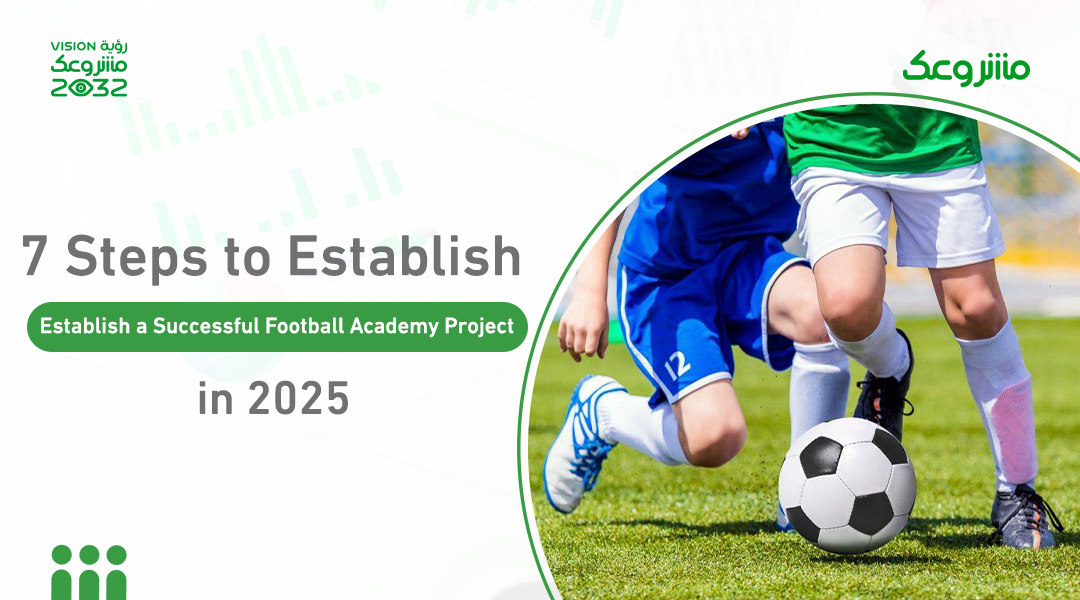
A football academy project stands out as one of the most promising investment opportunities, as it combines both athletic and developmental value. Launching a specialized academy is not limited to training young players and discovering talents—it also focuses on building balanced personalities by developing physical and mental skills and refining abilities in line with global standards.
With the growing popularity of football as the world’s most followed sport, the demand for distinguished institutions offering comprehensive, high-quality, and professional training programs continues to rise. Beyond its vital role in nurturing generations and preparing them for competition, the project also opens vast prospects for achieving attractive financial returns, especially as sports investment becomes a key pillar of economic and social development.
Therefore, conducting a detailed feasibility study and developing an integrated strategic plan are essential steps to ensure the academy’s success and long-term sustainability.
A football academy project is an ambitious educational and investment initiative aimed at establishing a specialized sports institution focused on discovering and nurturing football talents based on scientific and professional principles.
Its concept revolves around providing a comprehensive training environment that enables young players to develop their technical, physical, and mental skills through systematic programs supervised by qualified and experienced coaches.
The academy’s role goes beyond sports—it also aims to build balanced personalities, instill values of discipline, teamwork, and commitment, and contribute to forming a conscious and well-rounded sporting generation.
With the continuous rise in football’s popularity locally and globally, the project represents a promising investment opportunity that balances social development impact with sustainable economic returns.
Global indicators confirm the strength of the football schools market as a promising investment sector. Its value exceeded USD 3.41 billion in 2024, with projections reaching USD 4.71 billion by 2033, growing at a CAGR of 3.46% during the forecast period.
These figures clearly reflect the growing demand for sports academies, making a football academy project a profitable investment that combines high financial returns with long-term stability.
The project not only aligns with the global growth of the sports industry but also benefits from rising local demand for professional youth training programs—enhancing the investor’s ability to achieve substantial profits as the customer base expands year after year.
For more information on the marketing feasibility study, click here.
For more information on the technical feasibility study, click here
For more information about the financial feasibility study, click here.
For more information on the legal feasibility study, click here.
For more information about the feasibility study service offered by your project, click here.
Conduct a Comprehensive Feasibility Study
Start by preparing a detailed study covering marketing, technical, financial, and administrative aspects. This helps estimate demand, assess competitors, calculate costs and revenues, and identify potential risks. Without a thorough study, the project may face sustainability challenges.
Read here: The Economic Feasibility Study – Its Definition, Importance, Objectives, and Role in Risk Assessment
Choose the Right Location
Success heavily depends on selecting a strategic, easily accessible site for players and parents. The location should provide sufficient space for training fields, locker rooms, fitness halls, and classrooms, while ensuring safety and basic utilities.
Develop Infrastructure and Facilities
Build high-standard fields, service facilities, and modern training equipment. Include good lighting, security systems, and logistics to ensure a professional training environment for players.
Recruit Qualified Coaching and Administrative Staff
Hiring experienced coaches with certified qualifications is crucial. A skilled administrative team ensures efficient daily operations and builds trust among parents.
Design Comprehensive Training and Educational Programs
Develop structured programs tailored to different age groups, balancing physical training, technical skills, and mental preparation. Include theoretical lessons on nutrition, discipline, and psychological development—updated regularly based on international standards.
Implement an Effective Marketing Plan
Create a full marketing strategy involving advertisements, social media presence, sports events, and partnerships with schools and clubs. The goal is to build a strong academy reputation and attract as many players as possible.
Read here: The Complete Guide to Creating a Successful Marketing Plan Template
Ensure Continuous Monitoring and Development
After launch, conduct regular performance evaluations, measure parent satisfaction, and assess players’ progress. Invest in upgrading equipment, developing staff, and expanding programs to maintain long-term success and sustainability.

For inquiries and to request a feasibility study for a football academy project
The kebab restaurant project is one of the food-service ventures that combines strong demand for grilled meals with the opportunity to target a diverse customer base, including individuals, families, and lovers of traditional Middle Eastern cuisine. With growing competition in the restaurant sector, however, the project’s success is no longer determined by food taste alone. […]
Read moreA children’s toy store project is not limited to selling toys; it is built on understanding what attracts children and what families look for when choosing products that combine entertainment and educational value. With the wide variety of educational toys, skill-development games, recreational toys, and gifts available, the store has opportunities to meet the needs […]
Read moreA residential complex project is no longer simply an investment in a collection of real estate units. It has evolved into an integrated development model that combines comfortable living, diverse services, and long-term investment value. As cities expand and residents’ needs evolve, demand is growing for residential complexes that offer a comprehensive environment suited to […]
Read moreThe veterinary clinic project comes at a time when animal care is no longer limited to treating illnesses or injuries, but has expanded to include health monitoring, vaccinations, routine checkups, and care for both pets and livestock. However, many animal owners face challenges in accessing specialized veterinary services that combine prompt response, high-quality care, and […]
Read more
خصم 25% على خدمات مشروعك استفد من العرض الآن، فالفرصة متاحة لفترة محدودة فقط
سجّل بياناتك واحصل على خصم 25% الآن


