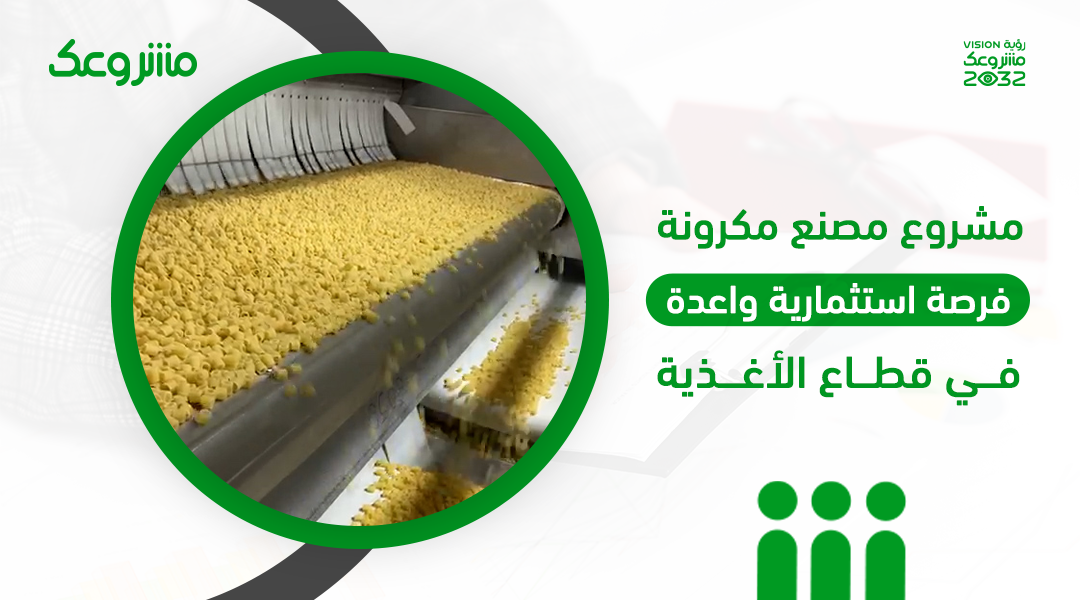
The pasta factory project in Egypt is one of the promising food industry ventures that holds strategic importance, given the growing demand for pasta products in both local and global markets. Pasta is considered one of the staple foods that many Egyptian and Arab families rely on daily, as it is used in preparing quick and diverse meals and is a fundamental part of main dishes. This makes it a continuously consumed product with no decline in demand over time. The project can benefit from product diversification to attract a broader consumer base. By offering pasta in different shapes and sizes, as well as adding innovative flavors, the factory can meet various tastes and needs, enhancing the potential for widespread market penetration both locally and internationally. According to available statistics, Egypt ranks eighth globally in pasta exports, with a value of approximately 113 million USD in exports. These figures reflect the substantial opportunities that the pasta factory project can capitalize on, whether meeting local demand or expanding into international markets, making it a promising and profitable investment in the food industry sector.
The pasta factory project is a promising investment venture that combines continuity with high profitability. Below are some of the key advantages of investing in this type of project:
The production process begins with receiving the primary raw materials, such as high-quality flour, salt, and water. These materials are carefully inspected to ensure they meet the required standards of quality. They undergo precise laboratory testing to verify protein levels, moisture content, and the absence of impurities before being stored in dedicated warehouses equipped with humidity and temperature control systems to ensure their safety and prevent any spoilage or contamination.
At this stage, the flour is mixed with water and salt using modern, advanced mixing machines to ensure complete homogeneity of the ingredients. The dough is then left for a short period to achieve the ideal consistency. Afterward, the dough is passed through shaping machines that produce different types of pasta (spaghetti, penne, lasagna, etc.) according to the required designs, ensuring product variety to meet market demands.
After shaping, the pasta is moved to cooling rooms to set the shape and prevent the pieces from sticking together. It is then transferred to drying rooms equipped with advanced temperature and humidity control systems. The drying process is gradual, reducing the pasta’s moisture content to the minimum required to prevent the growth of bacteria or fungi, maintaining the quality of the final product.
At this stage, the pasta is weighed accurately and distributed into specially designed plastic or paper packaging. Nutritional information is printed on the packaging, including weight, ingredients, production date, and expiry date. The packages are securely sealed using modern packaging techniques to maintain product quality and enhance consumer trust.
Finally, the packaged products are stored in warehouses equipped with temperature and humidity control systems to preserve product quality. Advanced logistical systems are used to transport the products to local and international markets, with shipments tracked using inventory management technologies to ensure timely delivery in optimal condition, thus improving the efficiency of the supply chain.
General Manager: Responsible for managing the entire project, setting strategic plans, and monitoring overall performance.
Accountant: Manages financial affairs, prepares financial reports, and monitors the budget.
Quality Supervisor: Ensures adherence to quality standards during production, conducting necessary product inspections.
The success of the pasta factory project depends on several key factors that work together to ensure profitability, project sustainability, and enhanced competitiveness in the market. Below are the most prominent factors:
To ensure the successful start and execution of a pasta factory project, investors must consider several essential conditions that help protect the project from any legal issues. The most prominent of these conditions include:

To communicate and request a feasibility study for a pasta factory project
The kebab restaurant project is one of the food-service ventures that combines strong demand for grilled meals with the opportunity to target a diverse customer base, including individuals, families, and lovers of traditional Middle Eastern cuisine. With growing competition in the restaurant sector, however, the project’s success is no longer determined by food taste alone. […]
Read moreA children’s toy store project is not limited to selling toys; it is built on understanding what attracts children and what families look for when choosing products that combine entertainment and educational value. With the wide variety of educational toys, skill-development games, recreational toys, and gifts available, the store has opportunities to meet the needs […]
Read moreA residential complex project is no longer simply an investment in a collection of real estate units. It has evolved into an integrated development model that combines comfortable living, diverse services, and long-term investment value. As cities expand and residents’ needs evolve, demand is growing for residential complexes that offer a comprehensive environment suited to […]
Read moreThe veterinary clinic project comes at a time when animal care is no longer limited to treating illnesses or injuries, but has expanded to include health monitoring, vaccinations, routine checkups, and care for both pets and livestock. However, many animal owners face challenges in accessing specialized veterinary services that combine prompt response, high-quality care, and […]
Read more
خصم 25% على خدمات مشروعك استفد من العرض الآن، فالفرصة متاحة لفترة محدودة فقط
سجّل بياناتك واحصل على خصم 25% الآن


