هذا النص هو مثال لنص يمكن أن يستبدل في نفس المساحة، لقد تم توليد هذا النص من مولد النص العربى، حيث يمكنك أن تولد مثل هذا النص أو العديد من النصوص الأخرى إضافة إلى زيادة عدد الحروف التى يولدها التطبيق.
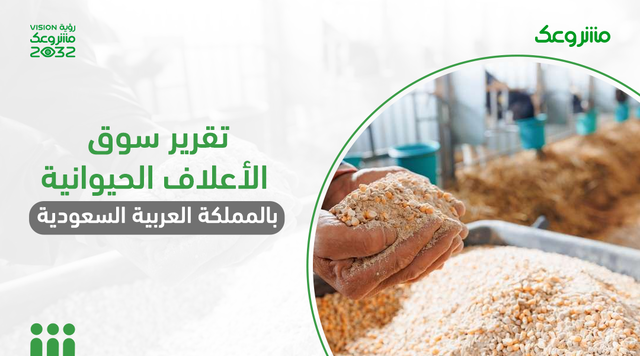
The animal feed market in Saudi Arabia is considered a fundamental pillar of the national agricultural economic system and one of the most prominent sectors witnessing rapid growth amid the major economic transformations taking place in the Kingdom. With the increasing population and rising living standards, the need for animal protein has become more urgent than ever, making the feed market a central component in the entire food production chain, from farm to table.
The role of the animal feed market is not limited to securing the needs of livestock alone; it extends to being a key factor in achieving national food security and sustaining local production of meat, dairy, and poultry. Within the framework of Vision 2030, the animal feed market is gaining unprecedented investment momentum, as the Kingdom seeks to enhance local production and reduce dependence on imports. This opens wide opportunities for investors and companies wishing to contribute to building an integrated and sustainable national food system.
What is the importance of the animal feed market in Saudi Arabia’s economy?
Achieving food security and self-sufficiency in animal products, and ensuring the needs of the local market are met in a sustainable manner.
Diversifying national income sources and contributing to reducing dependence on oil as the sole economic pillar.
Providing promising investment opportunities that attract both local and foreign capital in light of growing demand and increasing government support.
Creating job opportunities for citizens across different regions of the Kingdom in manufacturing, distribution, trade, and related services.
Reducing the import bill for feed and animal products and directing these resources toward strengthening local production.
Supporting farmers and breeders by providing high-quality local feed at competitive prices.
Enhancing the competitiveness of Saudi animal products locally and regionally by improving feed quality and reducing production costs.
Achieving environmental sustainability and rationalizing resource use through the adoption of modern feed production technologies that conserve water and agricultural land.
Animal Feed Market Size and Market Value in Saudi Arabia
The animal feed market in Saudi Arabia is estimated at approximately SAR 24.38 billion (equivalent to USD 6.50 billion).
By 2030, the animal feed market is expected to reach SAR 31.59 billion (equivalent to USD 8.42 billion).
The segment of animal feed pellets (compressed pellets) accounts for about 5% of the total feed market, valued at approximately SAR 1.22 billion.
Local animal feed production reaches 17,356,848 tons.
By the end of 2026, Saudi Arabia’s animal feed production is expected to reach 19,252,741 tons.
Total animal feed consumption in Saudi Arabia amounts to approximately 55,656,865 tons.
The United States ranks first among countries exporting green fodder to Saudi Arabia, accounting for 47% (out of a total import volume of 462,807 tons of green fodder).
Spain ranks first among countries exporting compound feed to the Kingdom, accounting for 23.6% (out of a total import volume of 35,353 tons of compound feed).
Forecast of the animal feed market in Saudi Arabia for 2030
The animal feed market in Saudi Arabia is expected to reach SAR 31.59 billion in 2030 (equivalent to USD 8.42 billion).
The value of animal feed pellets is expected to reach SAR 1.58 billion out of the total market size by 2030.
Saudi Arabia’s animal feed production is projected to reach 23,688,413 tons by 2030.
Animal feed imports are expected to reach 1,921,777 tons (including 359,003 tons of compound feed and 1,562,774 tons of green fodder).
Total feed consumption in Saudi Arabia is expected to reach 83,524,666 tons by 2030.
The compound annual growth rate (CAGR) of the feed market in Saudi Arabia is estimated at 5.32% during the period from 2024 to 2030.
Key Drivers of Growth in the Animal Feed Market in Saudi Arabia
Rapid population growth, which continuously increases demand for animal products such as meat, dairy, poultry, and eggs.
Expansion of livestock and poultry farming projects, increasing the need for larger quantities of high-quality animal feed.
Government support and incentive regulations provided by the Ministry of Environment, Water and Agriculture and the Agricultural Development Fund to develop the sector.
Saudi Vision 2030 objectives aiming for food self-sufficiency and reducing dependence on imports.
Rising per capita income and changing consumption patterns toward higher intake of animal protein products.
Expansion of the food service and hospitality sector driven by tourism growth, which continuously increases demand for animal products.
Technological advancement in feed production, improving nutritional formulations, production efficiency, and cost reduction.
Growth of the aquaculture sector, which requires specialized feed and opens new opportunities for feed manufacturers.
Increasing private sector investments in establishing new feed factories and upgrading existing facilities to meet demand.
Strategic partnerships between local and international feed companies to transfer technology and develop advanced feed products.
Large investment opportunities in livestock and aquaculture sectors estimated at around SAR 20 billion by 2030.
Launch of mega projects such as the Livestock City valued at SAR 9 billion, built on an area of 11 million square meters, expected to contribute about 13% of Saudi food security.
The kebab restaurant project is one of the food-service ventures that combines strong demand for grilled meals with the opportunity to target a diverse customer base, including individuals, families, and lovers of traditional Middle Eastern cuisine. With growing competition in the restaurant sector, however, the project’s success is no longer determined by food taste alone. […]
A children’s toy store project is not limited to selling toys; it is built on understanding what attracts children and what families look for when choosing products that combine entertainment and educational value. With the wide variety of educational toys, skill-development games, recreational toys, and gifts available, the store has opportunities to meet the needs […]
A residential complex project is no longer simply an investment in a collection of real estate units. It has evolved into an integrated development model that combines comfortable living, diverse services, and long-term investment value. As cities expand and residents’ needs evolve, demand is growing for residential complexes that offer a comprehensive environment suited to […]
The veterinary clinic project comes at a time when animal care is no longer limited to treating illnesses or injuries, but has expanded to include health monitoring, vaccinations, routine checkups, and care for both pets and livestock. However, many animal owners face challenges in accessing specialized veterinary services that combine prompt response, high-quality care, and […]